Google I/O 2026’s biggest announcements may have landed during the opening keynote, but the second day showed what those reveals actually mean across Google’s ecosystem, from Gemini and Android to XR glasses, creator tools, and AI subscriptions.
TL;DR
-
Google used I/O 2026 to show how Gemini is becoming the connective layer across Search, Android, YouTube, Workspace, shopping, and XR.
-
Android XR and smart glasses emerged as one of Google’s biggest long-term bets.
-
Adobe, YouTube, and Android updates showed how Google wants AI embedded directly into everyday workflows.
-
Some Gemini users pushed back against new usage caps introduced for premium plans.
Gemini Is Becoming The Core Layer Across Google’s Ecosystem
Google I/O 2026 made one thing clear, Gemini is no longer just an AI chatbot sitting beside Google’s products. It is becoming the connective layer running through Search, Android, YouTube, Workspace, shopping, and emerging hardware experiences.
The shift became clearer once attendees and users began seeing how the opening-day announcements connected to practical experiences. Instead of presenting AI as a separate destination, Google is embedding it into places where users already spend time.
That includes conversational help in YouTube, AI-assisted shopping through Universal Cart, faster Gemini models, smart glasses powered by contextual assistance, and productivity tools that can respond through voice and multimodal prompts.
Google’s New AI Features Are Already Reaching Everyday Users
One of the biggest signs of Google’s faster AI push is Gemini 3.5 Flash, which was introduced as a faster and more capable model for agentic behavior and coding tasks.
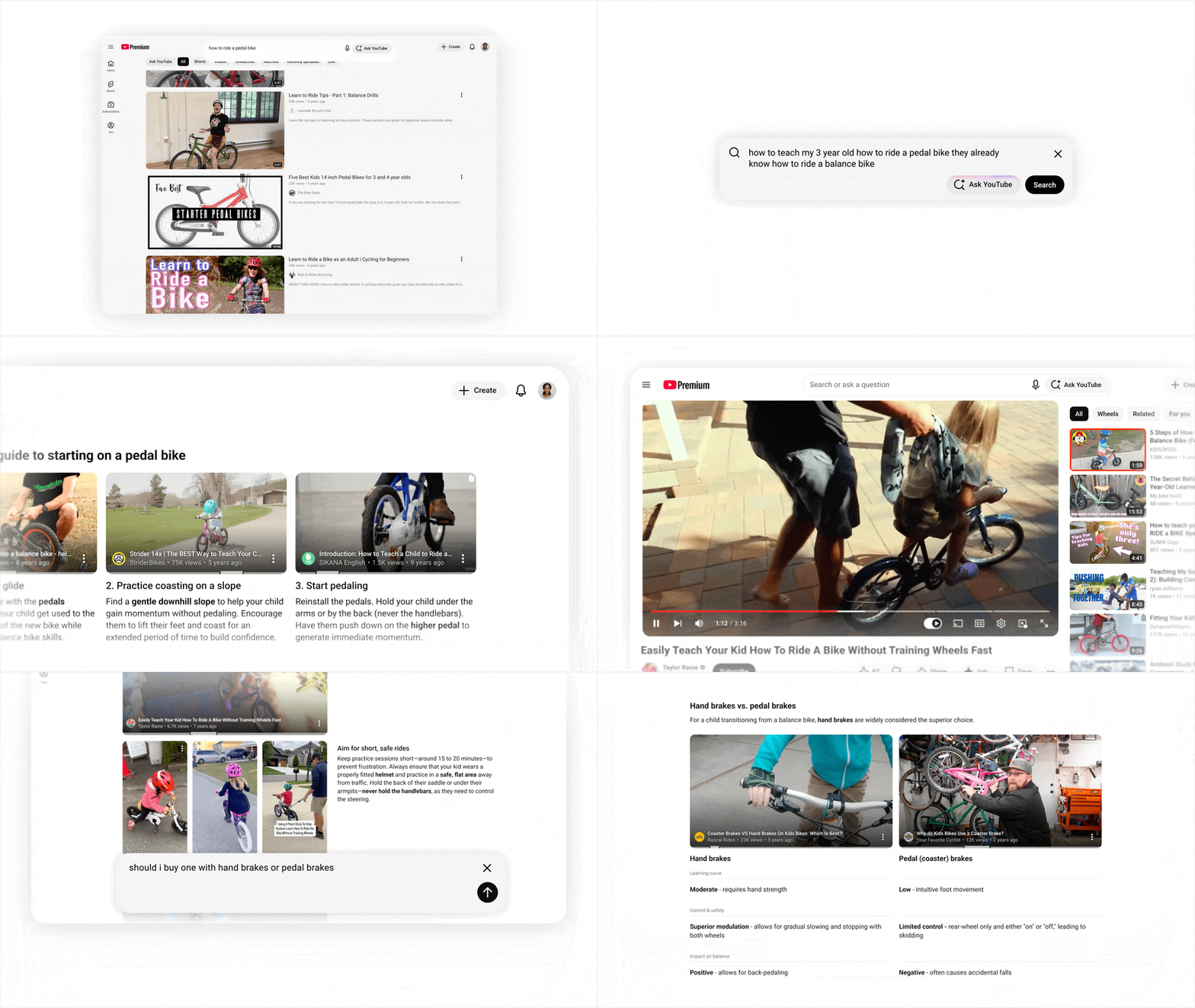
This matters because Google is trying to make Gemini feel less like an experimental assistant and more like an everyday utility. The company also showcased features such as Ask YouTube, which brings conversational discovery to video search, and Universal Cart, which turns shopping across Google into a more connected experience.
Universal Cart is especially important because it brings AI into commerce and could reshape how users move between Search, YouTube, Gmail, Gemini, and retailers.
Android 17 Pushes Cross-Device Experiences Further
Android also received attention through “Continue On,” a feature designed to help users move app activity between Android phones and tablets. The idea is similar to Apple’s Handoff, but its importance for Google is bigger than simple convenience.

For years, Apple has been stronger at making its devices feel like one connected ecosystem. With Android 17, Google appears to be pushing Android closer to that continuity-first experience.
This also fits the broader Gemini direction. If Google wants AI to understand context across tasks, then Android needs to carry user activity across devices more smoothly.
Android XR Glasses Gave A Better Look At Google’s Wearable Ambitions
Android XR was one of the most interesting parts of the event because it showed Google revisiting an old dream with a much stronger foundation. XREAL’s Project Aura appeared at I/O 2026, giving attendees a closer look at an Android XR form factor that combines immersive display capabilities with Gemini-powered assistance.

Google also previewed intelligent eyewear as part of its I/O announcements, saying users will be able to get directions, send texts, snap photos, and more without taking out their phones.
That positioning is important. Google is not simply trying to sell smart glasses as another screen. It is trying to make them feel like an ambient AI interface, where Gemini can see, hear, understand context, and respond naturally.
Google Believes Fashion Is The Key To Smart Glasses Adoption
The company also appears to have learned from Google Glass. During I/O, Android boss Sameer Samat explained that Google Glass failed largely because it was not fashionable enough for everyday users.
That is why Android XR’s current strategy looks different. Google is working with Samsung and eyewear brands such as Warby Parker and Gentle Monster, making the design and fashion element as important as the technology.
This is a major shift. The next smart glasses race will not only be about displays, cameras, or AI models. It will also be about whether people are comfortable wearing these devices in public.
Adobe And Google Are Bringing AI Deeper Into Creative Workflows
Google’s AI strategy also extends into creative work. Adobe and Google are working on the Adobe Creative Connector for Gemini, which is expected to help users create automated workflows across Adobe apps using contextual prompts.
This is another sign that Gemini is being positioned as an action layer, not just a response engine. For creative professionals, the value of AI is not only in generating assets, but also in helping move work across tools, formats, edits, and approvals.
Gemini Omni Expands AI-Powered Creation Inside YouTube Shorts
YouTube Shorts is also getting deeper AI integration through Gemini Omni. The new Remix capability allows users to reimagine Shorts in different visual styles and make AI-driven changes to clips.
Google said remixed Shorts will include watermarks and identifiers showing they were generated with AI. That transparency matters because AI video tools continue to raise concerns around ownership, attribution, and authenticity.
For YouTube, this could become a major creator feature. For Google, it gives Gemini Omni a high-visibility consumer use case inside one of the world’s biggest video platforms.
Google Is Strengthening Its AI Subscription Strategy With YouTube Premium
Google is also connecting AI more closely to subscriptions. The company is adding YouTube Premium benefits to its paid Google AI plans, with Google AI Pro getting YouTube Premium Lite and Google AI Ultra getting the full YouTube Premium experience.
This is a strategic bundling move. AI subscriptions are expensive to run because model inference and compute costs remain high. Adding YouTube benefits gives users another reason to stay subscribed.
It also shows how Google can use its ecosystem advantage against AI rivals by combining subscriptions with YouTube, Android, Search, Workspace, and hardware.
Some Gemini Users Aren’t Happy About Google’s New Usage Caps
However, the event was not entirely positive. Some Gemini Pro subscribers reportedly reacted negatively to new usage caps, especially because paid users expect premium access without sudden restrictions.
This highlights one of the biggest challenges in consumer AI. Companies want to offer powerful models at scale, but users want predictable access once they start paying.
For Google, this reaction is a reminder that AI monetization remains delicate as competition intensifies across the industry.
Google I/O 2026 Revealed A Future Built Around Ambient AI Experiences
The biggest takeaway from Google I/O 2026 is not one feature, model, or device. It is the direction of travel.
Google is building toward an ambient AI future where Gemini follows users across Search, Android, YouTube, Workspace, shopping, creator tools, and XR devices. The company’s message is clear: AI should not sit in a separate app, it should become part of the interface of everyday computing.
The second day of I/O helped make that strategy more visible. The headline reveals may have arrived earlier, but the follow-through showed how Google wants to turn those announcements into real products, workflows, and platform shifts.
If Google can balance usefulness, trust, pricing, and design, Gemini could become more than an assistant. It could become the operating layer for Google’s next era.
