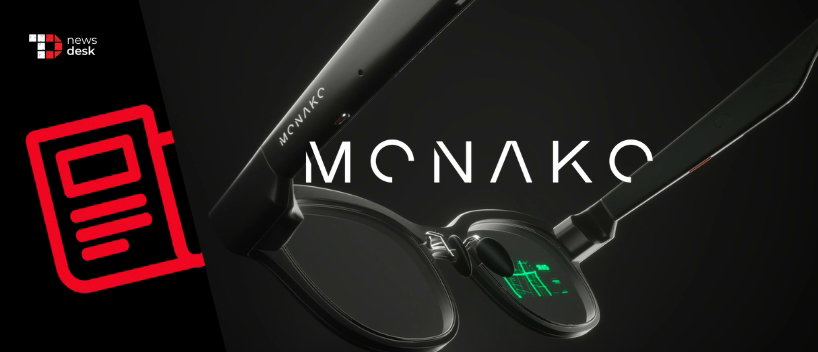
Chinese startup Monako AI introduced Monako Glass, a smart glasses device it describes as the “world’s first wearable Linux computer in glasses form,” built for developers, researchers, and AI power users who want coding agents and custom apps inside a heads-up display.
TL;DR
- Monako Glass runs a Linux-based operating system called MonoOS.
- It supports AI coding agents such as Claude Code and OpenAI’s Codex.
- The glasses weigh 48 grams and include a display, camera, speakers, gesture controls, and a bone-conduction microphone.
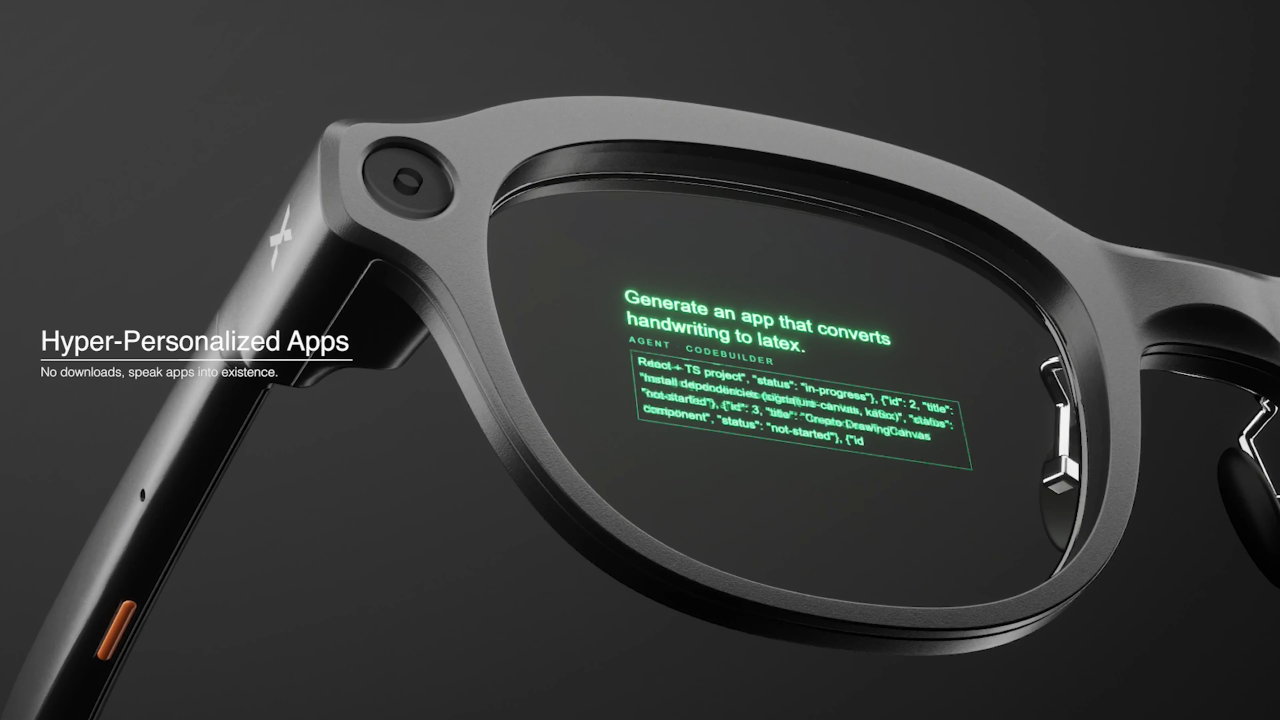
- Users can create “hyper-personalized apps” through voice prompts.
Monako Glass Brings AI Coding Agents To Smart Glasses
Smart glasses are no longer just trying to answer calls, show notifications, or capture quick videos. Monako Glass is pitching a much more ambitious idea, turning a regular-looking pair of glasses into a wearable Linux computer for AI-assisted productivity.
Created by Candy Yue, Monako Glass is aimed at developers, researchers, and AI power users who want to run tools such as Claude Code and OpenAI’s Codex directly from a heads-up display. Yue introduced the device through a launch video on X, formerly Twitter, positioning it as a product built for “VIBE productivity” and AI-assisted software creation.
"In the age of artificial intelligence, building has never been easier,” Yue stated in the video. “I used to grind at the keyboard, but nowadays I just tell the computer what I want and the AI builds it for me.”
That is the bigger promise behind Monako Glass. Instead of treating smart glasses as a companion to a phone or laptop, the startup is framing them as a new productivity device where software can be requested, generated, and used in the same wearable interface.
Monako Glass Uses MonoOS To Run Lightweight AI Apps
The foundation for this experience is MonoOS, a custom Linux-based operating system built for the glasses. It uses a Lua application layer to run apps with a minimal memory footprint, reportedly as low as 200KB to 500KB.
That lightweight approach matters because Monako Glass is designed to support what the company calls “hyper-personalized apps.” These are apps created for specific users, professions, and workflows across education, research, software development, gaming, and more.
In the launch demo, Yue showed how a user could ask the glasses to build a custom app through a voice prompt. The AI agent then begins creating the app and, once completed, pins it directly to the glasses’ home screen for future use.
Another example involved a student watching a professor write equations on a blackboard. The student asks the AI to create an app that can convert handwritten mathematical equations into LaTeX, showing how Monako Glass could move from passive display to active tool creation.
Monako Glass Adds Gesture Controls And Noise-Focused Voice Input
Despite the computing pitch, Monako Glass is designed to look like a regular pair of glasses and weighs just 48 grams. It includes expected smart glasses hardware such as a display, camera, and speakers, but its standout feature is a bone-conduction microphone positioned on the user’s nose.
The microphone listens to vibrations from the nasal bone, allowing the device to better separate the user’s voice commands from surrounding noise. Yue explained the idea simply: “If you're at a rave party or a very loud coffee shop, my AI listens to me and only me.”
The glasses also feature a built-in vision engine powered by a 0.5 TOPS NPU. This enables gesture-based navigation, letting users raise their hands to summon menus, tap to select apps, and adjust volume through hand movements.
Together, these features point to Monako Glass trying to solve two major wearable computing problems at once: how users control apps without a keyboard, and how voice commands remain usable in noisy environments.
Topics For More Insights
Why Monako Glass Could Matter For AI Productivity
The timing is notable. AI coding agents such as Claude Code and Codex are pushing software development toward prompt-based workflows, while wearable devices are trying to find a stronger productivity role beyond media capture and notifications.
Monako Glass sits at the intersection of both trends. Its pitch is not just that users can access AI from their face, but that they can ask AI to build small, specific tools that become part of their everyday workflow.
“We believe in the future all types of productivity will move to a form factor that's as small as a regular pair of glasses,” Yue said.
That vision is still early, and the real test will be whether Monako Glass can turn its demo-ready AI features into reliable daily utility. Yet its premise is clear: the next coding interface might not be another laptop screen, but a pair of glasses that listens, sees, builds, and pins the result in front of you.
