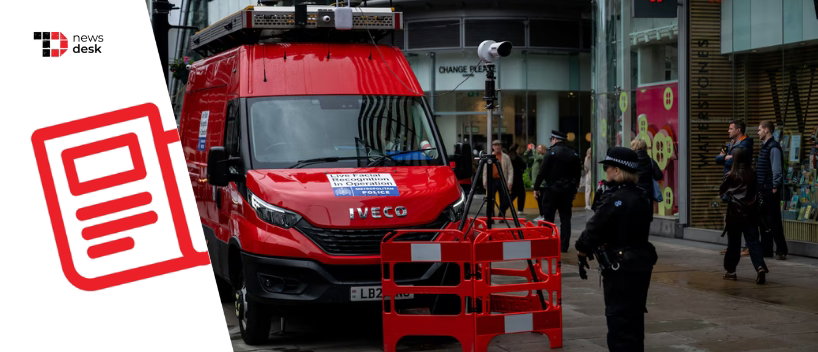
London’s Metropolitan Police is expanding its use of live facial recognition across public spaces, saying it helps officers identify wanted suspects faster. However, civil liberties groups argue the technology risks normalizing biometric surveillance of ordinary people.
TL;DR
- London’s Metropolitan Police says live facial recognition has helped arrest around 2,500 wanted people since early 2024.
- The system compares faces in public spaces against a watchlist of about 17,000 people.
- A UK High Court ruling in April 2026 upheld the Met’s current live facial recognition policy.
- Privacy groups warn that using the technology at protests could affect free speech and public anonymity.
London’s streets are becoming a live test case for one of policing’s most divisive technologies: facial recognition.
The Metropolitan Police is expanding the use of live facial recognition, a system that scans people in public spaces and checks their faces against a police watchlist in real time. Reuters reported on May 22, 2026, that the Met says the technology has helped officers arrest around 2,500 wanted people since the start of 2024, including suspects accused of violent and sexual offences.
The system works by focusing cameras on a specific area. When people pass through that zone, their images are streamed into the live facial recognition system and compared against a watchlist. The Met says facial recognition can be used to prevent and detect crime, find wanted people, safeguard vulnerable people, and protect the public from harm.
According to Reuters, the watchlist currently includes about 17,000 people, mainly compiled from custody images. The Met’s Lindsey Chiswick, national and Met lead for live facial recognition, said the technology has been “groundbreaking” for policing in London and cited cases involving suspects accused of robbery, rape, strangulation, and child sexual offences.
Chiswick also defended the system’s data handling, saying, “It’s a very, very fleeting engagement of two biometric templates, and then it’s destroyed, destroyed forever.” She said more than 3 million faces were scanned in the 12 months to last September, generating 10 false alerts, none of which led to an arrest.
The Met’s position gained legal support in April 2026, when London’s High Court dismissed a challenge to the force’s use of live facial recognition. The case was brought by community worker Shaun Thompson and civil liberties campaigner Silkie Carlo, who argued that the policy interfered with privacy, expression, and assembly rights.
The court ruled that the Met’s policy was lawful, sufficiently clear, and included safeguards against abuse.
Sir Mark Rowley, Commissioner of the Metropolitan Police Service, called the judgment “a significant and important victory for public safety.” He said live facial recognition was “actively removing thousands of dangerous and wanted offenders from London’s streets,” including people wanted for rape, domestic abuse, and child sexual offences.
However, the controversy has not eased.
Topics For More Insights
Civil liberties groups argue that the concern is not just whether facial recognition is accurate, but whether ordinary passers-by should be scanned without any individual suspicion. Reuters reported that live facial recognition was used at a protest for the first time on May 16, 2026, after police said they had intelligence about a possible public safety threat.
Big Brother Watch’s senior legal and policy officer Jasleen Chaggar criticized the move, saying, “We are at risk of becoming a nation of suspects, tracked from the moment we leave our front door, with profound consequences for our rights to privacy, free speech and freedom of association.”
The UK government is now working on a new legal framework for law enforcement use of biometrics, facial recognition, and similar technologies. A government consultation says live facial recognition is already used in England and Wales to find wanted people in public spaces, but also acknowledges concerns over oversight, transparency, bias, and the impact on rights.
The consultation proposes clearer limits on when facial recognition can be used, who can be placed on watchlists, how oversight should work, and how the system should guard against bias and discrimination. It also says facial recognition can interfere with privacy, freedom of expression, and peaceful assembly, especially when used at protests or public gatherings.
For London, the question is no longer whether facial recognition will remain experimental. It is already being used, upheld in court, and considered for broader legal regulation.
The bigger question is whether the UK can build rules strong enough to ensure that a tool designed to catch dangerous offenders does not quietly turn public life into a permanent identity check.
