Artificial Intelligence
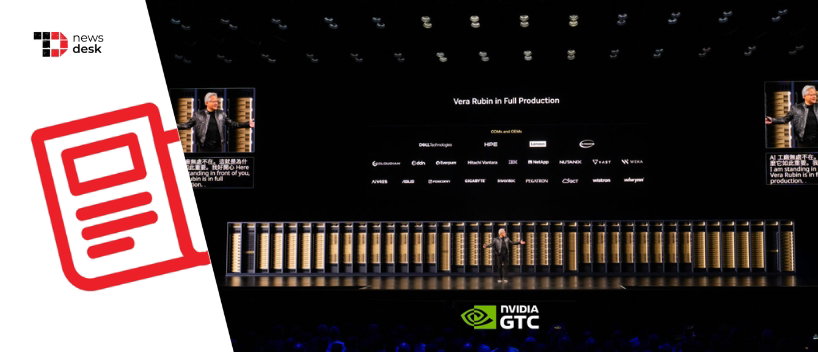
GTC Taipei 2026: NVIDIA Expands AI Stack With Vera Rubin Production Rollout And New Vera CPU!
Updated on Mon, Jun 1, 2026
Share
TL;DR
- Announced at COMPUTEX 2026, NVIDIA is moving Vera Rubin into full production as a core AI factory infrastructure platform.
- NVIDIA introduced the Vera CPU, built for AI agents and claimed to deliver up to 1.8x faster performance than x86 processors.
- Both Vera Rubin and Vera CPU will roll out through global partners starting this fall for large-scale AI deployments.
NVIDIA is now framing the next phase of computing around “AI factories,” large, continuous systems designed to generate and run AI workloads at scale. This moves the conversation away from standalone machines and toward infrastructure built for constant output and scale.
“Ultimately, our customers don’t want to buy computers, they want to build AI factories,” Jensen Huang said in Taipei. He added, “The more you buy, the more you make,” pointing to a model where compute directly translates into revenue, and efficiency becomes a core business driver rather than just a technical metric.
As this model scales, the focus is shifting toward building infrastructure that can support sustained, high-volume AI production across cloud and enterprise environments. NVIDIA’s next major infrastructure push, Vera Rubin, builds directly on this direction, bringing the AI factory idea closer to real-world deployment.
Vera Rubin
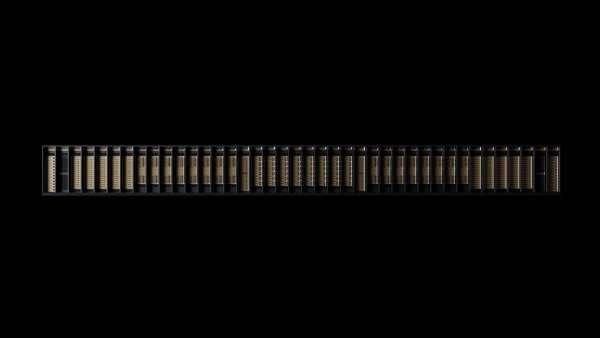
NVIDIA announced that the Vera Rubin platform is now entering full production, positioning it as a core building block for future AI factories. The system is designed as a tightly integrated stack that brings together compute, networking, and storage to support large-scale AI workloads.
The platform is designed as a POD-scale system that combines five integrated racks into a single AI supercomputer. It brings together Vera Rubin NVL72 systems, the Vera CPU, BlueField-4 STX for storage and security, and Spectrum-X Ethernet networking, all working as one unified architecture. Huang said, “The supply chain we created for Vera Rubin is twice as large as Grace Blackwell.”
A key focus of Vera Rubin is performance for agentic AI workloads. NVIDIA says it can deliver up to 10x higher agent throughput at scale compared to its previous Grace Blackwell generation, handling complex tasks like reasoning, tool use, and multi-step execution across distributed systems.
To support this, it introduces Spectrum-X Ethernet Photonics, a co-packaged optics networking system built for large-scale AI clusters, improving efficiency, uptime, and deployment speed. Security is also built in, with BlueField-4 DPUs and Confidential Computing enabling encrypted data handling and strong isolation for multi-tenant environments.
With manufacturing already underway across a global partner ecosystem, Vera Rubin systems are expected to begin shipping this fall, powering next-gen AI factories worldwide.
Topics For More Insights:
Vera CPU
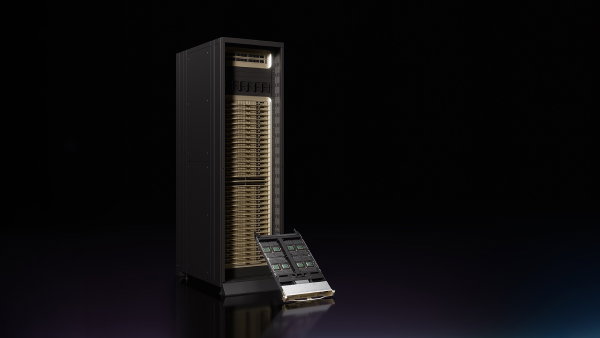
NVIDIA has introduced Vera, a new CPU designed specifically for the era of AI agents, marking a shift in how data centers handle modern workloads. The company says Vera is built for tasks like agentic AI, reinforcement learning, and large-scale data processing, where systems don’t just respond to prompts but run multi-step actions, use tools, and process complex workflows. NVIDIA claims it delivers up to 1.8x faster performance compared to traditional x86 processors.
Vera is not a standalone product in isolation. It powers multiple setups, including standalone CPU servers, NVIDIA’s Vera Rubin AI systems, and BlueField-4 STX storage platforms, making it a core part of its wider AI infrastructure stack.
NVIDIA also says the CPU is already attracting interest from major AI labs like Anthropic and OpenAI, along with cloud providers such as Oracle Cloud Infrastructure and CoreWeave. Server makers including Dell, HPE, Lenovo, and Supermicro are also preparing systems around it.
The chip is built on NVIDIA’s focus on “AI factories,” where computing is measured by output rather than hardware alone. With higher memory bandwidth and tighter integration with GPUs, Vera is designed to keep large AI systems running more efficiently and with less delay.
NVIDIA says Vera systems will start rolling out through its ecosystem of partners starting this fall.
Put together, Vera Rubin and the Vera CPU show where NVIDIA is headed next with building AI systems that are meant to run at scale, not just in isolated setups.
First published on Mon, Jun 1, 2026

Enjoyed what you read? Great news – there’s a lot more to explore!
Dive into our content repository of the latest tech news, a diverse range of articles spanning introductory guides, product reviews, trends and more, along with engaging interviews, up-to-date AI blogs and hilarious tech memes!
Also explore our collection of branded insights via informative white papers, enlightening case studies, in-depth reports, educational videos and exciting events and webinars from leading global brands.
Head to the TechDogs homepage to Know Your World of technology today!
Disclaimer - Reference to any specific product, software or entity does not constitute an endorsement or recommendation by TechDogs nor should any data or content published be relied upon. The views expressed by TechDogs' members and guests are their own and their appearance on our site does not imply an endorsement of them or any entity they represent. Views and opinions expressed by TechDogs' Authors are those of the Authors and do not necessarily reflect the view of TechDogs or any of its officials. While we aim to provide valuable and helpful information, some content on TechDogs' site may not have been thoroughly reviewed for every detail or aspect. We encourage users to verify any information independently where necessary.
Loading comments...