Artificial Intelligence
GTC Taipei 2026: NVIDIA DSX Brings A New Blueprint For Building And Running AI Factories!
Updated on Mon, Jun 1, 2026
Share
TL;DR
- NVIDIA launched DSX, a unified platform to design, simulate, and manage large-scale AI factories.
- DSX improves efficiency by cutting cost per token through better energy use and higher GPU utilization.
- Alongside DSX, NVIDIA rolled out DSX Sim, OS, MaxLPS, Flex, and Exchange, with growing adoption.
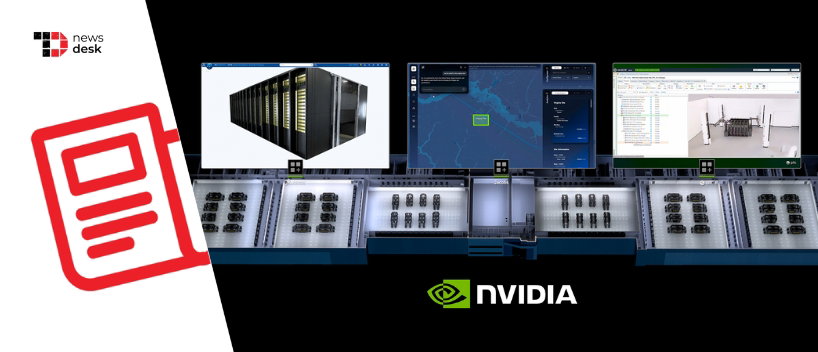
At its GTC Taipei event, NVIDIA introduced NVIDIA DSX, a platform designed to act like a full guidebook for building and running these AI factories. Instead of treating hardware, software, and energy systems separately, DSX connects them into one coordinated setup.
Jensen Huang explained it in simple terms, saying, “We’re not just shipping chips — we’re giving every infrastructure builder a complete playbook to build AI factories,” said Jensen Huang, founder and CEO of NVIDIA. “With the DSX platform, you can simulate the entire factory before you spend a dollar, validate performance before a single rack is installed and operate with the kind of reliability that production AI demands.”
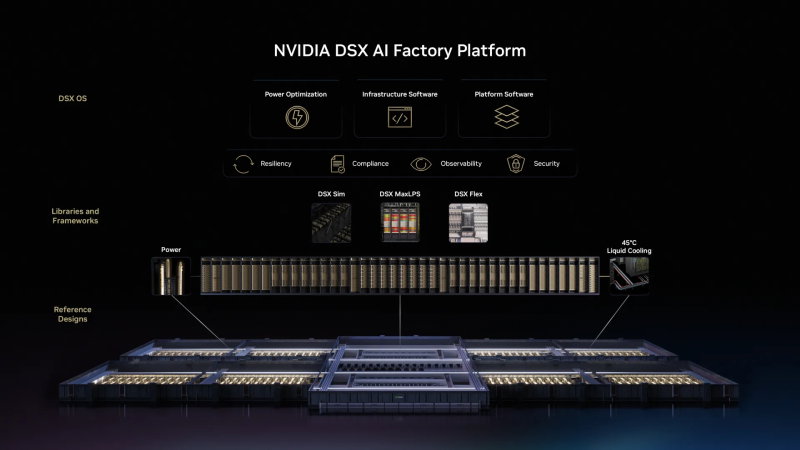
A big focus here is cost and efficiency. The new DSX MaxLPS system is designed to squeeze more performance out of every megawatt of power. NVIDIA says it can help operators run up to 40% more GPUs within the same energy limit, which is a big deal as AI workloads keep growing.
Along with that, DSX OS brings in a more flexible, open-source software layer that helps manage day-to-day operations. It handles things like workload scheduling, system health, scaling, and keeping everything running smoothly even in large multi-tenant environments.
There are a few more pieces in the DSX stack too. DSX Sim helps teams test and model infrastructure before building it, DSX Flex connects AI factories with power grids and renewable energy sources, and DSX Exchange helps different systems like IT and energy work together more smoothly.
What makes this announcement even more interesting is how many companies are already joining in. Names like Dell Technologies, HPE, Lenovo, Supermicro, ASUS, Foxconn, GIGABYTE, Pegatron, and Quanta Cloud Technology are all working on DSX-ready systems and designs.
Topics For More Insights:
On the cloud side, providers like CoreWeave, Crusoe, Lambda, Nebius, and others are already using parts of the platform to improve GPU usage and bring AI capacity online faster. Some pilots, like DSX Flex projects with Emerald AI and Silicon Valley Power, are even testing how AI factories can adjust power use based on grid demand.
There’s also a strong push around digital twins, with companies like Dassault Systèmes, Cadence, PTC, and Siemens helping simulate entire AI factory environments before they’re physically built. Overall, DSX feels like NVIDIA’s way of setting a clearer blueprint for how AI infrastructure should be planned and run, especially as everything scales up quickly.
In short, DSX is NVIDIA’s attempt to make AI infrastructure feel less scattered and more like one connected system that’s easier to plan, build, and run at scale.
First published on Mon, Jun 1, 2026

Liked what you read? That’s only the tip of the tech iceberg!
Explore our vast collection of tech articles including introductory guides, product reviews, trends and more, stay up to date with the latest news, relish thought-provoking interviews and the hottest AI blogs, and tickle your funny bone with hilarious tech memes!
Plus, get access to branded insights from industry-leading global brands through informative white papers, engaging case studies, in-depth reports, enlightening videos and exciting events and webinars.
Dive into TechDogs' treasure trove today and Know Your World of technology like never before!
Disclaimer - Reference to any specific product, software or entity does not constitute an endorsement or recommendation by TechDogs nor should any data or content published be relied upon. The views expressed by TechDogs' members and guests are their own and their appearance on our site does not imply an endorsement of them or any entity they represent. Views and opinions expressed by TechDogs' Authors are those of the Authors and do not necessarily reflect the view of TechDogs or any of its officials. While we aim to provide valuable and helpful information, some content on TechDogs' site may not have been thoroughly reviewed for every detail or aspect. We encourage users to verify any information independently where necessary.
Loading comments...