Google used I/O 2026 to show how Chrome is evolving from a traditional browser into an AI-powered platform for the “agentic web,” where users, developers, websites, and AI agents can interact more intelligently across everyday browsing experiences.
TL;DR
-
Google introduced 15 Chrome updates focused on AI agents, Gemini in Chrome, built-in browser AI, developer tools, and next-generation web performance.
-
WebMCP could help websites expose structured tools to AI agents, making browser-based automation more reliable.
-
Gemini in Chrome is expanding to Android with summaries, app connections, auto browse, Nano Banana, voice input, and screen selection prompts.
-
Chrome DevTools, Modern Web Guidance, and built-in AI tools aim to help developers build, debug, and optimize AI-ready web experiences faster.
Google Wants Chrome To Power The “Agentic Web”
Google’s message at I/O 2026 was clear, the web is entering what it calls the “agentic” era.
In this version of the web, users will not only click, scroll, search, and type manually. AI agents will increasingly help users complete tasks, interact with websites, summarize information, compare options, fill forms, build workflows, and even make web development faster.
That puts Chrome in a much bigger role than before. Instead of acting only as a window into the internet, Chrome is being positioned as an AI-powered layer between users, websites, developers, and digital services.
Google said this transition ties together three areas: helping AI agents build and interact with websites, pushing the boundaries of web UI and performance, and transforming Chrome into a proactive assistant through Gemini.
This is where the larger strategy becomes important. Google does not appear to be treating Gemini in Chrome as just another browser feature. It is using Chrome as the place where AI agents, local AI models, web apps, and user intent can come together.
That could make Chrome one of Google’s most important AI distribution channels.
WebMCP Could Change How AI Agents Interact With Websites
One of the most important updates is WebMCP, a proposed open web standard that allows websites to expose structured tools such as JavaScript functions and HTML forms to browser-based AI agents.
In simple terms, WebMCP could make websites easier for AI agents to understand and use.
Today, an AI agent may need to click through pages and forms the same way a human does. With WebMCP, a website could expose machine-friendly functions that allow the agent to complete tasks more directly, reliably, and quickly.
Google gave the example of a user planning a multi-city vacation. Instead of watching an agent manually move through travel forms, the user could authorize it to query backend APIs and build a personalized itinerary for approval.
That is a big shift. It suggests a future where websites are built not only for human visitors, but also for AI agents acting on behalf of those visitors.
The experimental WebMCP origin trial will begin in Chrome 149, and Gemini in Chrome is expected to support WebMCP APIs. Google also said global consumer brands are already experimenting with the standard, including travel, commerce, finance, real estate, delivery, and retail platforms.
If WebMCP gains adoption, it could become one of the foundational building blocks of the agentic web.
Gemini In Chrome Turns The Browser Into A Proactive AI Assistant
The consumer-facing side of Google’s Chrome strategy is Gemini in Chrome.
Google is bringing Gemini in Chrome to Android in June, where it will work as a mobile browsing assistant. Users will be able to summarize long articles, ask specific questions, and get explanations without switching apps.
It will also connect with Google apps such as Calendar, Keep, and Gmail, helping users complete tasks faster while browsing. With Personal Intelligence enabled, Gemini in Chrome can provide more tailored responses based on connected apps such as Gmail and Google Photos.
Auto browse is another major part of the strategy. It allows Gemini in Chrome to automate digital tasks, from booking appointments and finding items in stock to planning activities. Google gave the example of using Gemini in Chrome to find parking for a comedy show based on event details.
Google is also adding Nano Banana to Chrome on Android, allowing users to create or customize images while browsing. A user could ask Gemini to turn a page into an infographic or modify an image they are viewing.
Skills in Chrome will let users save useful prompts as reusable one-click tools. Screen selection prompts will allow users to point at specific parts of a webpage and ask Gemini questions about them. Voice input will also let users dictate into websites, with Gemini cleaning up transcription while preserving the user’s intent.
Together, these updates point to a major shift. Chrome is becoming less passive and more proactive, with Gemini acting as a browser-native assistant that can understand context and take action.
Google Is Embedding AI Directly Into The Browser For Developers
Google’s Chrome announcements were not only aimed at everyday users. Developers were a major focus too.
Built-in AI is one of the most important developer-facing updates. Instead of requiring every AI feature to run on external servers, Google wants more AI experiences to run directly inside the browser.
This could reduce server costs, avoid token bills, and make AI-powered web features more accessible to developers. Google said Chrome 148’s Prompt API is stable and uses Gemini Nano with multimodal inputs, structured output, and expanded language support.
Google also introduced Gemma 197M, an ultra-efficient model that can power task-specific APIs such as summarization across a wider range of devices.
For developers, this changes the economics of AI on the web. Smaller teams may be able to build personalized, proactive AI features without managing heavy backend infrastructure.
Google is also pushing AI into web development workflows. Modern Web Guidance, now in early preview, gives coding agents expert-vetted guidance for building accessible, secure, and performant web experiences.
Chrome DevTools for agents gives coding agents access to console logs, network traffic, and accessibility trees, helping them verify, debug, and optimize code. Google said LY Corporation used Chrome DevTools for agents to reduce manual performance analysis by 96% to 98%.
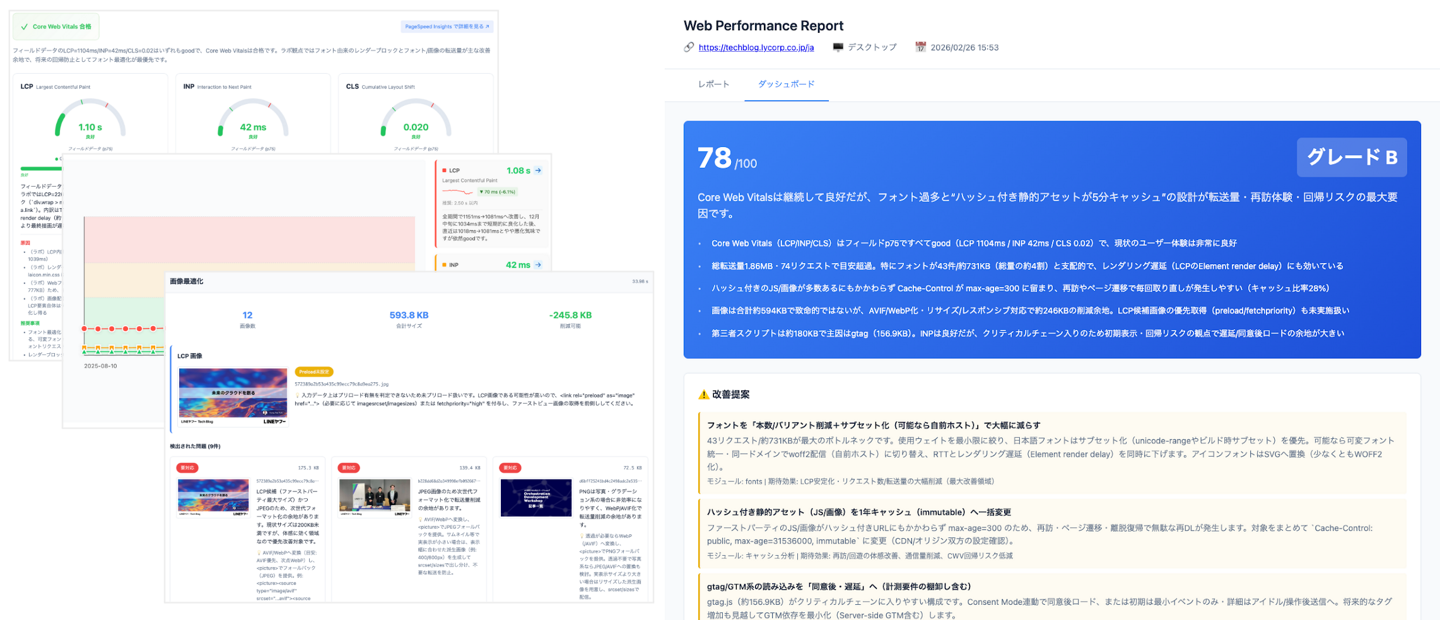
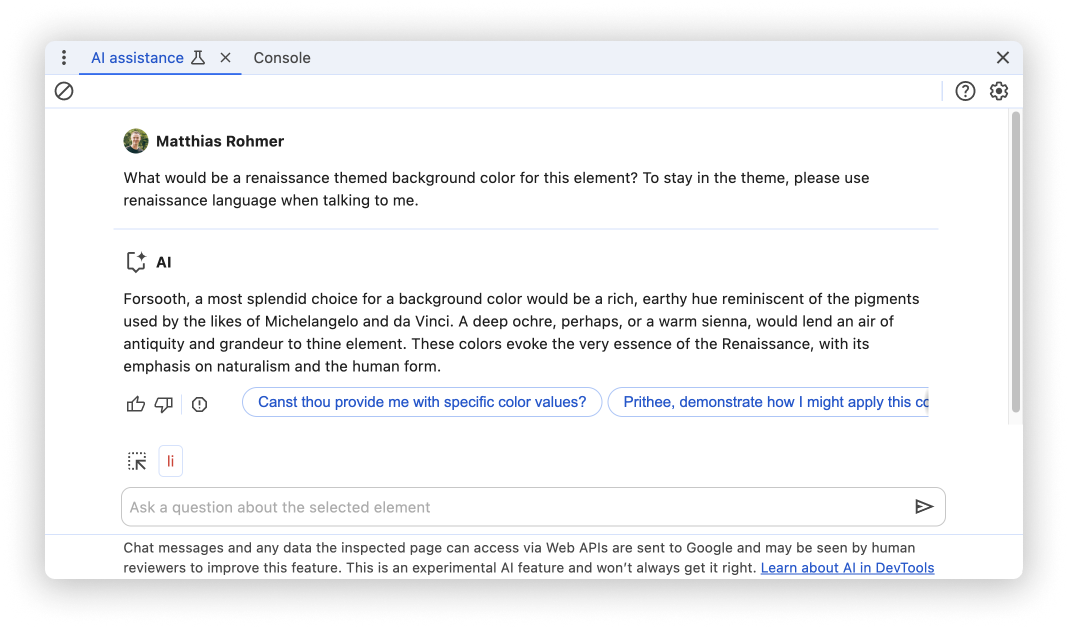
AI assistance in Chrome DevTools is also getting stronger with access to Lighthouse data and interactive widgets that show Gemini’s reasoning during debugging.
In short, Google wants AI agents to help both use the web and build it.
Chrome’s New UI And Performance Features Aim To Make The Web Feel More Native
Beyond AI agents and Gemini, Google also introduced updates designed to make web apps feel more powerful, responsive, and native-like.
HTML-in-Canvas is one of the most visually ambitious updates. It allows developers to integrate real DOM elements into a canvas with WebGL and WebGPU, enabling immersive 3D experiences that remain searchable, accessible, translatable, and connected to browser features.

Element-scoped view transitions and two-phase transitions are also designed to help developers create smoother, more layered UI motion without blocking interactivity.
Performance improvements are another major theme. Google is introducing the Soft Navigations API to bring Core Web Vitals measurement to Single Page Applications. This matters because many modern web apps behave more like native apps, but measurement tools have not always captured those experiences cleanly.
Declarative Partial Updates and new streaming APIs are also being tested to make it easier to insert HTML into pages without heavy DOM manipulation.
Google also introduced Immediate UI mode for authentication, bringing passwords and passkeys into a single browser-managed sign-in flow. Alongside this, the new Baseline Checker tool connects with Google Analytics API data to help developers understand which modern web features their real users can support.
The larger message is clear: Google wants the web to become faster, richer, easier to build, and more AI-native at the same time.
The browser is no longer just where the web is viewed. In Google’s vision, Chrome becomes where AI agents act, where developers build smarter experiences, and where users get more done with less manual effort.
That makes Chrome central to Google’s next phase of AI strategy, and possibly central to the future shape of the web itself.
