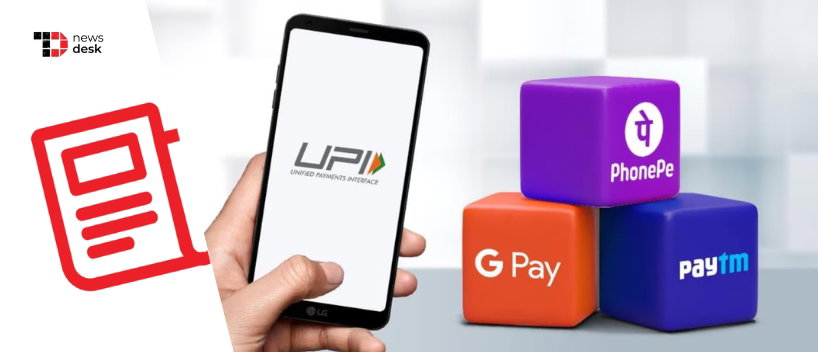
Amazon Pay, WhatsApp, CRED, MobiKwik and Flipkart’s Super.money are expected to meet NPCI to raise competition concerns around India’s UPI market, where PhonePe and Google Pay together handled roughly 80% of March’s 22.6 billion transactions.
TL;DR
- Amazon and Meta are part of a broader group lobbying NPCI.
- PhonePe and Google Pay dominate UPI transactions.
- Market share cap enforcement delayed to December 2026.
- Smaller players want fairer access and reduced dominance.
What Is Driving The Push Against UPI Leaders?
Amazon and Meta are not launching a joint payments product. Instead, both companies are part of a broader group of smaller UPI players preparing to raise concerns with the National Payments Corporation of India (NPCI).
This group includes Amazon Pay, WhatsApp, CRED, MobiKwik and Flipkart-backed Super.money. Their focus is on ensuring a more balanced competitive environment in India’s digital payments ecosystem.
How Dominant Are PhonePe And Google Pay?
PhonePe and Google Pay continue to dominate UPI transactions in India by a wide margin.
Together, they accounted for roughly 80% of the 22.6 billion UPI transactions recorded in March 2026. Estimates suggest PhonePe holds around 45% market share and Google Pay about 33%, leaving minimal share for competitors.
This concentration has made it difficult for smaller players to scale meaningfully despite rapid growth in digital payments adoption across the country.
Why The NPCI Market Share Cap Matters
NPCI proposed a rule to cap any single third-party UPI app at 30% market share to prevent excessive concentration.
However, enforcement has been repeatedly delayed, with the latest deadline now set for December 31, 2026. Earlier data showed PhonePe and Google Pay significantly above the proposed threshold.
This delay continues to benefit dominant players while limiting opportunities for others.
What Smaller Players Are Demanding
The companies involved are expected to push for several regulatory and operational changes.
These include restrictions on user acquisition strategies such as leveraging contact-book data and targeted installs. They are also seeking clarity on monetization practices, interoperability of transaction data, and equal access to new UPI features.
Concerns have additionally been raised around autopay mandates, collect requests, and preferential feature rollouts.
Topics For More Insights
Where WhatsApp And Amazon Stand
WhatsApp Pay remains central to Meta’s payments strategy in India. After NPCI removed its onboarding cap in late 2024, the platform gained the ability to scale across its full user base.
Despite this, it has yet to significantly disrupt the dominance of leading players.
Amazon Pay continues to expand its presence through its e-commerce ecosystem. The company is leveraging its existing customer base to drive payments adoption, but still trails far behind the top players in transaction volume.
What This Means For India’s Payments Ecosystem
The situation reflects growing tension within India’s digital payments space.
While UPI continues to scale rapidly, the concentration of power among a few dominant apps raises questions about long-term competition and innovation.
If regulators intervene more aggressively or enforce the market share cap, it could open doors for smaller players. Until then, companies like Amazon and Meta are likely to continue pushing for structural changes to improve their position.
