Biotechnology
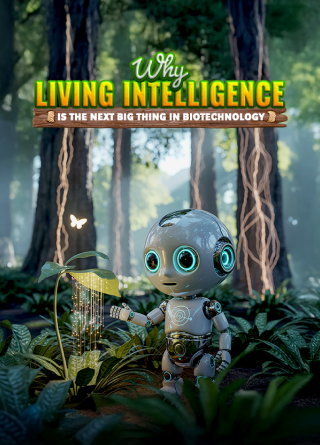
Why Living Intelligence Is The Next Big Thing In Biotechnology
Share
Overview
Well, imagine a machine that could do something similar.
One that can recognize patterns, adapt to situations, and gradually become more capable and skilled. Not because someone rewrote its code, but because it learned from experience.
This is the idea behind Living Intelligence.
Living Intelligence is about building machines that are responsive, adaptive, and continuously learning. They don’t just perform the assigned tasks but improve through every interaction. The more they engage, the more helpful and intuitive they become–and that is just the beginning.
In this article, we'll guide you through Living Intelligence and its major leap into biotechnology. Dive in!
 (1) 252-20250905100120.webp "TechDogs-\"Why Living Intelligence Is The Next Big Thing In Biotechnology\"")
For a long time, machines have operated by following a set of instructions: they take inputs, process them, and then produce a relevant output. However, technology is changing rapidly. We are now entering a new era where machines are more than just rule-followers; they are learning, observing, and making decisions.
This new phase is called Living Intelligence. It combines AI, sensors, and biotechnology to create systems that can grow and adapt with time. These machines respond to their surroundings, learn from experiences, and function more like living systems rather than just code-following robots.
In the upcoming sections, we will discuss what made it possible, where it's being used, and why it is important for the future.
What Is Living Intelligence?
Living Intelligence is the concept of combining AI systems with biological processes. Unlike regular AI that mimics human actions, Living Intelligence uses technology and biology together.
By using biotechnology and advanced sensors, these systems can sense, react, and adapt like living beings, offering greater responsiveness and flexibility.
Living Intelligence brings together three key areas:
-
Artificial Intelligence (AI): This allows computers to learn, reason, and make decisions on their own.
-
Biotechnology: This focuses on emulating biological systems that adapt at the cellular and genetic levels.
-
Sensors: These gather real-time data about living things and their environments.
When combined, these technologies create systems that understand surroundings, interact with the world, and react accordingly. Much like how living organisms behave.

Now, we’ll look at the principles that guide Living Intelligence’s development and management. Read on!
Design Principles For Living Intelligence Systems
As Living Intelligence systems become more advanced, it is crucial to design them in ways that encourage safe, sound, and adaptable behavior. Below are the design principles that guide such decisions.
-
Adaptability
Adaptability is very essential. Systems should be able to change their actions based on new information or changes in their environment without needing a complete update. This can be done through methods like continuous learning or updating parts of the system while it’s in use. Often, this learning needs to happen directly on the device without sending data to external servers.
-
Resilience
Resilience is like having a backup plan. It means that when some parts of a system fail, the rest can still keep working. This is important for things like medical devices or machinery, where failures can cause serious problems. A resilient system can notice when something is wrong, switch to backup parts, or safely slow down if necessary. This way, it can avoid completely shutting down and continue to perform its essential functions.
-
Human-in-the-Loop Integration
Human involvement is crucial, even for autonomous systems. Users need to grasp what the system is doing and its reasons for making certain decisions. This requires designs that provide clear explanations and allow for user control or overrides. When people understand how decisions are made, they tend to trust and accept the technology more.
-
Interoperability And Modularity
When designing Living Intelligence, it's important to make sure it works well with other tools and systems. Many of these systems are used alongside older technologies or different devices from various companies. To help them connect easily, they should follow standard rules and formats, leverage open communication standards, and use modular designs.
-
Ethics And Safety
It's important to think about ethics and safety from the very beginning. Systems should keep private information safe, avoid making unfair choices, and stop working if they could cause harm. Designers need to check the system's results regularly for mistakes and follow rules that match local laws and values to help minimize potential damage and earn public trust.
This raises a question: Is Living Intelligence truly the next major advancement in biotechnology? Time to find out!
Is Living Intelligence The Next Big Thing In Biotechnology?
Biotechnology is evolving fast, and Living Intelligence is emerging as the game-changer driving its next leap.
As we mentioned earlier, Living Intelligence is created by combining three fields: artificial intelligence, biotechnology, and advanced sensors.
When these technologies come together, they strengthen each other’s capabilities. Sensors provide continuous information from both the physical and biological worlds.
AI processes this information, learns from it, and makes real-time decisions. Biotechnology offers living systems that can be engineered and adapted to take feedback from both AI systems and sensors.
This combination allows for the development of systems that are both intelligent and responsive to complex environments. So, no wonder, Living Intelligence is influencing many areas and providing new opportunities for design, operation, and decision-making.
-
In healthcare, it supports continuous monitoring of patients and tailors treatment plans to fit individual needs, improving outcomes and reducing risks.
-
In education, adaptive learning platforms change content and teaching methods based on how students think and feel, creating more effective learning experiences.
-
In manufacturing, intelligent systems can react to changes in their surroundings and machinery, making production more efficient and resilient.
-
In ecological management, engineered organisms supported by AI can adapt to shifts in ecosystems, helping with pollution control, carbon capture, and restoration efforts.
Now, let’s take a look at what makes Living Intelligence so unique compared to traditional intelligent systems.
What Is The Difference Between Traditional Intelligent Systems And Living Intelligence?
Before we compare, let's define traditional intelligent systems: these systems operate based on fixed rules, use static data, and don’t learn or adapt automatically. Any changes in traditional systems need to be done through manual programming.
Well, here's a table that highlights the key differences between Traditional Intelligent Systems and Living Intelligence.
| Aspect | Traditional Intelligent Systems | Living Intelligence |
| Data Source | Uses old, fixed data. | Uses real-time data from the environment. |
| Learning Process | Needs manual updates to learn new things. | Learns continuously from real-world interactions. |
| Adaptability | Struggles with unexpected changes. | Adjusts on its own to new situations. |
| Environment Interaction | Works mostly in digital or controlled spaces. | Interacts directly with the real world, including nature. |
As you can see, Living Intelligence improves on all the important aspects of traditional systems. With that, let's conclude.
The Bottom Line
Living Intelligence is a big step in how machines are evolving. These systems do more than just calculations; they can sense, adapt, and learn over time. By using sensors, AI, and biotech together, they work in real-time and get smarter the more they operate.
Living Intelligence systems actively help in areas like healthcare, farming, and emergency response as they can work independently. However, we need to design them carefully to ensure they are safe and ethical.
The aim is to create connected systems that improve our lives while keeping the complexity of life in mind. This progress makes us rethink the line between living things and machines, and it’s important to move forward thoughtfully.
Living Intelligence has a lot of potential, but it still faces some challenges. For example, Artificial Intelligence (AI) needs accurate and up-to-date data to make good decisions.
Biotechnology often requires careful control and constant monitoring to be effective. Advanced sensors provide information about the machine’s surroundings but also needs systems that can understand the data in real time.
Just like Baby Groot, who starts off small and curious, these systems begin with basic interactions. Yet, they have the potential to develop into something more useful and adaptable.
Safe to say, Living Intelligence is leading the way toward intelligent living!
Frequently Asked Questions
What Is Living Intelligence?
Living Intelligence is a new form of AI that combines artificial intelligence, biotechnology, and advanced sensors to create systems that can learn, adapt, and respond to their environment in real time — similar to living organisms.
How Is Living Intelligence Different From Traditional AI?
Unlike traditional AI, which relies on fixed data and code updates, Living Intelligence systems learn from live interactions, adapt on the go, and function more like responsive biological systems than static software.
Where Is Living Intelligence Being Used Today?
Living Intelligence is emerging in fields like healthcare (for real-time patient monitoring), education (via adaptive learning platforms), smart manufacturing, and environmental management through AI-assisted bioengineering.
Mon, Aug 11, 2025

Enjoyed what you've read so far? Great news - there's more to explore!
Stay up to date with the latest news, a vast collection of tech articles including introductory guides, product reviews, trends and more, thought-provoking interviews, hottest AI blogs and entertaining tech memes.
Plus, get access to branded insights such as informative white papers, intriguing case studies, in-depth reports, enlightening videos and exciting events and webinars from industry-leading global brands.
Dive into TechDogs' treasure trove today and Know Your World of technology!
Disclaimer - Reference to any specific product, software or entity does not constitute an endorsement or recommendation by TechDogs nor should any data or content published be relied upon. The views expressed by TechDogs' members and guests are their own and their appearance on our site does not imply an endorsement of them or any entity they represent. Views and opinions expressed by TechDogs' Authors are those of the Authors and do not necessarily reflect the view of TechDogs or any of its officials. While we aim to provide valuable and helpful information, some content on TechDogs' site may not have been thoroughly reviewed for every detail or aspect. We encourage users to verify any information independently where necessary.
Loading comments...