Emerging Technology
Spotify’s Plan For AI Generated Music, Podcasts, And Recommendations
Share
TL;DR
-
Spotify is using AI to change how people discover music, podcasts, and audio on the platform.
-
The platform supports AI-assisted music creation but is also increasing protection against spam tracks, impersonation, and low-quality uploads.
-
Spotify is expanding AI beyond music with features like Personal Podcasts, AI-generated audio briefings, and more conversational recommendations.
-
As Spotify adds more AI features, trust, quality, and the listening experience becomes another important challenge.
Introduction
Everyone has that one friend who somehow knows the perfect song for every car ride, party, awkward silence, or late-night mood. They know when to switch from heartbreak tracks to dance anthems, when to play something nostalgic, and when to drop a hidden gem nobody saw coming.
Over time, you stop questioning their choices because the playlist always fits the moment. Spotify has spent years trying to become that friend. It has never been just a music app. It has become a place where people discover, save, and return to audio in many forms. Music was the starting point. Then came podcasts, audiobooks, video, personalized playlists, AI DJ, and now a new wave of AI-powered listening experiences.
That is why Spotify’s plan for AI-generated music, podcasts, and recommendations matters. The company is not simply adding AI as a shiny feature. It is building AI into how people find content, create listening moments, and interact with audio. This article looks at how Spotify plans to use AI for music, podcasts, and recommendations, and what it could mean for the future of listening. Read on!
What Is Spotify’s Approach To AI-Generated Music

Spotify’s position on AI is not a simple yes or no. The company is taking a middle-ground approach. It is open to AI-generated and AI-assisted music, but it also knows the platform could be flooded with spam, fake artists, impersonation, and low-quality uploads without clear rules.
This became clearer in September 2025, when Spotify announced stronger AI protections for artists and songwriters. Spotify also revealed that it had removed more than 75 million spam tracks in 12 months and showed how fast the problem is growing.
That approach makes sense. A musician might use AI to clean audio, generate a demo, translate lyrics, or experiment with new sounds. That is very different from someone uploading thousands of low-effort tracks designed only to game royalties or confuse listeners. For Spotify, that balance matters.
In simple terms, the Spotify plan for AI-generated music seems to be about allowing useful AI tools while stopping the kind of AI content that weakens trust.
Music is only one part of the story. Spotify's AI ambitions stretch much further than that.
How Spotify Is Expanding AI From Music To Podcasts
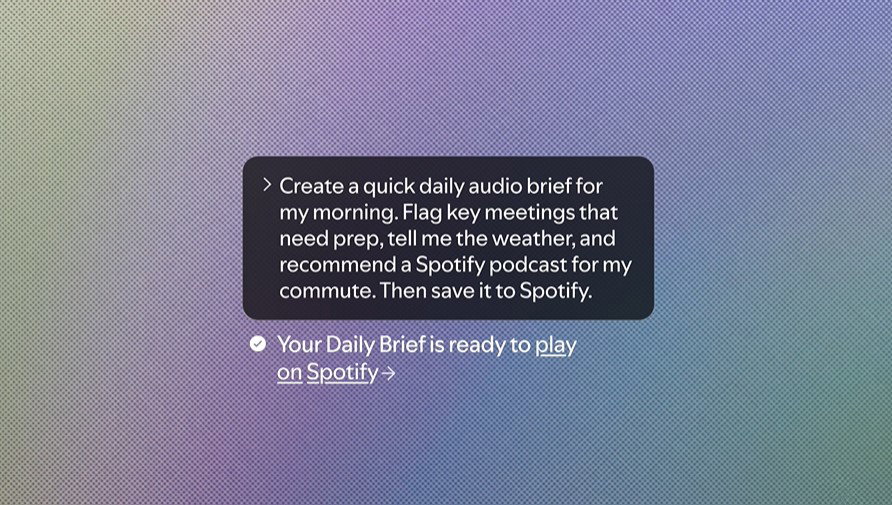
Spotify’s AI plans are not limited to music. The platform has been exploring AI-curated personal podcasts for a while. In 2024, it introduced an AI-powered Wrapped podcast with NotebookLM. In May 2026, Spotify introduced “Personal Podcasts,” for users to save and play private AI-generated audio briefings in their Spotify library. Yes, Spotify now welcomes AI-generated podcasts!
These could include daily updates, study notes, travel plans, summaries, or research recaps. Users working with AI agents like Claude Code or OpenAI Codex on desktop can use its new “Save to Spotify” beta tool to turn prompts into Personal Podcasts with a simple command.
In fact, TechCrunch reported that Spotify drives over 34 million first-time podcast discoveries every week which makes its growth into AI-curated podcast recommendations hard to ignore.
The feature works through a “Save to Spotify” beta tool. Users can create audio through supported AI workflows and save it privately to Spotify, where it appears alongside other saved content.
This may sound like a small feature for developers or advanced users, but the idea behind it is much bigger. Spotify wants to remain the home screen for listening, even when the audio is created outside Spotify.
Creating and storing audio is only half of it. The way Spotify talks to you is changing too.
How Are Spotify Recommendations Becoming More Conversational
Spotify's biggest AI play might actually be the recommendation layer itself. Spotify’s AI DJ, launched in 2023, was an early sign of this direction. Then came AI Playlist, which lets Premium users create playlists by typing prompts. That idea went beyond Spotify’s own app.
The company integrated Spotify into ChatGPT in late 2025, so users can get personalized music and podcast picks directly inside a ChatGPT conversation. This is how Spotify wants to be present wherever you make listening decisions and not just inside its own app.

Spotify recommendations are starting to feel less like random algorithm picks and more like something you can actually talk to. Instead of only scrolling through ready-made playlists, users can now describe a mood, situation, or vibe in simple language and get music or podcasts that fit the moment.
Spotify already looks at things like listening history, skips, saves, searches, favorite artists, and podcast habits to understand taste. AI just makes that system feel more natural and flexible. Rather than pushing the same playlists to everyone, Spotify is trying to understand what users actually want to hear at that specific moment.
Topics For More Insights:
Why Spotify’s AI Strategy Depends On Personalization
Spotify’s biggest strength has always been personalization. Features like Discover Weekly, Release Radar, daylist, Wrapped, Blend, and AI DJ all give users a feeling that Spotify understands them.
AI takes that to another level.
A normal recommendation system can suggest songs based on listening history. However, generative AI can understand prompts like “give me upbeat indie music for a rainy workday” or “make a podcast playlist about AI news but skip anything too technical.” That makes discovery feel more natural.
This is good for users because they get more control. It is good for Spotify because personalized sessions can increase engagement. It can be good for creators if the system helps the right listeners find them.
Well, there is a risk. If AI recommendations become too automated, people may feel trapped in a taste bubble. Spotify will need to balance comfort with surprise.
What Problems Could AI Create For Spotify
Spotify’s AI future comes with real challenges. Unlike most tech companies that can patch bugs, Spotify's problems play out in public through the music people hear, the voices they trust, and the creators who depend on the platform for their income.
-
Content Spam: AI makes it easy to produce audio, and Spotify has already acknowledged the need to fight spammy tracks.
-
Impersonation: AI voice and music tools can copy styles, voices, and identities. If listeners cannot tell what is real, trust breaks down.
-
Creator pressure: Artists and podcasters may worry that Spotify benefits from AI content while human creators face more competition.
-
Recommendation Quality: If the platform rewards cheap AI content because it is abundant, users may notice a decline in quality.
-
Disclosure: People may not always mind AI-generated content, but they want honesty. Clear labeling and metadata will become more important as AI audio grows.
These are real risks. However, they do not appear to be slowing Spotify down. The question now is what this all adds up to for the people who use it, make for it, and depend on it.

What Does Spotify’s AI Future Look Like For Artists, Podcasters, And Listeners?
For listeners, Spotify’s growing use of AI could make the app more useful. You may get better playlists, smarter podcast discovery, personal audio summaries, and more control over your listening sessions.
For artists, the picture is mixed. AI tools can help with creativity and production, but artists will expect Spotify to protect their identity, royalties, and visibility.
For podcasters, AI can help with translation, editing, research, scripting, clips, and even personalized spin-off content. Yet, podcasters will also need to work harder to build trust and personality because generic information-based audio may become easier to generate.
For Spotify, the goal is to become the central hub for all audio which includes human-made, AI-assisted, and personally generated.
Final Thoughts
Spotify started as the app people opened to play a song. Over time, it became the place where they found podcasts, built playlists, followed creators, and discovered something new without really searching for it. Now, with AI, Spotify seems to be moving into its next chapter of not just playing audio but shaping listening around each person. Especially with AI in podcasting and recommendations evolving together, Spotify is moving toward a more personalized audio ecosystem.
Its plan for AI-generated music, podcasts, and recommendations is not built around one feature. It is about changing the full listening journey.
Of course, this future comes with pressure. Artists want protection. Podcasters want trust. Listeners want quality, not a flood of lifeless AI content. That is why Spotify’s biggest job now is balance. It has to welcome new ideas without letting the platform lose its human feel.
Frequently Asked Questions
Can You Make A Podcast On Spotify Using AI?
Yes, you can make a podcast on Spotify using AI. Spotify's Personal Podcasts beta lets users create private AI-generated audio briefings using tools like Claude Code or OpenAI Codex and save them directly to their Spotify library.
How Does Spotify Use AI For Recommendations?
Spotify uses AI to understand your listening habits, mood, and prompts. Features like AI DJ, AI Playlist, and ChatGPT integration help surface music and podcasts that match what you actually want to hear.
Does Spotify Label AI-Generated Music?
Spotify launched an AI disclosure feature in April 2026 where artists can voluntarily reveal how AI was used in their music. Labels like vocals, lyrics, or production appear in Song Credits on mobile where artists have chosen to disclose.
Fri, May 15, 2026

Enjoyed what you read? Great news – there’s a lot more to explore!
Dive into our content repository of the latest tech news, a diverse range of articles spanning introductory guides, product reviews, trends and more, along with engaging interviews, up-to-date AI blogs and hilarious tech memes!
Also explore our collection of branded insights via informative white papers, enlightening case studies, in-depth reports, educational videos and exciting events and webinars from leading global brands.
Head to the TechDogs homepage to Know Your World of technology today!
Disclaimer - Reference to any specific product, software or entity does not constitute an endorsement or recommendation by TechDogs nor should any data or content published be relied upon. The views expressed by TechDogs' members and guests are their own and their appearance on our site does not imply an endorsement of them or any entity they represent. Views and opinions expressed by TechDogs' Authors are those of the Authors and do not necessarily reflect the view of TechDogs or any of its officials. While we aim to provide valuable and helpful information, some content on TechDogs' site may not have been thoroughly reviewed for every detail or aspect. We encourage users to verify any information independently where necessary.
Loading comments...