Social Media
Mastodon vs Bluesky: Which One Is Better?
Share
Overview
-
Choose Mastodon if you care most about governance, privacy, and niche communities with strong local norms.
-
Choose Bluesky if you want fast onboarding, cleaner timelines, and easier discovery without learning federated culture on day one.
-
The real difference is not features, it’s where power lives: instance admins and federation choices vs platform-led defaults plus optional moderation layers.
-
If you are building an audience, Bluesky tends to feel more main feed and Mastodon more neighborhoods.
-
Many people use both: Mastodon for depth and community, Bluesky for reach and real-time chatter.
Introduction
Hae you seen the movie Spider-Man: No Way Home?
If you have then you would have enjoyed the scene when everyone realizes the multiverse is real and the rules change overnight.
Today, similar thing is happening with social media platforms. There are new platforms in the market and people are leaving older ones.
Mastodon and Bluesky are the two most common where do I go next? answers, but they solve different problems. One is built around independent communities that connect through federation. The other aims for a familiar Twitter-like experience while rethinking ownership and feeds under the hood.
If you’re choosing based on outcomes like control, moderation, discovery, and how easy it is to find your people, the winner becomes a lot clearer.
What Is Mastodon?
Mastodon is the choose-your-neighborhood version of social media. Instead of one big platform controlled by a single company, it runs on thousands of independently managed servers called instances that can still talk to each other through a shared protocol (ActivityPub). That setup changes almost everything: what you see, who moderates you, and how community norms are enforced.
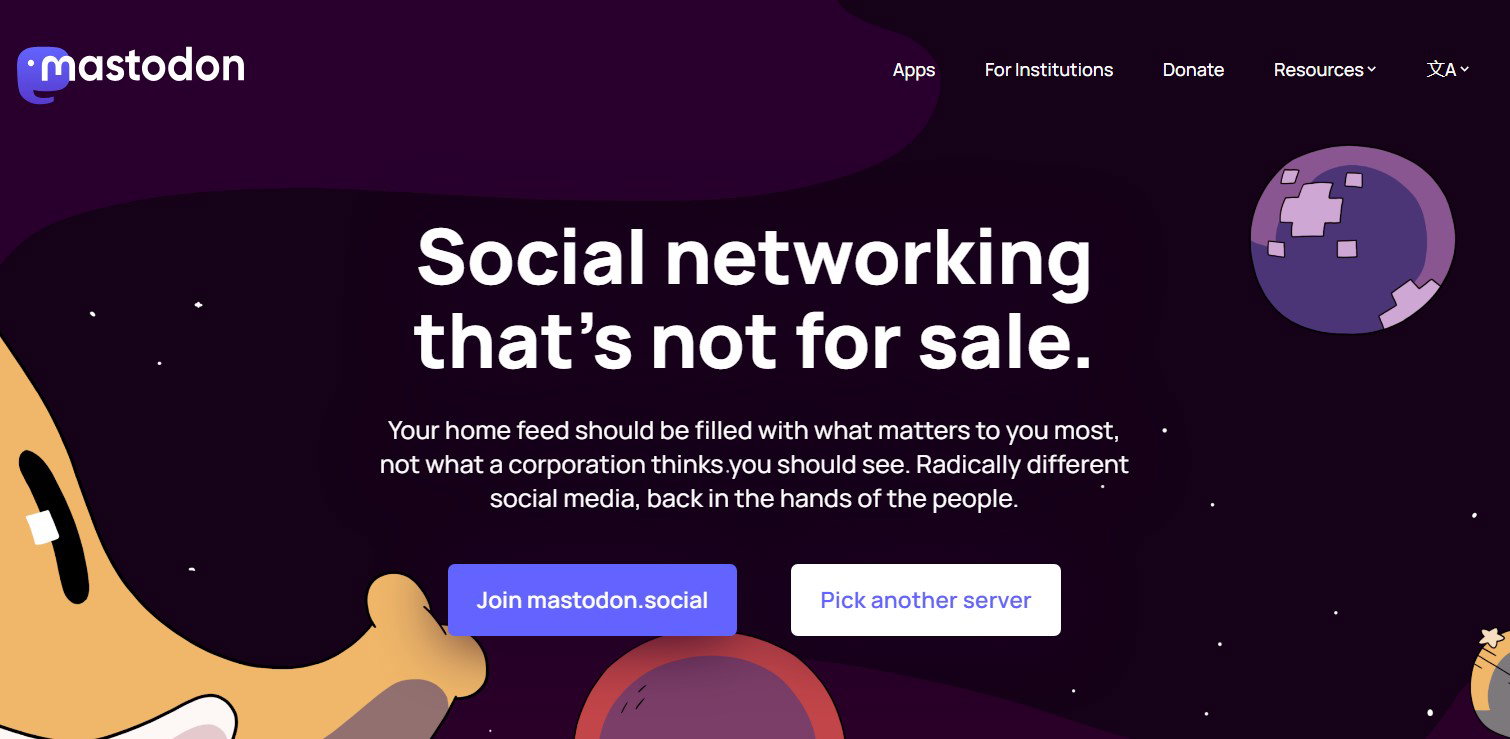
When you join Mastodon, you create an account, and you chose a home server. That server sets the vibe: rules, moderation strictness, and what kind of posts dominate the local timeline. Although, you can still follow and interact with people on other instances across the Fediverse, so your world is not limited to one server.
Surprising Factors
-
Instance choice matters. Two Mastodon users can have very different experiences depending on where they sign up.
-
Discovery feels slower at first. There is no single everyone is here feed, so you often build your timeline intentionally.
-
Moderation is local. If your instance admin is hands-on, the space can feel safer and more curated. If they are absent, it can feel messy.
-
Federation is a lever. Instances can block other instances (defederate), which can reshape what communities you can easily interact with.
Best For
Mastodon fits people who want control and community governance more than convenience. It tends to work best for:
-
privacy-first users and people tired of platform-wide algorithm steering
-
open-source and tech communities who like transparent systems
-
niche interest groups that want smaller spaces with clearer norms
-
anyone who prefers community rules over platform rules
If you want a social network that feels like a set of connected communities rather than one giant town square, Mastodon is designed for that.
What Is Bluesky?
Bluesky is the new Twitter. From the user side, it is familiar: short posts, fast replies, a clean interface, and a timeline that is constantly trying to sell you a mood. Under the hood, it is built on the AT Protocol, which is designed to make identity and social connections more portable over time.
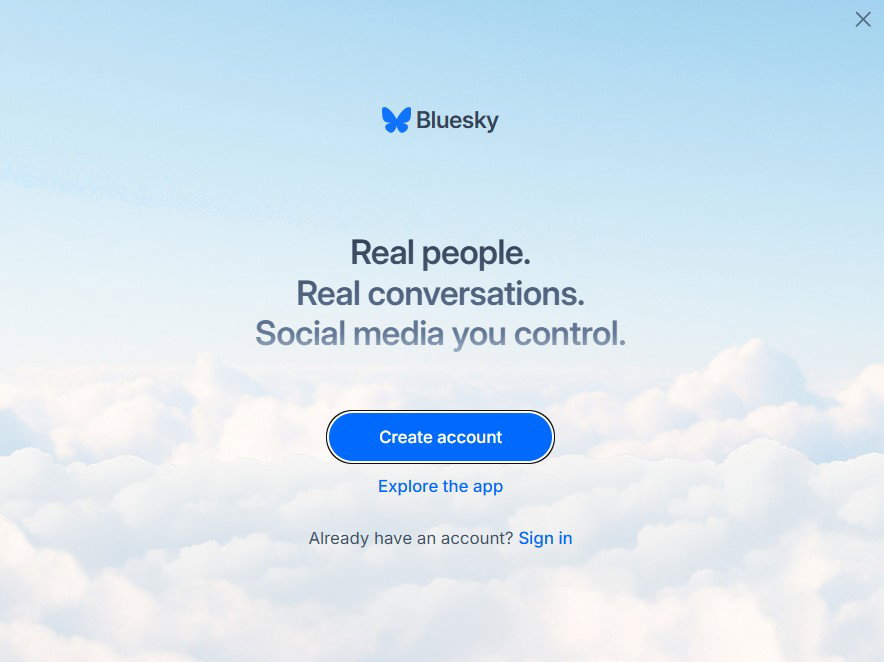
Most people experience Bluesky as one main network: you sign up, pick a handle, follow people, and your feed starts forming immediately. That simplicity is the point. Bluesky has leaned hard into lowering the friction that makes other decentralized platforms feel like a technical hobby.
The AT Protocol idea is that your identity and social graph are not supposed to be permanently trapped inside one app. In theory, that means more portability and more choice in how your feed is built and moderated.
Surprising Factors
-
Discovery is the product. It is easier to find interesting people and conversations quickly compared to Mastodon’s build it yourself approach.
-
Feeds are modular. Bluesky’s custom feed ecosystem lets you choose different feed experiences instead of living inside one algorithmic default forever.
-
It feels centralized today. Even though the protocol aims for decentralization, most users still experience Bluesky as a single, platform-shaped space. That is not automatically bad, but it matters if your reason for leaving X is governance and control.
-
Feature depth is lighter. Compared with Mastodon’s more mature ecosystem, Bluesky can feel intentionally minimal. It is optimized for speed and usability, not endless power-user controls.
Best For
Bluesky fits people who want momentum and reach without the cognitive overhead of learning instances, federation norms, and server culture on day one. It tends to work best for:
-
journalists, creators, and operators who want real-time conversation and easy discovery
-
users migrating from X who want familiarity without the chaos
-
anyone who wants a cleaner experience now, and is curious about decentralization without committing to it as a lifestyle
-
brands and community builders who need visibility and a broader mix of audiences
If Mastodon is neighborhoods, Bluesky is closer to a rebuilt town square that is trying to future-proof who owns the infrastructure.
Mastodon vs Bluesky: 5 differences
If you’re trying to decide which is better, don’t start with character limits or app polish. Start with outcomes: how much control you want, how you discover people, who enforces rules, and how fragile your social graph is if the platform changes direction. With Mastodon and Bluesky, the trade-off is basically control vs convenience, and each platform puts power in a different place.
Governance
-
Mastodon: Power is distributed across instances. Your experience is shaped by your server’s admins, rules, and federation choices.
-
Bluesky: Power mostly lives in a platform-shaped default experience today, even if the underlying protocol is designed for portability.
On Boarding
-
Mastodon: Choosing an instance is a real decision, and it can feel like you need context before you even start.
-
Bluesky: You can join immediately and start building a timeline with minimal setup.
Discovery
-
Mastodon: Discovery often happens through community lists, local timelines, hashtags, and cross-instance relationships. It can feel slower but more curated once it clicks.
-
Bluesky: Discovery is a core strength. The ecosystem around community-built feeds makes it easier to plug into conversations quickly.
Moderation philosophy
-
Mastodon: Moderation is instance-led. That can mean stronger local enforcement, but also uneven standards across the network and the reality of defederation choices.
-
Bluesky: Moderation feels more centralized as a default, with the ability to layer additional moderation services depending on how the ecosystem evolves.
Portability And Resilience
-
Mastodon: You can move servers, but the experience of migrating identity and continuity can be imperfect depending on what you expect to carry with you.
-
Bluesky: Portability is part of the design story. The promise is that your identity and connections are less locked into one app long-term.
Now that the core differences are clear, the next step is understanding their cultural impact.
Mastodon Culture
Mastodon feels less like one platform and more like a network of small communities.
Neighbourhood
Mastodon’s culture is shaped by the fact that you join an instance first, and a network second. That changes the social temperature. Instead of everyone chasing the same viral moment, conversations often feel smaller, slower, and more contextual. You’re more likely to see people talking to each other like they share a room, not like they are performing for an invisible crowd.
Norms And Etiquette
A lot of Mastodon communities treat etiquette as a feature, not an annoyance. Things like content warnings and alt text are often seen as baseline respect for the people around you. This can make Mastodon feel unusually considerate compared to mainstream platforms, but it can also surprise newcomers who are used to posting without thinking about community expectations.
Credibility
Mastodon does not tend to reward hot-take energy as consistently as Twitter-style networks. What travels is usually clarity, usefulness, and consistency within a niche. If you show up with a recognizable domain and add signal instead of noise, you build a following that actually cares. If you treat it like a link-dump channel, you usually get polite silence.
If Mastodon is a network of neighborhood with strong local norms, Bluesky is closer to a rebuilt public square: easier to enter, faster to move, and more driven by conversation velocity.
Bluesky Culture
Bluesky is closer to early Twitter energy: quicker takes, faster threads, easier discovery.
Twitter Elite
Bluesky culture is faster and punchier because the product experience encourages it. You can join instantly, find people quickly, and get pulled into live threads without understanding any deeper infrastructure story. That familiarity is why it attracts users who miss the good old Twitter, especially people who want real-time talk without the constant friction of ragebait mechanics.
Conversation Momentum
On Bluesky, being present matters. Replies, riffs, and quick context posts tend to do better than carefully crafted long explainers, simply because the network energy is built around active conversation. If you want to feel in the mix, you engage. If you post occasionally and leave, it can feel like your posts evaporate.
Feed Choices
Bluesky’s feed ecosystem means two people can live in very different versions of the same platform. One user might feel like it is thoughtful and niche, another might feel like it is chaotic and snarky, depending on what they subscribe to and who they follow. This makes Bluesky feel more customizable than it first appears.
Which Should You Choose?
If you want the platform that feels like a stable home base, Mastodon usually wins. It suits people who care about community norms, governance, and the long-term comfort of smaller spaces. If your priority is getting back to a familiar rhythm of posting, replying, and discovering people quickly, Bluesky is often the better fit because the social flow is faster and the onboarding is frictionless.
If you are a journalist, creator, founder, or community builder who depends on reach and real-time visibility, Bluesky tends to deliver results sooner. If you are a developer, researcher, or niche builder who values quieter credibility and stronger community etiquette, Mastodon tends to feel more aligned.
If your main concern is who holds power, Mastodon’s appeal is that governance is distributed and local. Bluesky is easier to trust on consistency because it behaves more like a unified platform.
If your goal is to rebuild your online presence without betting everything on one ecosystem, running both in parallel is often the smartest move.
Conclusion
Mastodon and Bluesky are both responses to the same frustration, but they solve it in different ways. Mastodon is the better pick if you care most about community governance, privacy-first norms, and building a calmer presence inside smaller, more intentional spaces. Bluesky is the better pick if you want the closest thing to early Twitter energy, with fast onboarding, easier discovery, and a cleaner day-to-day posting experience.
If you are deciding purely on outcomes, the shortcut is simple. Choose Mastodon when you want control and community structure. Choose Bluesky when you want momentum and visibility.
If you are still unsure, run both for a few weeks, because the best signal is not theory, it is where your people actually show up and stay.
Frequently Asked Questions
Mastodon Vs Bluesky: Which Is Better For Beginners?
Bluesky is usually better for beginners because the sign-up flow is simple and the experience feels immediately familiar if you have used X or Twitter before. Mastodon has a steeper learning curve since you need to choose an instance and understand how federation and local rules shape what you see.
What Is The Biggest Difference Between Mastodon And Bluesky?
The biggest difference is where control sits. Mastodon is built around independently run communities (instances) with local moderation and governance. Bluesky feels more like a single network today, with decentralization and portability as a long-term direction, not something most users actively manage on day one.
Can Mastodon And Bluesky Replace X (Twitter)?
Yes, but in different ways. Bluesky is closer to an X replacement for real-time conversation, discovery, and fast engagement. Mastodon works better as an alternative if you want smaller community spaces, stronger norms, and less algorithm-driven pressure, even if it takes longer to rebuild reach.
Thu, Apr 30, 2026
Enjoyed what you've read so far? Great news - there's more to explore!
Stay up to date with the latest news, a vast collection of tech articles including introductory guides, product reviews, trends and more, thought-provoking interviews, hottest AI blogs and entertaining tech memes.
Plus, get access to branded insights such as informative white papers, intriguing case studies, in-depth reports, enlightening videos and exciting events and webinars from industry-leading global brands.
Dive into TechDogs' treasure trove today and Know Your World of technology!
Disclaimer - Reference to any specific product, software or entity does not constitute an endorsement or recommendation by TechDogs nor should any data or content published be relied upon. The views expressed by TechDogs' members and guests are their own and their appearance on our site does not imply an endorsement of them or any entity they represent. Views and opinions expressed by TechDogs' Authors are those of the Authors and do not necessarily reflect the view of TechDogs or any of its officials. While we aim to provide valuable and helpful information, some content on TechDogs' site may not have been thoroughly reviewed for every detail or aspect. We encourage users to verify any information independently where necessary.
Loading comments...