Mobile
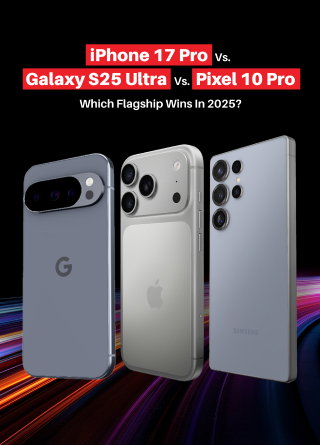
iPhone 17 Pro Vs. Galaxy S25 Ultra Vs. Pixel 10 Pro: Which Flagship Wins In 2025?
Share
Overview
Modern flagship smartphones mirror that same journey. The iPhone 17 Pro is the Messi of smartphones—refined, balanced, and a step ahead in design and experience. The Galaxy S25 Ultra is pure Ronaldo—bold, powerful, and built to make a statement. The Pixel 10 Pro is the Mbappé—next-gen, smart, and intelligent enough to punch above its weight.
Each model brings its own brand of brilliance to the pitch. The question isn’t just which is best—it’s which one plays your game better.
That’s what we're looking at in this article. Let's go!
-20250919090326.webp "TechDogs-\"iPhone 17 Pro Vs. Galaxy S25 Ultra Vs. Pixel 10 Pro: Which Flagship Wins In 2025?\"")
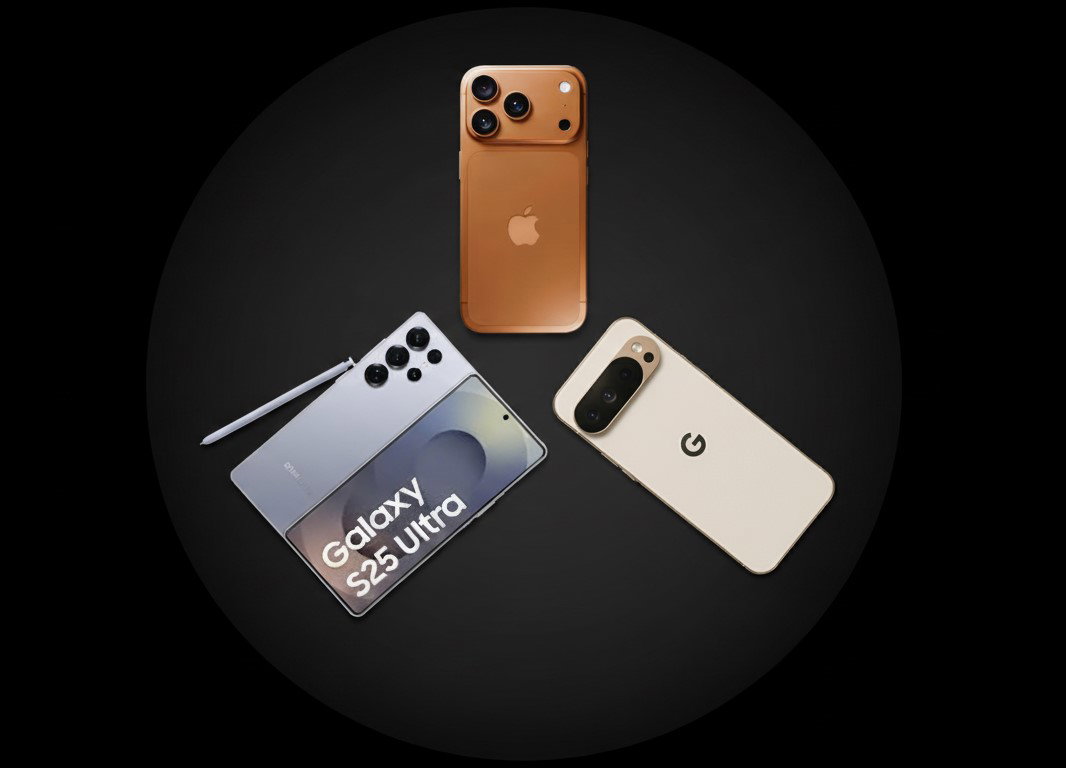
This guide breaks down the USPs of each smartphone—design, cameras, performance, battery, and more—to help you decide which flagship wins for you.
Let’s get started!
Specs, Screens And Style
At first glance, the design between these models feels almost the same. Although, let’s break what’s immediately differentiable.
Design And Build
-
iPhone 17 Pro
Features a brushed-aluminum unibody, a bold full-width camera plateau, “Pixelsnap” magnetic accessories, and dual Ceramic Shield 2 panels for scratch resistance, weighing 206 grams.
-
Galaxy S25 Ultra
Keeps its titanium frame and Gorilla Armor 2 up front with the newest gorilla glass, Victus 2, at the back. It’s sleeker than the S24, but still muscular at 218 grams.
-
Pixel 10 Pro
Sports a matte glass finish, curved sides, and signature camera bar. It's solid in the hand, weighing the highest at 232g.
Each has IP68 protection and a premium feel. Apple’s build feels precise, Samsung’s feels tank-tough, and Google’s feels thoughtfully weighted.
Displays And Protection Comparison Table
| Model | Display & Size | Refresh Rate / Brightness | Extras |
| iPhone 17 Pro | 6.3″ Super Retina OLED | 120Hz ProMotion, 3000 nits | Ceramic Shield 2, anti-reflective |
| Galaxy S25 Ultra | 6.9″ Dynamic AMOLED 2X | 120Hz Adaptive, 2600 nits | Gorilla Armor 2, anti-glare |
| Pixel 10 Pro | 6.8″ LTPO AMOLED (QHD+) | 120Hz, 3300 nits | Gorilla Victus 2, 480Hz PWM dimming |
The Pixel 10 Pro leads in brightness and low-light smoothness, Galaxy S25 Ultra brings size and glare control, and iPhone 17 Pro balances brightness and clarity with a new anti-reflective layer.
Specs Summary
| Model | Chipset | RAM / Storage Options |
| iPhone 17 Pro | A19 Pro (3nm) | 256GB / 512GB / 1TB / 2TB |
| Galaxy S25 Ultra | Snapdragon 8 Elite (3nm) | 12–16GB / up to 1TB |
| Pixel 10 Pro | Tensor G5 (3nm, TSMC) | 16GB / 256GB–1TB |
Samsung takes the performance crown on paper. Apple wins in sustained efficiency while Pixel leans into AI-focused architecture and smart thermal balance.
Bottom Line
Each flagship screams quality from the moment you unbox it. The iPhone 17 Pro goes for polished minimalism, classic Apple craftsmanship, and a display optimized for direct sunlight. The Galaxy S25 Ultra offers bold hardware, size, and rugged finesse. The Pixel 10 Pro blends sharp visuals, brightness, and AI‑tuned internal smarts.
Your choice hinges on whether you want balanced luxury, muscular versatility, or refined intelligence.
Camera, Chip And Core Performance
When you peek under the hood, each of these smartphones shows what the future of flagship tech looks like—whether it’s sensors, software, or sheer processing firepower.
Cameras
-
iPhone 17 Pro
Triple 48MP setup (main, ultra-wide, telephoto) with 8x optical zoom. ProRes RAW (video editing like a pro), dual recording (film front + back at once), and Log capture (cinematic color control) make it cinematic to the core.
-
Galaxy S25 Ultra
200MP main sensor, 50MP ultra-wide, 5x periscope, and 3x zoom with stellar low light photography and versatile lenses.
-
Pixel 10 Pro
50MP main, 48MP ultra-wide, upgraded 5x telephoto. Image processing wins in tough lighting and natural tone reproduction.
When it comes to photography, each flagship has its own lane.
In ultrawide and indoor shots, the Pixel 10 Pro often edges ahead with cleaner exposure and softer shadow handling—an AI-assisted touch that shows Google's image processing maturity.
If zooming is your thing, the Galaxy S25 Ultra still dominates beyond 5x, delivering clearer, more detailed long-range shots thanks to its versatile telephoto setup.
Meanwhile, for creators and mobile filmmakers, the iPhone 17 Pro pulls ahead with advanced video features like ProRes, Log capture, dual recording from front and rear cameras, and seamless post-production flexibility.
Each camera system has a specialty—and depending on whether you're a snapper, a zoomer, or a storyteller, your winner will look different.
Chip And Raw Processing Power Comparison Table
| Model | Chipset | Real-World Performance |
| iPhone 17 Pro | A19 Pro (3nm) | Smooth multitasking, strong GPU, no throttling |
| Galaxy S25 Ultra | Snapdragon 8 Elite | Multicore beast, excellent GPU, runs hot at times |
| Pixel 10 Pro | Tensor G5 | Great AI inference; lower GPU performance |
Bottom Line
If you shoot video or care about color grading, the iPhone is your toolbox. If you want zoom capabilities, hardware variety, and performance under heavy workloads, the S25 Ultra delivers. If your priority is still imagery, AI‑assisted capture, and color consistency, the Pixel nails it (even if it gives up a little in performance at the peak of its limits).
Battery, Charging And Software
Battery capacity doesn’t tell the full story—but it’s close. The Pixel 10 Pro comes with about 4,870 mAh, backed by Google’s efficient Tensor G5 chip. That gives it strong endurance under mixed usage. For Apple’s iPhone 17 Pro, Apple hasn’t confirmed mAh publicly but claims “all‑day battery,” with improvements in efficiency thanks to its new 3 nm A19 Pro chip. The S25 Ultra has a 5,000 mAh battery, with strong real‑world performance especially in display and multitasking heavy use.
When it comes to charging, the Pixel 10 Pro supports 30W wired charging, Qi2 wireless. The iPhone 17 Pro upgrades to 40W wired and keeps MagSafe charging (25W) via its updated standards. The S25 Ultra sits around 45W wired charging and supports Qi2 wireless at similar speeds.
When comparing the software aspect, each phone plays to different strengths:
-
iPhone 17 Pro
Runs iOS 26, Apple’s seamless hardware‑software integration, with updates prioritized for years, and features like “Liquid Glass” UI for smoother transitions.
-
Galaxy S25 Ultra
Uses One UI (moving to version 8 on Android 16 soon), adding deeper AI tools, improved multitasking, better sharing tools, and “Galaxy AI” enhancements as the One UI ecosystem matures.
-
Pixel 10 Pro
Brings Android 16 with updated Material 3 Expressive UI, seven years of OS/security updates promised by Google, robust AI features like Voice Translate, Magic Cue, and tighter energy efficiency management.
Quick Battery, Charging And Software Comparison Table
| Feature | iPhone 17 Pro | Galaxy S25 Ultra | Pixel 10 Pro |
| Battery (approx.) | ~3,200–3,300 mAh (est.) | 5,000 mAh | 4,870 mAh |
| Wired Charging | 40W (Lightning 2.0) | 45W | 30W |
| Wireless Charging | 25W (MagSafe/Qi2) | Qi2 Wireless | Qi2 Wireless |
| OS & UI | iOS 26 | Android 16 + One UI 8 | Android 16 (Stock) |
| Software Highlights | Liquid Glass UI, Ecosystem | Galaxy AI, DeX, Custom Tools | Smart Replies, AI Translate |
| Update Policy | ~5 years | 4–5 years | 7 years |
Bottom Line
If you prioritize all‑day battery and charging speeds, then S25 Ultra and Pixel 10 Pro are ahead; iPhone 17 has improvements, but its specs are less transparent, and you should wait for more detailed testing reports.
On software and updates, Pixel leads for long‑term support and AI tools; iPhone 17 offers polished, stable experience; and Samsung brings a richer, feature‑packed UI.
Performance And Core Metrics
Let’s get technical!
Apple’s A19 Pro boosts CPU and GPU performance over the A18 by 13–15%, with GPU seeing up to 40% gains. Its new vapor chamber keeps things cool even under 4K editing workloads.
The Galaxy S25 Ultra’s Snapdragon 8 Elite pulls ahead in multi-core benchmarks and GPU-intensive tasks, especially gaming. However, its large form factor can generate noticeable heat during long sessions.
Pixel 10 Pro’s Tensor G5 shows solid single- and multi-core improvements but still lags in heavy gaming scenarios, particularly in GPU frame rate and thermal throttling.
Quick Performance Comparison Table
| Metric | iPhone 17 Pro | Galaxy S25 Ultra | Pixel 10 Pro |
| CPU Gains | +13–15% vs A18 Pro | Strong multi-core | Better than Pixel 9, less than rivals |
| GPU/Graphics | +40% over last gen | Great GPU, some heat | Lags in frame rates |
| Thermal Management | Excellent (vapor chamber) | Strong, but gets warm | Can throttle under load |
Bottom Line
If you want peak power, snappy performance, and top‑notch graphics with minimal throttling, iPhone 17 Pro leads the pack. For Android users who want both big displays and strong performance in heavy multitasking or gaming, Galaxy S25 Ultra is a compelling pick. Pixel 10 Pro hits a sweet spot in CPU tasks, smart features, and everyday performance, but it lags in sustained graphics-heavy usage.
The Verdict: Which Flagship Wins in 2025?
By now, it’s clear each phone brings something special—like Messi, Ronaldo, and Mbappé each mastered a different art of the same sport. The iPhone 17 Pro brings polish, consistency, and dramatic design upgrades; the Galaxy S25 Ultra leans into raw power, feature richness, and adaptability; the Pixel 10 Pro bets on AI smarts and efficiency.
However, who wins depends on what you value most!
-
If you want top-tier video features, excellent photo/video processing, and long‑term software polish, the iPhone 17 Pro is your pick. Its camera plateau with three 48 MP sensors (including a bigger telephoto), vapor‑chamber cooling, and promises of the best battery life Apple has offered make it the device for on-the-go creators.
-
If your priorities are versatility, high battery endurance, powerful zoom, and more “do‑everything” capability, the Galaxy S25 Ultra wins. With its 200 MP main camera, strong AI tools (Galaxy AI suite), solid display, and large battery (claimed up to 2 days in active use in many reviews), it’s the jack of all trades.
-
If you care about smart features, a clean user interface, AI powered enhancements, and getting more out of everyday use—especially in photography under challenging conditions—Pixel 10 Pro offers the best value. Other features like Voice Translate, Camera Coach, Magic Cue, and long‑term updates help it shine in subtle but meaningful ways.
Comparison Table: Strengths And Trade-Offs
| Model | Strengths | Trade‑Offs |
| iPhone 17 Pro | Consistent camera color tech with best video tools; premium build | Charging still not fastest; high price and less customization vs Android |
| Galaxy S25 Ultra | Best zoom and battery for heavy use; packed with features & AI tools for multitasking | Bulky in hand; software can feel cluttered and AI features are sometimes inconsistent (per reviews) |
| Pixel 10 Pro | Smart camera and efficient AI software in a clean Android layout; great for daily use | Poor heat management under heavy gaming; camera and wired charging not as good as rivals |
Which One Is “Best” For You?
For creators and content producers, it’s iPhone 17 Pro. For power users, multitaskers, those who want a do‑everything flagship, it’s Galaxy S25 Ultra. For smart usage, photography enthusiasts who lean on AI, or people who want a phone that “works hard” without needing to tweak settings, Pixel 10 Pro is the best choice.
Conclusion
If I had to pick one overall champion, Galaxy S25 Ultra slightly edges out the rest—because it balances almost everything: display, cameras, battery, and features, but the margin is thin. If you want the most polished video and color performance with cleaner UI, iPhone 17 Pro is unbeatable. If you want smart, efficient power with AI perks, Pixel 10 Pro is the sleeper winner.
It all comes down to how you use your phone. Choose based on what features you won’t compromise on, and you will be the one winning in 2025!
Frequently Asked Questions
Which Phone Is Better, Galaxy S25 Ultra, iPhone 17 Pro Or Pixel 10 Pro?
The Galaxy S25 Ultra excels in camera versatility, multitasking, and battery life. The iPhone 17 Pro leads in video quality, display brightness, and processing efficiency. Pixel 10 Pro offers the smartest AI features with unmatched software longevity. Thus, the best choice depends on your usage priorities.
When Did Galaxy S25 Ultra, iPhone 17 Pro And Pixel 10 Pro Release?
The Galaxy S25 Ultra launched on February 14, 2025, following its January announcement. iPhone 17 Pro was unveiled on September 9, 2025, and released on September 19. Pixel 10 Pro debuted on August 20, 2025, with sales starting August 28.
What Are Galaxy S25 Ultra, iPhone 17 Pro And Pixel 10 Pro Best Features?
Galaxy S25 Ultra stands out with a 200MP camera, long battery life, and powerful zoom. iPhone 17 Pro impresses with cinematic video, a 3nm chip, and vapor chamber cooling. Pixel 10 Pro leads in AI tools, display brightness, and long-term Android updates.
Fri, Sep 19, 2025

Enjoyed what you've read so far? Great news - there's more to explore!
Stay up to date with the latest news, a vast collection of tech articles including introductory guides, product reviews, trends and more, thought-provoking interviews, hottest AI blogs and entertaining tech memes.
Plus, get access to branded insights such as informative white papers, intriguing case studies, in-depth reports, enlightening videos and exciting events and webinars from industry-leading global brands.
Dive into TechDogs' treasure trove today and Know Your World of technology!
Disclaimer - Reference to any specific product, software or entity does not constitute an endorsement or recommendation by TechDogs nor should any data or content published be relied upon. The views expressed by TechDogs' members and guests are their own and their appearance on our site does not imply an endorsement of them or any entity they represent. Views and opinions expressed by TechDogs' Authors are those of the Authors and do not necessarily reflect the view of TechDogs or any of its officials. While we aim to provide valuable and helpful information, some content on TechDogs' site may not have been thoroughly reviewed for every detail or aspect. We encourage users to verify any information independently where necessary.
Loading comments...