
Sports Technology
How AI Is Empowering FIFA World Cup 2026
Share
TL;DR
-
Lenovo signed on in 2024 as FIFA's first Official Technology Partner, covering both the 2026 World Cup and the 2027 Women's World Cup.
-
Football AI Pro gives all 48 teams equal access to AI-driven match analytics, leveling the playing field regardless of budget.
-
AI-enabled 3D player avatars turn offside calls into clear, real-time animations for fans and officials alike.
-
The next-gen Referee View uses AI stabilization to cut motion blur in body-cam footage by up to 50 percent.
-
Lenovo's AI infrastructure powers near real-time broadcast and IPTV delivery from hubs in Dallas and Miami.
-
In-stadium AI handles crowd navigation, immersive fan experiences, and a lineup of FIFA-branded special edition devices.
-
AI also runs through the tournament outside Lenovo's reach, from the sensor-equipped Adidas Trionda ball and Semi-Automated Offside Technology to Google Gemini's fan layer and AI-powered stadium security.

Introduction
*THE KICK-OFF WHISTLE BLOWS!*
Football is the most popular sport in the world, with a staggering 3.5 to 4 billion fans globally.
In the United States, though, it's still fighting for a spot in the conversation, trailing American football, basketball, baseball, and ice hockey. Hollywood noticed the gap and released several movies and TV shows to familiarize the U.S. audience with the sport.
Will Ferrell’s Kicking and Screaming (2005) brought a heartwarming underdog tale of school-level football. That same year, Goal told the story of an undocumented LA-based Mexican teenager getting a once-in-a-lifetime shot to play in club football’s biggest league, the English Premier League.
Ted Lasso, which began as promotional ads for the same league, evolved into a full-fledged TV show (2020) about a clueless American college football coach leading an English soccer team.
Outside of fiction, footballing legends such as Lionel Messi, David Beckham, Thierry Henry, Zlatan Ibrahimovic, Wayne Rooney, and more joined the USA’s Major League Soccer (MLS) to grow the sport. Ultimately, this helped form a strong fan base to support the biggest sporting event in the world, which is watched by 5 billion people: the FIFA World Cup 2026.
FIFA World Cup 2026
The U.S. is one of three host nations of this year's FIFA World Cup, co-hosted by Canada and Mexico. However, most of the key matches will be played in the U.S., including all quarterfinals, semifinals, and the final.
Like every World Cup before it, this edition too features a set of new rules and technology that will inspire and shape how the sport is played and watched going forward.
With the U.S. home to many of the world's leading artificial intelligence (AI) companies, it's no surprise that AI sits at the center of this edition's wave of innovation.
That movement has an official name behind it: Lenovo, FIFA's first official global technology partner. Here's what that partnership actually covers.
What The Lenovo-FIFA Partnership Is All About
Lenovo's partnership with FIFA dates back to October 2024, when the company was named FIFA's Official Technology Partner at Lenovo's annual Tech World event, the highest tier in FIFA's sponsorship structure.
The agreement covers two tournaments: the FIFA World Cup 2026, hosted across Canada, Mexico, and the United States, and the FIFA Women's World Cup 2027 in Brazil.
Under the deal, Lenovo's full product range, AI infrastructure, ThinkPad laptops, Motorola devices, and servers, will be built into both events. The goal with this technology was to improve decision-making and day-to-day tournament operations, sharpen analytics, and improve fan experiences in stadiums and broadcasts. It would also give football-playing nations more equal access to data regardless of budget.
At CES 2026, Lenovo and FIFA unveiled a fresh wave of FIFA 2026 tech innovations, showcasing exactly how AI would show up at the tournament. FIFA President Gianni Infantino framed it as part of a broader push the organization calls "Football AI."
This partnership is what's behind the Lenovo and FIFA Football AI innovations now running five major capabilities at the tournament.
How AI Is Empowering FIFA World Cup 2026
So how is AI used in the 2026 World Cup, exactly? Here's what each one actually does.
Football AI Pro
Football AI Pro is a generative AI (GenAI) knowledge assistant built on FIFA's own Football Language model, available to all 48 teams at the tournament rather than just the ones with the biggest analytics budgets. It processes hundreds of millions of FIFA-owned data points and turns them into pre- and post-match insights delivered as text, video, graphs, and 3D visualizations, in multiple languages.
It is the clearest example of AI empowering World Cup teams equally, available to all 48 squads rather than just the ones with the biggest analytics budgets. It provides every coach and analyst with the same starting toolkit, regardless of budget. However, it only works before and after matches, not during live play, supporting preparation and review rather than in-game decisions.
In the words of FIFA President Gianni Infantino, “With Football AI Pro, we will democratize access to data by providing the most complete set of football analytics to all competing teams and soon to fans as well.”
Dribbling past analysis, the next capability changes how decisions get made on the pitch itself.
AI-Enabled 3D Player Avatars
How do 3D player avatars help VAR decisions? By turning a hard-to-read freeze-frame into a lifelike animation that shows exactly where a player's body was the moment the ball was played.
Every player at the tournament is digitally scanned ahead of the competition, a process that takes about one second and captures precise body-part dimensions. That scan becomes a 3D model the system can use to track a player reliably, even during fast or crowded movements, the exact moments that have historically made offside calls hard to judge.
Those models then feed directly into match broadcasts. When the VAR (Video Assistant Referee) flags an offside decision, the call is shown to fans as a realistic 3D animation rather than a frozen, hard-to-read camera frame, both on stadium screens and in global broadcasts. This tech was tested previously at the 2025 FIFA Intercontinental Cup.

“AI-enabled 3D avatars will ensure precise player identification and tracking – a big advancement in semi-automated offside technology providing great images, faster decisions, and a clear understanding by everyone,” said Gianni Infantino.
While the avatars make offside calls easier to follow, the next upgrade changes what fans see from the referee's own point of view.
Next-Gen Referee View
Referee View gives fans a first-person look at the game through the match official's own body camera, and this cycle's version is built to actually be watchable. Earlier attempts at this kind of footage suffered from heavy motion blur and shake, the natural result of an official sprinting alongside elite athletes for ninety minutes.
“The next generation of Referee View will show us new AI-enabled stabilized pictures to make the viewing experience unique – as if you are in the center of the field with the players,” added Infantino.
The new version runs that footage through AI-powered stabilization software in real time, smoothing out the shake while keeping the first-person perspective intact. Lenovo cites up to a 50% reduction in motion distortion compared to earlier versions. This too was trialed during the FIFA Club World Cup in 2025.
That closes the gap between officials and fans during play. The next two capabilities work behind the scenes to make sure the broadcast itself never drops.
AI-Powered Broadcast And IPTV Infrastructure
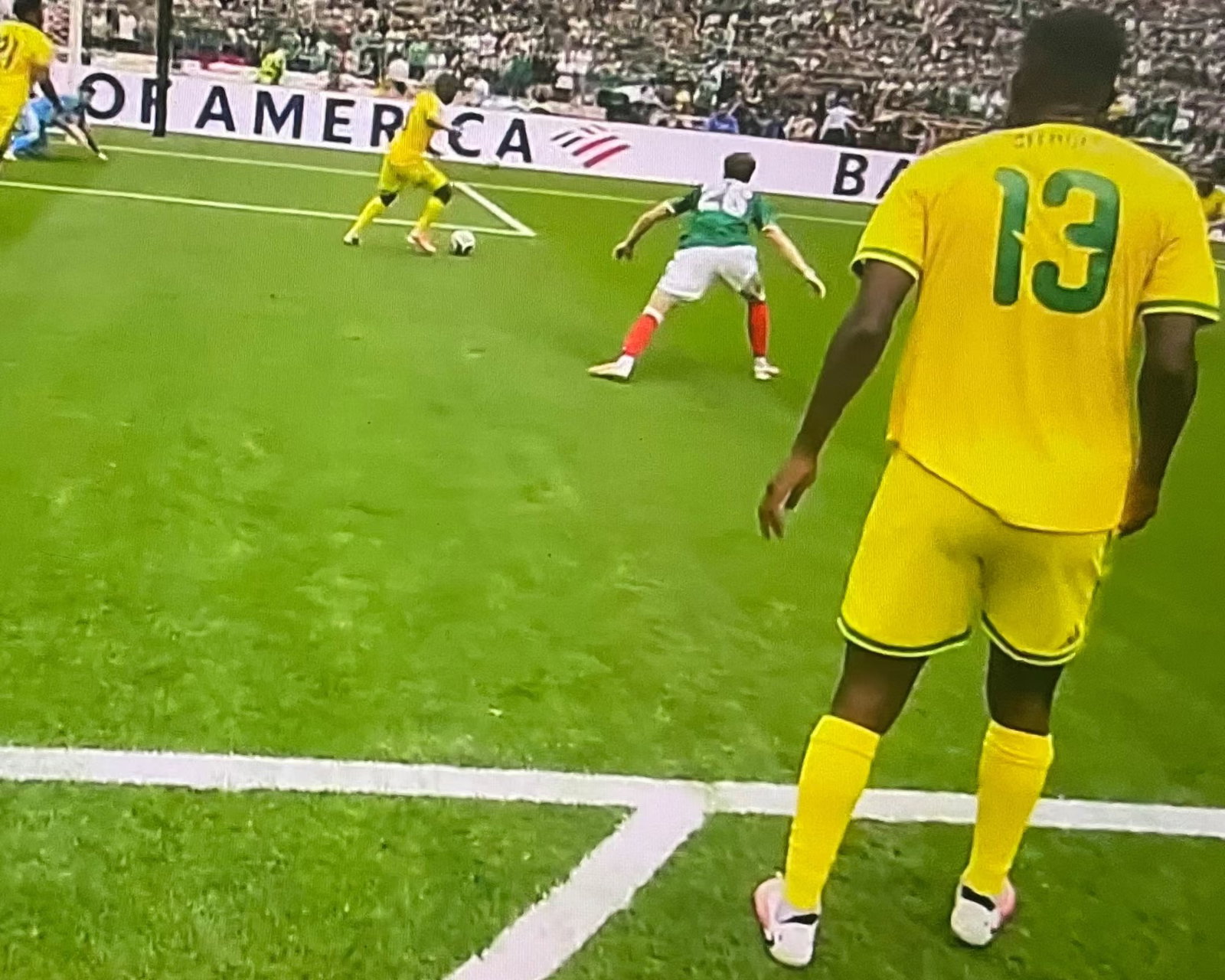
None of what fans see arrives on screen without a massive infrastructure operation behind it, and Lenovo runs that backbone from two hubs. Servers at the International Broadcast Center in Dallas handle the computing power needed to support broadcast operations, while FIFA's Technology Command Center in Miami functions as the tournament's mission control with near real-time monitoring.
The headline improvement is speed. Lenovo's ThinkSystem servers have pushed IPTV delivery to under five seconds of delay, ingesting and distributing live match content across ten channels to more than a thousand screens throughout FIFA venues, reaching fans, media, and officials almost as fast as the action happens. More than 17,000 Lenovo and Motorola devices and over 200 engineers are deployed across venues and team training sites to keep it running.
That infrastructure keeps every broadcast moving in near real-time. The final piece is what fans actually feel once they're inside the stadium.
Immersive Fan Experience
Inside the stadiums, Lenovo's AI aims to make the experience smoother and more memorable. AI-driven navigation systems, built on real-time digital models of all 16 host venues, help reduce congestion by tracking crowd flow and flagging bottlenecks before they form; something fans would never see but will benefit from.
On the more visible side, Lenovo is rolling out immersive digital and holographic experiences that give fans new ways to engage with the game and its history, alongside a lineup of FIFA-branded special edition devices, including a Motorola Razr and several ThinkPad models.
While that covers what Lenovo itself built for this tournament, FIFA's technology footprint doesn’t stop here.
Other AI Enhancements At The FIFA World Cup 2026
Lenovo carries the official title, but it isn't the only technology shaping this tournament. Independent systems, some predating the Lenovo partnership entirely, are running alongside it, covering everything from the ball itself to who gets let into the stadium.
Together, these systems show how artificial intelligence is changing football in 2026, well beyond what one technology partner can cover.
The Adidas Trionda Smart Match Ball
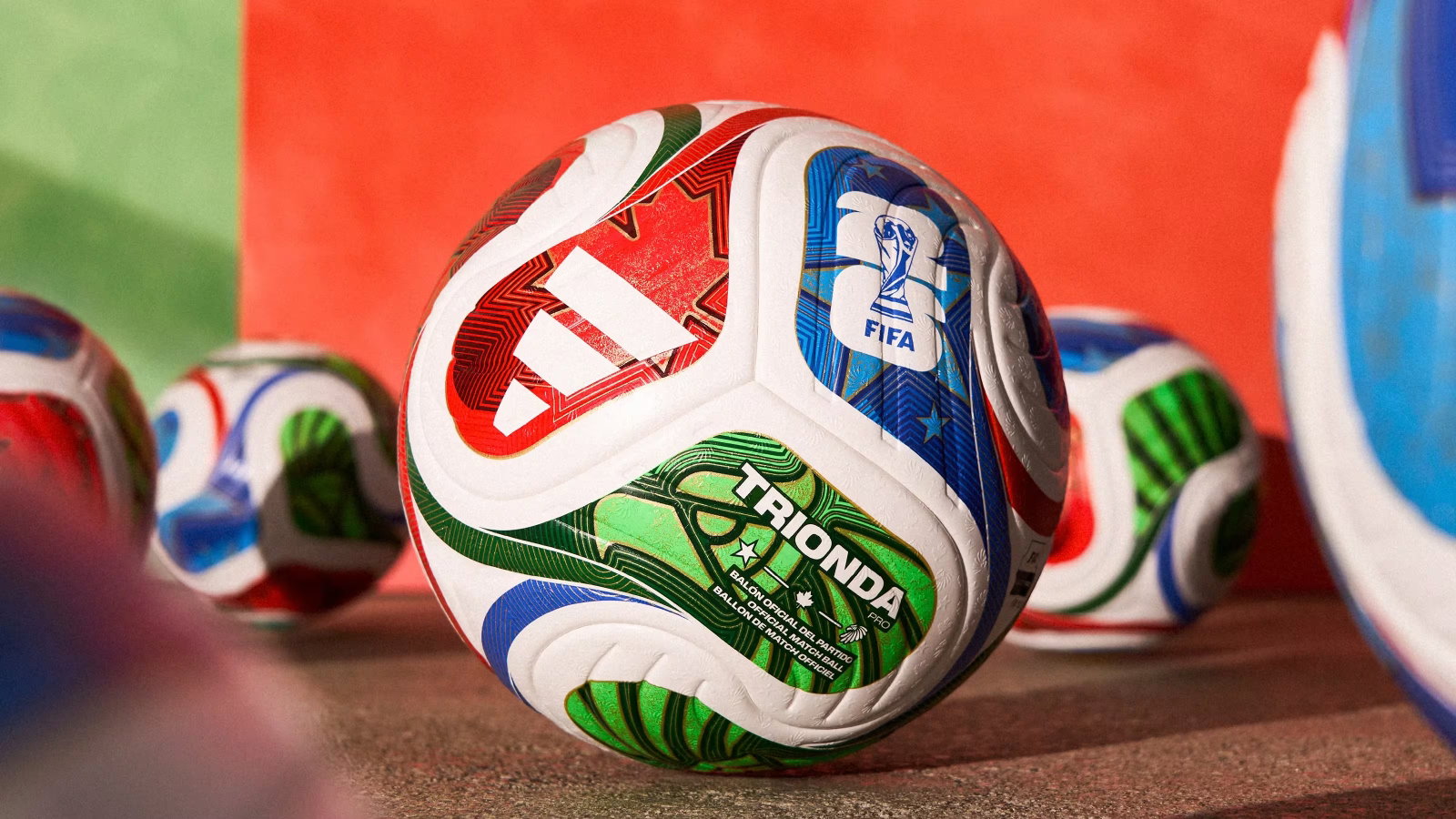
Perhaps the most unique change comes to the most basic and crucial element of the game: the ball. FIFA World Cup 2026’s new ball needs to be charged before each match. That's right!
The Trionda gets its name from the Spanish phrase for "three waves," a nod to the first World Cup hosted by three nations at once. Its four-panel design, the fewest panels of any World Cup ball, trades the familiar stitched-sphere look for a smoother, more aerodynamically consistent surface. Red, green, and blue coloring, alongside a maple leaf, an eagle, and a star, represent Canada, Mexico, and the United States.
Inside one of those panels sits a 500Hz motion sensor that tracks the ball's spin, acceleration, and every contact event, sending that data to the VAR system in real time. That's also why it needs charging: the sensor runs off a small rechargeable battery, topped up on a wireless dock before kickoff, good for roughly six hours of play.
However, the sensor isn’t in there just for kicks; it's one half of the system officials actually rely on to call offside.
Semi-Automated Offside Technology
The ball's sensor feeds real-time tracking data straight into FIFA's Semi-Automated Offside Technology (SAOT), combining it with a network of stadium cameras mounted around each stadium to pinpoint a player's position the instant the ball is played. This cycle tightens the system's threshold considerably, from 50 centimeters of clearance needed to trigger an alert down to just 10.
The alert itself moves faster, too. Instead of routing through VAR for review first, a clear offside is now sent directly to the assistant referee's earpiece. The system still only judges position; whether an offside player actually interfered with play remains a human call.
Google Gemini's Fan Layer
Google built its own AI presence into the tournament through Gemini, focused entirely on the fan experience outside the stadium. Gemini powers live scores that surface directly on phone lock screens, along with AI-generated match visuals that fans can pull up without opening an app. It also struck a tie-in with Argentina, the defending champion, adding tailored content for that fanbase.
AI-Powered Stadium Security
AI is also reshaping how these stadiums are protected. At several US venues, including Gillette Stadium, Hard Rock Stadium, and Mercedes-Benz Stadium, facial recognition software checks fans against security databases at entry points, screening for banned individuals or known risks before they reach the concourse.
On the ground, four-legged robots are doing some of that work too. Hyundai-built units patrol the International Broadcast Center in Dallas, while K9-X robotic dogs operate around venues in Mexico, including Estadio Monterrey, using onboard cameras and sensors to monitor perimeters and enter tight or risky spaces ahead of human officers.
That covers the tech running through the tournament itself. What does all of this actually change for the people on the pitch and in the stands?
What This Means For Players, Fans, And The Future Of Football
Into Added Time We Go!
For all the AI built into this tournament, the most important decisions still belong to people. Offside detection might be automated down to the centimeter, but interference, whether a player offside actually affected the play, is still judged by a human official. The same goes for fouls, handballs, and penalties: AI speeds up the evidence, but it doesn't make the call.
That distinction matters because trust is the real test these systems face. Faster, clearer decisions only help if fans believe them. The same is true off the pitch, where facial recognition and crowd-monitoring tools raise legitimate privacy questions even as they're framed around safety, two things that can both be true at once.
Conclusion
Congratulations! You’ve made it to the closing ceremony of this article!
Fun fact: FIFA conducts its closing ceremony before the kick-off of the final match that decides the winner of the World Cup. It runs for 15-30 minutes and features performances by global music artists.
From Lenovo's Football AI Pro and 3D player avatars to the sensor-packed Adidas Trionda and AI-driven stadium security, the 2026 World Cup is being shaped by AI at every level. The technology isn't replacing the human element of the game; it's supporting officials, leveling the field for all 48 teams, and giving fans a clearer view of the action.
Most importantly, you need to remember, it’s called football, not soccer!
*THE FULL-TIME WHISTLE BLOWS*
Frequently Asked Questions
What Are The Main AI Technologies Being Used At The FIFA World Cup 2026?
Lenovo, FIFA's Official Technology Partner, leads the charge with five Football AI capabilities: Football AI Pro for team analytics, AI-enabled 3D player avatars for offside calls, a stabilized Referee View, near real-time broadcast infrastructure, and immersive fan experience tools. Outside the Lenovo partnership, the tournament also runs Semi-Automated Offside Technology paired with the sensor-equipped Adidas Trionda ball, a separate Google Gemini fan layer, and AI-powered stadium security, including facial recognition and robotic patrol units.
Where Does The Term Soccer Originate, And Which Countries Use It?
Most of the world calls the sport football, but a handful of countries, including the United States, Canada, Australia, South Africa, and Ireland, use soccer instead. The word actually has English roots, coined in the 1880s as slang shorthand for "aSSOCiation," distinguishing Association Football from rugby football. Countries that use soccer today generally do so for the same reason England first did: to avoid confusion with their own homegrown football versions, whether that's American football, Australian rules, or Gaelic football.
Has AI Been Used At Previous FIFA World Cups?
Yes, VAR made its World Cup debut in Russia 2018, and Qatar 2022 introduced Semi-Automated Offside Technology alongside the first connected match ball, Al Rihla, which carried its sensor suspended at the center of the ball rather than embedded in a panel like the Trionda. What's different in 2026 is the breadth: AI now spans officiating, broadcast infrastructure, team analytics, and fan experience under one coordinated partnership, rather than a handful of standalone tools. More Football AI development is planned for the 2027 Women's World Cup.
Thu, Jun 18, 2026

Liked what you read? That’s only the tip of the tech iceberg!
Explore our vast collection of tech articles including introductory guides, product reviews, trends and more, stay up to date with the latest news, relish thought-provoking interviews and the hottest AI blogs, and tickle your funny bone with hilarious tech memes!
Plus, get access to branded insights from industry-leading global brands through informative white papers, engaging case studies, in-depth reports, enlightening videos and exciting events and webinars.
Dive into TechDogs' treasure trove today and Know Your World of technology like never before!
Disclaimer - Reference to any specific product, software or entity does not constitute an endorsement or recommendation by TechDogs nor should any data or content published be relied upon. The views expressed by TechDogs' members and guests are their own and their appearance on our site does not imply an endorsement of them or any entity they represent. Views and opinions expressed by TechDogs' Authors are those of the Authors and do not necessarily reflect the view of TechDogs or any of its officials. While we aim to provide valuable and helpful information, some content on TechDogs' site may not have been thoroughly reviewed for every detail or aspect. We encourage users to verify any information independently where necessary.
Loading comments...