Manufacturing Technology
Are Robotaxis The Future Of Urban Transportation?
Share
Introduction
Maybe it's stunning, realistic visuals? Perhaps it's the entry scenes of popular robots? The goosebumps-inciting speeches by the Autobots boss, Optimus Prime?
Whatever your reason for liking the movies (even if you don't, we know you secretly love them), it's a pretty good bet that automobile manufacturers love that their vehicles can drive themselves. Yes, we know that calling them vehicles would be incorrect, as they're robots. However, the fact remains that they are machines capable of autonomous mobility, whichever shape they may take.
While we're a way away from vehicles that transform, we live in a time where they can drive themselves and are easily accessible to just about anyone.
The best part? You don't have to buy a self-driving car to ride in one; you can just hire one.
ROBOTAXI!!!
That's the term for self-driving taxicabs worldwide. They're just like regular taxis, except they don't require a driver to be in the vehicle (or controlled like a drone), and they're expanding faster than you know!
However, they come with some issues still to be ironed out, leaving common folk to ask: Are Robotaxis The Future Of Urban Transportation?
TL;DR
-
Robotaxis are AI-powered self-driving taxis expanding rapidly across global cities.
-
Market projected to hit $158.7B by 2032 with strong government backing.
-
Key benefits include safety, cost efficiency, EV adoption, and 24/7 availability.
-
Challenges remain in regulation, cybersecurity, weather performance and public trust.
-
Industry leaders such as Waymo, Tesla and Baidu are accelerating global deployment.
What Are Robotaxis?
Before we dive into answering the question at hand, let's just clear our basics.
At a rudimentary level, robotaxis are autonomous vehicles used specifically for public transportation.
They operate just like regular taxis, except that a human driver does not drive them. Instead, they rely on technologies such as advanced sensors, cameras, AI, and others to navigate through traffic and other complex situations on the road.
From the point a passenger hails a robotaxi to the point they get off the vehicle at their destination; no human intervention is required. From pickup to drop-off, passengers enjoy a completely automated experience.
However, some robotaxi companies opt to keep a human safety inspector during testing or in the initial days after opening to the public.
Most robotaxi companies use electric vehicles (EVs), while some use hybrids or gasoline-powered vehicles.
Are Robotaxis The Future Of Urban Transportation?
Until a few years ago, self-driving vehicles like those in Transformers seemed like a pipe dream.
However, recent developments in artificial intelligence (AI), machine learning (ML), computer vision, LiDAR, V2X and other technologies have made the rise of robotaxis around the world.
That's right. Robotaxis are not just a phenomenon in the United States; they are being deployed across major cities worldwide, including China and the United Arab Emirates (UAE).
Leading robotaxi companies are also testing and training their vehicles in other countries around the world, including Japan, Singapore, Canada, Australia, South Korea, the United Kingdom, and other European countries. Robotaxis are expected to drive into more markets in 2026 and beyond.
Other than base technology improvements, there are a wide range of reasons contributing to their accelerating growth:
Reason 1: Growing Market
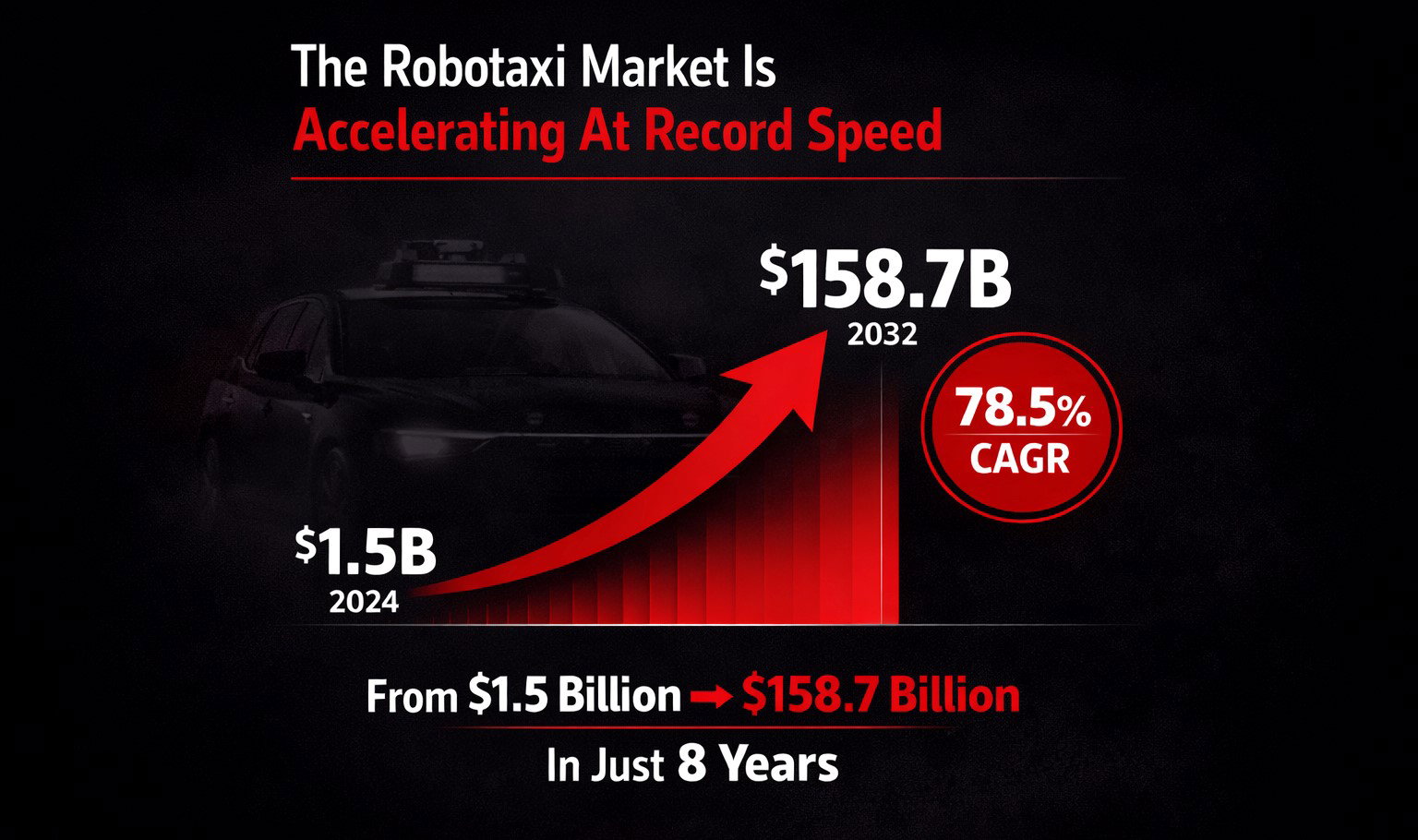
It's no surprise that the robotaxi market is set to reach a valuation of $158.7 billion by 2032, growing from $1.5 billion in 2024 at an astounding CAGR of 78.5% (2025 to 2032), according to a report by AnalystView Market Insights. This projection itself is a testament to the rapid growth and popularization of robotaxis worldwide.
The robotaxi sector is drawing the interest and investment of companies outside the robotaxi realm, such as GPU market leader NVIDIA, ride-hailing company Uber, and others. Plus, some automakers that are not traditionally focused on developing autonomous vehicles or robotaxis, such as Stellantis, BMW, Mercedes-Benz, BYD, and more.
Reason 2: Government Input
Even governments are riding the robotaxi revolution.
The report notes that the U.S. Department of Transportation has invested $500 million to deploy advanced mobility and connected vehicle technologies under the SMART Grants Program. Similarly, the European Commission has earmarked €8 billion to boost research and deployment of cooperative, connected, and automated transport.
In China, a leading robotaxi market, the government has created several autonomous-driving pilot zones where robotaxis are allowed to operate commercial services. This is in addition to large-scale intelligent road infrastructure.
Governments are also pushing the adoption of EVs and improving charging infrastructure by adding more charging ports.
Reason 3: Connectivity Improvements
Improvements in connectivity infrastructure have enabled ultra-low-latency communication, helping streamline real-time autonomous navigation and cloud-based fleet operations. Meanwhile, government telecom data showed that 5G coverage exceeded 80% in the U.S., 90% in China, and 70% in Europe.
Reason 4: Growing Trust
Robotaxis gained the trust of passengers after racking up miles of successful trips in cities such as San Francisco and Phoenix in the U.S., as well as Shenzhen, Wuhan, and Guangzhou in China, which were initial adopters and testing grounds.
Over time, the service spread to other cities and enjoyed similar success, seeing more people becoming comfortable with robotaxi rides.
Reason 5: Multifold Benefits
Robotaxis offer various benefits that human-driven vehicles don't, some even lifesaving.
So, what are the key benefits of robotaxis?
What Are The Benefits Of Robotaxis?
Riding in autonomous public transport vehicles comes with benefits for riders, automakers, and ride-hailing companies such as Uber, Lyft, and others.
-
Safety
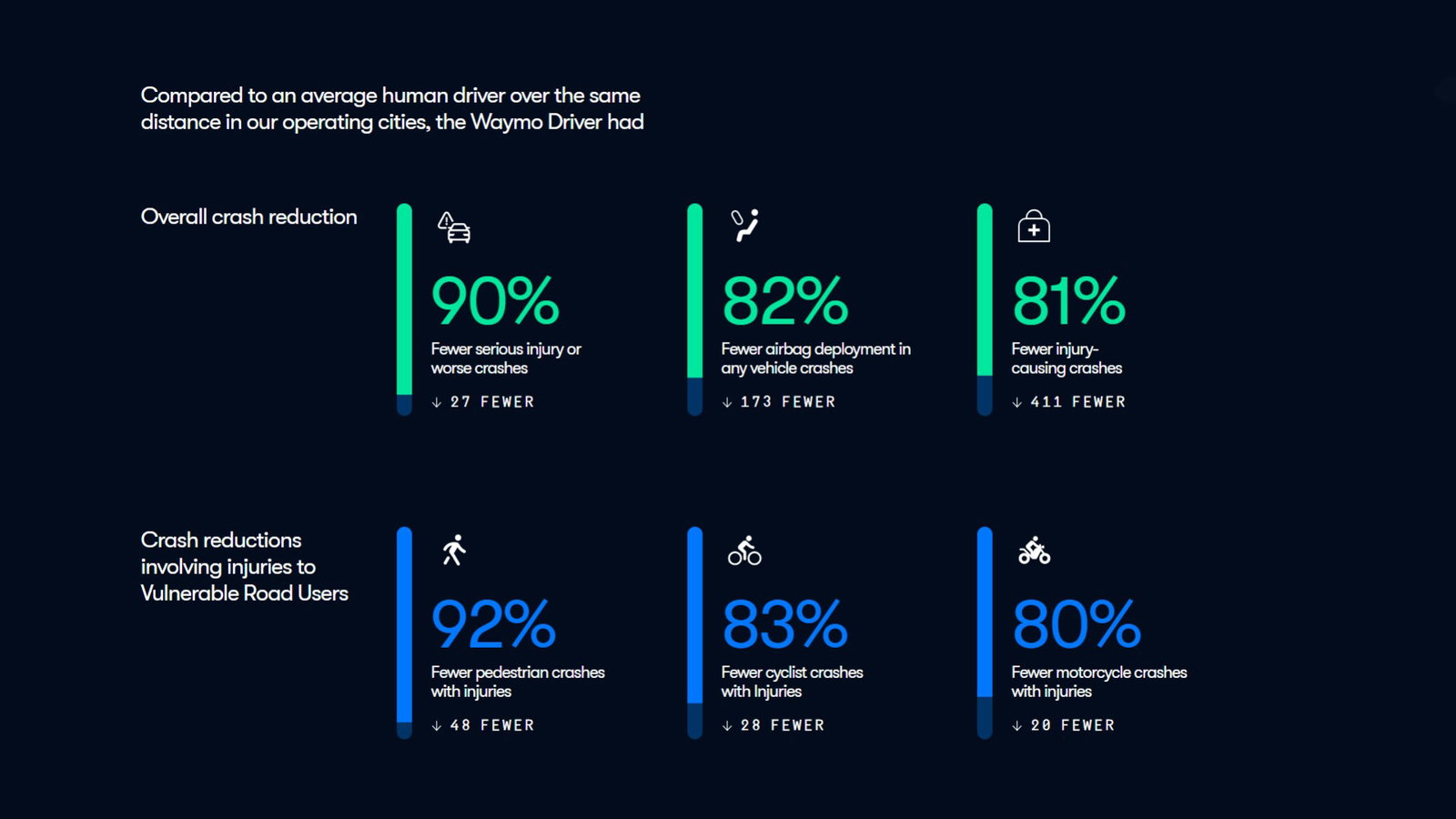
Self-driving robotaxis cut out human errors caused by distractions, reckless driving, or skill issues. The autonomous systems that power these vehicles are designed to respond more quickly to situations and predict potential problems. They enable lower collision and injury-causing crash rates, which makes a big difference when considering that humans cause 90% of all road accidents. #DontDrinkAndDrive
-
Consistent Driving Pattern
Powered by AI, robotaxis exhibit consistent driving patterns, maintain continuous speeds, adhere to speed limits, and avoid excessive acceleration or braking. They enable efficient traffic flow, reduce excess on-road traffic, and even eliminate the need for parking vehicles.
-
EV Shift
Robotaxis are almost exclusively deployed using EVs, resulting in zero tailpipe emissions. This EV shift also leads to lower energy consumption, simplified maintenance, and reduced costs.
-
Cost Efficiency
Removing human drivers reduces operational costs for ride-hailing companies, which translates into lower fares for passengers.
-
Privacy And Personal Preferences
The elimination of humans in the process also offers passengers improved privacy. They can personalize their experiences by playing movies, scrolling through social media, listening to their music, controlling the AC temperature, talking on their cell phones, and more, all without interruptions.
-
24/7 Availability
As long as the battery and navigation system are functional and charged, robotaxis can operate round the clock without breaks, rest, or sleep.
-
Productivity Boost
Instead of spending energy on driving, passengers can focus on other tasks, important work, or just relax.
-
Better Accessibility
Passengers unable to drive due to age, disability, or a lack of a license can use this convenient transportation option.
What Challenges Form Robotaxi Roadblocks?
While the benefits outweigh the drawbacks, robotaxis pose some challenges that raise concerns.
-
Developing Technology
Robotaxis are still developing, so they certainly have flaws that need to be ironed out. Robotaxis have been reported to be driving in circles, stopping in the middle of the road, making turns into oncoming traffic, blocking lanes, suddenly breaking, or experiencing technical difficulties due to the lights on top of police cars.
-
Complex Traffic
While AI-powered Robo taxis can react fast, they might struggle in edge cases such as predicting unpredictable human behavior, navigating complex traffic, or driving through construction zones or busy intersections.
-
Weather Conditions
Adverse or unpredictable weather, such as rain, fog, snow, glare, or other environmental factors, can impair sensors and cameras, reducing safe operation.
-
Cybersecurity
As with any product sporting a microchip connected to a cloud, robotaxis are vulnerable to hacking.
-
High Costs
While robotaxis save on driver costs, they spend heavily on R&D for sensors and other components. Specialized charging hubs or other required infrastructure can drive up costs, while faulty or stolen equipment can increase expenditure.
-
Regulatory Hurdles
Gaining permits to test robotaxis is tough enough; imagine how tough it would be to secure permits to deploy completely driverless, commercial robotaxis. Even tougher when the regulatory requirements could vary in different regions.
-
Public Trust
While many people enjoy robotaxi rides, not everyone is on board, especially given the concerns highlighted above. In some cases, passengers prefer human-driven taxicabs.
Topics For More Insights
Who Are The Major Competitors In The Robotaxi Industry?
The biggest markets for robotaxi deployment and testing are the U.S. and China. Suffice it to say, the top competitors hail from these two countries.
-
Waymo
Owned by Google's parent company Alphabet, Waymo is leading the robotaxi race in the U.S.
The company has deployed over 2,500 robotaxis in more than 10 cities—San Francisco Bay Area, Phoenix, Los Angeles, Miami, Orlando, Dallas, Houston, and San Antonio. At the same time, its services are available in Austin and Atlanta through Uber. Overall, it logs in over 450,000 rides per week.
Waymo is also testing its vehicles in New York and other cities in the country, as well as Tokyo and London. -
Tesla
At one point, Tesla was touted to be the face of robotaxis in the U.S. However, it's taken the automaker a while to dive into the market, despite being a prominent name in the self-driving car industry.
Currently, Tesla operates and tests a fleet in a small area of Austin with a safety inspector in the vehicle. The company plans to deploy in California soon, but has delayed its permit application, as CEO Elon Musk once said the company is "paranoid about safety." -
Zoox
Amazon-owned Zoox has made major strides, offering free rides to select early users in San Francisco and around the Las Vegas Strip as it awaits state approval to charge for rides.
-
Baidu
Baidu's Apollo Go was the first robotaxi service provider to secure permits to offer commercial trips in August 2022. It initially operated without safety drivers in Chongqing and Wuhan and eventually expanded to Shenzhen and Beijing. Apollo Go boasts about offering 300,000 weekly robotaxi rides.
Outside China, it secured permits to deploy robotaxis in Hong Kong in 2024, joined hands with Swiss Post's PostBus in October 2025 to operate its AmiGo robotaxi service in eastern Switzerland, and partnered with the UAE's Autogo in November 2025 for deployment in Abu Dhabi (to start in 2026). -
Others
Other popular robotaxi companies testing and expanding their services include the UK's Wayve, China's WeRide, Pony.ai, and Momenta.
Conclusion
So, are robotaxis the future of urban transportation?
The short answer is yes, but in the long run. As AI becomes more advanced, 5G expands globally, EV adoption accelerates, and governments invest in connected mobility infrastructure, robotaxis are moving from pilot programs to real-world scale. Despite its challenges, its market is exploding, weekly ride numbers are growing, and global giants are placing serious bets on autonomous fleets. Whether robotaxis dominate tomorrow or coexist alongside human drivers, one thing is clear: the road ahead is autonomous, and it's already underway.
Readers, roll out!
Frequently Asked Questions
What Is A Robotaxi And How Does It Work?
A robotaxi is an autonomous vehicle designed specifically for public transportation. Unlike traditional taxis, they operate without a human driver and relies on advanced technologies such as AI, machine learning, cameras, LiDAR, and vehicle-to-everything (V2X) communication to navigate roads. From booking and pickup to drop-off, the entire ride is automated, though some operators may include safety personnel during early deployment phases.
Are Robotaxis Safe For Daily Urban Use?
Robotaxis are designed to reduce human error, which accounts for nearly 90% of road accidents. Their AI systems react faster than human drivers, maintain consistent speeds, and strictly follow traffic rules. However, safety challenges still exist, especially in complex traffic situations, adverse weather conditions, and edge-case scenarios. While real-world testing in cities like San Francisco, Phoenix, Shenzhen, and Wuhan has built growing public trust, safety performance continues to evolve as the technology matures.
What Are The Biggest Challenges Facing Robotaxi Adoption?
Despite strong market growth and government backing, robotaxis face several hurdles. Regulatory approvals vary by region and can delay commercial deployment. High R&D and infrastructure costs remain significant, particularly for sensors and EV charging ecosystems. Cybersecurity risks are another concern due to cloud connectivity. Additionally, public trust is still developing, as some passengers remain cautious about fully driverless transport. These technical, regulatory, and social factors will play a critical role in determining how quickly robotaxis scale globally.
Mon, Mar 2, 2026

Enjoyed what you read? Great news – there’s a lot more to explore!
Dive into our content repository of the latest tech news, a diverse range of articles spanning introductory guides, product reviews, trends and more, along with engaging interviews, up-to-date AI blogs and hilarious tech memes!
Also explore our collection of branded insights via informative white papers, enlightening case studies, in-depth reports, educational videos and exciting events and webinars from leading global brands.
Head to the TechDogs homepage to Know Your World of technology today!
Disclaimer - Reference to any specific product, software or entity does not constitute an endorsement or recommendation by TechDogs nor should any data or content published be relied upon. The views expressed by TechDogs' members and guests are their own and their appearance on our site does not imply an endorsement of them or any entity they represent. Views and opinions expressed by TechDogs' Authors are those of the Authors and do not necessarily reflect the view of TechDogs or any of its officials. While we aim to provide valuable and helpful information, some content on TechDogs' site may not have been thoroughly reviewed for every detail or aspect. We encourage users to verify any information independently where necessary.
Loading comments...