Digital Marketing
A Learner's Guide To Cross-Device Tracking And Analytics
Share
Overview
Do you remember the movie, Doctor Strange in the Multiverse of Madness? We want to revisit the moment where we were sitting in a packed theatre, popcorn in hand.
One minute, our beloved Doctor is dodging demons in the dark, saving the universe and on the other hand, he’s floating through a world made entirely of paint. Everyone around us was whispering, “Wait, where is he now? Is this the same Strange or another version?”
Wasn't that a bit overwhelming? Trying to keep up but the multiversal chaos had us squinting at the screen, struggling to connect the dots! #MultiverseOfConfusion

Now, imagine that same confusion when businesses try to track users across multiple devices and platforms.
A person starts browsing on their phone, picks up a tablet later and completes a purchase on their laptop. Without cross-device tracking, it’s as chaotic as that theatre experience—brands can’t tell if it’s the same user or a completely new one.
Just like you would want a guide to explain which universe Doctor Strange is in, businesses need tools to map out and understand their users’ journeys. Cross-device tracking is that guide, piecing together the fragmented story into a clear narrative.
So, buckle up because as we dive into this concept and make sense of the multiverse—of devices, that is—to show you why it’s essential to master this in today’s digital age.
Ready to start? So, let’s first understand what cross-device tracking is.
Understanding Cross-Device Tracking
Simply defined, cross-device tracking is a way of combining clues from various devices to understand how users interact with a certain piece of content.
Here's an example to help you better understand where a person starts their day: checking emails on a smartphone, then switching to a tablet for some social media scrolling and finally landing on a laptop to make an informed purchase.
This evolution of tracking has become crucial as users hop between devices. eMarketer did a study that showed 90% of people use more than one device to get things done.
So why is it important for businesses to track users across devices? It helps businesses better understand user behavior!

Businesses can now make their marketing plans more effective by meeting users where they are, which will increase connection, loyalty and conversion rates.
There are several methods for cross-device tracking:
-
Cookies: The age-old traditional method of tracking, you can say. These are small files stored on a device that tracks user activity, like a digital trail of breadcrumbs.
-
Device Fingerprinting: This new method creates a unique record for each device by collecting data about its settings and features.
-
Deterministic Matching: This method connects devices by using known information about the person, like email addresses.
However, tracking and gathering info from many devices is only half the story. To truly make sense of it all, businesses need robust analytics.
Let's look at how data can order the chaos of tracking across devices!
The Role Of Analytics In Cross-Device Tracking
Analytics tools are like spies in the world of computers. They gather clues from various devices to piece together the user journey. These tools track these user clicks and movements, helping businesses understand how users interact with their brands across different platforms.

Sure! For this, creating a unified user profile is crucial as it helps businesses see the whole picture of how users act when all of their profiles are linked. This helps them to assess better and make better marketing plans.
It's important to understand this because Forrester says that businesses with unified profiles can boost their marketing return on investment (ROI) by as much as 30%.
So, when you look into cross-device analytics, these measures stand out:
-
Click-Through Rate (CTR): This measures how many users clicked on an ad or content after seeing it.
-
Conversion Rate: This shows the percentage of users who completed a desired action, such as making a purchase.
-
Cost Per Acquisition (CPA): This is the average expense spent on acquiring a new customer.
These metrics help businesses understand what’s working and what’s not. It’s like having a scoreboard in a game; you need to know the score to strategize effectively, right?
Analytics is more then just numbers - it’s about understanding the story behind those numbers!
This process helps businesses connect the dots, understand users' behavior across touchpoints and optimize their marketing efforts. With the right tools and metrics, companies can navigate the complex digital landscape like seasoned pros.
Since we're talking about "pros," let's look at the real pros (we mean benefits) of cross-device tracking and analytics!
Benefits Of Cross-Device Tracking And Analytics
Cross-device tracking and its analytics helps companies learn more about their customers' behavior, which helps them make better decisions and achieve better results.
Businesses can see how people use their brand on different media with cross-device tracking. This means they can:
-
Identify Patterns in user behavior.
-
Understand The Customer Journey from start to finish.
-
Tailor Marketing Efforts based on real-time data.
Did you know that a study by Global Web Index found that 87% of people in the US use more than one device to go online? Interesting, isn't it?
Picture going into a store for grocery-shopping and everyone knows your name, what you like and are even playing your favorite playlist on the speakers. That's how cross-device tracking works!
It allows businesses to:
-
Create Personalized Experiences for users.
-
Target Ads based on user behavior across devices.
-
Increase Engagement by showing relevant content.
This level of personalization can lead to higher conversion rates. In fact, McKinsey says it could be up to 20%.

In other words, companies can turn more leads into sales if they know more about their customers. Cross-device tracking helps in:
-
Identifying high-value customers.
-
Retargeting Users who showed interest but didn’t convert.
-
Building Loyalty through consistent messaging.
eMarketer found that companies using cross-device tracking saw a 30% increase in conversion rates. Isn’t that impressive?
It's clear that cross-device tracking and statistics are helpful. They enhance understanding, improve personalization and ultimately lead to better conversion rates.
Yet, setting up cross-device tracking has its own problems and moral issues to think about. So, let's look at these problems to make sure you can adopt and use this technology in a smart and ethical way.
Challenges And Ethical Considerations Of Cross-Device Tracking
Cross-device tracking surely is a powerful way of connecting with the audience. However, with great tracking power comes great responsibility. Consider these problems and moral issues that come up:
Privacy, a hot topic in the today's time, is a concern. With data protection regulations like GDPR and CCPA, companies must tread carefully and ensure that users know what data is being collected and how it is being used. As per Pew Research Center's study, 79% of consumers are concerned about how their data is used.
So here's what companies should consider implementing:
-
Transparency: Businesses should be honest about how they track people.
-
Consent: Users should be able to accept or reject tracking.
-
Security: It is very important to keep user info safe from hackers.
Although linking devices isn’t as easy as pie. Different devices have different identifiers and sometimes they don’t piece nicely together. Here are some hurdles:
-
Device Diversity: Users switch between smartphones, tablets and desktops.
-
Inconsistent Data: Data collected from different sources can be inconsistent.
-
User Behavior: Users may use multiple accounts or devices, complicating tracking.
Hence, finding the right balance is like walking a tightrope. Companies want to give customers unique experiences without going too far with their morals. This is how they can do it:
-
User-Centric Design: Focus on making a good user experience with user-centered design.
-
Ethical Guidelines: Make sure there are clear rules for keeping track of practices.
-
Feedback Loops: Ask people for feedback on how they'd like to be tracked.
Getting around in the world of cross-device tracking is like getting lost in a maze—one wrong turn and you'll be lost!
Cross-device tracking can help you glean useful information but it's important to think about its challenges and ethcial issues too. You don't want to be the bad guy in this digital story, right?
Now that we've discussed the problems, let's check out the practical ways to use cross-device tracking while being responsible and effective. Read on!
Best Practices To Implement Cross-Device Tracking Strategies
Cross-device tracking can be like trying to catch a chicken that is on the move but it is possible with the right tools!
These are some of the best online tools you can use:
|
Tool Name |
Purpose |
Cost |
|
Google Analytics 4 (GA4) |
General analytics and tracking user journeys across devices |
Free for standard use; premium features available through Google Analytics 360 with custom pricing. |
|
Segment |
Customer data platform to unify and track user data across devices |
Free tier; Paid plans start at $120/month |
|
Mixpanel |
Product analytics to monitor user interactions and improve engagement |
Free tier; Paid plans start at $25/month |
|
Amplitude |
Behavioral analytics to understand and optimize user experiences |
Free plan; Paid plans start at $995/month |
|
Adobe Analytics |
Enterprise-level analytics for cross-device and customer journey insights |
Custom pricing tailored to enterprise needs |
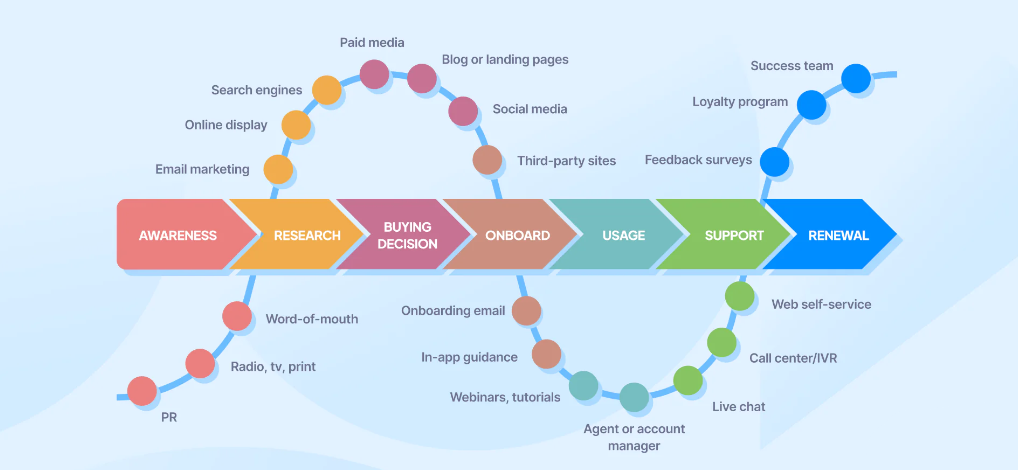
Companies always want to improve their marketing and must use cross-device tracking strategies. They can give users a smooth experience if they have the right tools and know-how, like how a well-directed movie gets people interested from beginning to end.
We think you should give it a try and start right away if you haven't already.
Wrapping It Up!
It may sound complicated but cross-device tracking and analytics can be simple with the right tools, knowledge and approaches!
They save the day by showing you what is working and what is not. Think of it as a must-have in the digital world where consumers hop, skip and jump across channels and decies. Cross-device tracking and analytics can allow your businesses to build a comprehensive profile of users' behavior and tailor marketing strategies based on these insights. You can personalize their entire journey, one touchpoint at a time.
Happy cross-tracking!
Frequently Asked Questions
What Is Cross-Device Tracking?
Cross-device tracking is a method that helps understand how people use different devices, like phones, tablets and computers, to interact with websites and apps. It shows how users move from one device to another.
Why Is Cross-Device Tracking Important?
Cross-device tracking is important because it helps businesses see the full picture of a user’s journey. This means they can create better experiences and more personalized ads for users.
What Are Some Common Methods For Cross-Device Tracking?
Some common methods include using cookies, which are small pieces of data stored on your device and device fingerprinting, which collects information about your device's settings and features.
Wed, Nov 20, 2024

Enjoyed what you've read so far? Great news - there's more to explore!
Stay up to date with the latest news, a vast collection of tech articles including introductory guides, product reviews, trends and more, thought-provoking interviews, hottest AI blogs and entertaining tech memes.
Plus, get access to branded insights such as informative white papers, intriguing case studies, in-depth reports, enlightening videos and exciting events and webinars from industry-leading global brands.
Dive into TechDogs' treasure trove today and Know Your World of technology!
Disclaimer - Reference to any specific product, software or entity does not constitute an endorsement or recommendation by TechDogs nor should any data or content published be relied upon. The views expressed by TechDogs' members and guests are their own and their appearance on our site does not imply an endorsement of them or any entity they represent. Views and opinions expressed by TechDogs' Authors are those of the Authors and do not necessarily reflect the view of TechDogs or any of its officials. While we aim to provide valuable and helpful information, some content on TechDogs' site may not have been thoroughly reviewed for every detail or aspect. We encourage users to verify any information independently where necessary.
AI-Crafted, Human-Reviewed and Refined - The content above has been automatically generated by an AI language model and is intended for informational purposes only. While in-house experts research, fact-check, edit and proofread every piece, the accuracy, completeness, and timeliness of the information or inclusion of the latest developments or expert opinions isn't guaranteed. We recommend seeking qualified expertise or conducting further research to validate and supplement the information provided.
Loading comments...