Artificial Intelligence
5 Hidden Gemini 3.1 Pro Features No One Talks About
Share
TL;DR
-
Three-Model Family: The Gemini 3.1 lineup—Pro, Flash, and Flash-Lite—offers a spectrum of intelligence, speed, and cost-efficiency tailored for everything from deep reasoning to high-volume automation.
-
Thinking Levels: The new three-tier thinking system (LOW, MEDIUM, HIGH) allows for granular control over reasoning tokens, potentially cutting API costs by 75%.
-
Custom Tools Endpoint: A dedicated customtools API endpoint prioritizes developer-registered functions over generic model defaults for more reliable agentic pipelines.
-
Thought Signatures: These Carry the model’s internal reasoning state across turns; failing to pass them back in custom API integrations now results in hard errors.
-
Animated SVGs: The model generates native, interactive, and website-ready SVG code directly from prompts without external design tools.
-
Affordable Context Caching: Large context windows are finally scalable with caching that reduces billing for static prompts by up to 75%.
Introduction
The best GPS systems do not just show you a blue line from A to B. They are reading live traffic feeds, recalculating alternate routes in real time and balancing dozens of variables you never see on screen. Most drivers interact with only the turn-by-turn directions. The intelligence running underneath stays completely invisible.
Gemini 3.1 Pro works the same way.
Released on February 19, 2026, it immediately claimed the top position on leading intelligence indices. The headline numbers followed: 77.1% on ARC-AGI-2, 94.3% on GPQA Diamond and 80.6% on SWE-Bench Verified. But those benchmarks are the blue line. Under them sit five features that barely appeared in any review. Some are available to any Pro or Ultra plan user right now. Here is what the headlines missed.
What Is Gemini 3.1 Pro?
Gemini 3.1 Pro is the flagship of Google DeepMind's most advanced model series. It is the first ".1" increment in the series history, a naming decision signaling a focused reasoning upgrade rather than a full-version refresh.
It processes text, images, audio (up to 8.4 hours), video (up to 1 hour) and code natively. Its context window supports 1 million tokens in consumer applications and 2 million tokens via the API. With an output limit expanded to 65,536 tokens, it effectively solves the truncation issues that previously affected large-scale code refactoring and long-form content generation.
Understanding these capabilities starts with knowing which version of the engine you are actually running.
Understanding The Gemini 3 Model Family
In 2026, the Gemini 3 family is categorized into three distinct tiers based on the "Three-tier model hierarchy" of Speed, Intelligence, and Scale:
-
Gemini 3.1 Pro: The intelligence leader for complicated reasoning, multi-step problem solving, and maximum modal accuracy. It dominates deep research and technology development.
-
Gemini 3 Flash: The high-performance tier. It handles the same 1 million-token context as the Pro model but at a much faster inference rate because it is optimized for speed and high output. It is the main tool for real-time apps and processing large volume of data.
Gemini 3.1 Flash-Lite: The efficiency specialist. It is designed for ultra-low latency and low-cost execution, ideal for mobile integration and simple, high-frequency operations where sub-second response times are crucial.
| Model | Primary Focus | Context Window | Key Strength |
| Gemini 3.1 Pro | Reasoning & Depth | 2M Tokens | Expert-level accuracy & complex tool use |
| Gemini 3 Flash | Speed & Throughput | 1M Tokens | Real-time multimodal processing |
| Gemini 3.1 Flash-Lite | Scale & Latency | 128k Tokens | Ultra-low cost for mobile/edge use |
While the model names define the scale, it is the internal parameters that define the results.
The 5 Hidden Features Of Gemini 3.1 Pro
Here are the 5 features of Gemini 3.1 Pro
-
Thinking Levels
Gemini 3.1 Pro adds a thinking_level parameter with three options: LOW, MEDIUM, and HIGH. This is not a cosmetic toggle; it directly impacts the amount of internal reasoning tokens created before the model produces an output.
-
The "Medium" Middle Ground: While Gemini 3 Pro only had two modes, the new MEDIUM option provides a balance of reasoning depth comparable to the previous version's HIGH setting, but with greater efficiency.
-
Cost Control: The API defaults to HIGH, which uses roughly 8,000 thinking tokens per call. Shifting to MEDIUM (~2,000 tokens) or LOW (~300 tokens) for simpler tasks like classification can reduce monthly thinking token costs by 70% to 75%.
-
-
A Dedicated Endpoint For Agentic Workflows
Google just made available a unique API endpoint called gemini-3.1-pro-preview-customtools. This appears as a technical footnote in the documentation, yet it is crucial to reliability.
Standard endpoints often default to generic code-writing or internal tools when faced with a problem. The customtools endpoint is specifically optimized to prioritize developer-registered functions—such as database queries or CRM updates. This has led to a significant jump in performance on the MCP Atlas tool-use benchmark, particularly for financial and spreadsheet-based AI agents. -
Thought Signatures And Reasoning Continuity
Every response from Gemini 3.1 Pro can contain a Thought Signature. This is an encrypted record of the model's internal reasoning process. In multi-turn talks, giving this signature back ensures that the model follows a consistent logic chain.
This is no longer a choice in formal function-calling processes. If you don't include a Thought Signature in these technical settings, the API will now give you a hard 400 error. Custom integrations must record and return the thoughtSignature field to avoid "reasoning drift" during long sessions, even though the official SDKs do this for you. -
Native Animated SVG Generation
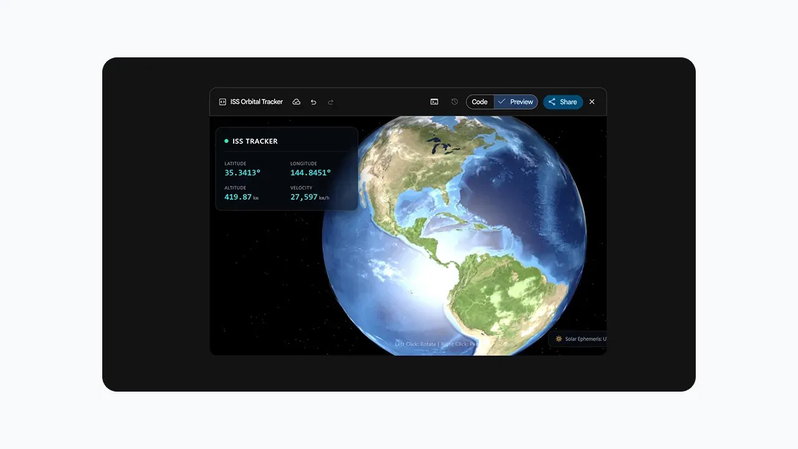
Gemini 3.1 Pro can turn plain text summaries into animated SVGs. Unlike making videos or GIFs, this makes front-end code that can be scaled up and used widely.
These moving graphics stay crisp at any resolution and are significantly smaller than video files. The model can code everything from live aerospace telemetry dashboards to interactive 3D murmuration effects using only inline CSS and SVG code. For teams looking to build interactive web elements, this removes the need for separate animation software or export pipelines. -
Context Caching For Repeated Data
When context windows get to 2 million tokens, it can be too expensive to send the same technical manuals or system directions for each call. You can only store this static information once with context caching.
Cached tokens are billed at a fraction of the standard rate ($0.20–$0.40 vs $2.00 per million). This provides up to a 75% reduction in costs for applications that rely on large knowledge bases. It is the feature that makes massive context windows economically viable for enterprise scale.These features are powerful in isolation, but their true value emerges when applied to specific industry challenges.

Use Cases For The Gemini 3.1Pro
Here are the use cases where these hidden features provide a competitive edge in 2026:
-
For Content and Strategy Teams
A marketing department can use LOW and MEDIUM thinking for daily content optimization to keep on budget and HIGH for competitor analysis. Teams can structure material to be "chunked" by AI answer engines using the model's Generative Engine Optimization (GEO) reasoning. AI-driven search powers approximately 50% of first-touch queries, making this crucial.
-
For Developers and Technical Teams
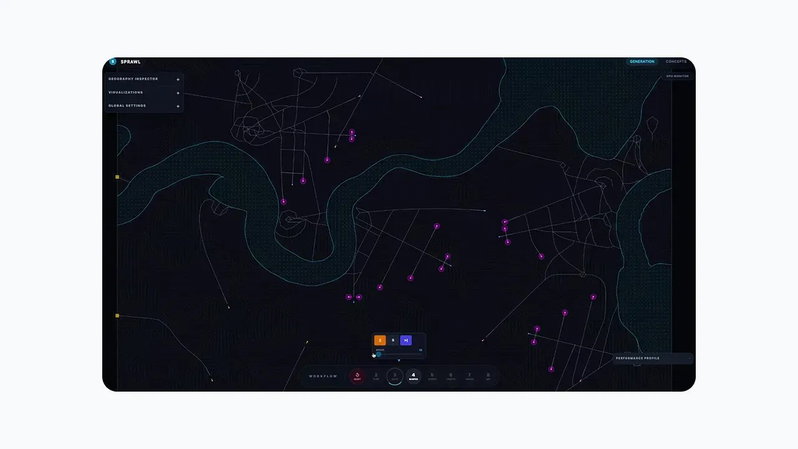
Code-review agent developers can use the customtools endpoint to ensure the AI uses their review_pr routines instead of bash fallbacks. This improves pipeline predictability and auditability. Developers can prototype interactive data visualizations or UI animations from text prompts using animated SVGs.
-
For Enterprise Knowledge Management
Law firms and technical support centers processing large documents can use Context Caching to reference a 500-page master structure on every query without reprocessing. Along with Thought Signatures, this creates a coherent, multi-session research environment where the model recalls both the "what," and the "how" of its reasoning.
Let’s conclude.
Conclusion
The shift from traditional SEO to full Search Experience Optimization is underway. In 2026, ranking on a results page is only the first step; being the definitive answer inside an AI's reasoning chain is the new finish line.
Gemini 3.1 Pro provides the infrastructure for this, a thinking system you can calibrate, a memory you can manage and an execution engine that scales. These features don't require a new model; they simply require knowing what is already inside the one you have.
Frequently Asked Questions
Is Gemini 3.1 Pro Model Better Than ChatGPT?
Gemini 3.1 Pro and ChatGPT both excel in advanced AI tasks, but the better choice depends on your needs. Gemini 3.1 Pro stands out for its deep integration with Google services, strong multimodal capabilities, and large-context processing. ChatGPT, on the other hand, is widely preferred for conversational accuracy, coding assistance, creative writing, and access to a broader ecosystem of tools and integrations. Businesses and professionals often compare them based on workflow compatibility, pricing, and AI performance in real-world tasks.
What Can Gemini 3 Pro Do?
Gemini 3 Pro can handle advanced reasoning, content creation, coding, data analysis, multimodal inputs, and long-context conversations. It supports text, images, audio, and video understanding, making it useful for research, productivity, automation, and enterprise workflows. The model is also designed to integrate closely with Google Workspace tools such as Docs, Gmail, and Sheets for AI-powered assistance.
Is the Google Gemini Pro plan worth it?
The Google Gemini Pro plan can be worth it for users who heavily rely on Google’s ecosystem and need advanced AI features for productivity, research, or business tasks. It offers improved performance, access to premium AI models, and enhanced integrations across Google services. However, casual users may find the free version sufficient, while power users and enterprises are more likely to benefit from the paid plan’s advanced capabilities.
Fri, May 15, 2026

Enjoyed what you've read so far? Great news - there's more to explore!
Stay up to date with the latest news, a vast collection of tech articles including introductory guides, product reviews, trends and more, thought-provoking interviews, hottest AI blogs and entertaining tech memes.
Plus, get access to branded insights such as informative white papers, intriguing case studies, in-depth reports, enlightening videos and exciting events and webinars from industry-leading global brands.
Dive into TechDogs' treasure trove today and Know Your World of technology!
Disclaimer - Reference to any specific product, software or entity does not constitute an endorsement or recommendation by TechDogs nor should any data or content published be relied upon. The views expressed by TechDogs' members and guests are their own and their appearance on our site does not imply an endorsement of them or any entity they represent. Views and opinions expressed by TechDogs' Authors are those of the Authors and do not necessarily reflect the view of TechDogs or any of its officials. While we aim to provide valuable and helpful information, some content on TechDogs' site may not have been thoroughly reviewed for every detail or aspect. We encourage users to verify any information independently where necessary.
Loading comments...