 Featured
Leadership
Leadership Trends Defining The Modern Workplace In 2026
Share
TL;DR
-
AI-Integrated Leadership: Leaders who develop AI fluency and combine machine speed with human judgment will outpace those who resist the shift.
-
Inclusive Leadership: Diversity and inclusion move from compliance to culture, shaping strategy, performance goals, and hiring at every level.
-
Agile And Adaptive Leadership: Amazon’s two-pizza teams and Forrester’s 95% agile-adoption data confirm that adaptive structures outperform rigid ones.
-
Hybrid Work Leadership: With 51% of U.S. workers in hybrid roles (Gallup), leaders must prioritize trust-building, proximity-bias reduction, and intentional communication.
-
Emotional Intelligence In Leadership: Gallup data shows employees with caring leaders are 69% less likely to job-search. Psychological safety is now a measurable performance driver.
Introduction
Jack Sparrow’s compass does not point north. It points at what you want most. That is exactly what strong leadership in 2026 feels like: not a fixed direction, but a clear sense of priority amid constant motion.
The stakes are real. McKinsey reports that 92% of companies plan to expand AI investments over the next three years. Gallup finds that 51% of remote-capable U.S. employees now work hybrid. And according to Wellhub, 93% of employees say workplace well-being matters as much as salary.
Leadership skills 2026 demands go beyond authority. They call for AI fluency, inclusive leadership, agile and adaptive thinking, hybrid work leadership, and emotional intelligence in leadership. Five capabilities. One direction.
Human-centered leadership is now the differentiator. The leaders who will define 2026 are not the most technically advanced. They are the most adaptable, empathetic, and deliberate.
Here are the five leadership trends 2026 has surfaced, and what every leader needs to know about each one.
Trend 1: AI-Integrated Leadership Will Transform Business Efficiency
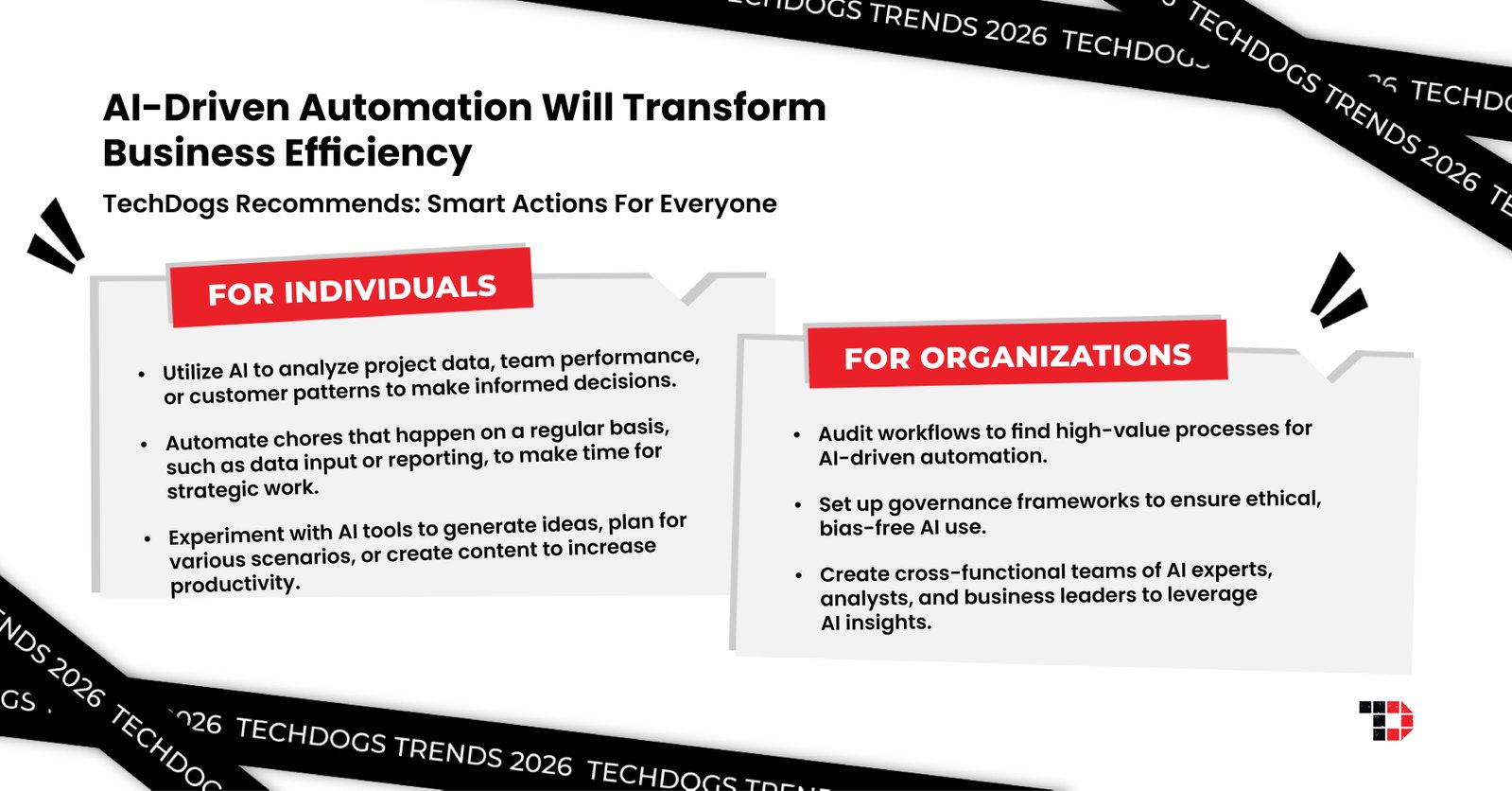
Over the past few years, leaders have moved from using AI for basic analytics to building AI fluency across their organizations. Intelligent automation now offers real-time insights, predicts outcomes, and simulates different strategies. Tasks that once ate up hours, such as reporting, workforce planning, or tracking operational metrics, are now handled automatically. Leaders gain space to focus on strategy, innovation, and supporting their teams.
Looking ahead to 2026, AI and automation are set to shift leadership from reacting to anticipating. Think AI copilots that don’t just display data on a dashboard but suggest the next best step, flag risks before they escalate, or model multiple scenarios so leaders decide with confidence. As automation takes root across HR, finance, and customer operations, machines become partners, delivering speed and scale. Human leaders contribute what machines cannot: judgment, creativity, and empathy. That collaboration is what modern AI-integrated leadership looks like.
How Is The Industry Responding?
AI-Integrated Leadership: A leadership approach that combines AI fluency with human judgment, using intelligent automation to handle analysis and forecasting while leaders apply empathy, creativity, and ethical reasoning to decisions.
The scale of investment signals the shift. McKinsey reports that 92% of companies plan to increase AI investments over the next three years. According to Grand View Research, the global intelligent process automation market estimated to reach $14.55 billion in 2024 and is projected to hit $44.74 billion by 2030, growing at an annual rate of 22.6%.
As Apple CEO Tim Cook sums it up best: "All of us are using AI in a significant way already, and we must use it as a company as well. To not do so would be to be left behind, and we can't do that."
Challenges To Watch
The adoption of automation may face challenges from employees and managers, especially when it is seen as a risk to current responsibilities. At the same time, using sensitive company data for AI-driven decisions raises significant concerns about privacy and cybersecurity, making careful oversight essential.
TechDogs Recommends: Smart Actions For Everyone
Trend 2: Inclusive Leadership And Diversity Will Fuel Workplace Transformation
In 2026, leadership is going beyond business expansion and profit. It is about building workplaces where diverse voices are heard, valued, and empowered. From gender equality and cultural representation to neurodiversity and inclusive leadership styles, organizations see that diverse perspectives sharpen decisions and drive innovation. Diversity is no longer a checkbox. It is a core business capability.
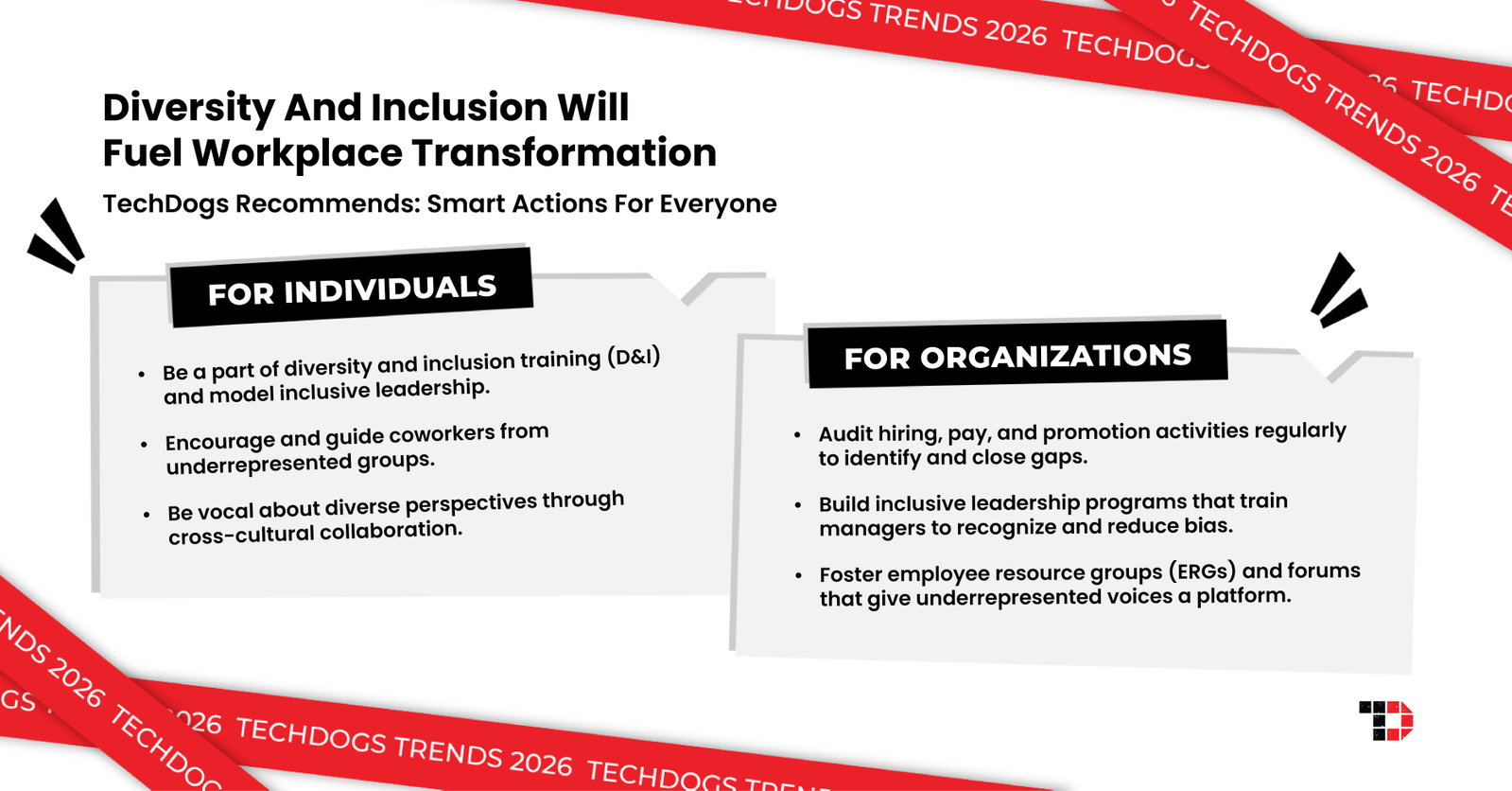
In earlier years, many efforts around diversity and inclusion centered on compliance or representation. In 2026, the focus is shifting toward integrating inclusivity into everyday leadership practices and organizational culture. Leaders must ensure that professional growth, collaboration, and decision-making are fair and open. Diversity and inclusion are no longer side projects. They shape strategy, influence performance goals, and guide leadership decisions, so inclusivity becomes lasting rather than performative.
How Is The Industry Responding?
Johnson & Johnson is actively shaping its leadership pipeline to be more inclusive. The company had aimed to achieve 50% representation of women in management roles globally last year and 35% racial diversity in U.S. management positions. On the other hand, Novartis, a global pharmaceutical company, believes in innovation through an inclusive workplace, embedding DEI training into daily practices. With 110,000 employees from diverse backgrounds, the company has earned recognition from Bloomberg’s Gender-Equality Index and Stonewall awards, ensuring that diverse voices shape decisions, drive collaboration, and foster growth.
As Wanda Hope, Chief Diversity, Equity and Inclusion Officer at Johnson & Johnson, said, “A culture of inclusion opens the door to new ideas while ensuring that our teams reflect the communities that we serve.”
Challenges To Watch
Diversity and inclusion face challenges, including tokenism, which can make efforts seem superficial rather than genuine. Bias in AI tools can unintentionally reinforce inequalities, while global cultural differences add complexity, as what inclusion means in one country may not translate into another. This requires leaders to adapt sensitively and create authentic, lasting change.
TechDogs Recommends: Smart Actions For Everyone
Trend 3: Agile And Adaptive Leadership Will Define Tomorrow’s Success
From boardrooms to project teams, the past couple of years have been a masterclass in unpredictability. Markets fluctuated without notice, new technologies transformed entire industries overnight, and global events prompted companies to reevaluate their goals on the fly. Leaders learned fast: rigid plans slow teams down. Those who listened, responded, and changed course kept their teams on track and strong.
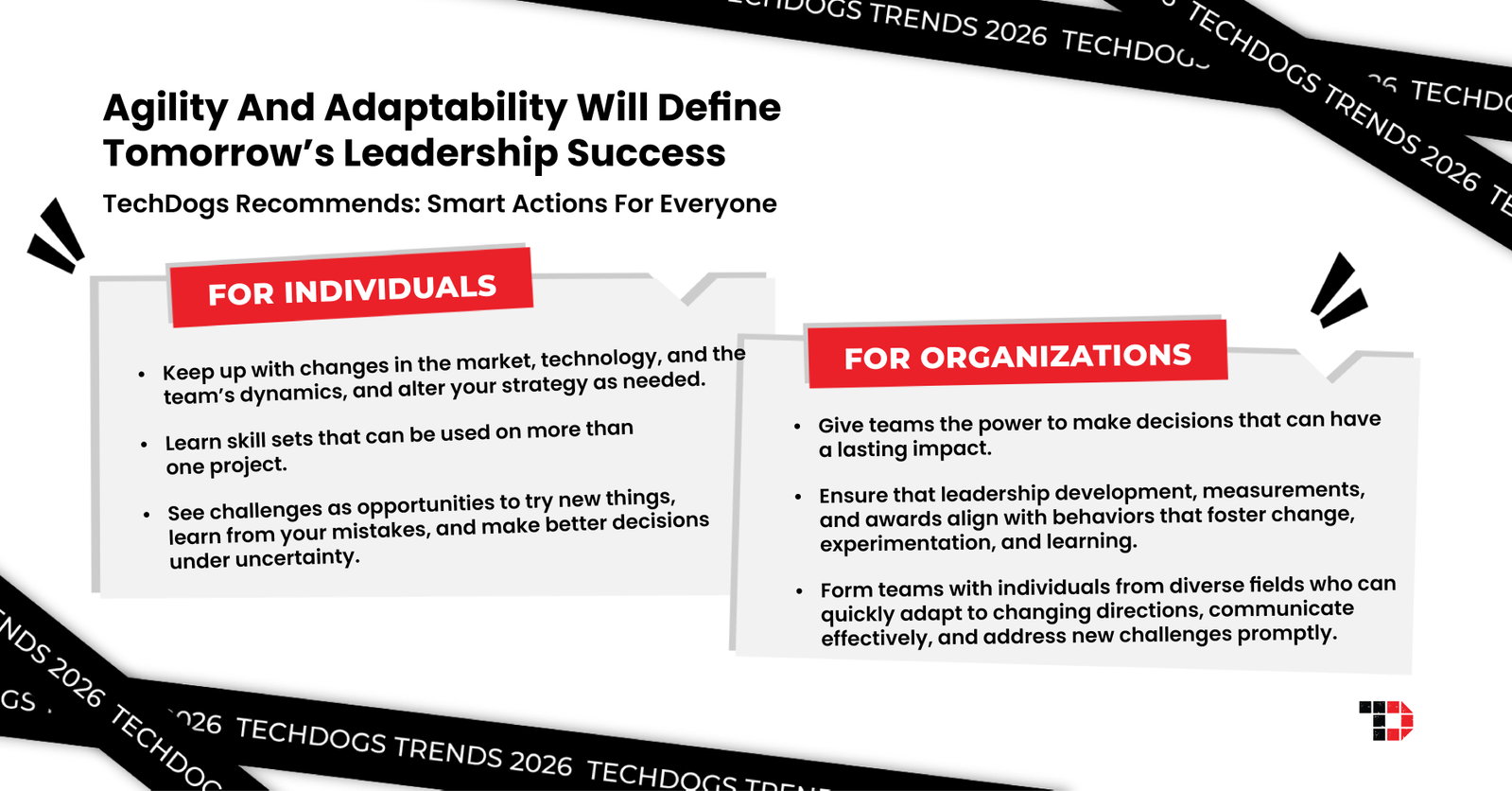
In 2026, agile and adaptive leadership moves from a situational skill to a core leadership style. Leaders need to create environments where trying new things is encouraged, mistakes are seen as chances to learn, and decisions can change as approaches shift. Strong agile and adaptive leadership creates environments where teams respond quickly, stay aligned, and innovate with confidence, even without a clear roadmap. Success means balancing speed with thoughtfulness and empowering people to act while maintaining organizational cohesion.
How Is The Industry Responding?
According to Forrester, 95% of professionals believed agile methods were crucial to their work, and 58% of business and technology leaders were actively working to implement them. Companies like Amazon have put this into practice through its “two-pizza team” model, which consists of small, empowered groups of up to six members, roughly the number of people two pizzas can feed. When teams are small and independent, employees can come up with new ideas, make choices quickly, and fix problems on their own. This not only enhances a business's ability to respond to market changes but also encourages experimentation and learning, all while staying in touch with customer needs.
Prof Sanjeev Prashar, Director-in-Charge at IIM Raipur, also shared his thoughts on the same. "True leadership lies beyond authority; it's about vision, adaptability, and purpose. Future-ready organizations will be built not only on technology and innovation but also on people-centric values, inclusivity, and resilience."
Challenges To Watch
Some difficulties come with being agile. If teams don't receive sufficient support, constant change can leave them feeling tired, confused, or burned out. Leaders also need to be careful not to pivot too much, which could damage confidence or make messages unclear. Lastly, if an organization isn't set up to make quick decisions, adaptive leadership will have a smaller impact.
Topics For More Insights
TechDogs Recommends: Smart Actions For Everyone
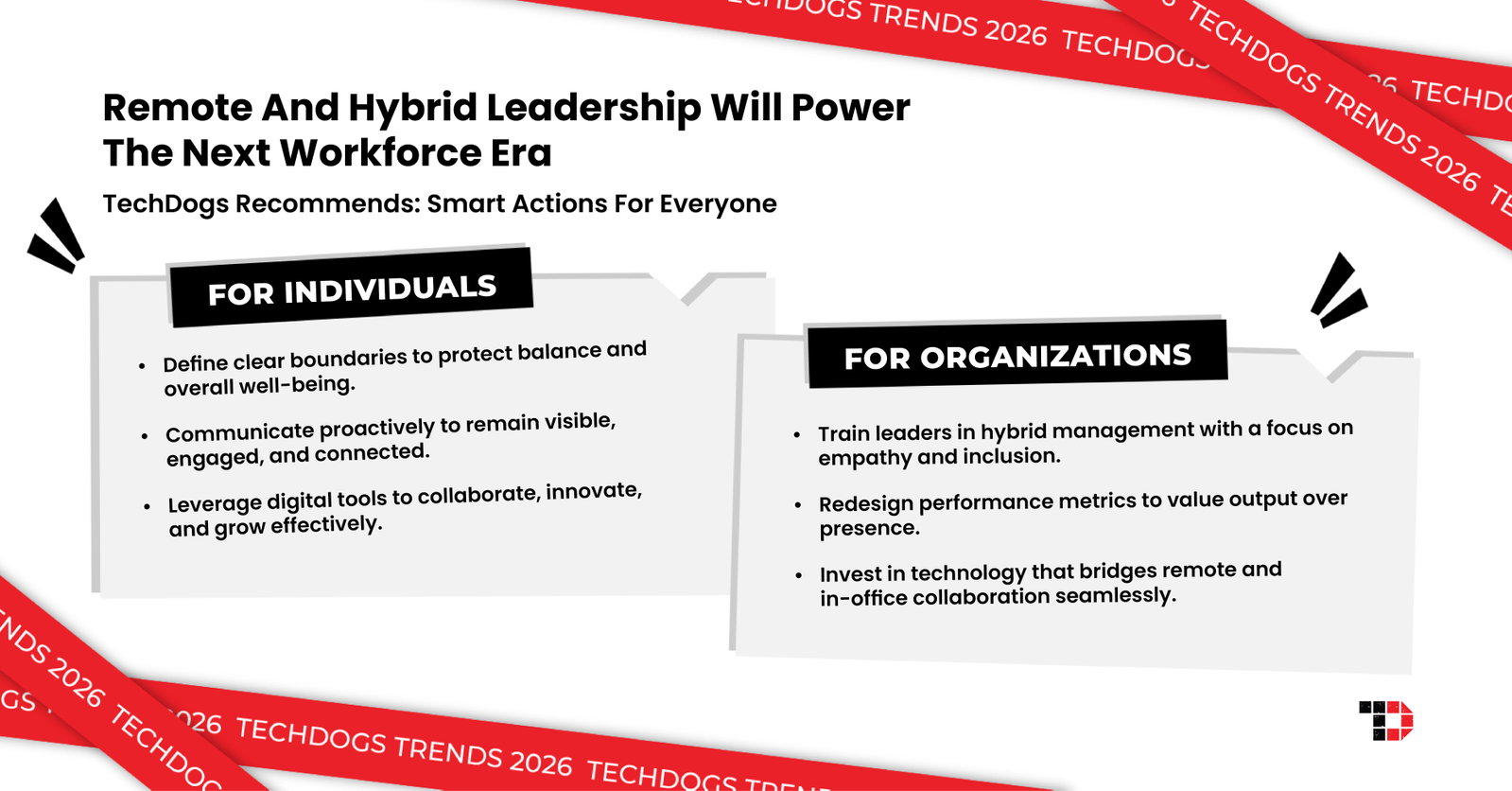
Trend 4: Hybrid Work Leadership Will Define The Next Workforce Era
Hybrid and remote work are here to stay. What began as a necessity during the pandemic has now become a permanent part of life. Lately, companies have become aware of the advantages and challenges of having teams that work from different locations. While hybrid models created room for global talent, boosted flexibility, and reshaped employee expectations, they have also put pressure on leaders to rethink how they build trust, maintain cohesion, and sustain productivity across both physical and virtual spaces.
Hybrid work is not about a place. It is about proving that great work knows no boundaries. In 2026, hybrid work leadership demands more than managing schedules or video calls. Cultivating connection, culture, and collaboration across geographies has become essential. Leaders make decisions and communicate with greater intentionality, emphasizing clarity, inclusion, and trust-building. At the same time, leaders need to strike a balance between flexibility and accountability, creating systems where autonomy and performance coexist and thrive together.
How Is The Industry Responding?
A Gallup survey revealed that 51% of U.S. employees in remote-capable jobs are now working in a hybrid model, with only 21% entirely on-site. As per another statistical report from Archie, over 64% of leaders report that their companies use a hybrid model, indicating the increasing prevalence of flexible work arrangements, particularly among larger companies that prioritize agility and cross-geographic collaboration.
Lucas Birdsall, a Vancouver-based leadership consultant and expert in hybrid team dynamics, stated while sharing his opinions, “Remote leadership isn’t just about managing from afar; it’s about creating an environment where people thrive, whether in the office or working from home."
Challenges To Watch
Proximity bias remains a challenge, as it risks undermining morale and inclusivity. Then there are technology gaps and uneven infrastructure, which may create unfair advantages for some employees and leave others behind. Finally, there’s the risk of culture dilution while maintaining shared values, innovation, and a sense of belonging across dispersed teams that require deliberate effort.
TechDogs Recommends: Smart Actions For Everyone
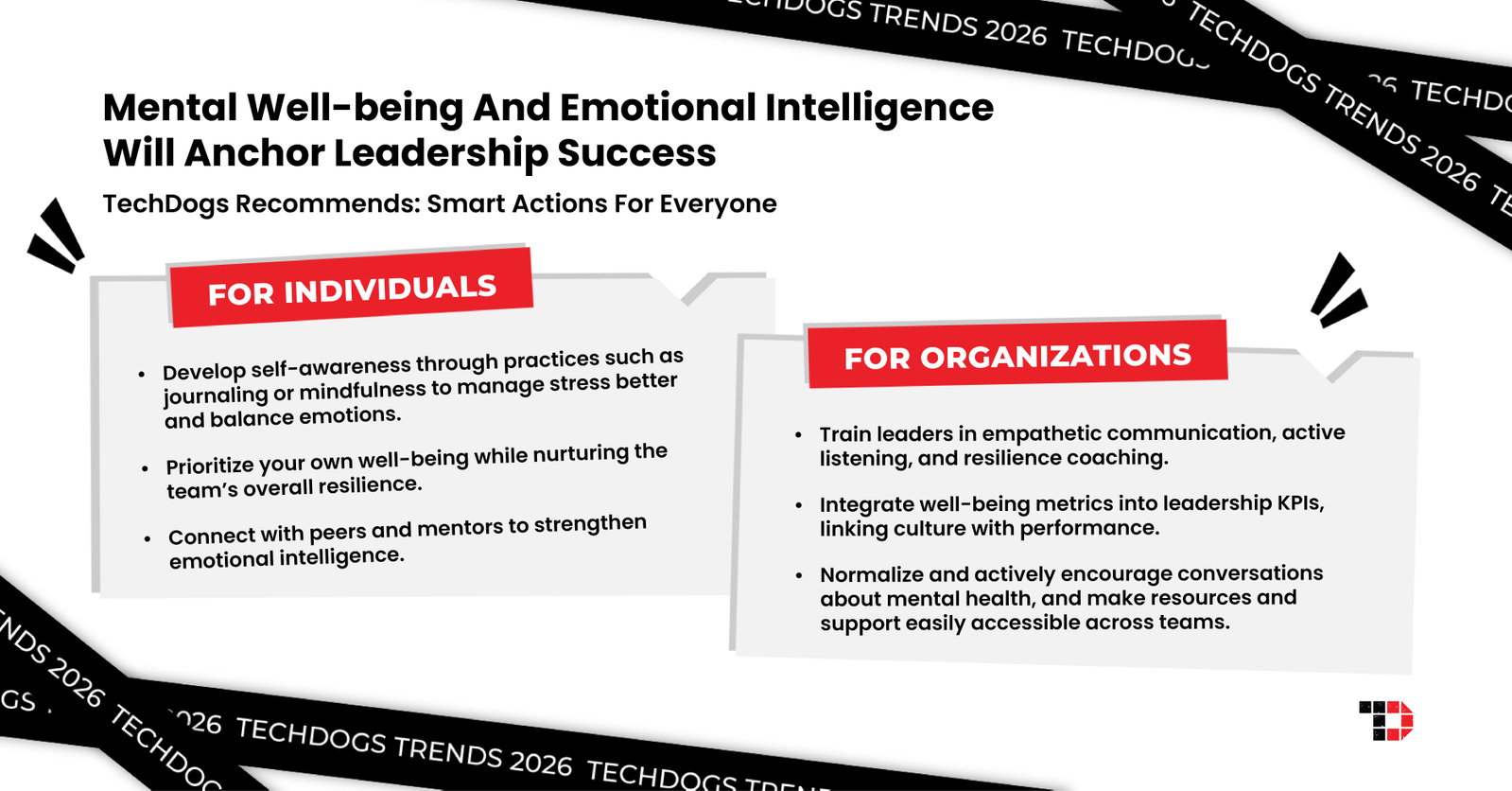
Trend 5: Emotional Intelligence In Leadership Will Anchor Mental Well-Being And Success
Not long ago, leadership was measured by revenue, efficiency, and scale alone. That has changed. Leaders today face equal scrutiny for how they support mental and emotional well-being at work. Burnout is widespread. Work-life lines have blurred. Emotional intelligence in leadership has shifted from a nice-to-have trait to a baseline leadership skill.
Employees want leaders who see them as people, not just workers. People dealing with stress, change, and growth need human-centered leadership that meets them where they are. In 2026, mental well-being at work is not a perk. It is a performance driver that directly affects productivity, creativity, and retention. Leaders who build psychological safety, practice active listening, and lead with empathy build the resilient, high-performing teams organizations need most.
How Is The Industry Responding?
Year after year, the priority is shifting. 93% of employees said their workplace well-being mattered as much as their salary, up from 83% the previous year. At the same time, Gallup found that employees who strongly agree that their leaders care about their well-being are 69% less likely to actively seek new jobs.
Forbes contributor Naz Beheshti emphasized this point while writing for Mental Health Awareness Month, "Lip service will not cut it anymore. How leaders support mental health directly impacts employee engagement, retention, and long-term performance."
Challenges To Watch
The difficulty with emotional intelligence programs is measuring their success. Without a clear return on investment (ROI), it may be more challenging to justify long-term support. For teams that work together around the world, cultural variations make things even more complicated because different parts of the world have very varied ideas about mental health and how to show emotions.
TechDogs Recommends: Smart Actions For Everyone
Conclusion
The top leadership trends 2026 demands are not about technology alone. They are about reading the room. AI-integrated leadership, inclusive teams, agile and adaptive structures, hybrid work leadership, and emotional intelligence in leadership all point in the same direction: strategy with empathy, and innovation with connection. The compass does not point north. It points at what matters most.
The future of leadership belongs to those who can hold both: the data and the human. The model and the moment. Leaders who build that balance now will be the ones worth following in 2026 and beyond.
Frequently Asked Questions
What Are The Top Leadership Trends For 2026?
The top leadership trends 2026 organizations must prepare for include AI-integrated leadership, inclusive leadership and diversity, agile and adaptive leadership, hybrid work leadership, and emotional intelligence in leadership with a focus on mental well-being at work.
Why Is Emotional Intelligence Important For Leadership?
Emotional intelligence in leadership enables leaders to build trust, manage stress, and create psychological safety. Teams led by emotionally intelligent leaders are 69% less likely to actively seek new jobs, according to Gallup.
How Is AI Changing Leadership In 2026?
In 2026, AI will provide real-time insights, predict outcomes, and automate repetitive tasks, enabling leaders to focus on strategy, innovation, and human-centric decision-making.
Thu, Oct 23, 2025

Enjoyed what you read? Great news – there’s a lot more to explore!
Dive into our content repository of the latest tech news, a diverse range of articles spanning introductory guides, product reviews, trends and more, along with engaging interviews, up-to-date AI blogs and hilarious tech memes!
Also explore our collection of branded insights via informative white papers, enlightening case studies, in-depth reports, educational videos and exciting events and webinars from leading global brands.
Head to the TechDogs homepage to Know Your World of technology today!
Disclaimer - Reference to any specific product, software or entity does not constitute an endorsement or recommendation by TechDogs nor should any data or content published be relied upon. The views expressed by TechDogs' members and guests are their own and their appearance on our site does not imply an endorsement of them or any entity they represent. Views and opinions expressed by TechDogs' Authors are those of the Authors and do not necessarily reflect the view of TechDogs or any of its officials. While we aim to provide valuable and helpful information, some content on TechDogs' site may not have been thoroughly reviewed for every detail or aspect. We encourage users to verify any information independently where necessary.
Loading comments...