Financial Management Solutions
Financial Technology Trends Disrupting Banking In 2026
Share
TL;DR
-
Digital Banking: Banks’ digital spending grew 310% between 2022 and 2024 (Market.Biz). AI in finance now powers emotion-aware interactions, real-time cross-border payments, and CBDCs that reduce cash dependence.
-
Cybersecurity In Finance: 72% of financial firms face rising cyber threats (WEF). Zero Trust systems, biometrics, and continuous monitoring are now the baseline for digital trust.
-
RegTech Solutions: The RegTech market is projected to reach $44.11 billion by 2030 (Mordor Intelligence). AI, ML, and NLP now read regulations automatically, cutting compliance costs and risk.
-
Green Banking: 70% of consumers prefer financially sustainable institutions (Fintech Tables). Green deposits, ESG-linked loans, and carbon-tracking tools make sustainability a core banking product.
-
DeFi Platforms: The global DeFi market is set to reach $231.19 billion by 2030 at 53.7% CAGR (Grand View Research). Omnichain DeFi and AI-powered tools extend financial inclusion to billions without traditional bank access.
Introduction
Remember dropping coins into a piggy bank, one by one, for that satisfying clink? Those small, consistent acts built something real. The top FinTech trends of 2026 work exactly the same way, layering digital intelligence, security, compliance, sustainability, and inclusion into a financial system that is smarter with every iteration.
The numbers confirm the momentum. Banks’ digital spending grew 310% between 2022 and 2024. The global DeFi market is projected to reach $231 billion by 2030. And 72% of financial firms report rising cyber threats. Digital finance trends are not a future forecast. They are today’s operating reality.
Financial technology trends 2026 is built on cover five areas: digital banking, cybersecurity in finance, RegTech solutions, green banking, and decentralized finance (DeFi) platforms. Five layers. One direction: money that is more accessible, more secure, and more intelligent than ever before.
AI in finance now does more than process transactions. It analyzes habits, flags risks, personalizes advice, and even detects emotional cues mid-interaction. Finance is no longer about keeping up with technology. Technology leads, and the best institutions follow with purpose.
Here are the top financial technology trends 2026 is built on, and what they mean for every institution, team, and customer.
Trend 1: Digital Banking Will Redefine Everyday Finance In 2026
Digital banking moved from a transformation initiative to a way of life. Fintech companies raised the bar with mobile apps, rapid approvals, and contactless payments, while traditional banks accelerated their own digital overhauls. As infrastructure matured, the focus shifted from digital access to digital intelligence. AI in finance now makes banking smarter, more personal, and easier to use.
That change is set to reach a new level in 2026. To be clear, digital banking is different from online banking since it offers a full ecosystem that includes online, mobile, and new smart tools to give users complete financial experiences. Digital payments now evolve beyond basic chatbot-assisted transactions to real-time cross-border payments and the introduction of Central Bank Digital Currencies (CBDCs) to modernize financial systems and reduce cash dependence. Emotion-aware banking is also adding a new level of intelligence, since AI agents can tell when someone is upset or unsure and change their responses right away. This emerging phase makes digital interactions feel more natural, tailored, and calming.
How Is The Industry Responding?
Market.Biz says that banks' digital spending grew by 310% between 2022 and 2024. This shows that banking is moving toward more frictionless, secure, and personalized services. These investments are a direct response to demand and changing user preferences, as millennials prefer digital banking, with 80% of them opting for digital solutions.
As banking expert, Dr. Amina Hassan said, “Digital banking platforms can reach underserved populations that traditional banks often overlook.”
Challenges To Watch
Digital banking’s growth still faces real friction. Banks in developing regions struggle to upgrade legacy systems and guarantee reliable access. Fraud concerns and data privacy pressures keep mounting, while fast-moving regulations test how quickly digital banking can scale without cutting corners.
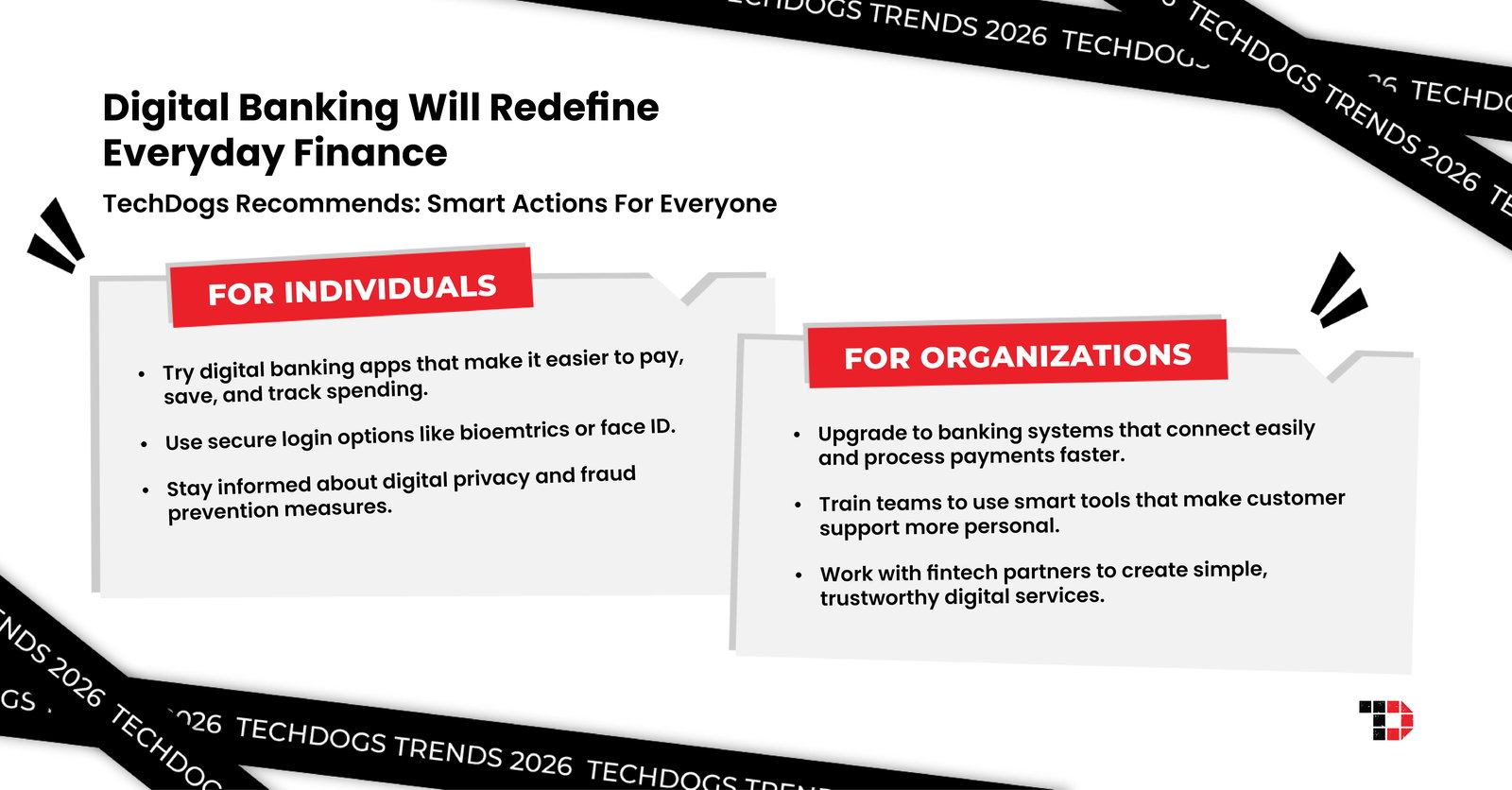
TechDogs Recommends: Smart Actions For Everyone
Trend 2: Cybersecurity In Finance Will Power The Foundations Of Digital Trust
In recent years, the financial world has seen an explosion of new digital risks. Cyberattacks on banks and fintech platforms grew sharper and more frequent, targeting everything from mobile apps to digital wallets. As businesses started using cloud systems, open APIs, and real-time payments, attackers’ strategies evolved to find holes in networks and third-party tools. Cybersecurity became the top priority for financial institutions trying to build consumer trust and keep operations running.
In 2026, banks are adopting “Zero Trust” systems that verify every user and transaction continuously. With growing cyber threats, biometrics are quickly replacing passwords as the standard for security. Fingerprint and facial recognition are now built into most banking apps, while subtle cues like typing speed or screen behavior add extra protection in the background. As digital money moves faster, cybersecurity is quietly becoming the foundation of trust in finance.
How Is The Industry Responding?
The financial sector is one of the most targeted industries by cybercriminals. In fact, Positive Technologies highlighted that the biggest cybersecurity risks for the financial sector are expected to come in 2025–2026 from weak API connections and attacks on third-party vendors that banks rely on. Another report from The WEF Global Cybersecurity 2024 found that 72% of respondents from financial firms faced more cyber threats, mostly related to fraud, phishing, and identity theft.
Dr. Veronica Paz, Professor of Accounting and Information Technology at Indiana University of Pennsylvania, put it plainly: “There’s more of a digital footprint as more technologies emerge, and as a result, there are more potential vulnerabilities and risks. We’re no longer just on a server. Now, we have ransomware, phishing, data breaches, insider threats, financial fraud—so many vulnerabilities and attacks on data.”
Challenges To Watch
The real challenge is scale. As banks connect with more fintech partners and rely on APIs, every new link creates another potential entry point for attackers. New technologies like quantum computing may soon crack current security encryption methods, turning data protection into a constant race. At the same time, the shortage of skilled cybersecurity experts is stretching defenses thin, especially for smaller banks and credit unions.
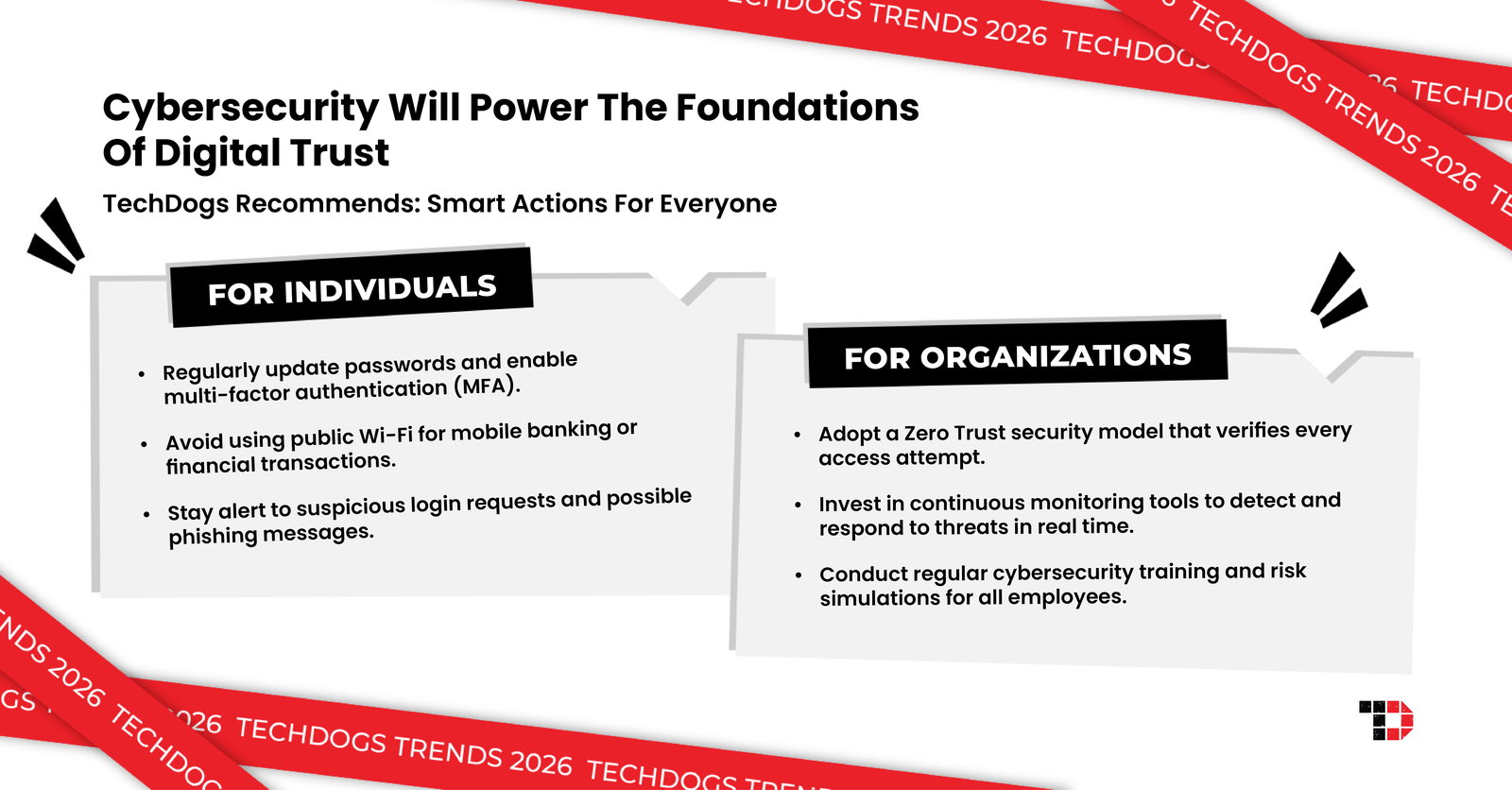
TechDogs Recommends: Smart Actions For Everyone
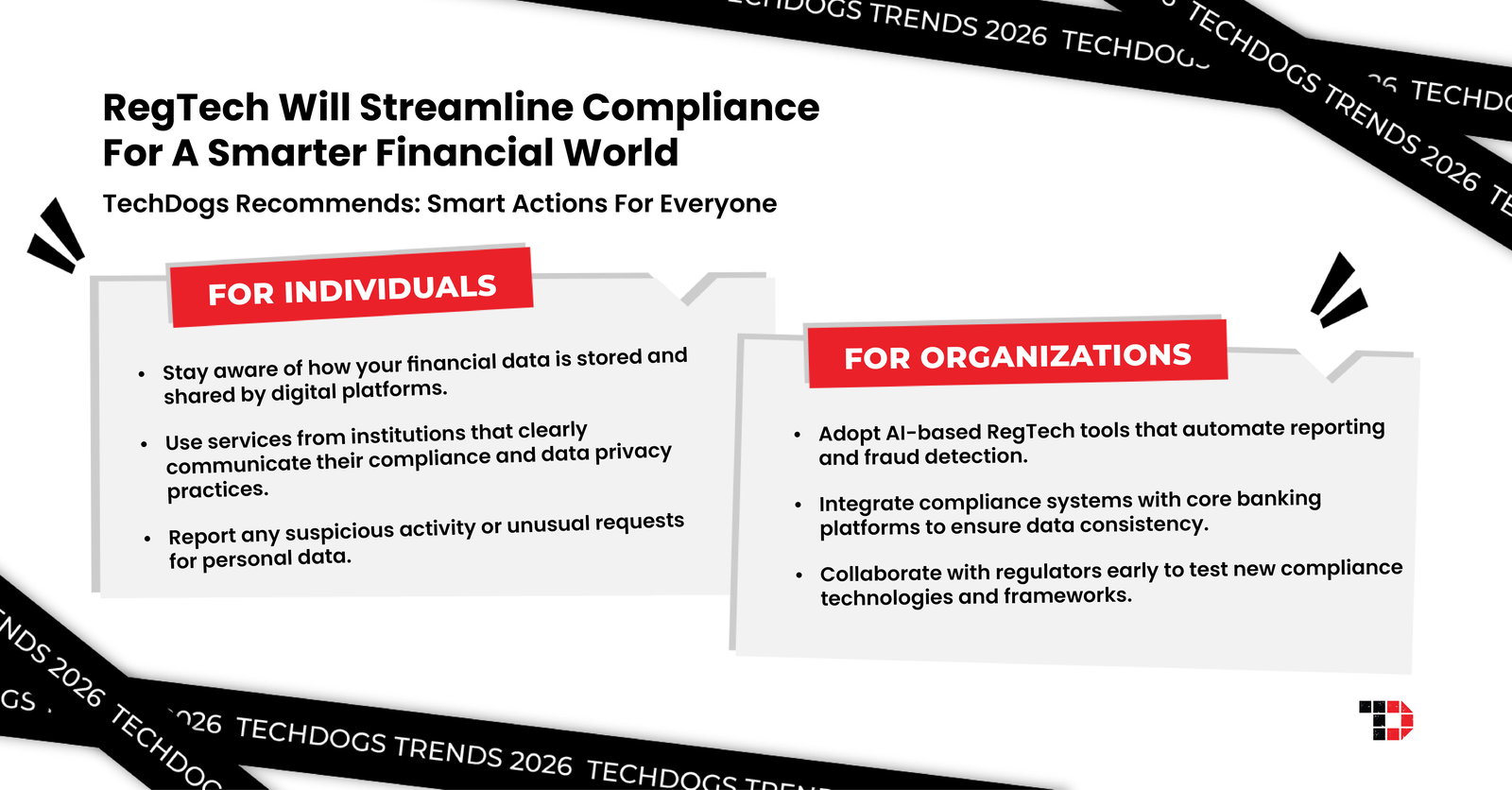
Trend 3: RegTech Solutions Will Streamline Compliance For A Smarter Financial World
Lately, banks and fintech have faced stricter rules around data privacy, reporting, and anti-money laundering (AML). Traditional compliance methods, handled by large teams and manual checks, can no longer match the speed and scale of digital transactions. That’s where RegTech (Regulatory Technology) Automation and real-time monitoring now help institutions manage compliance faster, cut risk, and keep pace with changing rules.
In 2026, RegTech solutions evolve from support tool to strategic advantage. With AI, Machine Learning (ML), and Natural Language Processing (NLP), these systems can now read and interpret new regulations automatically, adjusting policies as needed. Blockchain technology is being used to create transparent audit trails, while predictive analytics is helping detect potential risks before they escalate. A once-routine compliance task becomes a smarter, data-driven process built on trust and transparency.
Digital Banking: A full-ecosystem financial service delivered via mobile, web, and AI-powered tools that offers real-time payments, personalized insights, and 24/7 access, distinct from legacy online banking by its depth of intelligence and integration.
How Is The Industry Responding?
According to Mordor Intelligence, the RegTech market is valued at USD 20.67 billion in 2025 and is expected to reach USD 44.11 billion by 2030, growing at 16.37% each year. This growth shows how compliance tools are moving from simple rule-based systems to smarter, AI-powered platforms. This trend is also reflected in real-world success stories. A BioCatch case study reports how a major bank in Latin America used a RegTech solution with behavioral biometrics to boost fraud detection from under 50% to over 90%, cut false alerts by 66%, and improve customer safety.
RegTech Analyst’s director of research Mariyan Dimitrov says, “As financial institutions get to grips with the challenges of staying compliant amid rapidly changing regulatory obligations, as well as the growing presence of AI, the importance of working with the right RegTech partner is becoming critical.”
Challenges To Watch
As RegTech grows, financial institutions still face some tough hurdles. The mix of global and regional rules keeps changing, which makes it hard to stay fully compliant. Many banks also rely on older systems that don’t work smoothly with new technology. New areas like crypto and environmental, social, and governance (ESG) reporting bring extra complexity and keeping sensitive compliance data secure and transparent continues to be a top concern.
Topics For More Insights
TechDogs Recommends: Smart Actions For Everyone
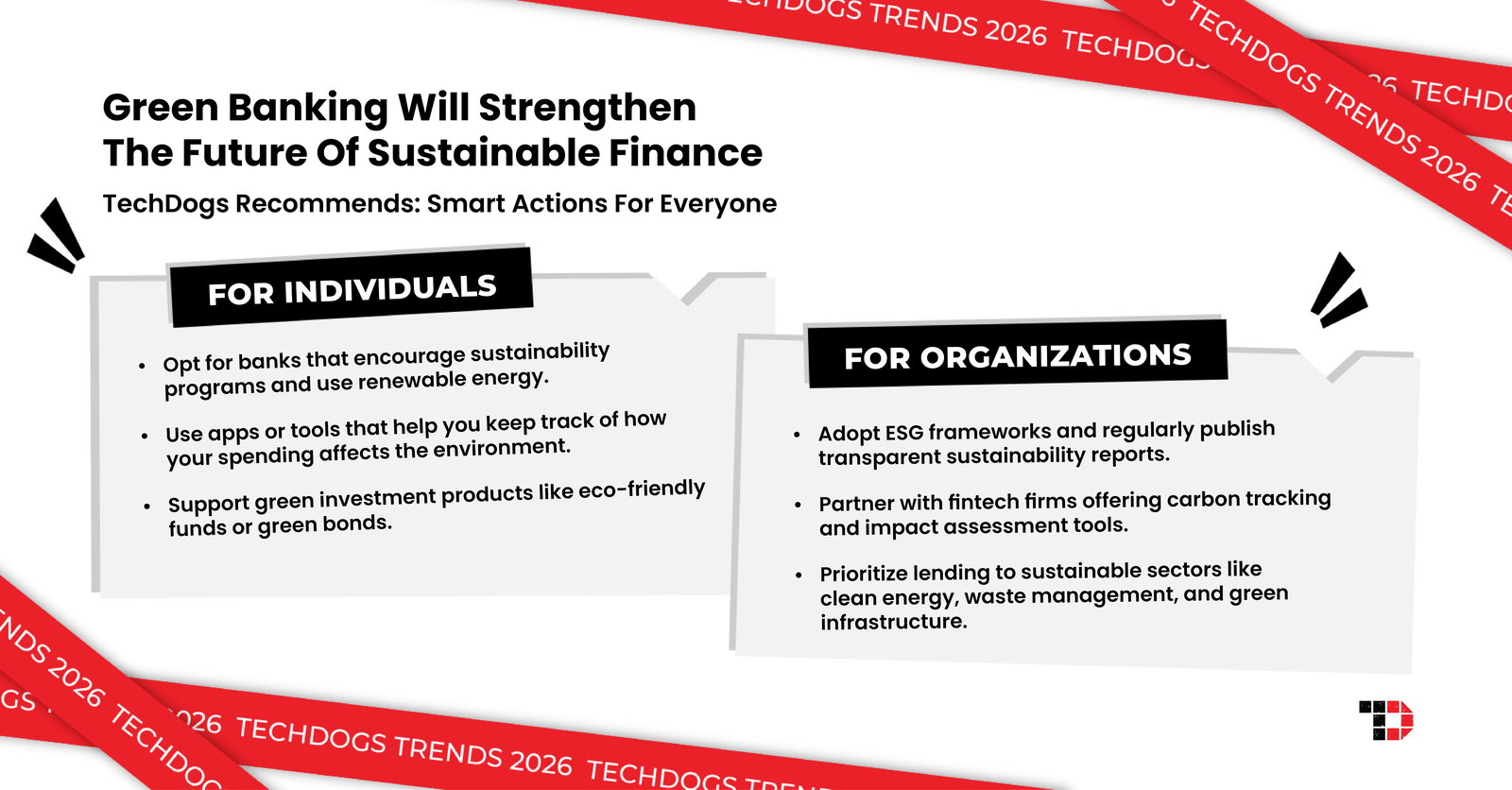
Trend 4: Green Banking Will Strengthen The Future Of Sustainable Finance In 2026
In recent years, banks scale ESG goals as part of core operations, driven by regulation and investor pressure. Financing renewable energy and offering green loans now reflect both reputation and economics. Environmental checks in lending protect institutions from losses tied to stranded assets, producing more stable, future-ready portfolios.
In 2026, green banking is set to become a defining pillar of global finance, evolving into a business priority. Financial institutions are using advanced data analytics and AI-driven tools to measure the environmental impact of their portfolios and assess climate-related risks in real time. Digital platforms now make it easier for customers to track the carbon footprint of their spending, while banks are issuing green bonds and sustainability-linked loans to fund low-carbon initiatives. The concept of green deposits, where savings directly fund climate-friendly ventures, are gaining rapid traction. By funding environmentally responsible projects, green fintech helps cut carbon emissions and limit climate risks.
How Is The Industry Responding?
According to Fintech Tables, about 70% of consumers prefer to engage with financial institutions that show a clear commitment to sustainability and green practices. As it turns out, 41% of banking sectors have experimented with green digital banking solutions like paperless statements and virtual branches as stated by Gitnux Market Data.
András Puskás, Deputy CEO of MBH Bank, noted that “It is important for us to integrate sustainability into our daily operations, thus contributing proportionately to the achievement of domestic climate goals and the promotion of a greener economy.”
Challenges To Watch
A key challenge for green banking is limited access to affordable capital, as many clean energy projects require high upfront investment that discourages private lenders. Investor caution, inconsistent global standards, and persistent greenwashing also erode trust. Building transparency and delivering measurable impact will be essential for green banking to achieve meaningful, lasting progress.
TechDogs Recommends: Smart Actions For Everyone
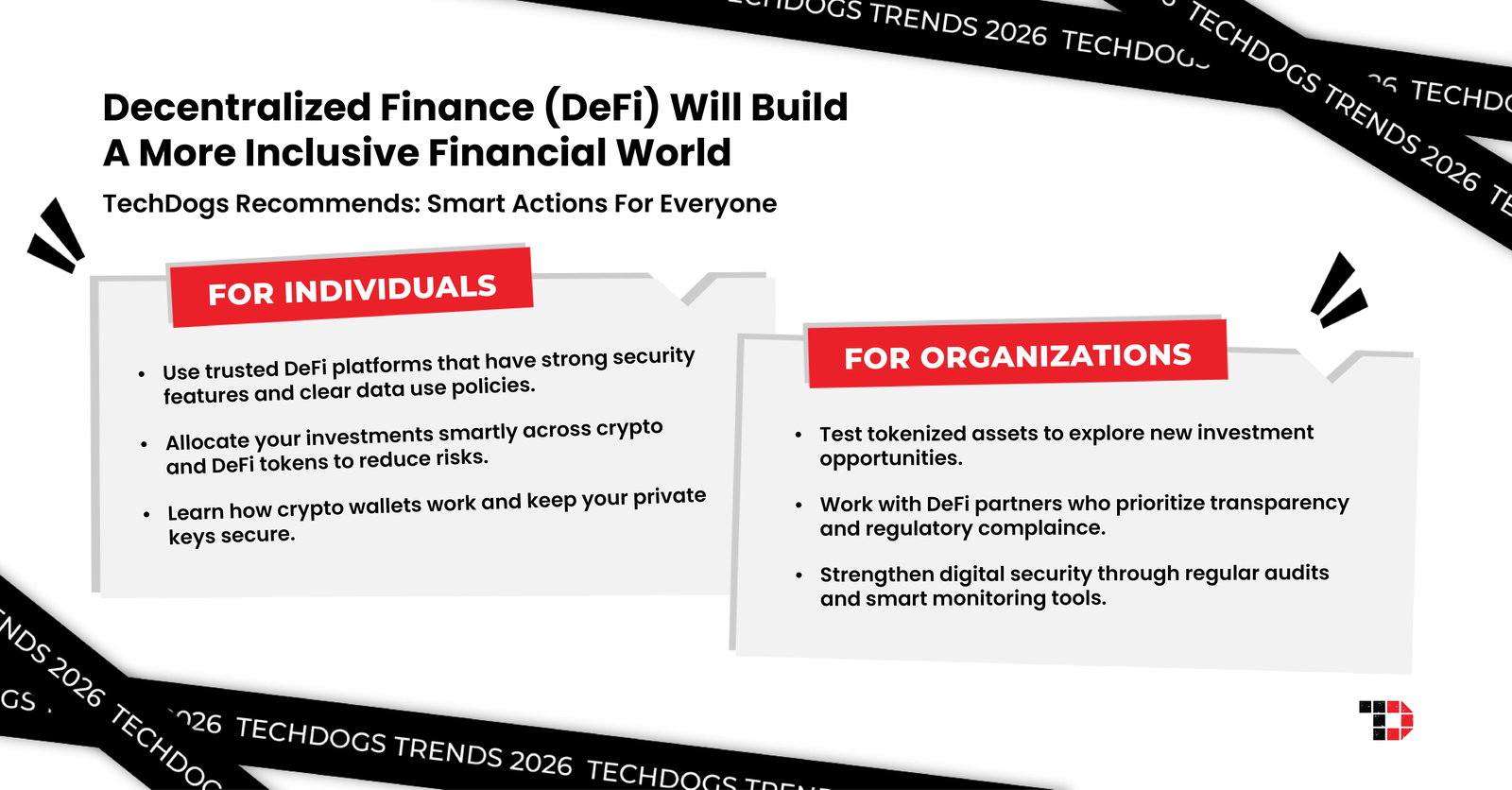
Trend 5: Decentralized Finance (DeFi) Platforms Will Build A More Inclusive Financial World
Decentralized Finance (DeFi) has grown from a niche concept into one of the most dynamic areas in financial technology. Built on blockchain, it lets people borrow, lend, and trade without relying on traditional banks or intermediaries. DeFi platforms offer transparency, lower costs, and full user control over assets. For the billions who lack access to conventional banking, decentralized finance opens a direct path to financial inclusion and independence.
In 2026, decentralized finance integrates into the global financial system through Omnichain DeFi, making it easier to move funds and trade across different blockchains. AI-powered tools add smarter automation across real-time trading and fraud detection to better risk management. Digital-first banks now emerge as user-friendly gateways, helping everyday customers explore DeFi platforms without technical barriers.
How Is The Industry Responding?
Grand View Research states that the global DeFi market was worth about USD 20.48 billion in 2024 and is expected to reach USD 231.19 billion by 2030, growing rapidly at 53.7% each year from 2025 to 2030. Alongside this progress, companies like Rumi Finance, RioDeFi, DFX Finance, and Elk Finance are developing DeFi solutions that simplify cross-chain payments, enable tokenization of real-world assets, and build decentralized platforms for trading and earning.
Sopnendu Mohanty, MAS’s chief fintech officer, says, “With the appropriate guardrails in place, digital assets and decentralized finance have the potential to transform capital markets.”
Challenges To Watch
DeFi’s growth comes with challenges, especially security risks like hacks and smart contract flaws that can cause major losses, while regulatory pressure may slow down innovation. Plus, fluctuating crypto prices can also keep traditional investors away. Beyond that, scaling across blockchains and ensuring ethical, transparent growth remain key hurdles as DeFi moves toward mainstream adoption.
TechDogs Recommends: Smart Actions For Everyone
Conclusion
The financial technology trends 2026 brings share a common thread: making money work better for more people. Digital banking, cybersecurity in finance, RegTech solutions, green banking, and decentralized finance platforms each address a different layer of trust, access, and intelligence.
Together, they represent the top FinTech innovations reshaping digital finance trends for the decade ahead.
Just as dropping coins in a piggy bank taught patience, today’s fintech shows that progress compounds the same way: step by step, coin by coin. The next chapter of finance is not just digital. It is more thoughtful, more inclusive, and more human than any chapter that came before it.
Frequently Asked Questions
What Are The Top Financial Technology Trends For 2026?
The top financial technology trends 2026 organizations must track include digital banking, cybersecurity in finance, RegTech solutions, green banking, and decentralized finance (DeFi) platforms. Together, these top FinTech innovations are transforming how people save, invest, and manage money securely and sustainably.
Why Is Cybersecurity Important In Financial Technology?
Cybersecurity in finance ensures digital trust by protecting financial data from fraud, phishing, and cyberattacks. According to WEF Global Cybersecurity 2024, 72% of financial firms faced increased cyber threats. In 2026, banks deploy Zero Trust systems, biometrics, and real-time monitoring to secure every transaction.
How Is Decentralized Finance (DeFi) Shaping The Future Of Finance?
Decentralized finance (DeFi) platforms enable borrowing, lending, and trading without traditional banks, giving users full control over their assets. According to Grand View Research, the global DeFi market is projected to reach $231.19 billion by 2030 at 53.7% CAGR. Companies like Rumi Finance, RioDeFi, and Elk Finance drive financial inclusion through cross-chain payments and real-world asset tokenization.
Wed, Oct 29, 2025

Enjoyed what you read? Great news – there’s a lot more to explore!
Dive into our content repository of the latest tech news, a diverse range of articles spanning introductory guides, product reviews, trends and more, along with engaging interviews, up-to-date AI blogs and hilarious tech memes!
Also explore our collection of branded insights via informative white papers, enlightening case studies, in-depth reports, educational videos and exciting events and webinars from leading global brands.
Head to the TechDogs homepage to Know Your World of technology today!
Disclaimer - Reference to any specific product, software or entity does not constitute an endorsement or recommendation by TechDogs nor should any data or content published be relied upon. The views expressed by TechDogs' members and guests are their own and their appearance on our site does not imply an endorsement of them or any entity they represent. Views and opinions expressed by TechDogs' Authors are those of the Authors and do not necessarily reflect the view of TechDogs or any of its officials. While we aim to provide valuable and helpful information, some content on TechDogs' site may not have been thoroughly reviewed for every detail or aspect. We encourage users to verify any information independently where necessary.
Loading comments...