
Cyber Security
Cybersecurity Trends Redefining Enterprise Security In 2026
Share
TL;DR
-
AI-Driven Attacks and Automated Defense: 82.6% of analyzed phishing emails now use AI-generated content (KnowBe4 2025).
-
Identity-First Security and Zero Trust: Credential theft surged 160% in 2025 (Check Point). Stolen credentials appear in roughly half of all analyzed breaches. CISA Zero Trust Maturity Model 2.0 places identity as the first of five technical pillars.
-
Supply-Chain and Third-Party Risks: IBM X-Force reports supply chain breaches quadrupled over the past five years. Third-party involvement in breaches doubled from 15% to 30% (Verizon DBIR 2025). 91% of CISOs report rising third-party incidents, yet only 3% have complete visibility beyond direct vendors.
-
Quantum-Readiness: NIST released its first three post-quantum cryptography standards in August 2024. 99% of Fortune-1000 companies are still unprepared for quantum threats. Adversaries are already using harvest-now-decrypt-later strategies.
-
OT and Critical Infrastructure: Dragos documented 1,693 ransomware attacks on industrial organizations in 2024, an 87% increase year-over-year. 75% impacted OT operations, and 25% caused full site shutdowns. Manufacturing ransomware attacks rose 56% in 2025 (Check Point).
Introduction
In The Dark Knight, the Joker tells Batman, “I'm not a schemer. I show the schemers how pathetic their attempts to control things really are.” He doesn't follow a fixed plan. He probes every weakness, adapts in real time, and exploits whatever opens up. In 2026, that is exactly how AI-powered adversaries operate. They do not need a blueprint. They generate one on the fly, faster than any human analyst can track.
Technology today has advanced more in the past three years than in some entire decades before, thanks to AI. That progress unlocked incredible opportunities, but it also opened the floodgates to attackers who innovate just as fast. Attackers now use generative AI to write convincing phishing emails. They exploit flaws from anywhere in the world and break into systems faster than security teams can patch them. Cybercrime is projected to cost the global economy $10.5 trillion in 2026, according to Cybersecurity Ventures. Ransomware attacks tripled between Q1 2024 and Q1 2025 (QBE Insurance Group). And Gartner projects global cybersecurity spending will reach $240 billion in 2026, a 12.5% increase, because organizations have no other choice.
In 2026, Cybersecurity is no longer limited to IT teams. It has become a matter of business survival and personal safety. From AI-powered attacks to identity fraud to deepfake scams, the threat landscape is evolving daily. The only way forward is to understand the new rules of this high-stakes game and prepare smarter, not just stronger.
Here are the five cybersecurity trends that will define protection, trust, and resilience in 2026.
Trend 1: AI-Driven Attacks And Automated Defense Will Take Center Stage
Like the Joker's chaos, AI-powered attacks in 2026 follow no fixed script. They conduct reconnaissance, generate phishing lures, exploit vulnerabilities, and pivot in real time, with no human attacker waiting to approve the next move.
Google's Cybersecurity Forecast 2026 highlights the use of AI by adversaries and defenders as the defining theme this year, where automation takes over reconnaissance, phishing, exploitation, and defense at a massive scale.
How Is The Industry Riding The Wave?
Threat actors are already using generative models to produce customized phishing messages, launch convincing deepfake scams, and mimic internal communication patterns. According to the KnowBe4 2025 Phishing Threat Trends Report, 82.6% of analyzed phishing emails now use AI-generated content. While deepfake fraud continues to grow, multiple security industry analysts warn of a sharp rise in AI-powered identity fraud across sectors such as fintech and retail.
For example, Anthropic reported a widely covered incident in 2025. Attackers linked to a China-based group used Claude Code. The company said the AI handled 80-90% of the operation, greatly reducing the attack timeline compared with traditional human-led hacks.
On the defensive side, AI is becoming central to detection, investigation, and response. According to a Netacea study, 93% of security leaders expect daily AI-powered attacks. Yet, according to the World Economic Forum (WEF), only 37% of organizations have security controls to assess the safety of AI tools before deployment, a governance gap that introduces weaknesses into the security stack.
David Koh, Commissioner of the Cyber Security Agency of Singapore: "My belief is that AI should be developed and deployed in a safe, secure, and trustworthy manner for the public good."
The shift is clear: AI has made the attacker's job faster and cheaper, and the defender's job more demanding. Automated, AI-driven defense is no longer an upgrade; it is the new baseline.
Challenges To Watch
Although AI empowers defenders, it also accelerates the arms race. There is growing concern around data poisoning and model hijacking. As organizations rapidly adopt AI without governance, "Shadow AI" appears, with unmonitored tools that may unknowingly expose sensitive data or create new attack paths.
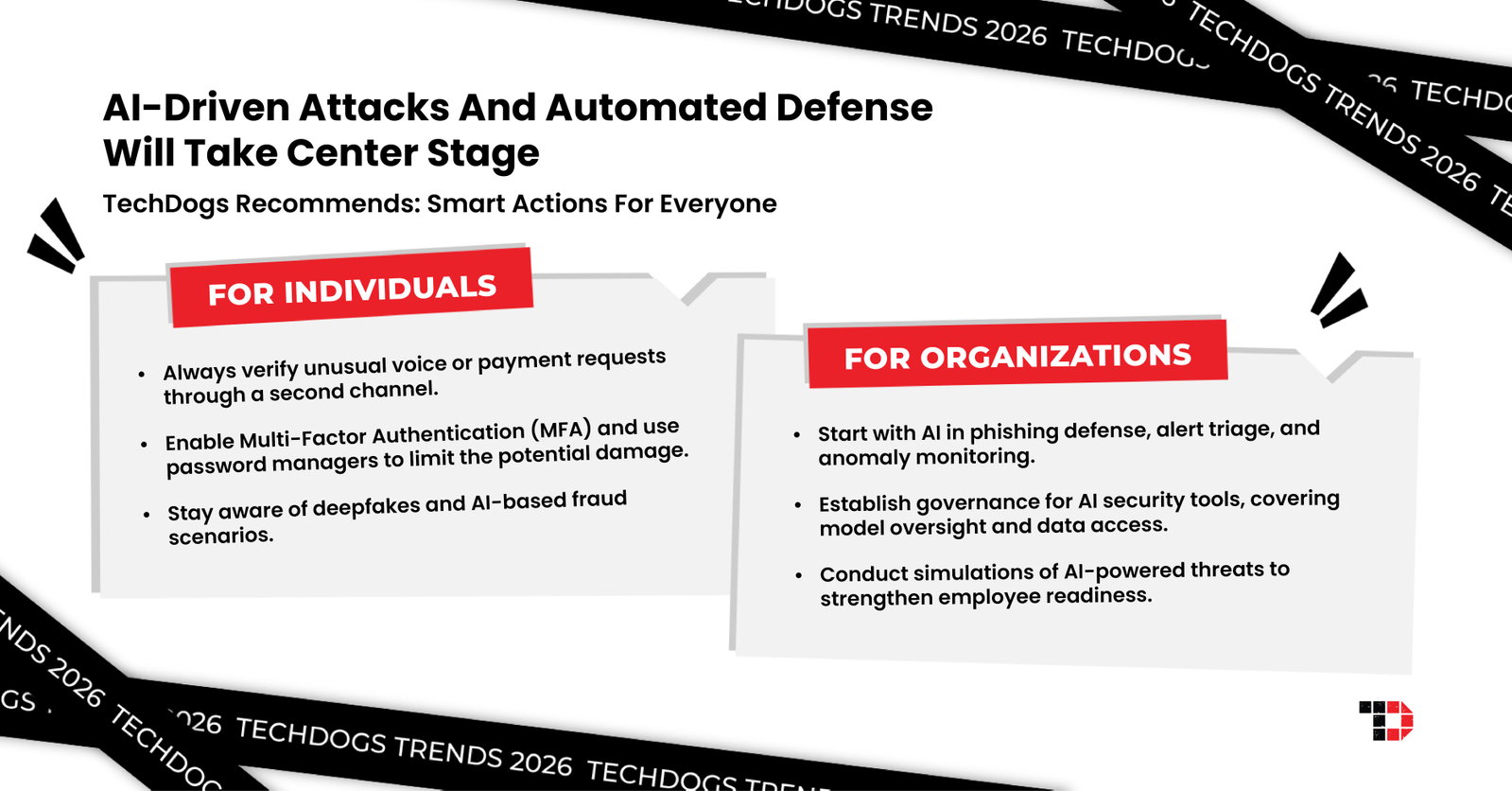
TechDogs Recommends: Smart Actions For Everyone
Trend 2: Identity-First Security Will Redefine Zero Trust
The breach no longer starts at the firewall. In 2026, it starts with a single login, either a reused password, a tricked helpdesk reset, or a compromised API key. Verizon's 2024 and 2025 Data Breach Investigations Reports show that stolen credentials appear in roughly half of all analyzed breaches.
Global security strategy is shifting from 'protect the network' to 'prove the identity, every time.' Gartner describes Identity as the new security perimeter, urging organizations to put identity at the center of security design rather than the LAN edge.
How Is The Industry Riding The Wave?
Identity is now attacked at scale. Check Point reports credential theft surged 160% in 2025, accounting for roughly one in five breaches, driven by AI-enhanced phishing and Malware-as-a-Service kits. Verizon's latest breach data shows 68% of breaches involve a non-malicious human element, such as error or social engineering.
The U.S. CISA Zero Trust Maturity Model 2.0 places Identity as the first of five technical pillars. Many large organizations are now rolling out Single Sign-On (SSO), phishing-resistant MFA, conditional access policies, and identity threat detection and response (ITDR) tools across hybrid cloud estates.
"Zero trust ensures no identity, device, or process is trusted by default, strengthening defenses against both human and AI-driven attacks," says Takanori Nishiyama, SVP APAC & Japan Country Manager, Keeper Security.
What this means in practice: identity sprawl is now a primary attack surface. Every dormant account, misconfigured SSO integration, and privilege escalation path is a door left open. Organizations enforcing identity controls with the same rigor as perimeter firewalls will detect breaches earlier and limit the damage when they occur.
Challenges To Watch
Organizations face identity sprawl across cloud environments, SaaS, and legacy systems, making consistent enforcement of MFA, privileged access, and lifecycle management complex. Attackers exploit weaknesses such as token theft and password reset manipulation.
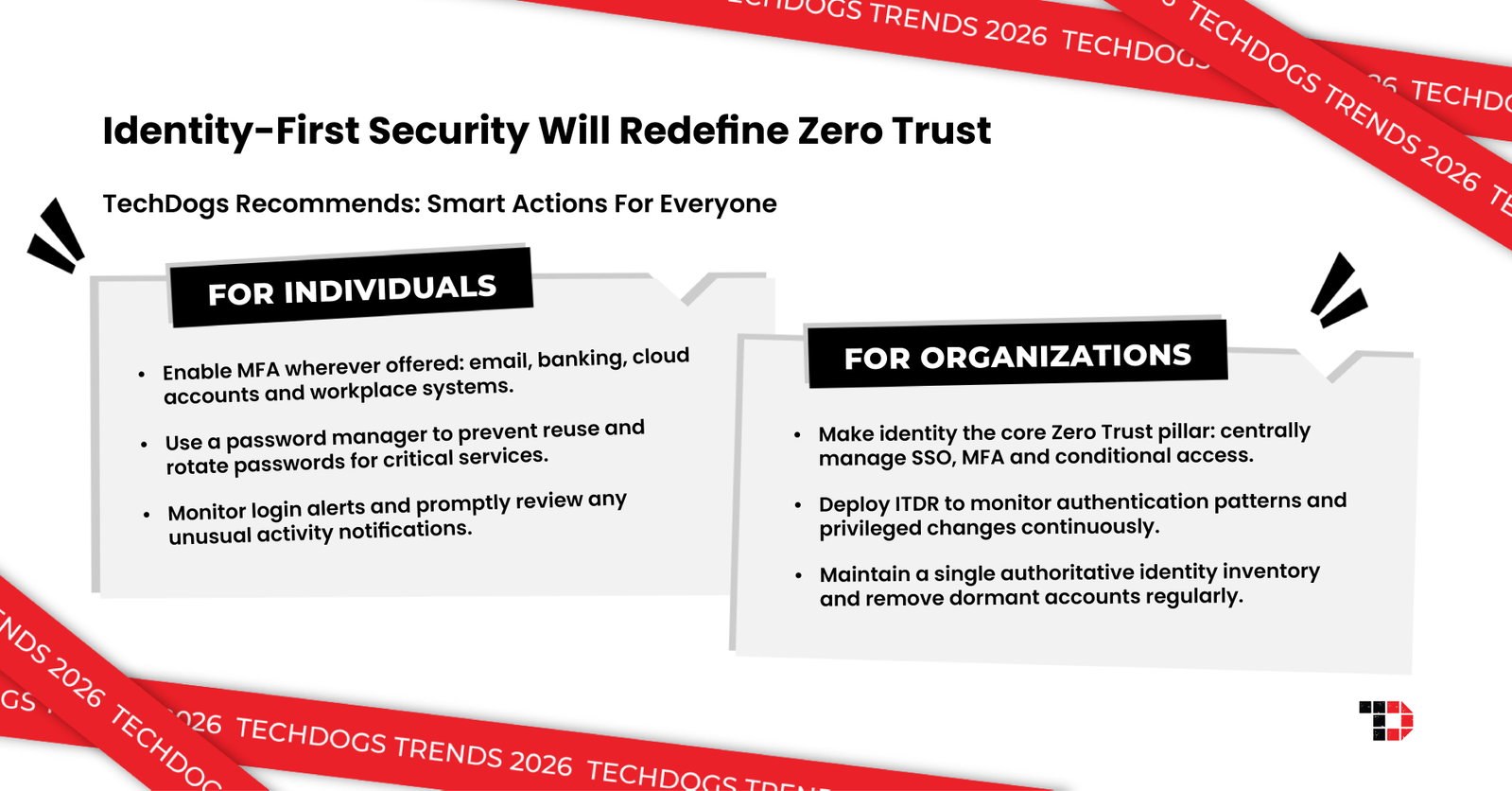
TechDogs Recommends: Smart Actions For Everyone
Trend 3: Supply-Chain And Third-Party Cyber Risks Will Intensify
Your company doesn't have to get hacked for you to end up on the front page. In 2026, a compromised payroll provider, logistics partner, or IT outsourcer can be enough to shut down operations, leak customer data, and damage stock prices. Every shared system, integration, and API extends the attack surface. Gartner has already warned that by 2025, 60% of supply chain organizations will treat cybersecurity risk as a primary factor in third-party buying decisions.
How Is The Industry Riding The Wave?
IBM's X-Force Threat Intelligence Index 2026 reports that major supply chain and third-party breaches have quadrupled over the past five years. Third-party involvement in breaches doubled from 15% to 30% (Verizon DBIR 2025). KPMG's 2024 supply-chain risk insights found that 53% of organizations had one or more breaches attributed to third-party suppliers, with remediation costs averaging $7.5 million per incident.
Visibility into extended vendor ecosystems stays dangerously low. SecurityScorecard's 2025 Supply Chain Cybersecurity Trends report notes that 79% of companies oversee less than half of their third-party supply chain with formal cybersecurity programs. A 2025 CISO survey revealed that 91% of CISOs report rising third-party cyber incidents, yet only 3% have complete visibility beyond direct vendors.
Nick Bradley, Director of IBM X-Force Threat Intelligence: "Attackers have figured out that they don't need to break through your carefully guarded front door when they can walk right in through your supplier's back door with valid credentials."
Palo Alto Networks also states: "No matter how advanced our internal defenses, we are only as strong as the weakest link in our supply chain."
The reality is this: your security posture is only as strong as the weakest vendor in your ecosystem. With third-party breaches now quadrupling over five years, continuous vendor risk monitoring is not a compliance exercise; it is a survival strategy.
Challenges To Watch
Organizations constantly onboard new SaaS tools and vendors faster than security teams can assess them, creating blind spots in access, credentials, and integrations. Even with frameworks like EU NIS2 raising accountability, many still lack visibility into vendor dependencies and risk levels.
Topics For More Insights
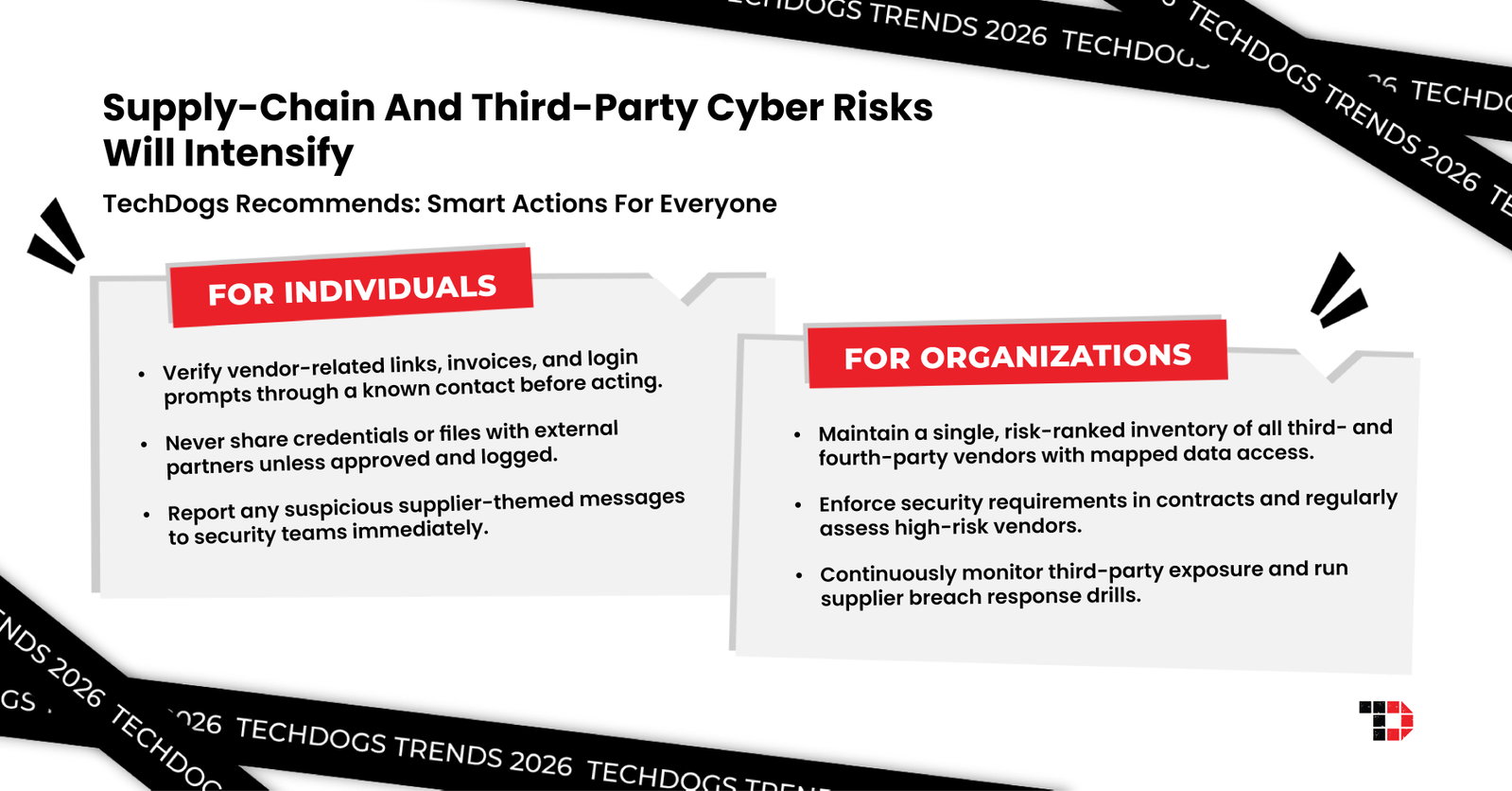
TechDogs Recommends: Smart Actions For Everyone
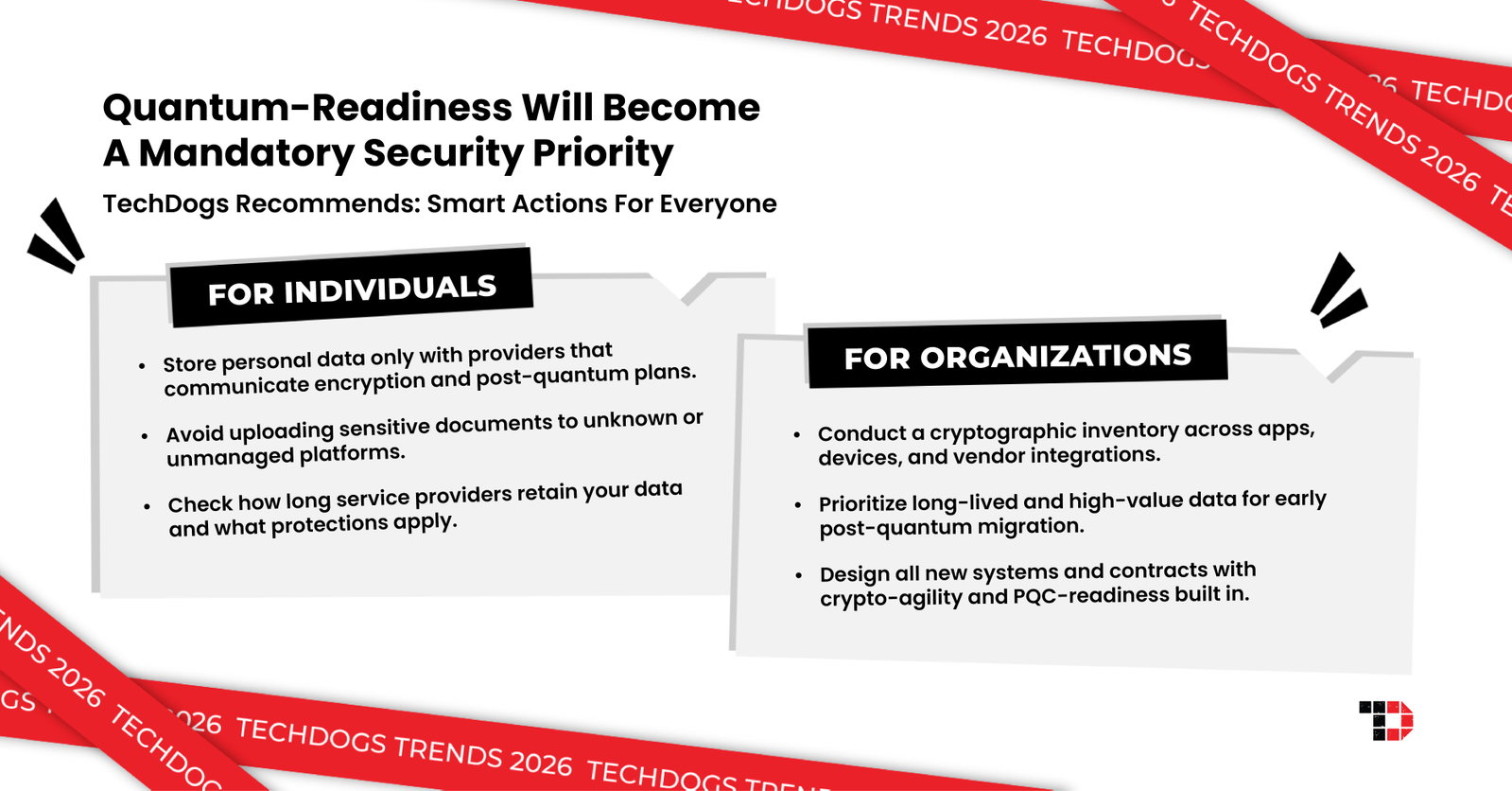
Trend 4: Quantum-Readiness Will Become A Mandatory Security Priority
The countdown to Quantum Readiness has already started. In 2026, most encryption still holds, but the clock is ticking toward 'Q-Day', the moment a cryptographically relevant quantum computer can break today's public-key cryptography. Security agencies warn that adversaries are already using a harvest-now-decrypt-later strategy: steal encrypted data today, decrypt it when quantum capabilities mature. CISA, NSA, and NIST jointly urge organizations to begin quantum-readiness planning immediately.
This is especially critical for long-lived sensitive data: medical records, financial histories, state secrets, industrial IP, and critical-infrastructure telemetry. For boards and CISOs, quantum risk has shifted from 'someday' to a budgeting and architecture problem that must be addressed this decade.
How Is The Industry Riding The Wave?
Governments and standards bodies are already acting. In August 2024, NIST released its first three post-quantum cryptography standards: FIPS 203 (ML-KEM) for general encryption, FIPS 204 (ML-DSA) for digital signatures, and FIPS 205 (SLH-DSA) as a hash-based backup signature scheme. In March 2025, NIST selected HQC as a fifth algorithm. These standards now anchor quantum-safe roadmaps for operating systems, browsers, VPNs, hardware security modules, and IoT chips.
The U.S. Quantum Computing Cybersecurity Preparedness Act requires federal agencies to inventory cryptographic systems and plan PQC migration across 2025-2035. The UK NCSC recommends that organizations identify vulnerable services by 2028 and treat quantum-readiness as a board-level risk.
Jason Nathaniel Ader, Co-Founder and Chief Innovation Officer at Qryptonic: "You can't mitigate what you don't measure. With 99% of Fortune-1000 companies unprepared for quantum threats, immediate action is crucial for maintaining competitive advantage and ensuring long-term security."
The advantage is shifting to organizations that treat quantum-readiness as infrastructure work, not future R&D. A cryptographic inventory is the starting point, and it is not as costly as the alternative of losing long-lived sensitive data to adversaries who have been collecting it for years.
Challenges To Watch
Quantum-readiness is a decade-long transformation. Many organizations don't know which algorithms they use where, lack "crypto-agility" in legacy systems, and depend on vendors whose PQC roadmaps are still evolving.
TechDogs Recommends: Smart Actions For Everyone
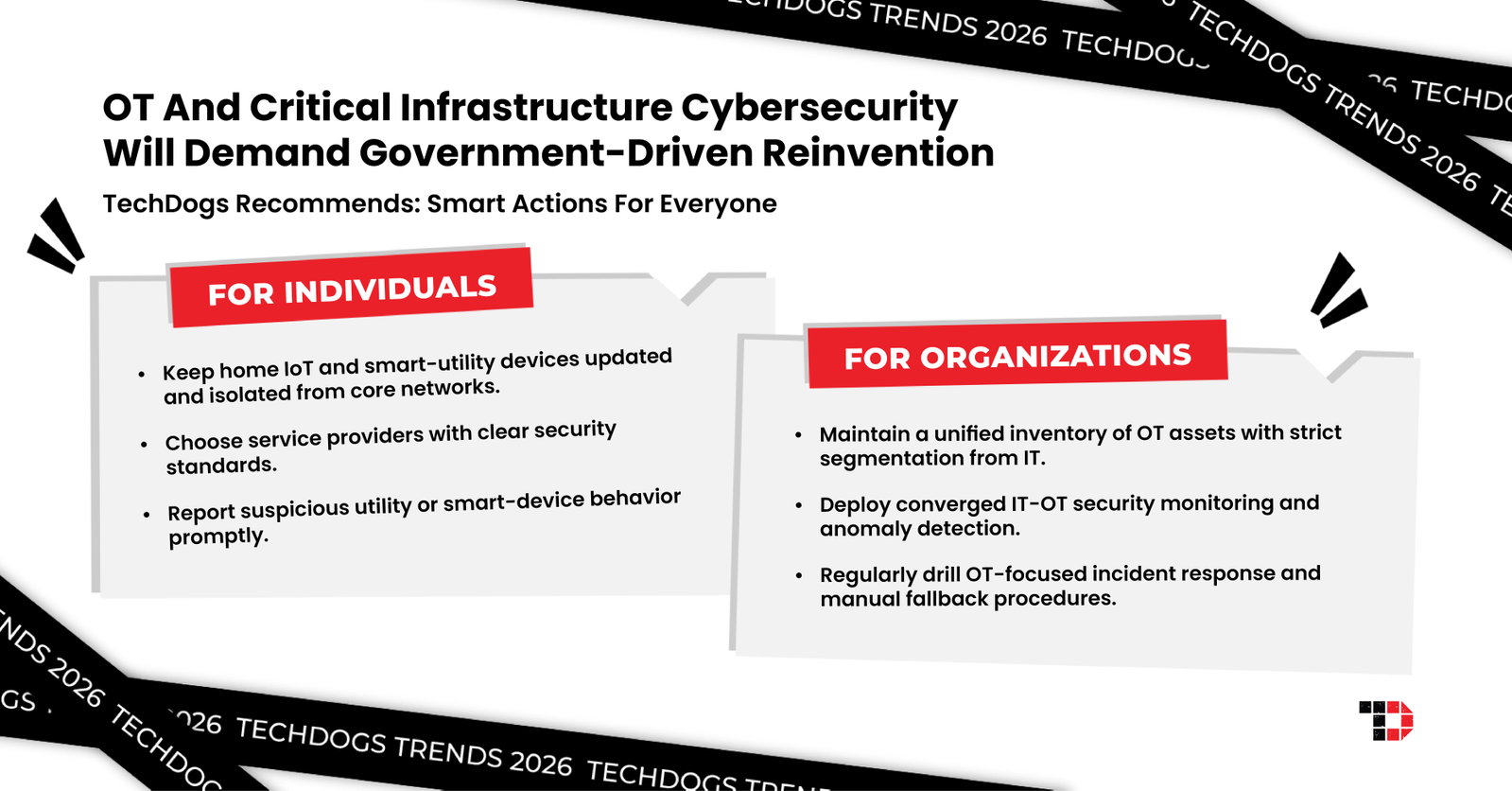
Trend 5: OT And Critical Infrastructure Cybersecurity Will Demand Government-Driven Reinvention
Now, the stakes are physical. In April 2025, Russian-linked hackers briefly seized control of the Bremanger dam in Norway, remotely opening a floodgate and releasing around 500 liters of water per second for four hours before operators regained control. In June 2025, cyberattacks on two hospitals in Delhi, India, forced one to shift critical services to manual operations.
As cities, industries, and utilities become more automated and connected through IoT devices, cloud-linked control systems, and remote-access tools, these incidents show how attacks on operational technology (OT) can quickly spill into the physical world. Governments and security agencies warn that failures in OT cybersecurity can threaten public safety and essential services.
How Is The Industry Riding The Wave?
Dragos documented 1,693 ransomware attacks targeting industrial organizations in 2024, an 87% increase over the previous year, with 75% impacting OT operations and 25% causing full-site shutdowns. In 2025, the surge continued: global ransomware incidents rose 32% year-over-year to 7,419 documented cases, while manufacturing-targeted attacks rose 56% (Check Point), per Industrial Cyber reporting. A Kansas water-treatment plant breach prompted FBI involvement in 2024.
Fortinet's 2024 State of Operational Technology and Cybersecurity report found that only 5-15% of organizations have complete visibility into OT systems, while over half experienced ransomware or wiper intrusions in the past year. Regulators are responding through measures such as NERC CIP-015-1 to enforce improved internal monitoring of energy infrastructure.
Peter Burns, who leads Accenture's business in Australia and New Zealand: "Client demand for cybersecurity services is accelerating as data and digital environments become increasingly connected and heightened threats are exposed across operational value chains, supply chains, and the enterprise. The need for responsible governance is also rising as AI and Quantum technologies advance."
The takeaway for organizations: OT security has moved from a compliance checkbox to a board-level concern with physical consequences. The question is no longer whether critical infrastructure will be targeted; it already is. The question is whether defenders will have the visibility and response capability to contain the blast radius before water flows, power fails, or hospital systems go dark.
Challenges To Watch
Legacy OT systems weren't built for cyber defense, and downtime risk slows patching. Fragmented environments with multiple vendors and old protocols reduce visibility and increase response complexity.
TechDogs Recommends: Smart Actions For Everyone
Final Thoughts
Batman never beats the Joker by being stronger. He beats him by being smarter, by understanding the pattern beneath the chaos, anticipating the next move, and building systems that hold even under pressure that no one could predict in advance. That is the only model that works against AI-powered adversaries in 2026.
As 2026 unfolds, Cybersecurity is no longer just about networks. It is about identities, ecosystems, physical infrastructure, and the future of encrypted trust. AI has changed both the threat and the defense.
The organizations that will thrive are those that anticipate, adapt, and act early. In cybersecurity, readiness is not a luxury, it is survival. The defenders who win are not the ones with the thickest walls. They are the ones who see the attack coming before it arrives.
Frequently Asked Questions
What Are The Top Cybersecurity Trends To Watch In 2026?
The five most defining trends include AI-driven attacks and autonomous defense, identity-first Zero Trust models, third-party supply chain security, quantum-safe migration, and protection of operational technology. Together, they signal a shift to security that safeguards both digital and physical environments.
How Should Organizations Prepare For AI-Powered Cyber Threats?
Organizations must adopt automated detection and response, enforce strong identity controls, continuously validate external dependencies, and establish governance for emerging tools. Globally, 82.6% of phishing emails now use AI-generated content (KnowBe4 2025), and 93% of security leaders expect daily AI-powered attacks, making automated, AI-driven defense the new baseline for any organization serious about cyber resilience.
What Are The Top 5 Major Threats To Cybersecurity?
The top five cybersecurity threats in 2026 are AI-driven phishing and social engineering attacks, credential and identity compromise, software supply-chain breaches, ransomware targeting critical infrastructure, and data exposure due to weak cloud or third-party security controls, all growing in frequency and impact globally.
Wed, Dec 3, 2025

Enjoyed what you've read so far? Great news - there's more to explore!
Stay up to date with the latest news, a vast collection of tech articles including introductory guides, product reviews, trends and more, thought-provoking interviews, hottest AI blogs and entertaining tech memes.
Plus, get access to branded insights such as informative white papers, intriguing case studies, in-depth reports, enlightening videos and exciting events and webinars from industry-leading global brands.
Dive into TechDogs' treasure trove today and Know Your World of technology!
Disclaimer - Reference to any specific product, software or entity does not constitute an endorsement or recommendation by TechDogs nor should any data or content published be relied upon. The views expressed by TechDogs' members and guests are their own and their appearance on our site does not imply an endorsement of them or any entity they represent. Views and opinions expressed by TechDogs' Authors are those of the Authors and do not necessarily reflect the view of TechDogs or any of its officials. While we aim to provide valuable and helpful information, some content on TechDogs' site may not have been thoroughly reviewed for every detail or aspect. We encourage users to verify any information independently where necessary.
Loading comments...