
Customer Engagement
Top 5 Real-Time Interaction Management Software Of 2026
Share
TL;DR
-
HCL Unica helps enterprises orchestrate complex real-time customer journeys across multiple channels and touchpoints.
-
Treasure AI transforms fragmented customer data into unified profiles that support faster and more intelligent engagement.
-
Amazon Personalize enables businesses to deliver real-time recommendations without building machine learning infrastructure from scratch.
-
Adobe Campaign simplifies cross-channel engagement and customer journey management within Adobe-driven ecosystems.
-
Monetate combines personalization, testing, and optimization to help brands deliver more relevant digital experiences.
Introduction
Have you watched Stranger Things?
It is one of the most popular Netflix shows that has come out in the last decade. If you remember the scene when the lights start flickering, everyone suddenly realizes that something is about to happen.
Businesses face a surprisingly similar challenge today.
Every click, search, swipe, store visit, abandoned cart, support request, and social interaction leaves behind a signal. Some customers are ready to make a purchase. Some are comparing alternatives. Some are about to leave. Others simply want reassurance before taking the next step.
The problem is that these signals do not wait around.
That is why businesses are increasingly turning to Real-Time Interaction Management (RTIM) software.
These platforms help organizations analyze live customer behavior, identify intent as it emerges, and determine the next-best action while the interaction is still unfolding. Whether that means serving a personalized offer, recommending a product, triggering a support response, or adapting a customer journey in real time, RTIM helps brands stay relevant when timing matters most.
Before we explore the leading platforms in this category, let's first understand what RTIM software actually does.
What Is A Real-Time Interaction Management Software?
Real-Time Interaction Management (RTIM) software is a technology that helps businesses understand, decide, and respond to customer needs the moment an interaction takes place.
It collects and analyzes data from multiple touchpoints, including websites, mobile apps, emails, call centers, social media platforms, physical stores, customer service channels, and connected digital experiences. By combining these signals, the software creates a live view of each customer's behavior, preferences, and intent.
Using that real-time context, RTIM platforms help businesses determine the next-best action, message, recommendation, offer, or engagement strategy for every individual customer.
Unlike traditional marketing approaches that rely on delayed insights or broad audience segments, RTIM enables organizations to deliver timely, relevant, and highly personalized experiences while the opportunity is still active.
In simple terms, RTIM software helps businesses move from reacting to customer behavior to responding in the moment.
Top 5 Real-Time Interaction Management Software of 2026
Customer expectations are evolving faster than ever, and relevance increasingly depends on timing. The ability to recognize intent, personalize engagement, and respond instantly can often make the difference between a conversion and a missed opportunity.
Here are our Top 5 Real-Time Interaction Management Software platforms of 2026.
 |
 |
 |
 |
 |
HCL Unica: Best Overall
HCL Unica is a veteran real-time interaction management tool and enterprise marketing automation platform built for brands that need precision at scale. It helps teams personalize customer interactions in milliseconds across websites, call centers, POS, ATMs, kiosks, and more.
Unica is now owned by HCL Software, after HCL acquired select IBM software products, including Unica, in 2019. It brings together real-time personalization, journey orchestration, campaign management, AI-led recommendations, next-best-channel intelligence, and enterprise-grade data control in one powerful suite.
Why We Chose HCL Unica In 2026
HCL Unica stands out as an enterprise-first RTIM platform built for scale, control, and complex customer journeys. For 2026, its Unica+ evolution adds predictive AI, GenAI, agentic AI, behavioral signals, and context-aware orchestration.
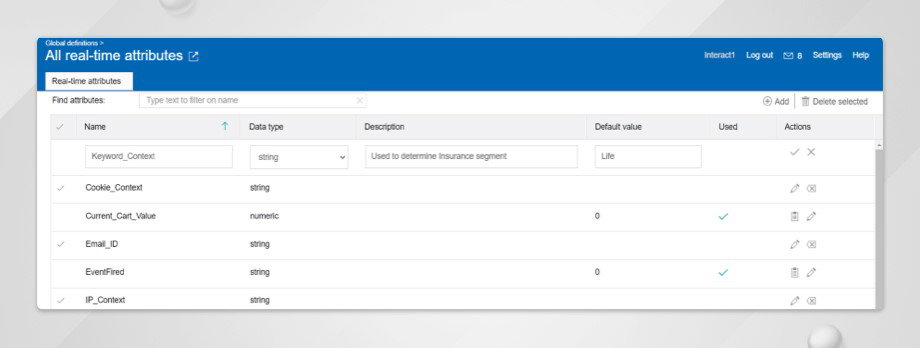
Unlike lighter tools, Unica fits large, regulated, data-heavy businesses that need deep customization, flexible deployment, legacy integration, and strong governance. With strong Gartner Peer Insights ratings and proven enterprise support, HCL Unica remains a powerful choice for brands that want personalization without losing control.
Pricing
HCL Unica does not list a fixed starting price. As an enterprise RTIM, it follows a custom quote-based model relying on business needs, database size, and select modules such as Unica Interact or Unica Campaign.
What Works And What Doesn’t
| Pros | Cons |
| Massive scalability | High implementation overhead |
| Robust real-time decisions | Interface complexity |
| Deep data integration | Reporting limitations |
Our Final Take
HCL Unica is ideal for large, data-rich enterprises that need real-time personalization, complex journey orchestration, deep integrations, and strict governance across high-volume channels. It may not suit small teams or fast-moving startups that need simple setup, low-cost pricing, and lightweight campaign tools.
Treasure AI: Best AI Features
Treasure AI, formerly Treasure Data, is an agentic experience platform built on a powerful enterprise CDP foundation. It unifies customer data, resolves identities, and uses AI agents to drive real-time personalization, messaging, and decisioning. The company serves 400+ enterprise customers, with past public references also citing 450+ brands, including major global names.
Treasure Data was acquired by Arm in 2018, then separated to operate independently under SoftBank’s portfolio in 2021. It raised $234 million in 2021, was named a Leader in the 2024 Gartner Magic Quadrant for Customer Data Platforms and won “Overall Data Analytics Company of the Year” at the 2024 Data Breakthrough Awards.
Why We Chose Treasure AI In 2026
Treasure AI stands out by turning the traditional CDP into an agentic RTIM engine. It activates real-time decisions through AI agents, messaging, personalization, and analytics in one loop. Its edge is speed with governance.
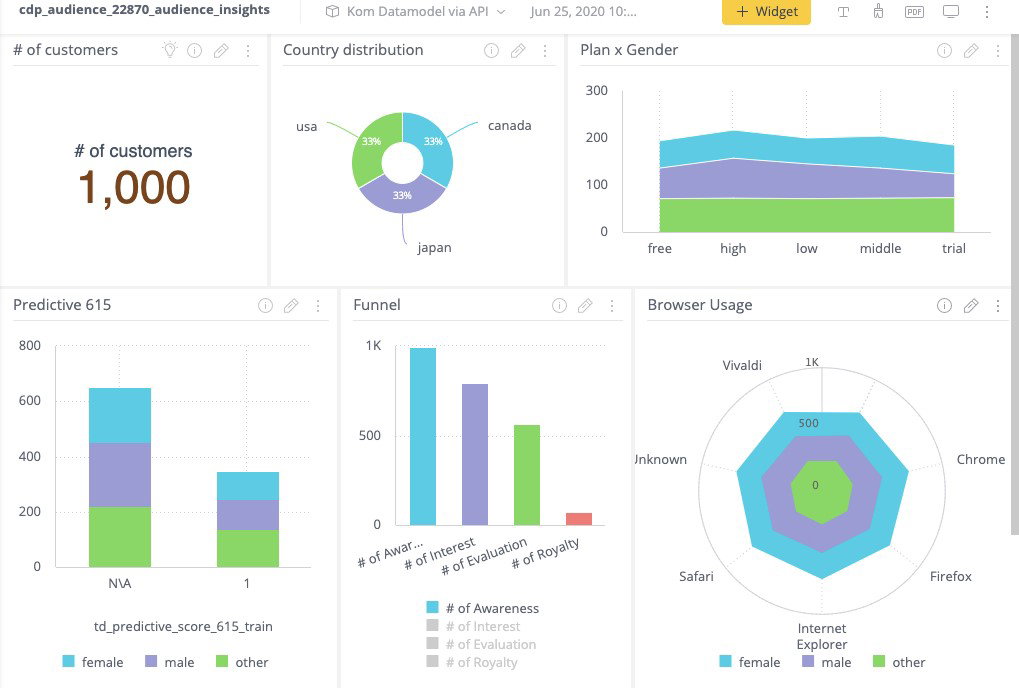
Treasure AI Studio offers 50+ pre-built skills for segments, journeys, SQL, dashboards, integrations, and AI agents. It also supports 400+ integrations, billions of profile activations, and millions of records per second.
Treasure AI’s security is enterprise-grade, with HIPAA Type 2, privacy controls, consent tracking, encryption, RBAC, audit logs, and compliance support. Gartner users rate Treasure AI 4.5 stars, while G2 reviewers praise its flexible integrations, analytics depth, and hands-on support. For 2026, it is best positioned for enterprises that want AI-native customer intelligence with serious scale and control.
Pricing
Treasure AI is not a low-cost, flat-rate tool and does not provide a free version. Built for enterprise CDP and autonomous AI use cases, its standard platform suites reportedly start at $8,825 per month.
What Works And What Doesn’t
| Pros | Cons |
| Rapid data unification | Heavy data dependency |
| Autonomous AI agents | Premium pricing |
| Lifecycle governance | Integration complexities |
Our Final Take
Treasure AI suits data-heavy enterprises that need AI-led personalization, identity resolution, and real-time customer intelligence at scale. It may not fit SMBs or lean teams seeking a low-cost, plug-and-play RTIM tool.
Amazon Personalize: Best Value
Amazon Personalize is AWS’s fully managed AI recommendation engine for real-time product, content, and marketing personalization. AWS claims that Personalize’s users include FOX, Seven West Media, Discovery Education, Coursera, Ticketek, Razer, and Paytm.
Amazon Personalize’s impact is proven, with FOX seeing a six percent lift in average minutes viewed and Seven West Media reporting a 48% increase in minutes interacted. It stands distinctly for delivering AWS-scale personalization, low-latency recommendations, managed infrastructure, and usage-based pricing.
Why We Chose Amazon Personalize In 2026
Amazon Personalize brings Amazon-style recommendation power to businesses without heavy ML effort. It supports real-time and batch recommendations, personalized ranking, similar items, user segmentation, business-rule filters, and GenAI-ready recommendation metadata. Its v2 Transformer-based recipes handle catalogs of up to 5 million items with lower latency and stronger accuracy.
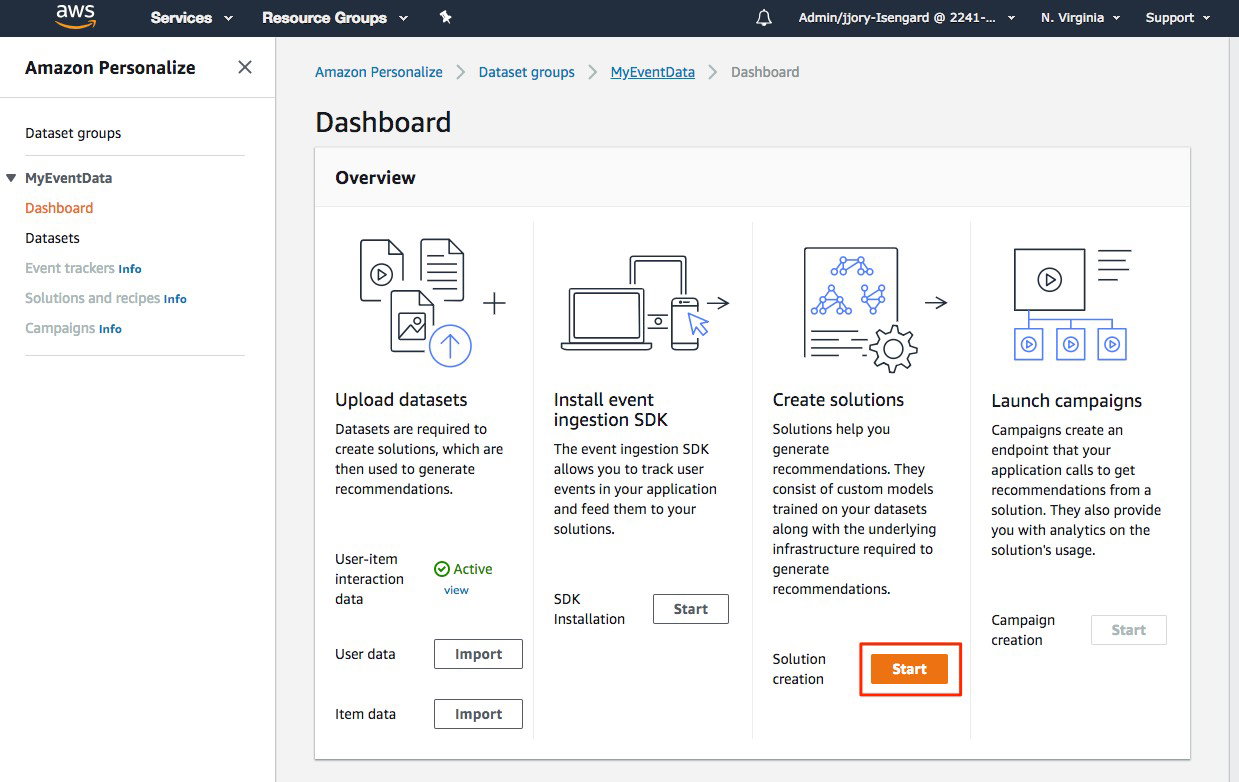
Backed by AWS scalability, encryption, documentation, support plans, and partner resources, it is ideal for teams that want focused, API-driven personalization with enterprise-grade cloud value.
Pricing
Amazon Personalize has no fixed starting price. It uses pay-as-you-go pricing with no minimum fees, setup costs, or upfront commitments, and new users can begin with the AWS Free Tier for the first two months.
What Works And What Doesn’t
| Pros | Cons |
| Real-time responsiveness | Costly for small scale |
| Handles cold start | Data-hungry |
| Seamless AWS integration | Longer training times |
Our Final Take
Amazon Personalize suits digital-first enterprises that need real-time recommendations, personalized ranking, user segmentation, and AWS-scale deployment without building ML models from scratch. It may not fit brands seeking a full RTIM suite with journey orchestration, campaign management, and broad marketing automation beyond recommendations.Adobe Campaign: Best For Integration
Adobe Campaign is a cross-channel campaign management platform for personalized customer engagement across email, mobile, direct mail, and more. It is part of Adobe Experience Cloud and integrates deeply with Adobe Real-Time CDP, Adobe Experience Platform, and Adobe Analytics.
The platform originated from Adobe’s 2013 acquisition of Neolane. It is widely used for its strong Adobe ecosystem connectivity and enterprise orchestration power.
Why We Chose Adobe Campaign In 2026
Adobe Campaign stands out for deep cross-channel orchestration across email, SMS, push, direct mail, web, call centers, and stores. Its biggest edge is Adobe Experience Cloud integration, connecting with Adobe Real-Time CDP, Experience Platform, Analytics, and Journey Optimizer.
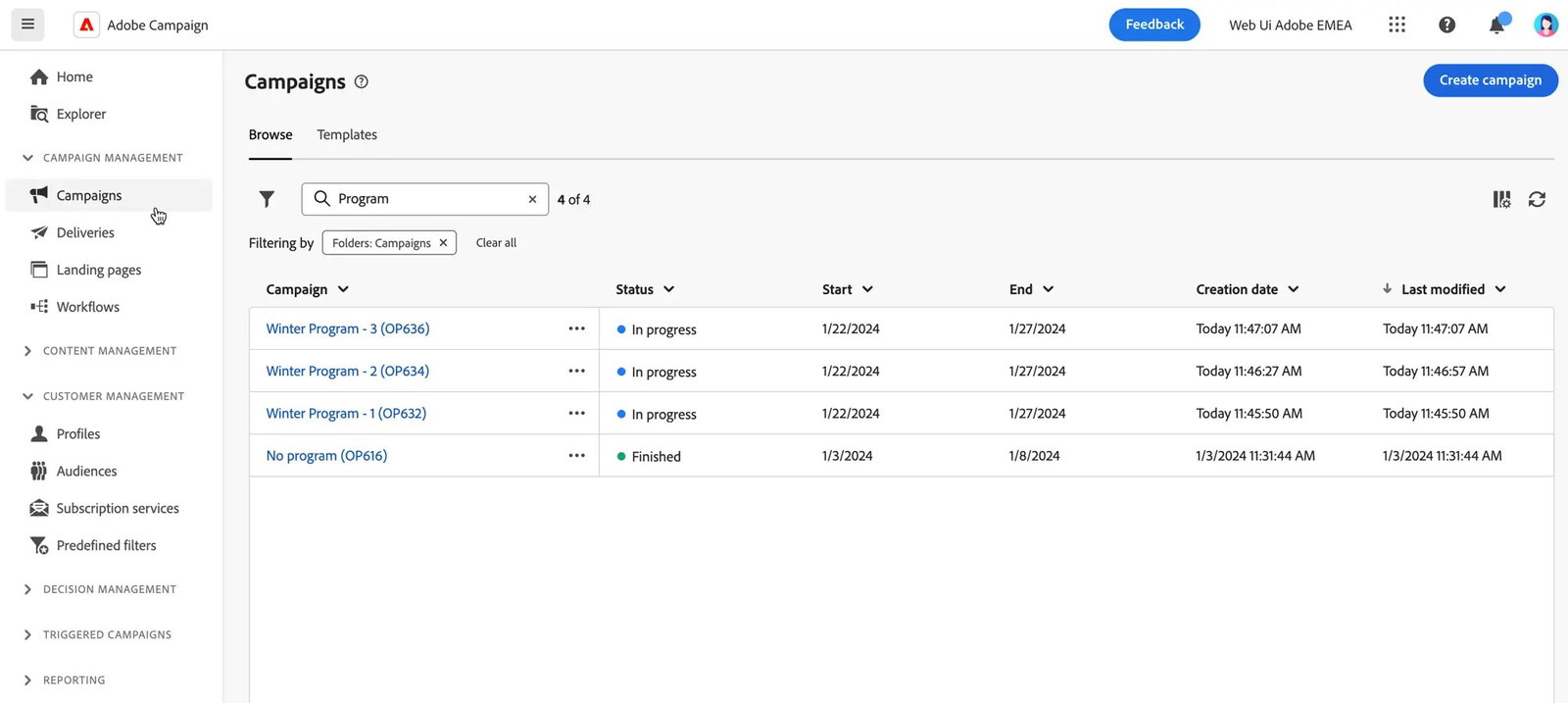
For 2026, Campaign v8 adds cloud-native scale, Snowflake-powered performance, AI Assistant, experimentation, send-time optimization, and stronger security. It is a strong fit for large brands that want connected campaign execution with Adobe-level trust and scale.
Pricing
Adobe Campaign does not publish a fixed starting price. As an enterprise platform, its pricing is quote-based and tailored to each company’s scale, needs, and deployment requirements.
What Works And What Doesn’t
| Pros | Cons |
| Omnichannel orchestration | Steep learning curve |
| Enterprise scalability | High implementation and resource cost |
| Ecosystem integration | Legacy interface |
Our Final Take
Adobe Campaign suits large, Adobe-led enterprises needing high-volume, cross-channel orchestration with strong data governance. It may not fit small teams seeking a lightweight, low-cost RTIM tool.
Monetate: Best Customer Support
Monetate is an AI-driven experience optimization platform for real-time personalization, experimentation, recommendations, and journey testing. It is now a Centre Lane Partners portfolio company, after Kibo spun out Monetate as a standalone brand in 2022.
Monetate serves 200+ enterprise customers and expanded its capabilities by acquiring SiteSpect in 2025. For 2026, it is recognized for combining enterprise personalization with strong guidance, service, and optimization expertise.
Why We Chose Monetate In 2026
Monetate stands out as a digital-first RTIM platform for AI personalization, experimentation, recommendations, and experience optimization. Its 2025 SiteSpect acquisition adds stronger server-side testing, zero-flicker experiments, enterprise scale, and deeper security.
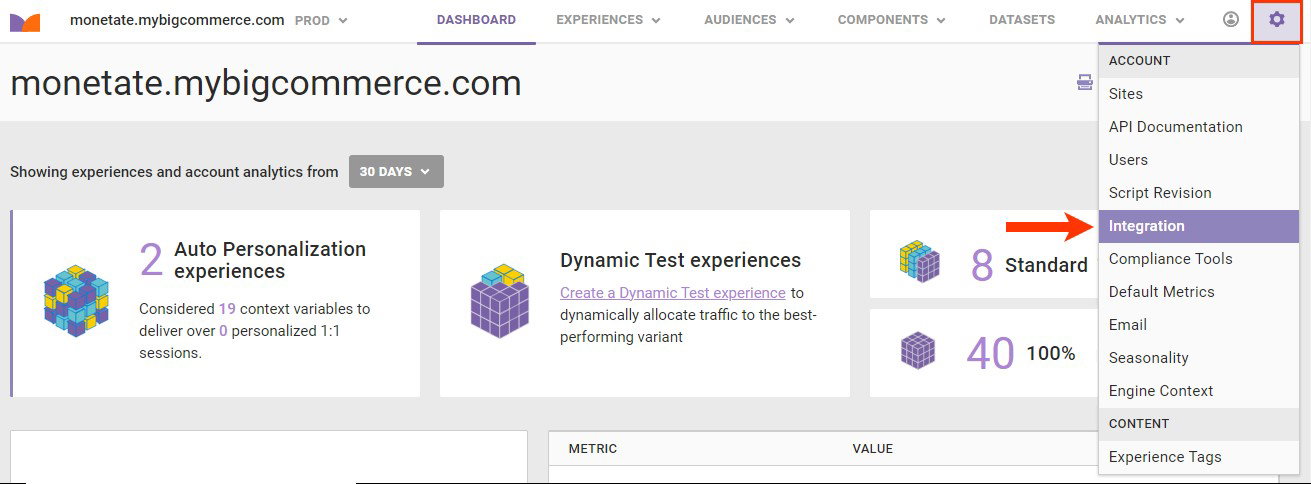
Built for web, mobile, app, and ecommerce journeys, Monetate is especially strong for retail and digital commerce brands. For 2026, it is best positioned for teams that want personalization, testing, and customer success support in one focused growth engine.
Pricing
Monetate does not use fixed or tiered pricing. It follows custom enterprise pricing based on traffic volume and personalization requirements.
What Works And What Doesn’t
| Pros | Cons |
| Dynamic A/B Testing | Compatibility issues |
| User-friendly interface | Limited analytics |
| Omnichannel personalization | Costly for smaller businesses |
Our Final Take
Monetate suits retail and digital-first enterprises needing AI personalization, testing, and recommendations. However, it may not fit small teams seeking a low-cost, all-in-one RTIM suite.
Top 5 Real-Time Interaction Management Software Comparison
Choosing the right RTIM software is not just about features; it is about finding a platform that can think, respond, and scale with your customers in real time. Here’s a quick comparison of our best Real-Time Interaction Management Software picks to help you spot the suitable fit faster.
| Criteria |  |
 |
 |
 |
 |
| Starting Price | NA | $8,825/month | NA | NA | NA |
| Avg. User Rating | 4.4 | 4.5 | 4.5 | 4.2 | 4.1 |
| Free Trial/Demo | NA | NA | 60 days | NA | NA |
| Key Features | Real-time personalization, scalable run-time engine, cross-channel delivery | AI agent foundry, Treasure AI Studio, Built-in governance | Real-time recommendation engine, intelligent item reranking, contextual filtering | Real-time decisioning, interaction tracking, cross-channel consistency | Real-time behavioral targeting, AI-powered customizations, robust experimentation |
| Integrations | Salesforce, Twilio, Mailchimp, and more | Zendesk, Snowflake, Amazon S3, and more | Twilio, LangChain, Amazon Bedrock, and more | Microsoft Dynamics 365, Adobe Analytics, Adobe Target, and more | Google Analytics, Adobe Analytics, Tealium, and more |
Wrapping Up
In 2026, RTIM software is about more than fast responses; it is about turning live customer signals into meaningful, personalized action. Each of these top 5 tools brings a distinct advantage, from AI-led recommendations and deep ecosystem integrations to enterprise orchestration, experimentation, and real-time decisioning.
The right choice depends on your business scale, data maturity, customer touchpoints, and personalization goals. Choose well, and every interaction can become a moment of relevance, loyalty, and growth.
Frequently Asked Questions
How Does RTIM Software Make Real-Time Decisions Across Multiple Customer Touchpoints?
RTIM software unifies live customer data, behavioral signals, rules, and AI models to understand intent instantly. It then selects the next-best action, offer, message, or channel while the interaction is still happening.
How Is RTIM Software Different From Traditional Marketing Automation?
Traditional marketing automation often works through pre-planned campaigns and scheduled workflows. RTIM software responds dynamically in the moment, using real-time context to personalize each customer interaction.
What Should Enterprises Evaluate Before Choosing An RTIM Platform?
Enterprises should assess data integration depth, AI decisioning, scalability, security, governance, and omnichannel execution. They should also check whether the platform can support existing systems, high-volume journeys, and long-term personalization goals.
Tue, Jun 16, 2026

Enjoyed what you read? Great news – there’s a lot more to explore!
Dive into our content repository of the latest tech news, a diverse range of articles spanning introductory guides, product reviews, trends and more, along with engaging interviews, up-to-date AI blogs and hilarious tech memes!
Also explore our collection of branded insights via informative white papers, enlightening case studies, in-depth reports, educational videos and exciting events and webinars from leading global brands.
Head to the TechDogs homepage to Know Your World of technology today!
Disclaimer - Reference to any specific product, software or entity does not constitute an endorsement or recommendation by TechDogs nor should any data or content published be relied upon. The views expressed by TechDogs' members and guests are their own and their appearance on our site does not imply an endorsement of them or any entity they represent. Views and opinions expressed by TechDogs' Authors are those of the Authors and do not necessarily reflect the view of TechDogs or any of its officials. While we aim to provide valuable and helpful information, some content on TechDogs' site may not have been thoroughly reviewed for every detail or aspect. We encourage users to verify any information independently where necessary.
Loading comments...