Business Intelligence
Top 5 Predictive Analytics Software Of 2026
Share
TL;DR
-
Google Cloud BigQuery delivers scalable, serverless predictive analytics with built-in AI and real-time data processing capabilities.
-
Microsoft Azure Machine Learning stands out for end-to-end ML workflows, enterprise governance, and deep customization options.
-
Amazon Web Services QuickSight makes predictive insights easier through natural-language analytics, forecasting, and cloud-native BI dashboards.
-
Databricks Data Intelligence Platform combines analytics, AI, governance, and Lakehouse architecture into one unified environment.
-
SAP Analytics Cloud remains a strong enterprise choice for organizations focused on planning, forecasting, and SAP ecosystem integration.
Introduction
If there’s one thing almost everyone worries about these days, it’s being prepared for the future. Financially, professionally, and emotionally, everyone wants some sense of control over what comes next. The problem is that life rarely gives warnings before things suddenly change.
Businesses deal with a very similar challenge. Nobody can predict the future perfectly, but companies can absolutely make smarter, faster, and more informed decisions by learning from the enormous amounts of data they already generate every single day. That’s exactly where Predictive Analytics Software comes in.
These tools act like high-beam headlights for businesses, helping teams spot trends earlier, anticipate risks, identify opportunities, and respond before problems grow larger. And honestly, in a world where data keeps multiplying every second, that advantage matters more than ever.
According to Statista, global data creation is expected to exceed 394 zettabytes by 2028, nearly six times higher than the 64.2 zettabytes recorded in 2020. That explosion of information is creating massive opportunities for businesses that can actually make sense of it.
The real question is: which platforms are helping organizations do best in 2026?
Well, grab a coffee (or a Coke), and let’s explore the top 5 Predictive Analytics Software platforms shaping the future of business intelligence and forecasting.
Before we dive into the list, let’s quickly understand what Predictive Analytics Software actually does.
What Is Predictive Analytics Software?
Predictive Analytics Software is a specialized tool designed to help businesses answer a critical question: “What’s likely to happen next?” These tools use historical data, machine learning and statistical algorithms to identify patterns and predict future outcomes. They are widely used across industries to improve decision-making, enhance customer experiences and boost operational efficiency.
The evolution of Predictive Analytics Software is closely tied to advancements in big data and machine learning. With access to larger, more diverse datasets, these tools have become increasingly accurate and efficient at delivering actionable predictions, thus helping businesses navigate challenges and seize opportunities with confidence!
This year, technology has only gotten better. So, let’s dive into some of the best Predictive Analytics Software solutions of 2026 shaping the future of predictive analytics!
Top 5 Predictive Analytics Software Of 2026
Introducing the top Predictive Analytics Software of 2026. Remember: it’s not a competition; the right pick depends on what fits your business goals best. Dive in!
 |
 |
 |
 |
 |
Google BigQuery: Best For Scalability
Google Cloud BigQuery continues to hold its place on our 2026 list, and honestly, that is not very surprising anymore. Over the last few years, BigQuery has quietly evolved into one of the most widely adopted large-scale analytics platforms in the market.
Used across 195 countries and trusted by thousands of organizations globally, BigQuery remains a major part of Google Cloud’s growing AI and analytics ecosystem. Its industry reputation also remains strong, with Google Cloud being named a Leader in The Forrester Wave™: Data Lakehouses in Q2 2024, earning perfect scores across multiple evaluation criteria.
Why We Chose Google BigQuery In 2026
BigQuery stands out because it removes a lot of the infrastructure headaches that usually come with large-scale analytics. Teams do not need to spend time managing servers, tuning storage systems, or constantly worrying about scaling resources manually. The platform’s serverless architecture handles much of that complexity automatically, letting organizations focus more on insights and less on operations.
What also gives BigQuery an edge is how deeply connected it feels to Google’s broader AI ecosystem. Features like BigQuery ML allow teams to run machine learning models directly inside the platform without constantly moving data into separate tools, while federated queries make it easier to analyze information spread across multiple environments.
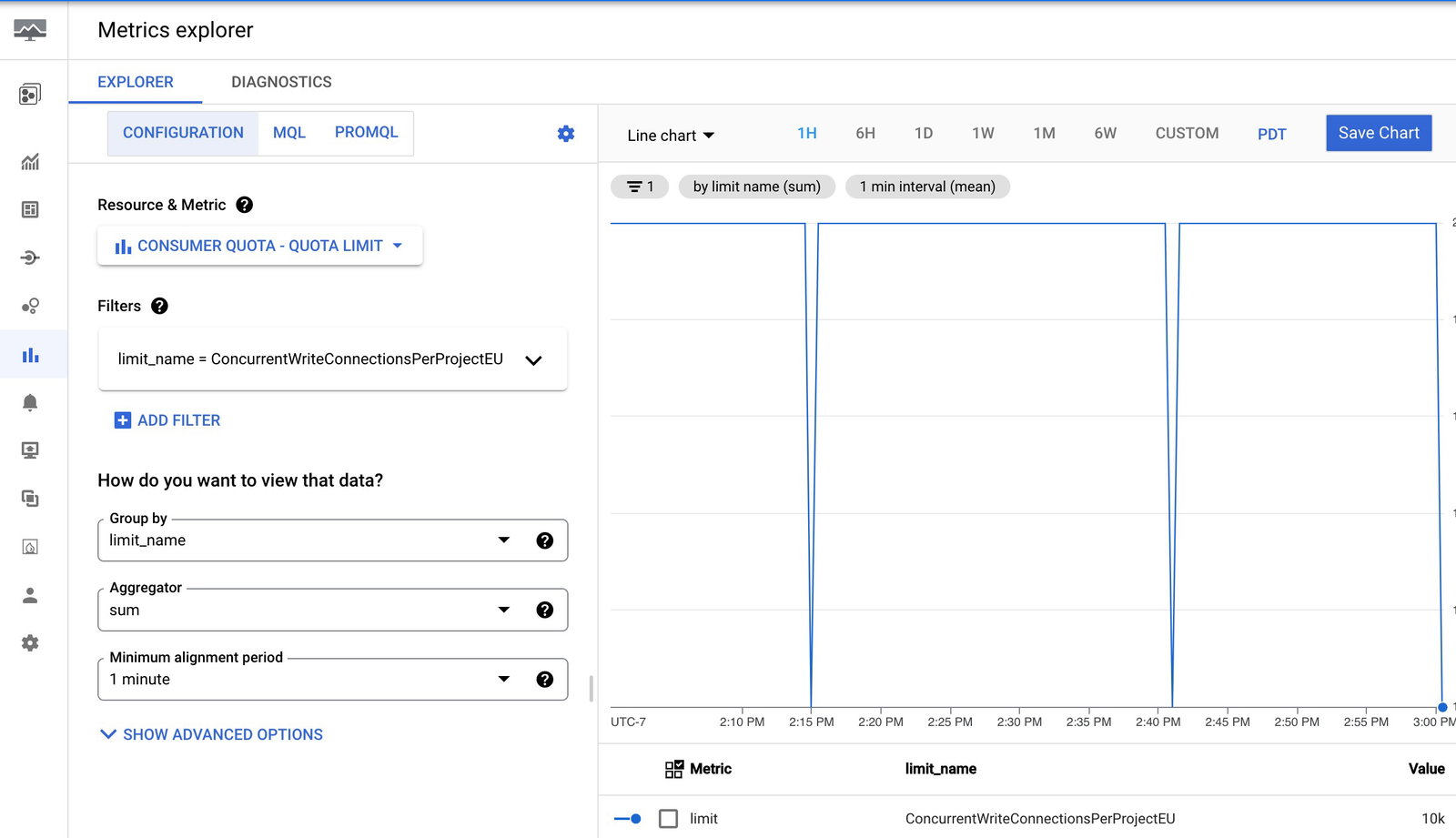
The platform also supports real-time streaming ingestion, which means businesses can process live data continuously instead of waiting for batch updates. On the security side, Google Cloud brings enterprise-grade encryption, global compliance certifications, and regional infrastructure support that make BigQuery suitable for organizations handling large-scale or sensitive datasets.
Pricing
BigQuery separates pricing into compute and storage, giving organizations more flexibility depending on how heavily they use the platform. On-demand compute pricing starts at roughly $6.25 per TB scanned, while storage pricing begins around $0.02 per GB/month for active data. Long-term storage costs reduce automatically after 90 days, helping teams optimize costs over time.
What Works And What Doesn’t
| Pros | Cons |
| Serverless architecture reduces infrastructure management overhead | Costs can rise quickly without query optimization |
| Strong integration with Google Cloud AI and analytics services | The learning curve may feel steep for non-technical teams |
| Real-time ingestion and scalable analytics performance | Migration effort can be higher outside Google Cloud environments |
Our Final Take
BigQuery works especially well for organizations handling massive datasets, real-time analytics, and AI-driven workloads at scale. Businesses already operating inside the Google Cloud ecosystem will likely get the most value from its integrations and automation capabilities. Smaller teams looking for lightweight BI tools with minimal technical involvement, however, may find the platform more powerful and complex than they actually need.
Azure Machine Learning: Best Customization
Microsoft Azure Machine Learning makes its way onto our 2026 list as one of the strongest enterprise-focused predictive analytics and machine learning platforms available today. Over the years, Microsoft has steadily expanded Azure ML from a cloud ML service into a much broader end-to-end AI and analytics environment. That progress was recognized in 2025 when Microsoft was named a Leader in the Gartner® Magic Quadrant for Data Science and Machine Learning Platforms.
Why We Chose Azure Machine Learning In 2026
Azure Machine Learning stands out because it gives organizations an unusually high level of control across the entire machine learning lifecycle. From preparing datasets and training models to deployment, monitoring, automation, and MLOps, almost everything can be managed inside the same environment.
That flexibility becomes especially valuable for enterprises handling complex workflows or operating across hybrid and multi-cloud environments. Unlike simpler analytics tools focused mainly on dashboards and reporting, Azure ML feels much more like a full AI development ecosystem built for long-term scalability and governance.
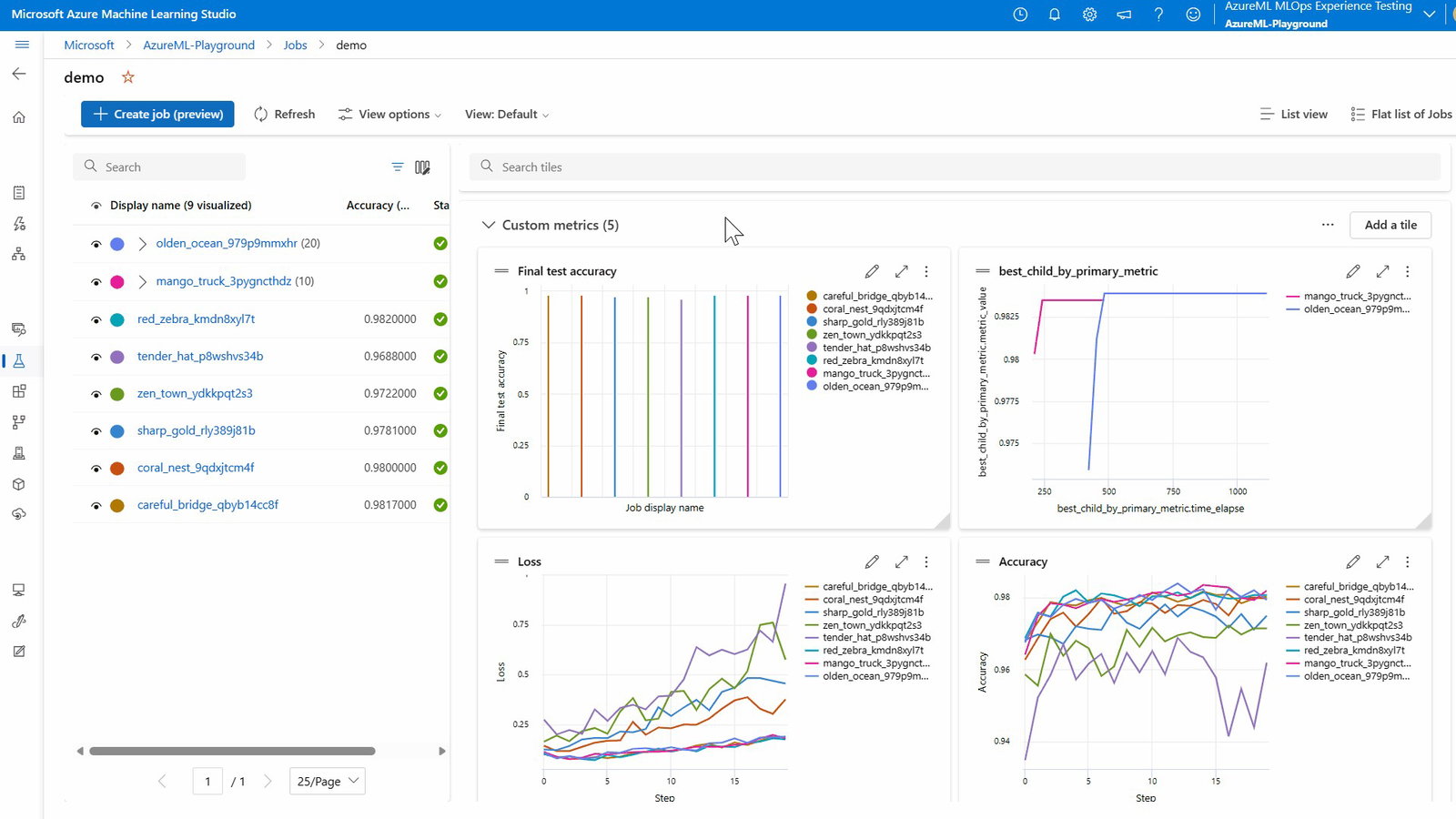
Azure ML also includes capabilities like automated machine learning, pipeline orchestration, model interpretability, and real-time endpoint deployment. On the governance side, Microsoft supports enterprise-grade compliance standards including ISO, SOC 2, and GDPR, while Azure’s identity and access management infrastructure adds another layer of operational security for larger organizations.
Pricing
Azure Machine Learning follows a pay-as-you-go pricing structure. General-purpose virtual machines can start around $140/month, while GPU-based configurations for heavier AI workloads can rise significantly higher. Savings plans are also available for organizations committing to longer-term usage.
What Works And What Doesn’t
| Pros | Cons |
| End-to-end ML lifecycle support inside one ecosystem | Initial setup and operational complexity can be significant |
| Strong enterprise governance and hybrid cloud flexibility | Organizations outside Azure may face onboarding challenges |
| Automated ML and real-time deployment capabilities | Managing costs across multiple Azure services can become difficult |
Our Final Take
Azure Machine Learning is best suited for enterprises building advanced predictive analytics and AI workflows at scale. Teams looking for deep customization, governance, and production-grade ML operations will likely appreciate its flexibility. However, for smaller businesses or teams seeking lightweight plug-and-play analytics tools, Azure ML may feel far more extensive than necessary.
Amazon QuickSight: Best Value
Amazon Web Services QuickSight continues to strengthen its position in 2026 as one of the more accessible and business-friendly predictive analytics platforms inside the AWS ecosystem. Over the last few years, QuickSight has evolved far beyond traditional dashboard reporting, adding forecasting, anomaly detection, and embedded analytics. Its growing reputation has also earned recognition in SoftwareReviews’ Data Quadrant Awards 2025 and G2’s Best Analytics Software rankings.
Why We Chose Amazon QuickSight In 2026
QuickSight stands out because it lowers the barrier to predictive analytics without sacrificing scalability. Many analytics platforms still feel heavily built around technical users, but QuickSight focuses strongly on usability, accessibility, and rapid deployment.
Its serverless architecture allows organizations to scale dashboards and analytics environments without worrying much about infrastructure management, while features like natural-language querying through Amazon Q make exploring data feel much less intimidating for business users who may not know SQL or advanced analytics workflows.
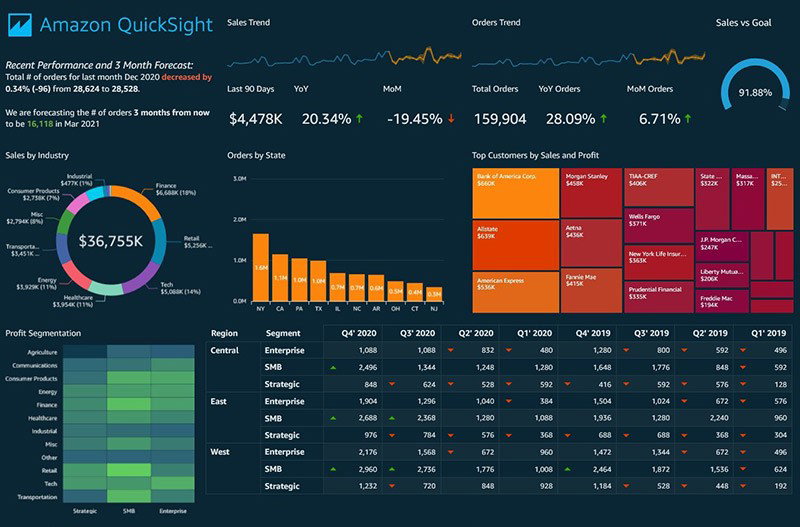
QuickSight also supports anomaly detection, forecasting models, embedded analytics, and interactive dashboards that update in near real time. On the compliance side, AWS maintains enterprise-grade certifications including ISO, SOC, PCI, and HIPAA, making the platform viable for regulated industries as well.
QuickSight follows a role-based pricing model. Reader plans begin around $3 per user/month, while Author plans start at approximately $12 per month. Enterprise capacity pricing and optional add-ons like Amazon Q or additional SPICE storage can increase costs depending on usage needs.
What Works And What Doesn’t
| Pros | Cons |
| Serverless architecture simplifies scaling and deployment | Advanced ML customization may require additional AWS services |
| Natural-language analytics improves accessibility for business users | Platform lock-in concerns for non-AWS organizations |
| Forecasting and anomaly detection are built directly into dashboards | Complex analytics scenarios may exceed native QuickSight capabilities |
Our Final Take
Amazon QuickSight works especially well for organizations already invested in AWS and looking for predictive analytics. Its combination of forecasting, embedded analytics, and natural-language exploration makes it particularly attractive for business teams that want faster insights. Teams requiring highly customized AI pipelines or deep standalone ML development, however, may eventually need broader AWS tooling beyond QuickSight itself.
Databricks Data Intelligence Platform: Best Overall
The Databricks Data Intelligence Platform is a new entrant on our 2026 list. It has been recognized as a Leader in the 2025 Gartner Magic Quadrant for Data Science & Machine Learning and featured in multiple Forrester and IDC reports.
Why We Chose Databricks Data Intelligence Platform In 2026
The platform distinguishes itself with a unified “lakehouse” architecture that supports data engineering, analytics, AI and governance in a single environment. It automatically optimizes performance, integrates generative-AI capabilities, and offers seamless data sharing.
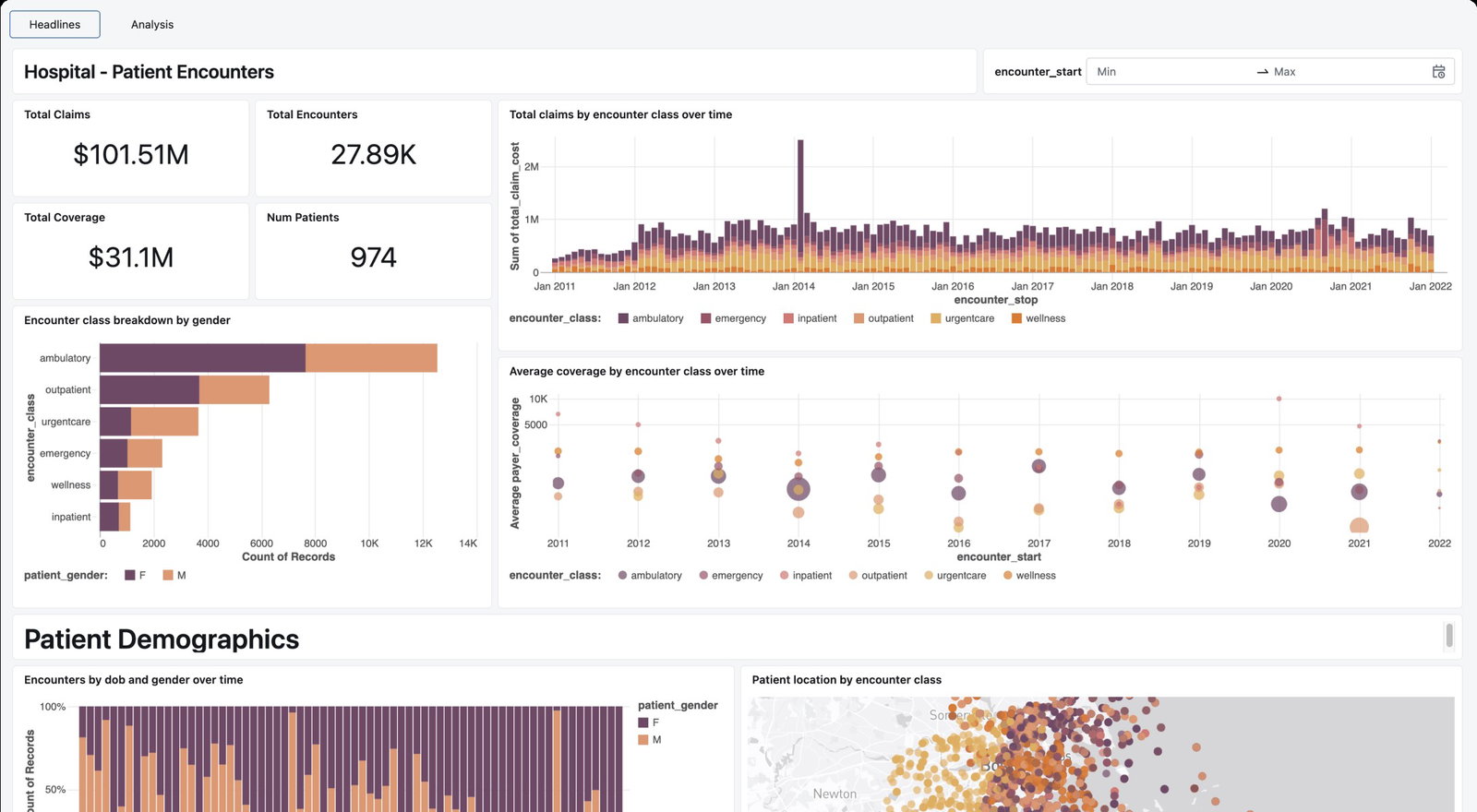
The platform also supports real-time streaming, batch processing, open data formats like Delta Lake, multi-cloud deployments, MLflow integration, and enterprise-grade governance controls across both analytics and AI assets. That flexibility allows teams to build scalable predictive analytics pipelines without becoming heavily locked into one isolated workflow structure.
Pricing
Databricks follows a consumption-based pricing model built around Databricks Units (DBUs). Pricing varies depending on workloads and service tiers, with data engineering workloads typically starting around $0.10 per DBU/hour. Infrastructure costs from underlying cloud providers are billed separately.
What Works And What Doesn’t
| Pros | Cons |
| Unified lakehouse architecture reduces data silos | Requires strong engineering and governance maturity |
| AI-driven optimization improves large-scale analytics efficiency | Initial setup and operational complexity can be high |
| Open formats and multi-cloud support improve flexibility | Smaller organizations may find the platform excessive for simpler BI needs |
Our Final Take
The Databricks Data Intelligence Platform is best suited for large enterprises or data-mature organizations looking to integrate their data, analytics, and AI into one scalable system. It may be less suitable for smaller teams seeking a lightweight tool with minimal setup. If you’re ready to unify data and AI workflows at scale, this platform is a top-tier 2026 choice.
SAP Analytics Cloud: Best For Integration
SAP Analytics Cloud (SAC) stays on our 2026 list as a retained tool, continuing its evolution under SAP SE without a change in ownership. It has been recognized in the IDC MarketScape and BARC Score reports as a Leader in Business Intelligence & Analytics Platforms 2025 and Integrated Planning & Analytics 2025.
Why We Chose SAP Analytics Cloud in 2026
SAP Analytics Cloud stands out because of how tightly it connects analytics with operational planning and enterprise systems. Many predictive analytics tools focus mainly on dashboards or model generation, but SAC pushes further into business planning, scenario modelling, and forecasting directly tied to live enterprise data.
That integration becomes especially powerful for organizations already running SAP applications such as SAP HANA or SAP S/4HANA. Instead of constantly moving information between disconnected systems, teams can work with real-time operational and financial data directly inside the analytics environment itself.
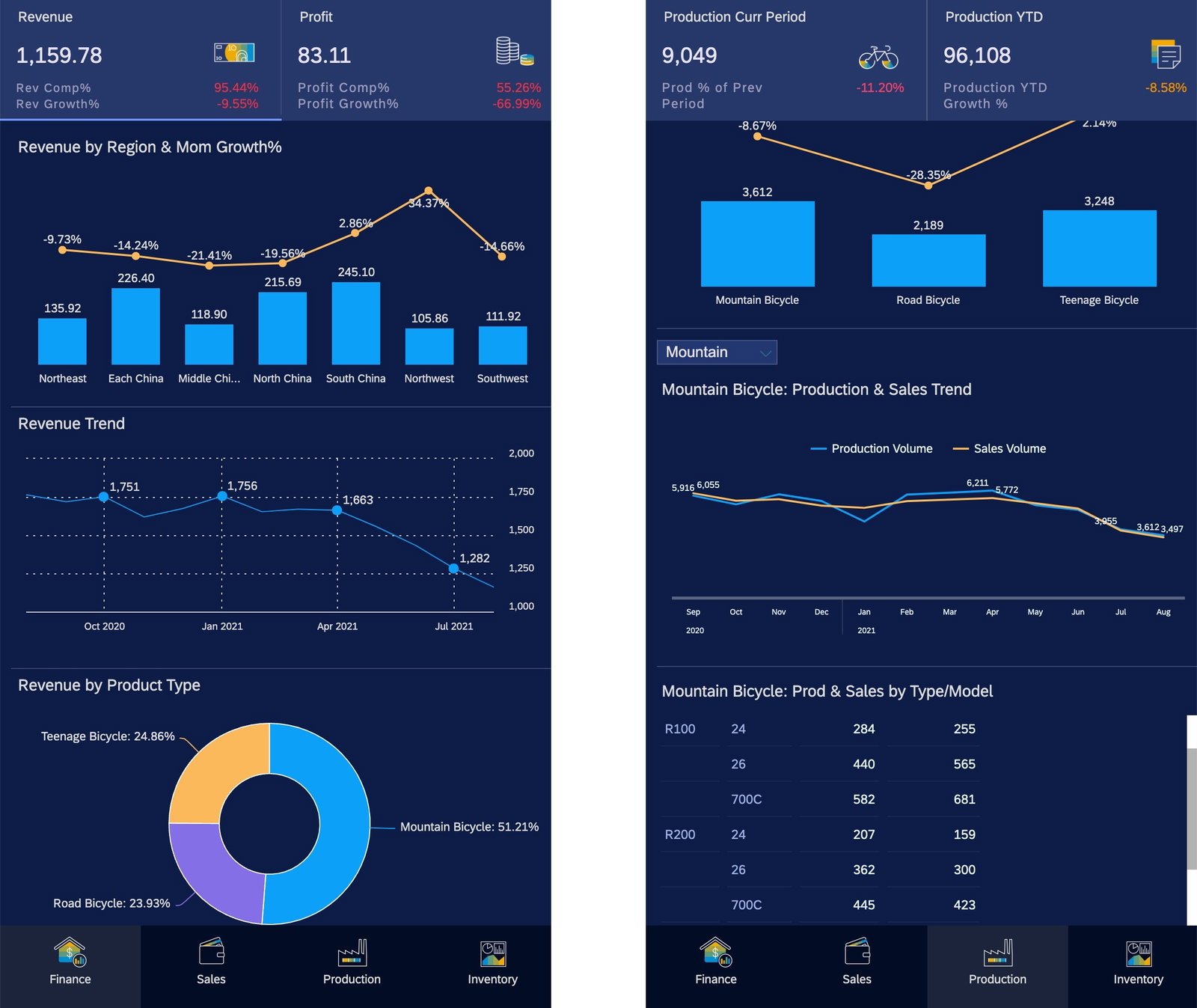
The platform also supports live data connectivity, real-time scenario planning, predictive forecasting, role-based access controls, and enterprise compliance capabilities designed for global deployments. For organizations deeply embedded inside SAP ecosystems, SAC often feels less like a standalone analytics tool and more like a direct extension of broader business operations.
Pricing
SAP Analytics Cloud follows a subscription-based licensing model. Business Intelligence-focused plans begin around $36 per user/month, while planning-focused editions and enterprise capabilities typically require custom pricing based on deployment size, modules, and user roles.
What Works And What Doesn’t
| Pros | Cons |
| Unified analytics, planning, and predictive modelling environment | Licensing and module structures can become complicated |
| Deep SAP ecosystem integration simplifies enterprise workflows | Performance may slow with extremely large or highly diverse datasets |
| Embedded AI and forecasting accelerate business planning | Smaller non-SAP organizations may prefer lighter standalone tools |
Our Final Take
SAP Analytics Cloud is best suited for large enterprises or organizations already using SAP systems that unify analytics, planning, and predictive modelling on one platform. It may not be ideal for smaller organizations with limited SAP presence or narrow BI needs. For teams seeking an integrated, enterprise-grade solution and willing to engage with SAP-centric architecture, SAC remains a strong 2026 choice.
Top 5 Predictive Analytics Software for Comparison
P.S.: Always remember to visit the vendor’s site for the latest information!
| Criteria |  |
 |
 |
 |
 |
| Starting Price | $6.25/TB. | $70/month. | $3/user/month | $0.10/DBU/hour | $36/user/month |
| Avg. User Rating | 4.7 | 4.5 | 4.3 | 4.6 | 4.2 |
| Trial Period / Demo | 90-Day Free Trial | 30-Day Free Trial | 30-Day Free Trial | 14-Day Free Trial | 30-Day Free Trial |
| Key Features | Serverless analytics, BigQuery ML, and federated queries | End-to-end ML lifecycle, AutoML, and MLOps | Natural-language queries, forecasting, and anomaly detection | Delta Lake, AI-driven metadata, and MLflow | Unified analytics, planning, predictive forecasting, and SAP-native connectivity |
| Integrations | Google Cloud ecosystem, Looker, Power BI, and more | Azure Data Lake, Synapse, Power BI, and more | AWS, Redshift, Athena, and more | AWS, Azure, Spark ecosystem, and more | SAP HANA, SQL sources, OData, and more |
Conclusion
Predictive analytics in 2026 continue to evolve rapidly, and each tool in this list earns its place by addressing distinct business needs. Google BigQuery excels with scalable, serverless analytics; Azure Machine Learning delivers a full end-to-end ML lifecycle; Amazon QuickSight democratizes insights with accessible, cloud-native BI; Databricks leads in unified data and AI workloads through its lakehouse architecture; and SAP Analytics Cloud remains a strong choice for organizations relying on integrated planning and SAP-centric environments.
Choosing the right platform ultimately depends on your data maturity, ecosystem alignment, and performance expectations. Whether you prioritize scale, automation, simplicity, or deep enterprise governance, these five solutions represent the most capable and future-ready predictive analytics platforms entering 2026.
Frequently Asked Questions
What Are The Top 5 Predictive Analytics Software Of 2026?
The leading platforms of 2026 are Google BigQuery, Azure Machine Learning, Amazon QuickSight, Databricks Data Intelligence Platform, and SAP Analytics Cloud—each offering strong predictive capabilities, scalability, and enterprise-grade features for modern data and AI workloads.
What Are The Features Of Predictive Analytics Software?
Predictive analytics software typically includes machine learning automation, forecasting, anomaly detection, real-time data processing, model monitoring, data integration, and security controls. These tools help teams analyze patterns, anticipate outcomes, and make data-driven decisions with greater accuracy and operational efficiency.
Which Is The Best Predictive Analytics Software Of 2026?
The best option depends on your ecosystem and needs, but Databricks and Google BigQuery stand out for large-scale analytics and AI integration. Azure Machine Learning excels for end-to-end ML workflows, while QuickSight and SAP Analytics Cloud suit business-focused predictive insights.
Tue, May 19, 2026

Liked what you read? That’s only the tip of the tech iceberg!
Explore our vast collection of tech articles including introductory guides, product reviews, trends and more, stay up to date with the latest news, relish thought-provoking interviews and the hottest AI blogs, and tickle your funny bone with hilarious tech memes!
Plus, get access to branded insights from industry-leading global brands through informative white papers, engaging case studies, in-depth reports, enlightening videos and exciting events and webinars.
Dive into TechDogs' treasure trove today and Know Your World of technology like never before!
Disclaimer - Reference to any specific product, software or entity does not constitute an endorsement or recommendation by TechDogs nor should any data or content published be relied upon. The views expressed by TechDogs' members and guests are their own and their appearance on our site does not imply an endorsement of them or any entity they represent. Views and opinions expressed by TechDogs' Authors are those of the Authors and do not necessarily reflect the view of TechDogs or any of its officials. While we aim to provide valuable and helpful information, some content on TechDogs' site may not have been thoroughly reviewed for every detail or aspect. We encourage users to verify any information independently where necessary.
Loading comments...