 Featured
Business Intelligence
Top 5 Operational Analytics Software Of 2026
Share
TL;DR
-
Microsoft Power BI solves disconnected reporting with unified, real-time business dashboards.
-
Tableau solves complex data analysis through intuitive visual analytics.
-
Looker solves inconsistent metrics with governed, centralized BI.
-
Domo solves operational data silos with connected, AI-driven analytics.
-
Splunk solves IT and security monitoring with real-time machine data analytics.
Introduction
Imagine running a business today without real-time insights, it’s a bit like the crew in Top Gun: Maverick trying to navigate a high-risk mission with delayed radar updates. In today’s hyperconnected digital economy, every second delay can mean lost revenue, operational bottlenecks, cybersecurity risks, or missed customer expectations. Organizations are flooded with massive volumes of live data from applications, devices, customers, and cloud systems, but raw data alone means nothing without speed and context.
That’s where operational analytics software becomes indispensable, enabling enterprises to monitor operations in real time, uncover patterns instantly, automate responses, and turn fast-moving data into smarter, faster business decisions.
What Is An Operational Analytics Software?
Operational analytics software is a business intelligence and data analytics solution designed to analyze real-time operational data from applications, systems, devices, and business processes to support faster, smarter decision-making.
Unlike traditional analytics tools that focus mainly on historical reporting, operational analytics platforms continuously monitor live data to help organizations identify trends, detect anomalies, optimize workflows, improve customer experiences, and respond to operational challenges instantly.
By combining dashboards, automation, AI-driven insights, alerts, and predictive analytics, these platforms enable businesses to enhance efficiency, agility, and overall operational performance.
Top 5 Operational Analytics Software of 2026
The top operational analytics software platforms of 2026 are helping enterprises transform real-time data into faster decisions, smarter operations, and greater business agility. With AI-driven insights, automation, and scalable analytics, these tools are redefining modern operational intelligence.
 |
 |
 |
 |
 |
Microsoft Power BI: Best Value
Microsoft Power BI is Microsoft’s BI and operational analytics platform for creating dashboards, reports, and data-driven insights. Microsoft acquired Datazen in 2015 to strengthen Power BI’s mobile BI features. Power BI is used by 375,000+ organizations and 30M monthly active users. It was named Leader in Gartner’s 2025 Analytics & BI Magic Quadrant for the 18th year and remains 2026-relevant with Software Reviews naming it a 2026 Data Quadrant Champion.
Why We Chose Microsoft Power BI In 2026
Microsoft Power BI stands out for its deep Microsoft ecosystem integration, strong enterprise scalability, and AI-led analytics through Copilot and Microsoft Fabric.
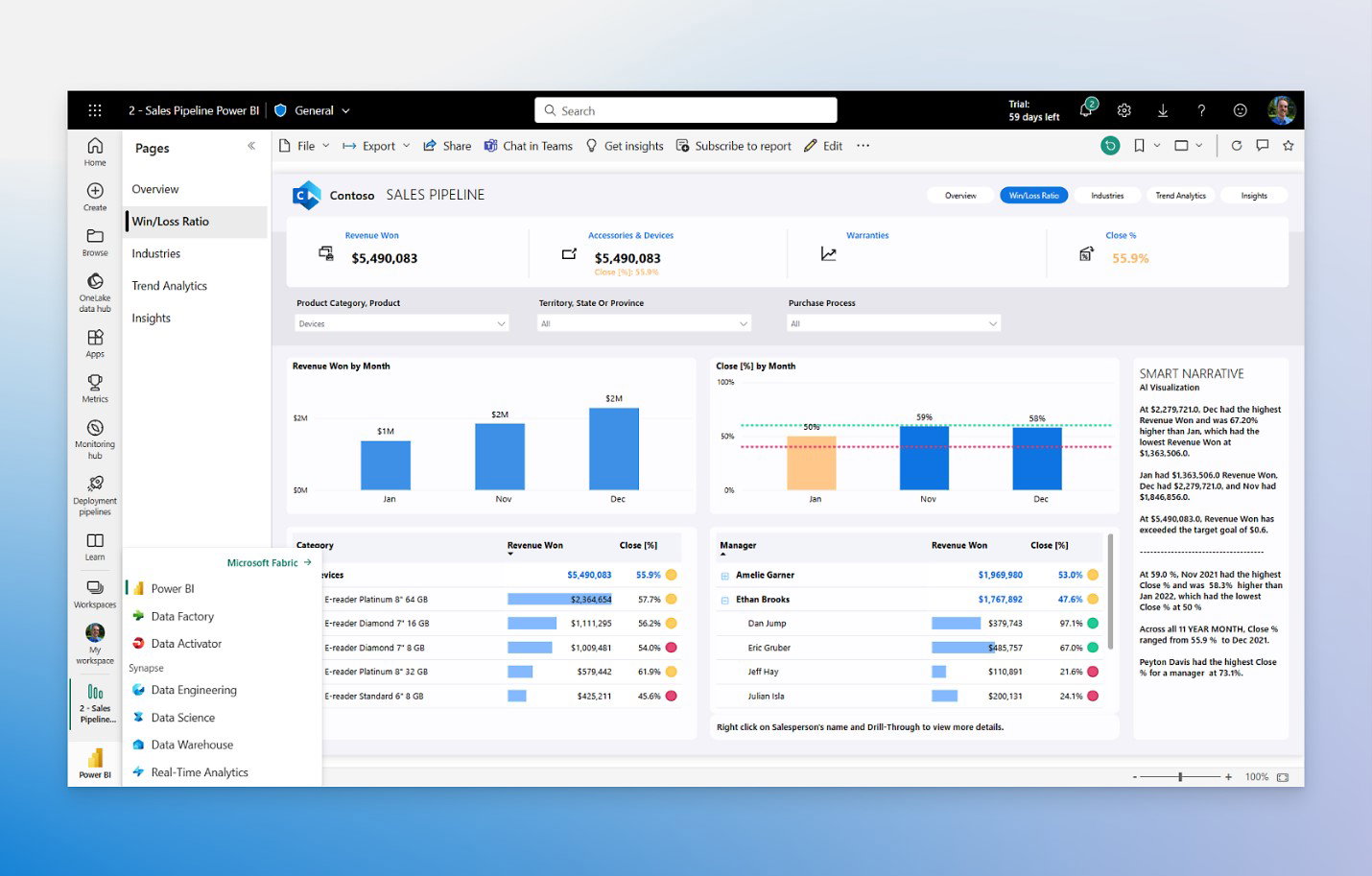
Compared with many BI tools, it offers advanced semantic modeling, real-time dashboards, embedded analytics, governance via Microsoft Purview, role-based security, and broad compliance controls. Its flexible pricing, frequent product updates, and recognition as a 2025 Gartner BI Leader keep it strongly positioned for 2026.
Pricing
Microsoft Power BI offers flexible pricing, ranging from free individual access to enterprise capacity plans starting above $4,995/month. Its licensing supports teams of different sizes through standalone Power BI plans or integration with broader Microsoft Fabric and Microsoft 365 suites.
What Works And What Doesn’t
| Pros | Cons |
| Seamless Microsoft integration | Steep learning curve |
| Exceptional visualization | Complex data modeling |
| Broad data connectivity | Cluttered UI |
Our Final Take
Microsoft Power BI is a strong fit for Microsoft-led enterprises seeking secure, scalable, AI-powered analytics across teams. It is less ideal for non-Microsoft ecosystems or brands needing highly bespoke, design-led BI experiences.
Tableau: Best User Experience
Tableau is a Salesforce-owned operational analytics and BI platform that helps enterprises turn complex data into intuitive, interactive visual insights. Salesforce completed its acquisition of Tableau in 2019 in a deal valued at about $15.7B, bringing Tableau into the Salesforce ecosystem.
Tableau is widely adopted, with public estimates citing 100,000+ customer accounts and 100,000+ active community peers, while its 2026 relevance remains strong through Tableau’s 2025 Gartner Magic Quadrant Leader recognition, Forrester Wave BI Leader status, and 2026 product push around its Agentic Analytics Platform.
Why We Chose Tableau In 2026
Tableau stands out for its visual-first analytics, intuitive dashboards, and industry-leading data storytelling, making complex insights easier for business teams to explore and act on.
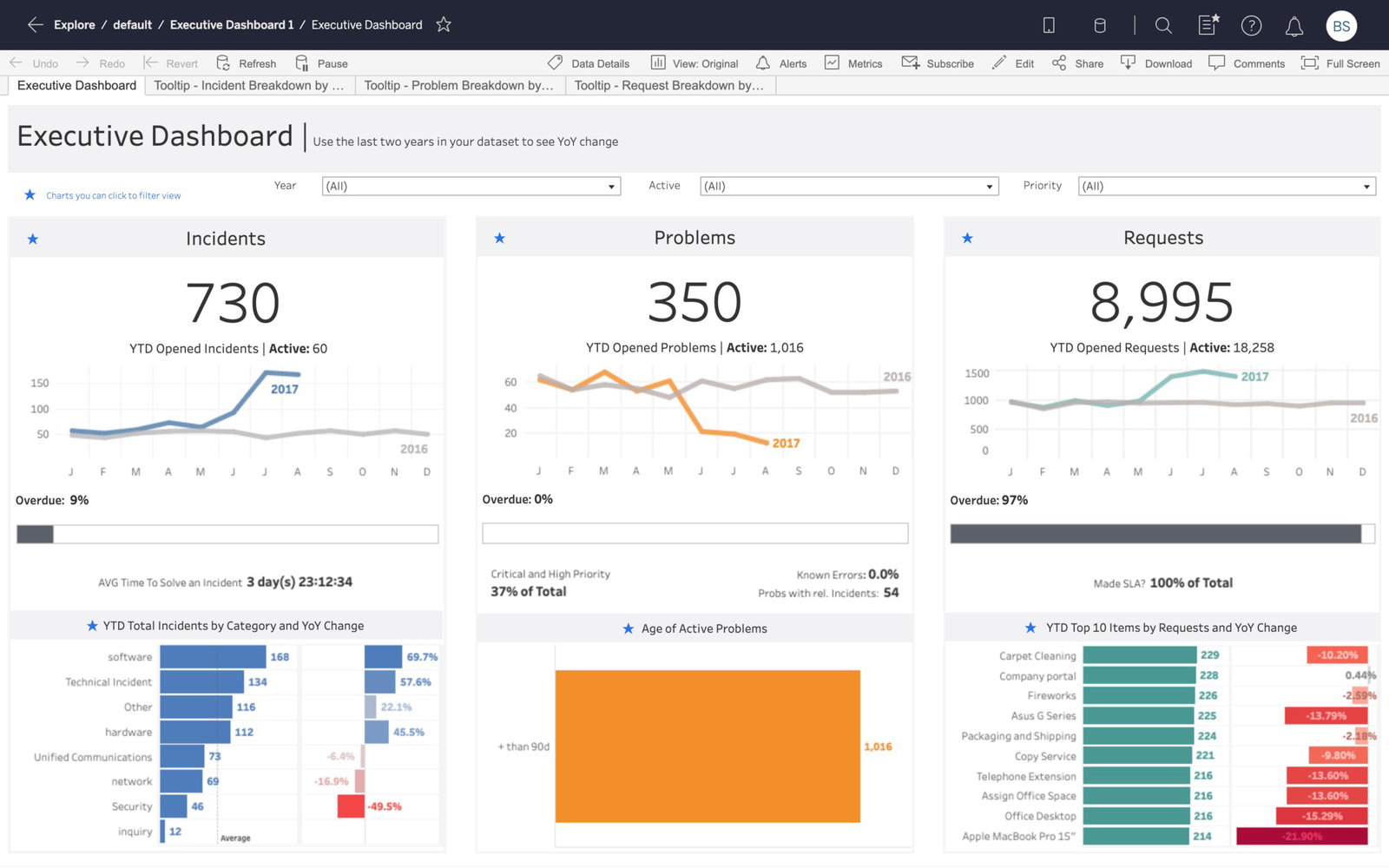
Its 2026 positioning is strengthened by Tableau Next, Agentic Analytics, AI-assisted insights, semantic modeling, broad data connectivity, governed data management, scalable Cloud/Server deployment, and enterprise-grade security controls, making it a strong fit for organizations that value both analytical depth and polished visual experiences.
Pricing
Tableau uses an annual, role-based subscription model, with standard plans starting at $15/user/month for viewers and rising to $75/user/month for creators. Advanced editions and embedded analytics are priced through custom quotes.
What Works And What Doesn’t
| Pros | Cons |
| Best-In-Class Visualization | High cost |
| Massive data handling | Steep learning curve |
| Flexible data integration | Collaboration challenges |
Our Final Take
Tableau is ideal for data-driven enterprises that value premium visual analytics, interactive dashboards, and compelling data storytelling across teams. It may be less recommended for cost-sensitive organizations, Microsoft-first environments, or businesses seeking simple, low-maintenance BI without advanced set-up or governance needs.
Looker: Best Customization
Looker is Google Cloud’s BI and operational analytics platform for governed data exploration, embedded analytics, and real-time insights. Google Cloud acquired Looker in 2020 for a reported $2.6B; the platform has served 2,000+ organizations. Its 2026 relevance is supported by Google’s 2025 Gartner BI Leader recognition, IDC leadership, and Gemini-powered analytics upgrades.
Why We Chose Looker In 2026
Looker stands out for its governed semantic layer, LookML modeling, real-time data exploration, and embedded analytics, making it especially strong for enterprises that want consistent metrics across teams.
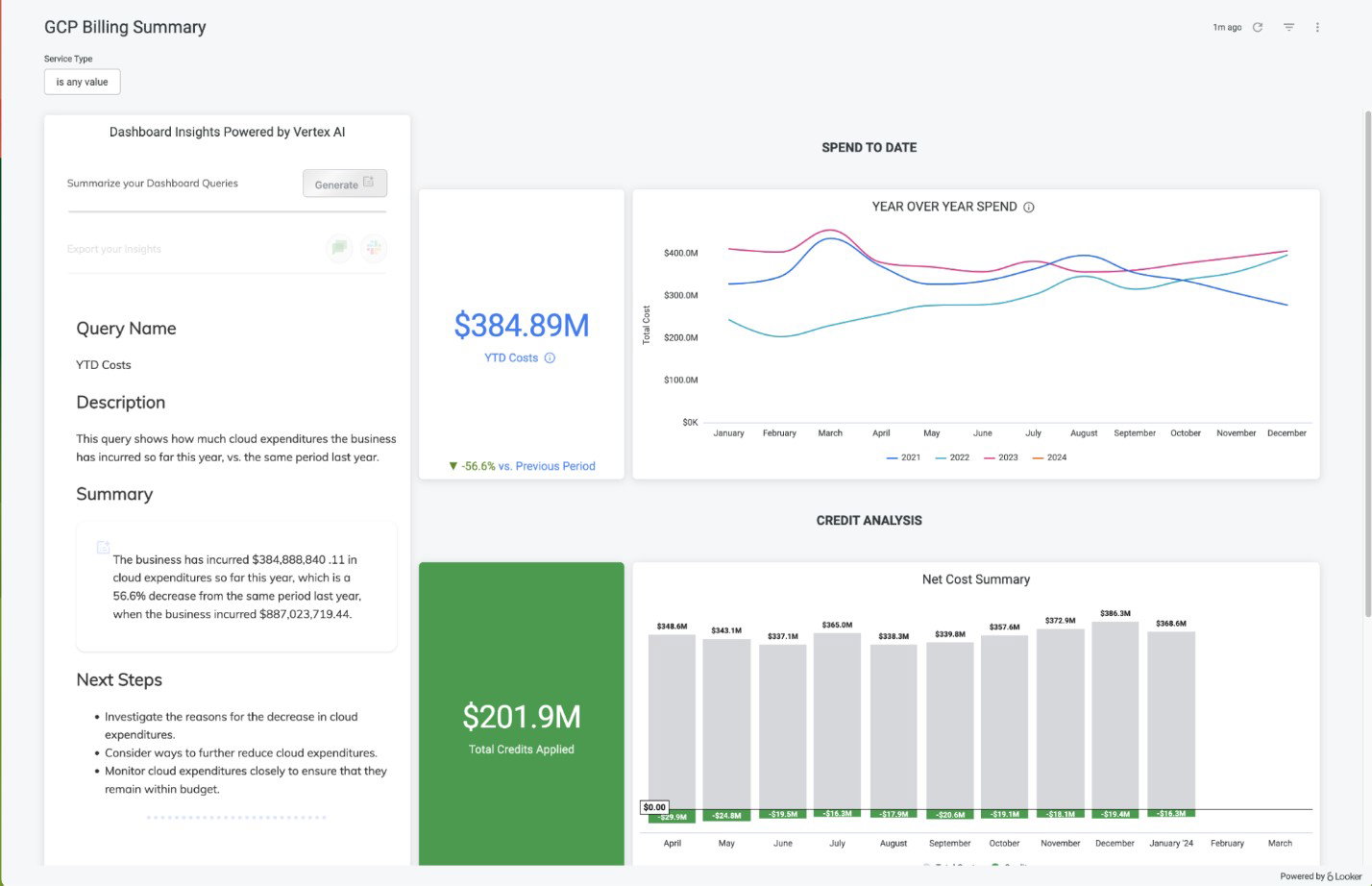
Its 2026 edge is amplified by Gemini-powered conversational analytics, agentic BI, Knowledge Catalog integration, BigQuery-native scale, API-first architecture, enterprise support, SSO/IAM, private networking, and Google Cloud security controls, positioning Looker as a trusted, cloud-native BI platform for governed, AI-ready analytics.
Pricing
Looker, Google Cloud’s enterprise BI and operational analytics platform, follows a custom quote-based pricing model that typically includes an annual platform fee plus per-user licenses. Pricing varies by deployment size, user roles, and selected add-ons.
What Works And What Doesn’t
| Pros | Cons |
| Centralized data modeling | Steep learning curve |
| Robust governance and security | High cost |
| Version control and collaboration | Limited visualizations |
Our Final Take
Looker is a best fit for cloud-native enterprises seeking governed metrics, scalable embedded analytics, and real-time intelligence within complex data ecosystems. It may be less ideal for budget-sensitive organizations or teams prioritizing low-code simplicity over semantic modeling and technical customization.
Topics For More Insights
Domo: Best For Integration
Domo is a publicly traded, cloud-native AI and data products/operational analytics platform. It reports over 2,400 customers in its FY2026 annual report, while its marketing site states 2,600+ customers. The platform helps teams connect data, build dashboards/apps, automate workflows, and turn business data into real-time decisions.
Recent 2026-relevant recognition includes G2 Winter 2026 Leader mentions across BI/analytics categories, G2 2026 awards such as Most Implementable and Momentum Leader, six Dresner Technology Innovation Awards, and top vendor placement in Dresner’s 2026 Cloud BI Report.
Why We Chose Domo In 2026
Domo differentiates itself in 2026 as a unified operational analytics and AI platform that combines BI dashboards, ETL, app building, workflow automation, embedded analytics, and AI-powered insights in one cloud-native system. Unlike many traditional BI tools, Domo focuses on real-time operational decision-making with strong scalability, 1,000+ data connectors, governed self-service analytics, and embedded analytics for customers and partners.
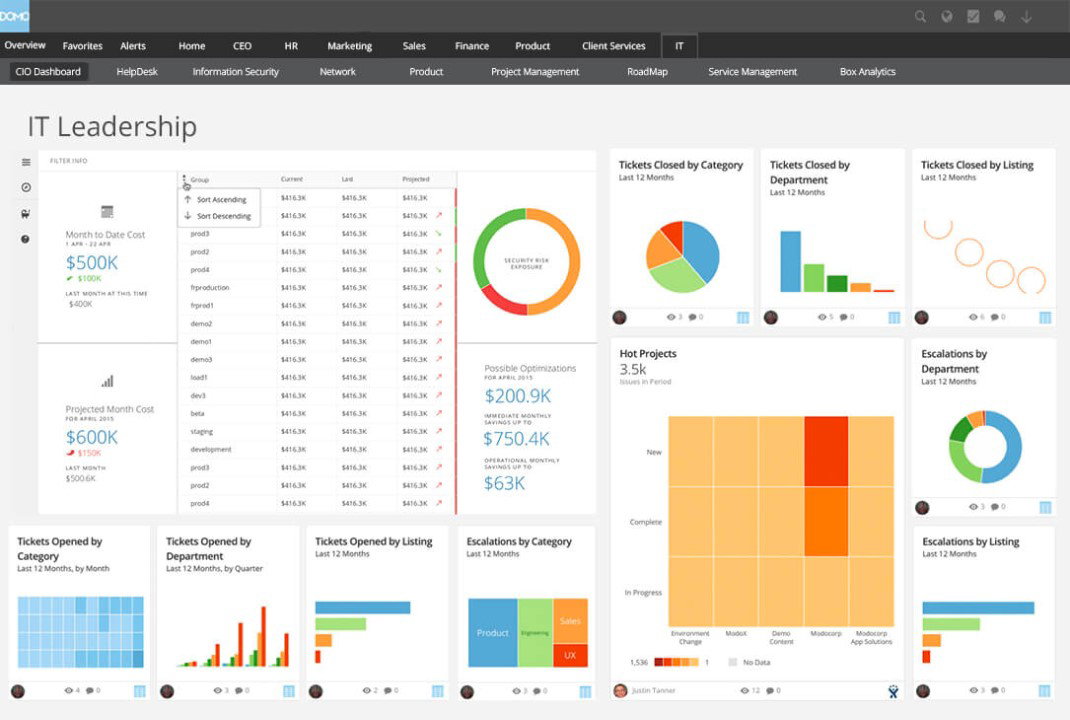
Its advanced capabilities include AI assistants, Magic ETL automation, low-code app development, and enterprise-grade security with role-based governance, compliance certifications, and centralized admin controls, while its customer support and adoption programs are widely recognized for ease of implementation and fast business value.
Pricing
Domo follows a flexible, consumption-based pricing approach that uses a credit system, where costs depend on actual platform usage, data storage, and compute activities such as workflow execution and table updates, instead of relying solely on fixed per-user licensing fees.
What Works And What Doesn’t
| Pros | Cons |
| Real time dashboards | Complex pricing models |
| Mobile experience | Steep learning curve |
| Apps and alerts building | Slow performance on heavy data |
Our Final Take
Domo is ideal for mid-sized and large enterprises seeking scalable, AI-powered operational analytics with real-time insights, automation, and enterprise-grade governance, but may be less suitable for smaller or budget-sensitive organizations needing simpler, lower-cost reporting solutions.
Splunk: Best For Security
Splunk is a leading operational analytics and observability platform used for real-time monitoring, security analytics, and IT operations across hybrid and cloud environments. Acquired by Cisco in 2024 for $28 billion, Splunk serves 15,000+ customers globally and continues to earn major industry recognition, including repeated leadership positions in Gartner Magic Quadrant reports for SIEM and observability through 2026.
Why We Chose Splunk In 2026
Splunk holds relevance in 2026 for unifying security, observability, IT operations, and operational analytics on a highly scalable machine-data platform built for complex enterprise environments.
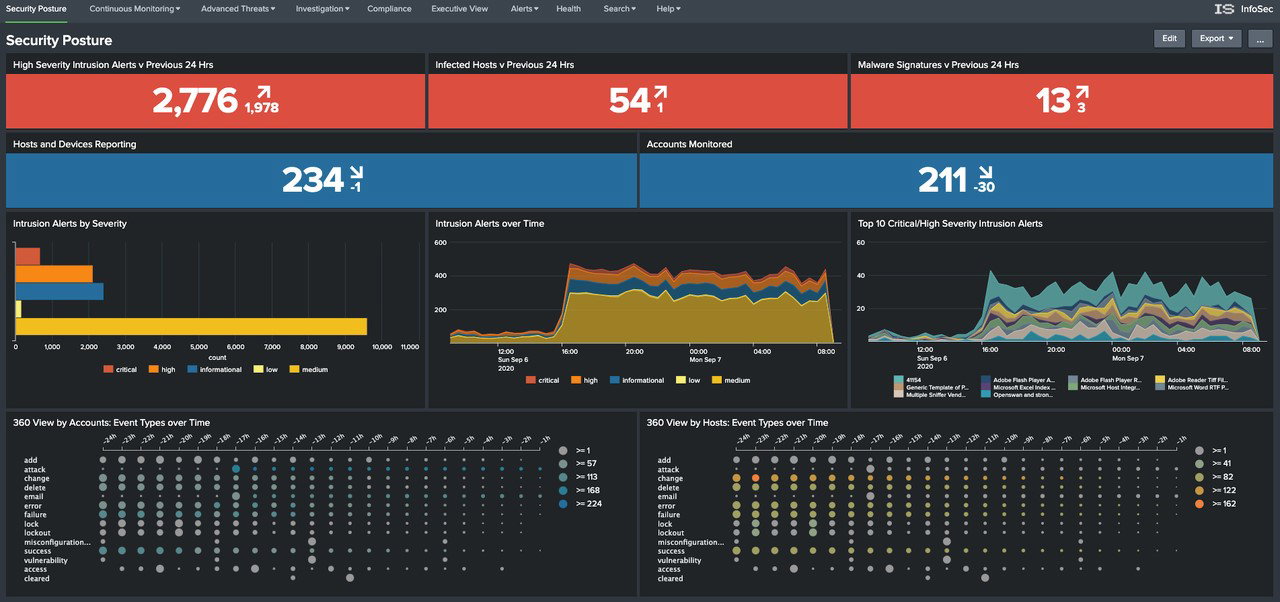
Its edge lies in deep log analytics, AI-assisted troubleshooting, real-time detection, risk-based alerting, Open Telemetry-native observability, strong Cisco ecosystem integration, premium support options, and enterprise-grade compliance/security controls, making it stronger for mission-critical resilience than lighter BI or monitoring tools.
Pricing
Splunk’s pricing differs widely based on the deployment type, such as Cloud, Enterprise, or Observability, and can range from approximately $1,800 to over $18,000 annually for smaller teams, depending on usage and scale.
What Works And What Doesn’t
| Pros | Cons |
| Real-time visibility | Prohibitive costs |
| Robust search and querying | Steep learning curve |
| Flexible scalability | Complex implementation |
Our Final Take
Splunk excels in large-scale, mission-critical enterprises that demand enterprise-grade security, observability, and real-time operational intelligence across complex hybrid environments, but may be excessive for smaller organizations seeking lightweight, low-cost analytics solutions.
Top 5 Operational Analytics Software Comparison
Our comparison of the top operational analytics software of 2026 highlights how leading platforms differ in scalability, AI capabilities, pricing, and enterprise readiness. Explore which solution best aligns with your organization’s operational intelligence and analytics needs.
| Criteria |  |
 |
 |
 |
 |
| Starting Price | $10/user/month | $15/user/month | $2,000 to $3,000/month | $30,000/year | $2000/year |
| Avg. User Rating | 4.5 | 4.4 | 4.4 | 4.3 | 4.3 |
| Free Trial/Demo | 60 days | 14 days | NA | 30 days | 60 days |
| Key Features | Real-time analytics, AI-powered insights, Natural language QnA | Drag and drop visualizations, real-time analytics, natural language querying | Semantic data modeling, embedded analytics, actionable workflows | Real-time data integration, Drag-and-drop ETL, proactive live alerts | Robust data ingestion, search processing language, custom dashboards |
| Integrations | DAX studio, ALM toolkit, Oracle | Google BigQuery, Snowflake, Amazon Redshift | Slack, Zapier, Google Workspace | Snowflake, MongoDB, MySQL | AWS, Microsoft Azure, Google Cloud |
Wrapping Up
As organizations strive to prioritize operational efficiency and real-time decision-making, the right choice of operational analytics software can become a major competitive benefit.
Our top pick of operational analytics platforms for 2026 is not only aiding businesses track performance but also enabling automation, predictive insights, and quicker responses to evolving operational conditions. By choosing a solution that aptly aligns with your business goals, data strategy, and scalability requirements, you can turn operational data into actionable intelligence that drives resilience and long-term growth.
Frequently Asked Questions
How Does Operational Analytics Software Improve Real-Time Decision-Making Across Enterprise Workflows?
Operational analytics software processes live data streams from multiple business systems to deliver instant insights and performance alerts.
This enables teams to identify inefficiencies, predict disruptions, and make faster data-driven decisions without relying on delayed reports.
What Role Does AI And Machine Learning Play In Modern Operational Analytics Platforms?
AI and machine learning help operational analytics tools detect patterns, forecast outcomes, and automate anomaly detection in complex datasets.
These capabilities enhance predictive maintenance, resource optimization, and proactive business operations management.
How Can Operational Analytics Software Integrate With Existing Enterprise Infrastructure And Cloud Environments?
Most advanced platforms support API-based integrations with ERP, CRM, IoT, and cloud-native applications for unified data visibility.
This ensures seamless scalability, centralized monitoring, and consistent analytics across hybrid and multi-cloud ecosystems.
Fri, May 15, 2026

Liked what you read? That’s only the tip of the tech iceberg!
Explore our vast collection of tech articles including introductory guides, product reviews, trends and more, stay up to date with the latest news, relish thought-provoking interviews and the hottest AI blogs, and tickle your funny bone with hilarious tech memes!
Plus, get access to branded insights from industry-leading global brands through informative white papers, engaging case studies, in-depth reports, enlightening videos and exciting events and webinars.
Dive into TechDogs' treasure trove today and Know Your World of technology like never before!
Disclaimer - Reference to any specific product, software or entity does not constitute an endorsement or recommendation by TechDogs nor should any data or content published be relied upon. The views expressed by TechDogs' members and guests are their own and their appearance on our site does not imply an endorsement of them or any entity they represent. Views and opinions expressed by TechDogs' Authors are those of the Authors and do not necessarily reflect the view of TechDogs or any of its officials. While we aim to provide valuable and helpful information, some content on TechDogs' site may not have been thoroughly reviewed for every detail or aspect. We encourage users to verify any information independently where necessary.
Loading comments...