Emerging Technology
Top 5 Neural Network Software Of 2026
Share
TL;DR
-
TensorFlow: Provides a massive, free ecosystem ideal for building and deploying scalable, production-ready AI models.
-
Keras: Offers a user-friendly high-level API that simplifies rapid prototyping across multiple backend frameworks.
-
PyTorch: Delivers unmatched customization and dynamic computation graphs favored by researchers and deep learning engineers.
-
H2O.ai: Enables professional-grade neural network development through a streamlined, no-code visual interface for faster deployment.
-
AWS Deep Learning AMIs: Supplies preconfigured cloud environments that allow teams to scale heavy workloads using high-performance infrastructure.
Introduction
What a cool movie The Imitation Game was, right? The film follows Alan Turing as he joins MI6 to crack the "unbreakable" Nazi Enigma code. Turing’s pioneering work in cryptography and machine learning laid the foundation for modern artificial intelligence (AI), proving that machines could do more than just crunch numbers; they could simulate human intelligence. Just as Turing’s Bombe machine automated the tedious process of breaking codes, modern neural network software simplifies the development of complex AI models.
These tools allow systems to process massive datasets and make choices that once required human intuition. Today, businesses and researchers use these networks to drive everything from autonomous vehicles to life saving medical diagnoses. As the bridge between Turing’s early concepts and today's advanced deep learning continues to shorten, choosing the right platform is essential for staying competitive. Explore these Top 5 Neural Network Software Of 2026 that are currently reshaping the future of digital intelligence.
What Is Neural Network Software?
First things first, a Neural Network is a computational model inspired by how the human brain processes information. It consists of layers of artificial neurons that work together to recognize patterns and learn from data. Specifically, Neural Network Software (sometimes called Neural Net Software) helps programmers create, train, and use AI models that work like the human brain for processing information. Deep learning also depends on these tools, allowing computers to find patterns, analyze data, and make smarter predictions.
Top 5 Neural Network Software Of 2026
So, without further ado, let’s explore the Top 5 Neural Network Software Of 2026 and discover which platform suits your AI ambitions best. Read on!
 |
 |
 |
 |
 |
TensorFlow: Best Overall
TensorFlow was created by the team at Google Brain way back in 2015. Aside from being recognized as one of the top Neural Network Software, this open-source machine learning library is used by the likes of Coca-Cola, Spotify, Google, Google DeepMind, Intel, Lenovo, PayPal, and more.
Why We Chose TensorFlow In 2026
TensorFlow combines flexibility, scalability, and production readiness within a single ecosystem. It supports the complete neural network lifecycle; from model creation and training to deployment across CPUs, GPUs, TPUs, mobile devices, and browsers. Features such as eager execution, distributed training, and support for complex neural network architectures allow teams to experiment rapidly while scaling efficiently for production workloads.
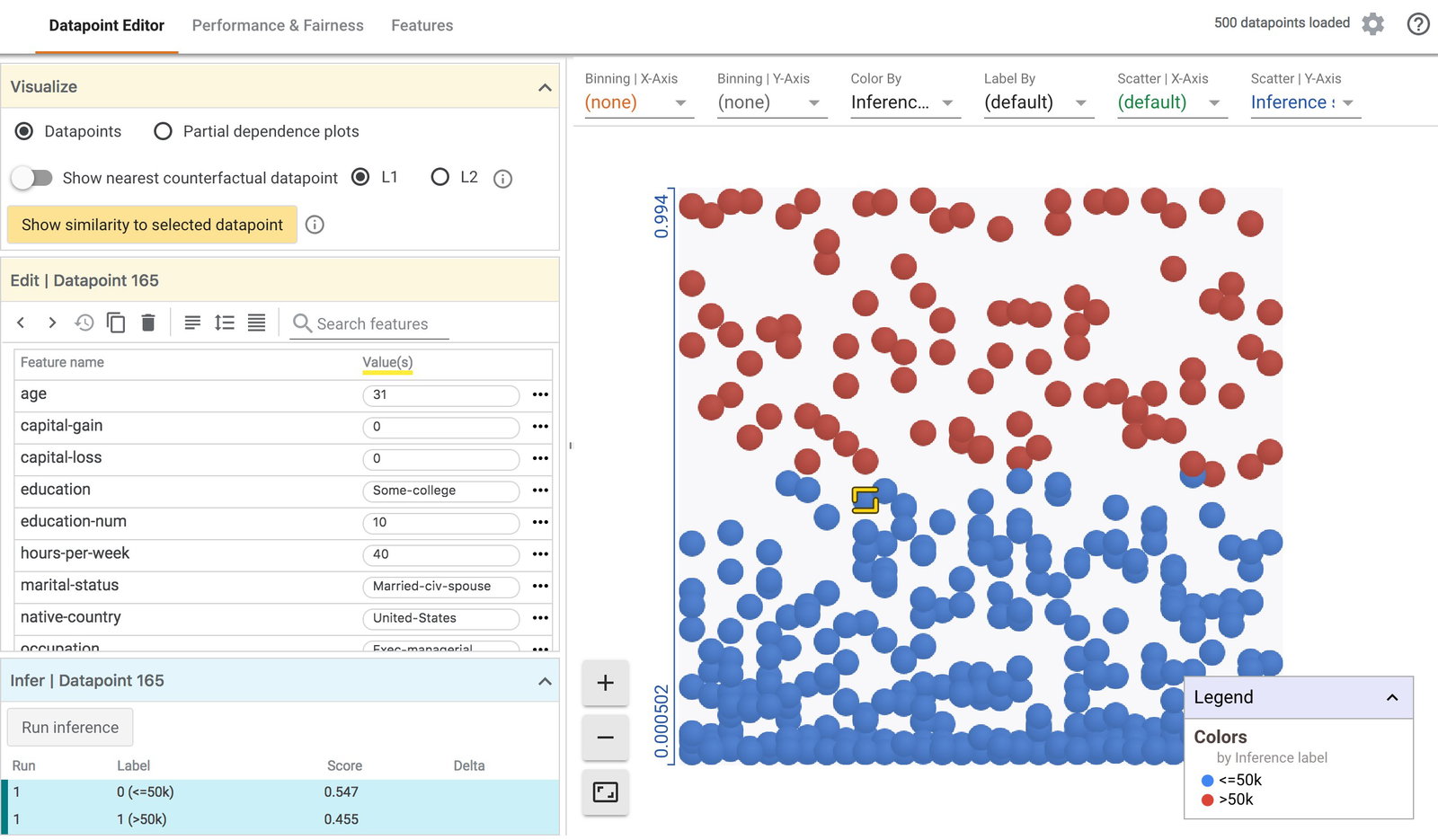
TensorFlow’s standout factor is its massive global ecosystem and community support, which simplifies and accelerates neural network development and innovation. TensorFlow User Groups (TFUGs) span regions across the Americas, Europe, Asia Pacific, and Africa, bringing together developers, data scientists, and ML practitioners worldwide. It also comes with a rich ecosystem of libraries, tools, pretrained models, and deployment frameworks such as TensorFlow Lite, TensorFlow.js, and TFX.
Pricing
TensorFlow is completely free to use under the Apache 2.0 open-source license. Individuals and businesses can build, train, and deploy neural network models without paying licensing fees. The platform offers free-forever access to its core machine learning and deep learning capabilities, while deployment costs depend only on the infrastructure or cloud resources organizations choose to use.
What Works & What Doesn't
| Pros | Cons |
| Flexible and powerful | Steep learning curve |
| Easy to use | Occasionally performs slowly |
| Good model variety | Model conversion and debugging complexities |
Our Final Take
TensorFlow is best suited for AI researchers, enterprises, developers, and data science teams looking for scalable and production-ready neural network software. While beginners may face an initial learning curve, its flexibility, deployment versatility, and extensive ecosystem make TensorFlow one of the strongest deep learning and neural network platforms.
Keras: Best User Experience (UX)
Ranked 1st Easiest To Use in Artificial Neural Network Software on G2, Keras is used by Waymo, Uber, Amazon, Netflix, YouTube, NASA, NIH, CERN, and other scientific organizations the world over, including at the Large Hadron Collider near Geneva, Switzerland (which is operated by CERN). Released in March 2015, it is widely adopted by more than 2.5 million developers today.
Why We Chose Keras In 2026
One of the most developer-friendly neural network programs, Keras’ high-level API simplifies the entire ML workflow, enabling teams to build, train, and evaluate neural network models with minimal code complexity. Features such as the Functional API, model subclassing, and built-in training methods provide flexibility for both beginners and advanced practitioners. Keras also supports rapid prototyping and debugging, which boosts experimentation, research, and iterative model development across different neural network architectures.
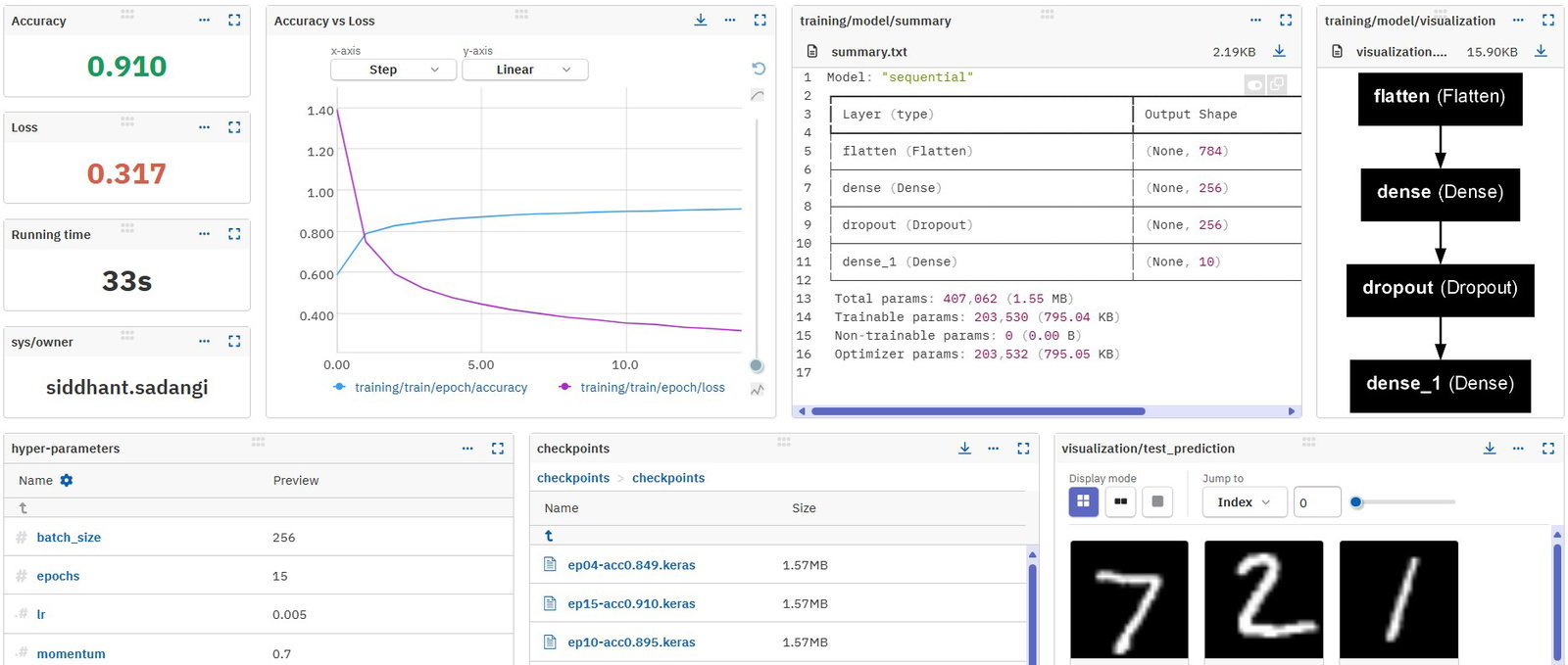
The standout factor is Keras 3.0’s multi-framework architecture, which allows developers to seamlessly work across TensorFlow, JAX, and PyTorch without changing core model code. This flexibility allows organizations to optimize performance based on their preferred backend while gaining access to multiple ML ecosystems simultaneously. It also improves scalability with support for model parallelism and distributed training, while maintaining compatibility with diverse data pipelines and deployment environments.
Pricing
Keras is completely free and open source under the Apache 2.0 license. Developers and organizations can use, modify, and deploy Keras-based neural network models without subscription costs or licensing fees. The platform offers free access to all core deep learning and neural network capabilities, with infrastructure costs depending only on the chosen deployment environment.
What Works & What Doesn't
| Pros | Cons |
| Easy to use | Tough to customize models |
| Flexible | Installation and setup complexities |
| Versatile tool | Difficulties in debugging errors |
Our Final Take
Keras is best suited for developers, researchers, startups, and AI teams looking for an easy-to-use yet scalable neural network software platform. While advanced low-level customization may require deeper framework knowledge, its simplicity, multi-framework support, and rapid experimentation capabilities make Keras one of the strongest neural network development tools.
PyTorch: Best Customization
PyTorch has its roots in the early 2000s, when it was originally called Torch and released in 2001. It was rewritten in 2010 under the banner of Torch7 or LuaTorch, and was updated in 2016, until development finally ceased in 2018.
This was because PyTorch was released in January 2017 by researchers at Meta AI, which was called Facebook AI Research (FAIR) at the time. Even today, PyTorch is one of the most popular deep learning libraries. It is still developed by Meta AI, a company that doesn’t really need an introduction. PyTorch is used by Salesforce, Amazon, NASA, Stanford University, IBM, Duolingo, Tubi, and more.
Why We Chose PyTorch In 2026
Used by AI teams to build complex deep learning models, PyTorch’s modular neural network API provides pre-built layers, activation functions, and loss functions, making it easier to design, train, and refine advanced architectures. It also supports eager execution for flexible experimentation, while TorchScript helps teams move models toward production. With native distributed training, teams can scale neural network workloads across multiple GPUs and nodes, making PyTorch suitable for both research and enterprise-grade AI development.
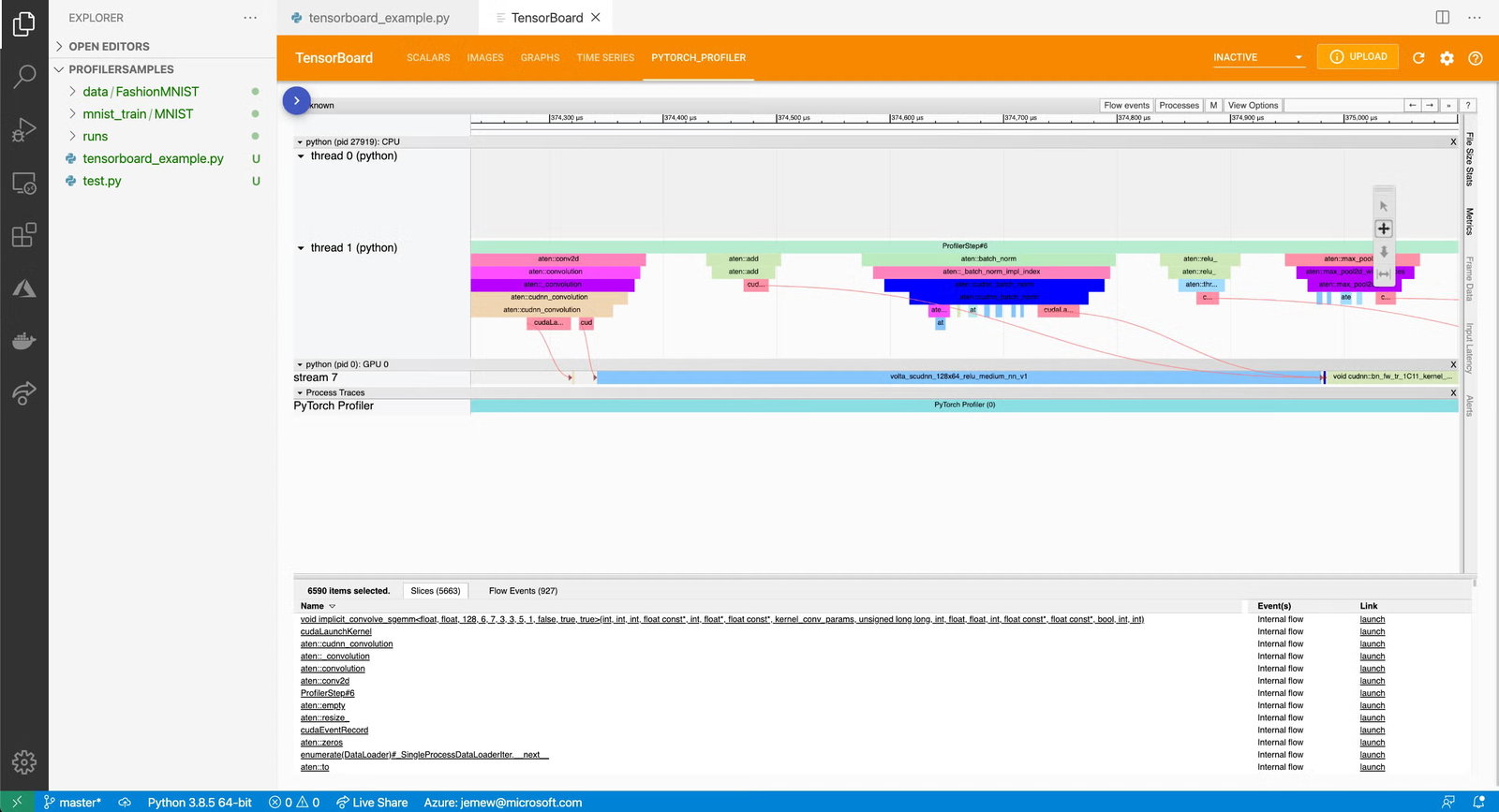
The standout factor is the release of PyTorch 2.12, launched on May 13, 2026, which brings major performance and scalability improvements through 2,926 commits from 457 contributors. This includes up to 100x faster batched eigendecomposition on CUDA, fused Adagrad optimization, improved graph capture through a new API, and enhanced support for compressed model export.
Pricing
PyTorch is a free and open-source deep learning library. Developers, researchers, and businesses can download, use, modify, and deploy PyTorch for personal or commercial neural network projects without paying licensing fees. However, while the software itself is free, organizations may still incur costs for cloud infrastructure, GPUs, storage, compute resources, and enterprise support.
What Works & What Doesn't
| Pros | Cons |
| Intuitive design and problem-solving | Complexity in deploying models at scale |
| Extensive documentation is helpful | Steep learning curve |
| Dynamic computation graph makes debugging easier | Navigation difficulties |
Our Final Take
PyTorch is best suited for AI researchers, deep learning engineers, and enterprise teams building advanced neural network models that require flexibility, scalability, and strong ecosystem support. While it may require technical expertise for production deployment, its open-source model, distributed training capabilities, and fast innovation make it a leading neural network software choice.
H2O.ai: Best AI Features
Founded in 2012, H2O now has around 300 employees housed in 7 offices spread across the globe. This includes its headquarters Mountain View, California, as well as Canada, Poland, Australia, Sri Lanka, Singapore, and Prague. The company’s customer base spans names such as Wells Fargo, Workday, AT&T, Bank of America, Samsung, CVS, Cisco, Citi, eBay, Hyundai, Synopsys, and more, totaling over 20,000 global organizations. H2O’s Hydrogen Torch was awarded Best in Deep Learning Technology at the 2022 AI Tech Awards.
Why We Chose H2O.ai In 2026
H2O Hydrogen Torch helps data science teams, developers, and businesses build advanced models and applications of artificial neural networks without any coding. The platform supports state-of-the-art model training across image, text, video, audio, and 3D image use cases. It covers tasks such as classification, regression, object detection, semantic segmentation, speech-to-text, and sequence-to-sequence modeling. Meanwhile, hyperparameter experimentation, transfer learning, and neural network architectures help teams move from data ingestion to training, inspection, deployment, and consumption within a streamlined workflow.

The standout factor is Hydrogen Torch’s connection to the broader H2O.ai AI Cloud ecosystem, including H2O Driverless AI for automated ML workflows, feature engineering, model tuning, validation, and interpretability. This gives organizations a more complete environment for building, deploying, and managing AI models, bringing them a no-code neural network development within an enterprise-ready AI ecosystem.
Pricing
H2O Hydrogen Torch does not publicly list fixed pricing. As part of H2O AI Cloud, pricing is typically customized based on business requirements, deployment environment, usage scale, and selected capabilities. Interested teams need to contact H2O.ai or request a demo to receive a tailored quote.
What Works & What Doesn't
| Pros | Cons |
| Ease to use | Documentation could be better |
| Powerful visual interface | Confusing debugging messages |
| Quick model prototyping and deployment | Steep learning curve |
Our Final Take
H2O Hydrogen Torch is best suited for data science teams, enterprises, and AI-driven businesses that want to build neural network models without relying heavily on manual coding. While it may not replace low-level frameworks for advanced researchers, its no-code deep learning, broad use-case support, and deployment options make it a strong neural network software choice.
AWS Deep Learning AMIs: Best For Scalability
Amazon Web Services (AWS), a subsidiary of Amazon, is one of the world’s leading cloud computing providers, offering services across compute, storage, databases, analytics, AI, ML, and application development. Launched in 2006, AWS makes enterprise-grade IT infrastructure accessible on demand, reporting an annual segment sales of $128.7 billion in 2025. AWS was named a Leader in the 2025 Gartner Magic Quadrant for AI Application Development Platforms.
Why We Chose AWS Deep Learning AMIs In 2026
AWS Deep Learning AMIs (DLAMI) comes with preconfigured environments for building, training, and deploying deep learning models on Amazon EC2. These AMIs come ready with popular frameworks such as TensorFlow, PyTorch, and Apache MXNet, along with key dependencies, libraries, and tools. The inclusion of NVIDIA CUDA drivers, cuDNN, Intel MKL, Python packages, Anaconda, Elastic Fabric Adapter, and AWS OFI NCCL plugin, helps teams reduce setup time and accelerate neural network development at scale.
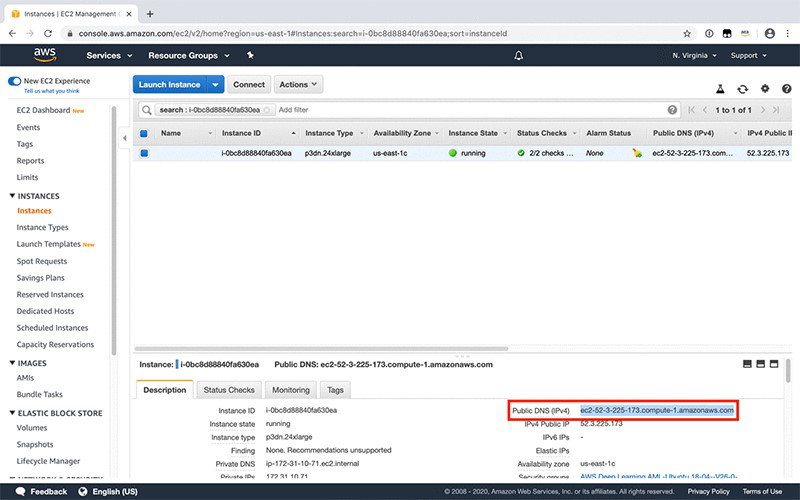
The standout factor is DLAMI’s ability to combine preconfigured deep learning software with powerful AWS compute options. Teams can train neural network models on accelerators such as AWS Trainium, AWS Inferentia, and NVIDIA GPUs, while scaling distributed ML training to thousands of accelerated instances. It also supports use cases such as autonomous vehicle development, natural language processing, healthcare data analysis, and accelerated model training.
Pricing
AWS Deep Learning AMIs are provided free of charge by AWS. However, users pay for the underlying AWS resources they consume, such as Amazon EC2 compute instances, GPU or accelerator usage, EBS storage, and data transfer, as AWS follows a pay-as-you-go pricing model. This makes cost dependent on workload size, training duration, selected instance type, and deployment requirements.
What Works & What Doesn't
| Pros | Cons |
| Easy to setup | High cost for heavy workloads |
| Good preconfigured environment | Less embedded frameworks and tools |
| Saves time and streamlines development | Confusing to activate certain packages |
Our Final Take
AWS Deep Learning AMIs are best suited for data scientists, ML engineers, AI startups, and enterprises that want scalable cloud infrastructure for neural network training and deployment. While teams must manage AWS usage costs carefully, DLAMI’s prebuilt frameworks, accelerator support, and production-ready environments make it a strong neural network software choice.
Top 5 Neural Network Software Comparison
| Criteria |  |
 |
 |
 |
 |
| Starting Price | Free | Free | Free | Custom | Pay-As-You-Go |
| Avg. User Rating | 4.5 | 4.6 | 4.5 | 4.5 | 4.3 |
| Trial Period/Demo | NA | NA | NA | Demo | NA |
| Key Features | Distributed training, model deployment, pretrained models | Multi-framework support, rapid prototyping, functional API | Dynamic graphs, TorchScript deployment, distributed training | No-code modeling, transfer learning, visual interface | Preconfigured environments, GPU acceleration, AWS integration |
| Integrations | AWS Lambda, Python, SpotOn, and more | TensorFlow, JAX, PyTorch, and more | Microsoft Azure, Google Cloud Platform, Alibaba Cloud, and more | Microsoft Azure, AWS, Kaggle, and more | AWS, PyTorch, TensorFlow, Linux, Ubuntu, and more |
Conclusion
Choosing the right neural network software depends on your team’s goals, technical expertise, infrastructure needs, and AI ambitions. As businesses continue increasing AI investments, these tools can help teams build smarter, faster, and more reliable neural network models. Evaluate your use case, budget, and deployment requirements to select the platform that best supports your AI journey.
P.S: Always check the official websites of the vendors to see what's new, since AI systems change so quickly!
Frequently Asked Questions
What Are The Top 5 Neural Network Software Tools Of 2026?
The top 5 neural network software tools of 2026 are TensorFlow, Keras, PyTorch, H2O.ai, and AWS Deep Learning AMIs. TensorFlow is ideal for scalable, production-ready AI development, Keras is best for easy and fast neural network prototyping, PyTorch is a strong choice for research and advanced deep learning projects, H2O.ai supports no-code neural network model development, and AWS Deep Learning AMIs help teams build, train, and deploy models using preconfigured cloud environments.
What Is Neural Network Software Used For?
Neural network software is used to create, train, test, and deploy AI models that can recognize patterns, process data, and make predictions. Businesses use these tools for applications such as recommendation engines, image recognition, natural language processing, anomaly detection, healthcare analysis, fraud detection, and automated decision-making.
How Do I Choose The Best Neural Network Software For My Business?
To choose the best neural network software, businesses should consider their technical expertise, deployment needs, scalability requirements, budget, and preferred development environment. Teams that need enterprise-scale deployment may prefer TensorFlow or AWS Deep Learning AMIs, while developers looking for simplicity may choose Keras. Research-heavy teams often prefer PyTorch, and organizations looking for no-code AI development may benefit from H2O.ai.
Fri, May 15, 2026

Enjoyed what you've read so far? Great news - there's more to explore!
Stay up to date with the latest news, a vast collection of tech articles including introductory guides, product reviews, trends and more, thought-provoking interviews, hottest AI blogs and entertaining tech memes.
Plus, get access to branded insights such as informative white papers, intriguing case studies, in-depth reports, enlightening videos and exciting events and webinars from industry-leading global brands.
Dive into TechDogs' treasure trove today and Know Your World of technology!
Disclaimer - Reference to any specific product, software or entity does not constitute an endorsement or recommendation by TechDogs nor should any data or content published be relied upon. The views expressed by TechDogs' members and guests are their own and their appearance on our site does not imply an endorsement of them or any entity they represent. Views and opinions expressed by TechDogs' Authors are those of the Authors and do not necessarily reflect the view of TechDogs or any of its officials. While we aim to provide valuable and helpful information, some content on TechDogs' site may not have been thoroughly reviewed for every detail or aspect. We encourage users to verify any information independently where necessary.
Loading comments...