E-commerce
Top 5 E-Commerce Platforms Of 2026
Share
Overview
The 2026 e-commerce market focuses on balancing high level customization with AI-driven tools to create seamless, engaging consumer experiences.
-
Adobe Commerce: Provides unmatched flexibility and deep integration for enterprises needing high customizability.
-
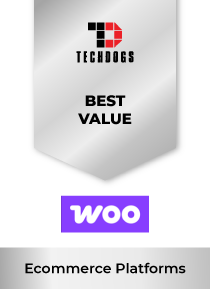
WooCommerce: Offers incredible value for small businesses by leveraging the vast WordPress plugin ecosystem.
-
BigCommerce: Delivers enterprise-grade scalability and robust performance for brands with a global reach.
-
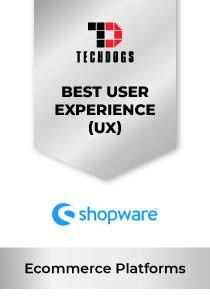
Shopware: Stands out for its exceptional user experience through modular architecture and creative AI features.
-
Shopify: Rremains the best overall solution by blending intuitive usability with a massive app ecosystem.
Introduction
Do you remember the cultural phenomenon of Pokémon Go? Back in 2016, this smartphone game took the world by storm by blending digital elements with our physical reality through innovative augmented reality. Just as trainers wandered through neighborhoods to catch rare creatures, today’s digital landscape requires businesses to hunt for the perfect tools to captivate their own audiences. The magic of that experience was how it transformed a simple screen into a gateway for exploration and engagement.
Modern online storefronts are now undergoing a similar evolution by using cutting edge tech like virtual try-ons and AI personalization to make shopping feel just as immersive. As technology continues to shift, these platforms are no longer just about transactions but about creating a satisfied customer journey in a competitive market. Choosing the right foundation is essential for any brand looking to bridge the gap between a digital catalog and a real world connection. Explore these Top 5 E-Commerce Platforms that are defining the industry in 2026.
What Is An E-Commerce Platform?
An E-Commerce platform is a tool that helps companies to set up, run and maintain an online business. Businesses can manage digital storefront functions such as product catalog, order processing, and payment transactions from this central location, enabling them to display products, monitor stock levels, and make necessary modifications.
Along with comprehensive order management that manages the entire process, from order placing to fulfillment, it also offers secure payment processing to make it easier for customers to make purchases.
Now that you know what it means, let’s explore the top 5 E-Commerce Platforms of 2026, their providers, standout features, and key benefits. Dive in!
Top 5 E-Commerce Platforms Of 2026
We know it was daunting to choose the best Pokémon in Pokémon Go, but selecting the right e-commerce tool can be challenging, too. That is why we have listed down the top five E-commerce Platforms of 2026.
 |
 |
 |
 |
 |
Adobe Commerce: Best Customization
Adobe Commerce, the first name on our 2026 list, returns from last year’s list, reaffirming its strength in the enterprise E-Commerce space. Acquired by Adobe in 2018, it leverages Adobe’s robust ecosystem. In 2025, over 131,000 live storefronts powered by Adobe Commerce handled roughly $155 billion in annual GMV and accounted for 8% of the global E‑commerce Platform share.
Why We Chose Adobe Commerce In 2026
Adobe Commerce stands out for its unmatched flexibility and ecosystem integration. It excels at serving both B2B and B2C channels through a single, scalable platform, delivering AI-powered experiences. Its strengths lie in high customizability and extensibility via thousands of third‑party extensions, robust B2B capabilities, and support for headless and composable architectures. Enterprises benefit from seamless integration with Adobe’s broader marketing and analytics tools.
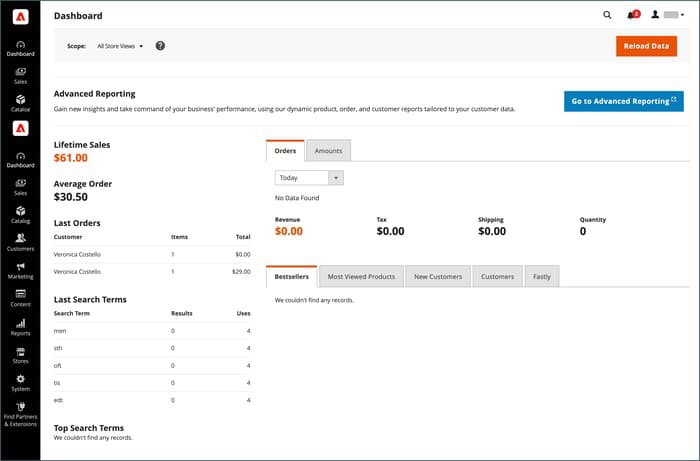
Adobe Commerce offers enterprise-grade features like ISO 27001 and SOC 2 certifications, GDPR tooling, PCI DSS 4.0 alignment, and rapid SaaS‑style patch deployment via Adobe Commerce Cloud. It scales elastically, supports mobile commerce with high conversion rates, and reduces Total Cost of Ownership (TCO) while enhancing security and compliance.
Pricing
Adobe Commerce offers enterprise-focused pricing, with licensing starting at approximately $22,000 per year for on-premises deployments and exceeding $125,000 per year for Adobe Commerce Cloud. Pricing is typically quote-based depending on business requirements, and organizations can request free demos to evaluate the platform.
What Works And What Doesn’t
| Pros | Cons |
| High customizability and scalability | Higher cost than some SaaS alternatives |
| Strong B2B & multi-brand support | Steep learning curve and dependency on developers |
| Enterprise-level security and integration options | Complexity may deter SMEs and smaller businesses |
Our Final Take
Adobe Commerce is a great marketing tool for businesses that need strong B2B functionality, composability, and integration with Adobe’s broader suite. It may not suit startups or simple storefronts due to its complexity and higher investment, but it is a compelling choice for those seeking enterprise-grade flexibility and performance.
WooCommerce: Best Value
WooCommerce enters our top‑5 list as a dynamic new contender for 2026. Acquired by Automattic in 2015, it remains a powerhouse in open‑source E-Commerce built on WordPress. As of mid‑2025, WooCommerce powered approximately 4.65 million active sites globally, capturing around 20.1 % of the global E‑commerce Platform market. At the 2025 WP Awards, WooCommerce was voted #2 in the E-commerce Tools category.
Why We Chose WooCommerce In 2026
WooCommerce captivates with its blend of flexibility, cost efficiency, and the vast WordPress ecosystem. This makes it one of the best e-commerce platforms for small businesses seeking customizable, high-value storefronts. This platform excels in extensibility through thousands of themes and plugins, seamless WordPress integration, and full control over customization. Its open‑source nature ensures adaptability to diverse business needs without vendor lock-in.
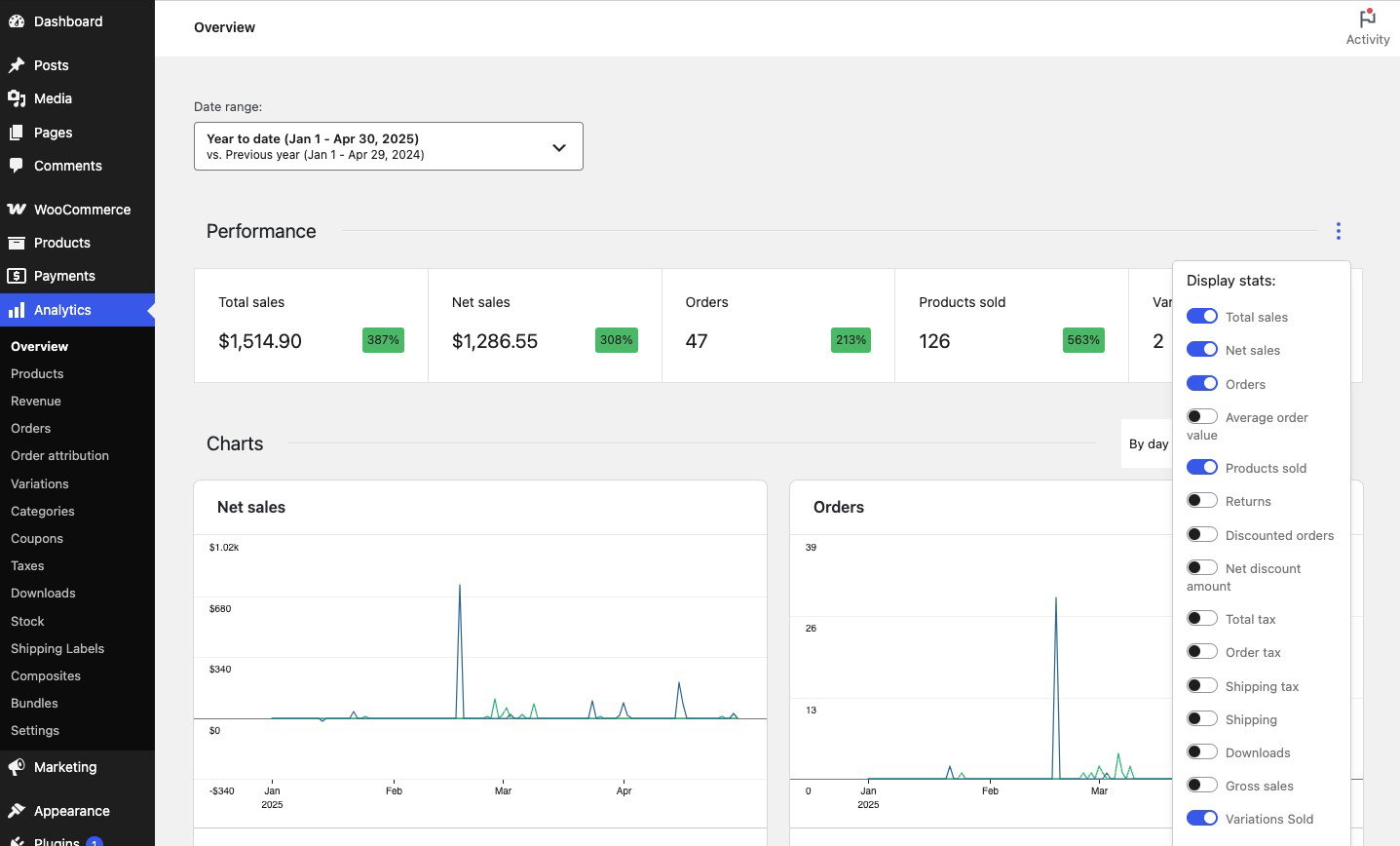
WooCommerce supports scalable growth through hundreds of integrations for payments, shipping, and marketing. Security can be strengthened via hosting partner tools, SSL, GDPR‑compliant extensions, and PCI‑compliant solutions. With a strong developer community, users benefit from continuous improvements and responsive support networks.
Pricing
WooCommerce follows a flexible pricing model, starting with a free base plugin that can be installed at no cost. Ongoing expenses depend on additional needs, with hosting typically starting at under $10 per month. Premium themes are available from around $50, while specialized plugins can range from $30 to over $200 per year, depending on functionality and complexity.
What Works And What Doesn’t
| Pros | Cons |
| Free base platform with massive plugin ecosystem | Requires management of hosting, security, and updates |
| Highly customizable via themes and plugins | Performance depends on hosting and technical setup |
| Strong community and WordPress familiarity | Complexity can overwhelm non-technical users |
Our Final Take
WooCommerce is ideal for entrepreneurs and small to mid‑sized merchants seeking a budget-friendly, customizable e-commerce platform built on WordPress. It may not be ideal for enterprises seeking turnkey, managed platforms; instead, it is a cost-effective option for those willing to manage their own infrastructure.
BigCommerce: Best For Scalability
BigCommerce maintains its strong position among E‑commerce Platforms, supporting over 130,000 merchants across more than 150 countries and powering around 41,200 live storefronts globally. In 2025, it also received the Top Rated Award for customer satisfaction from TrustRadius.
Why We Chose BigCommerce In 2026
BigCommerce offers refined scalability and enterprise-ready performance, while preserving BigCommerce’s customizable SaaS legacy. It’s tailored for businesses with a global presence aiming to grow with composable solutions. Commerce delivers advanced B2B and B2C capabilities, multi-storefront support, headless commerce via API, and rich SEO and analytics tools. Its acquisition under Commerce's unified product lines makes BigCommerce part of an innovation-focused ecosystem.
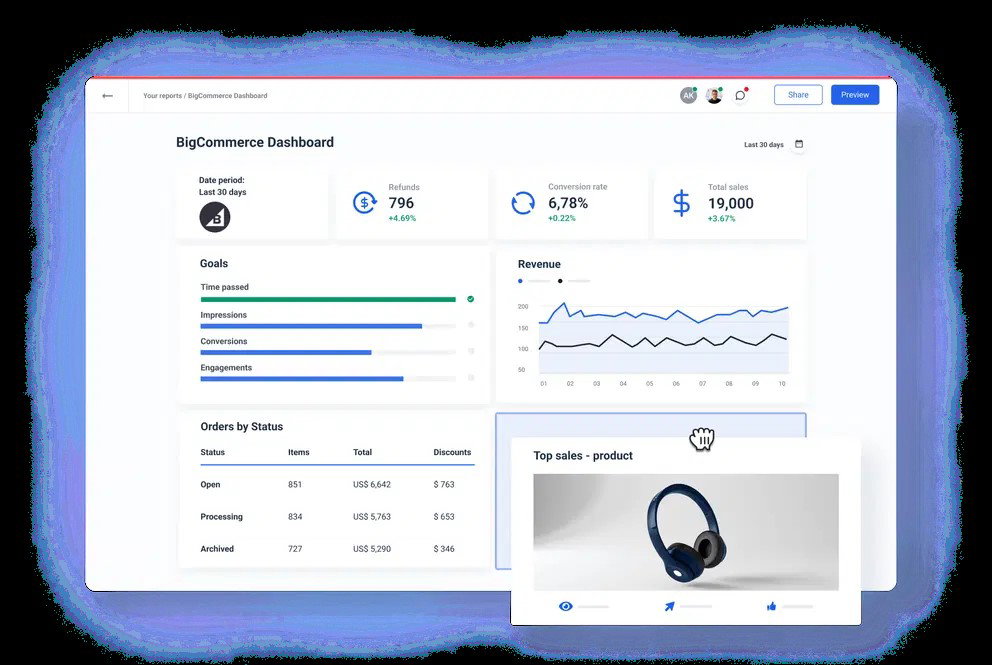
Security features include PCI DSS compliance, SSL, and two‑factor authentication. The platform offers AI-powered features and integrations, with real-world impact evidenced by growth success stories from award-winning merchants such as Sleep Country Canada and MUJI.
Pricing
BigCommerce offers a tiered pricing structure designed to scale with business growth. Pricing starts with the Standard plan at $29 per month, followed by the Plus plan at $79 per month. The Pro plan is priced at $299 per month, with costs increasing based on revenue thresholds and advanced feature requirements.
What Works And What Doesn’t
| Pros | Cons |
| Full-featured SaaS with enterprise-grade toolkit | Expensive compared to basic E-commerce Platforms |
| Strong security and compliance out of the box | Less design flexibility compared |
| Acquisition streamlines ecosystem and innovation | Complex for very small or design-focused merchants |
Our Final Take
BigCommerce is well-suited for growing brands and enterprises that need global reach, flexibility, and a composable architecture. Smaller merchants or those prioritizing ultra-simple design workflows may find it overwhelming. BigCommerce remains a smart choice for ambitious online sellers seeking robust capability and long-term scalability.
Topics For More Insights
Shopware: Best User Experience (UX)
Shopware makes a confident debut on our top‑5 list as a new entrant, gaining momentum in 2025. With over 55,000 B2C and B2B merchants globally, Shopware also reported 300% year‑over‑year growth in North America during H1 2025. It earned a place among the “top 14 providers” in 2025, according to Forrester’s Commerce Solutions for B2B.
Why We Chose Shopware In 2026
Shopware impresses with its open‑source flexibility, modular architecture, and AI‑powered capabilities. It’s ideal for mid-sized and enterprise brands seeking agency‑level control alongside strong B2B and creative abilities. Built on Symfony, Shopware supports headless, composable commerce with rich extension options and over 3,500 plugins, as well as integrations with payments and ERP systems. The platform offers advanced tools like Flow and Rule Builders, Shopping Experiences, 3D & AR Commerce, and AI‑enhanced analytics.
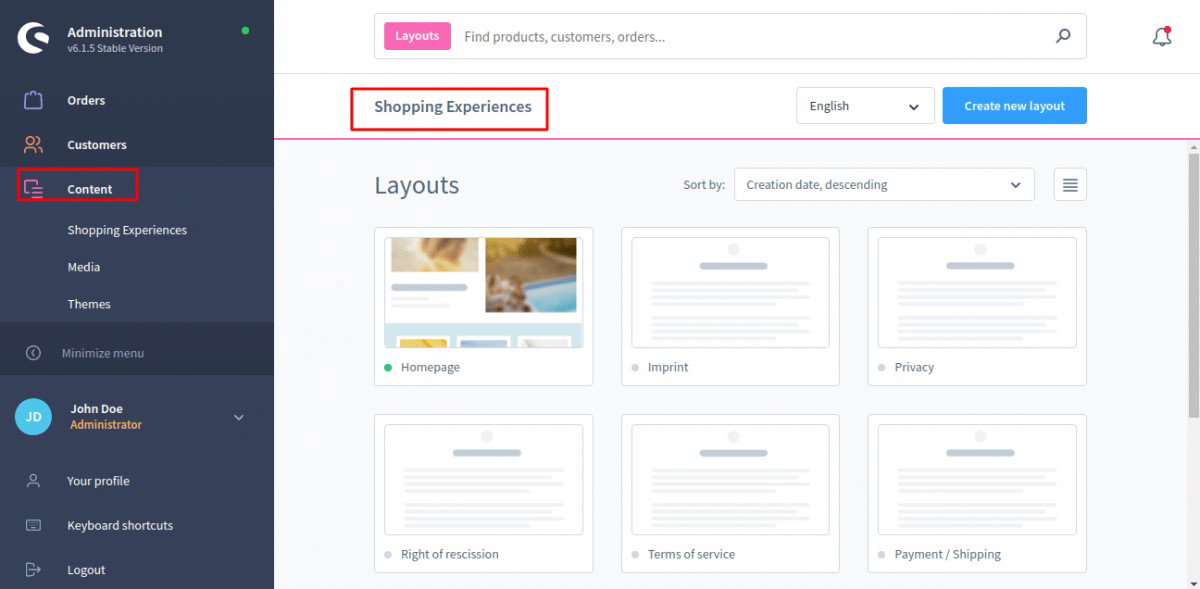
Shopware enhances digital experiences with standout features such as the Scene Editor for 3D product views and Digital Sales Rooms for live discounting. It partners with firms such as KPS and Human Element to support North American entry and to deliver enterprise-grade composable CX solutions.
Pricing
Shopware offers a tiered pricing model to support businesses at different growth stages. The Community Edition is free to use, while paid plans start with the Rise plan at approximately $600 per month. The Evolve plan is priced at around $2,400 per month, and the Beyond plan begins at about $6,500 per month, offering more advanced features and scalability for enterprise needs.
What Works And What Doesn’t
| Pros | Cons |
| Open‑source and highly extensible | Requires technical skills for setup and maintenance |
| Strong B2B-focused AI-native features | Smaller merchant stores |
| Growing North American presence and enterprise support | Fewer plug‑and‑play options |
Our Final Take
Shopware is best suited for mid‑to‑enterprise businesses looking for flexible, innovative e‑commerce tools with strong B2B, AI, and visual capabilities. It may not suit budget‑conscious, non‑technical startups, but it is a powerful platform for those ready to scale with control.
Shopify: Best Overall
Shopify remains a cornerstone on our top‑5 list, continuing to lead as a retained platform. As of 2026, Shopify supports approximately 5 million active stores, serves around 6 million daily active users, and generated an all‑time high $292.3 billion in processed transactions in 2025. In The Gartner Magic Quadrant of Q4 2025 for Digital Commerce, Shopify was named a Leader for the second consecutive year.
Why We Chose Shopify In 2026
Shopify blends intuitive usability with deep customization, a thriving app ecosystem, and enterprise‑grade scalability. Its continued leadership and strong merchant adoption underpin its compelling value. Shopify’s platform is highly extensible through over 16,000 apps, supports headless commerce via Hydrogen and Oxygen, and scales seamlessly across SMBs to enterprise with Shopify Plus. Its intuitive UI, integrated payments, fulfillment tools, and global coverage make it a one‑stop e‑commerce solution.
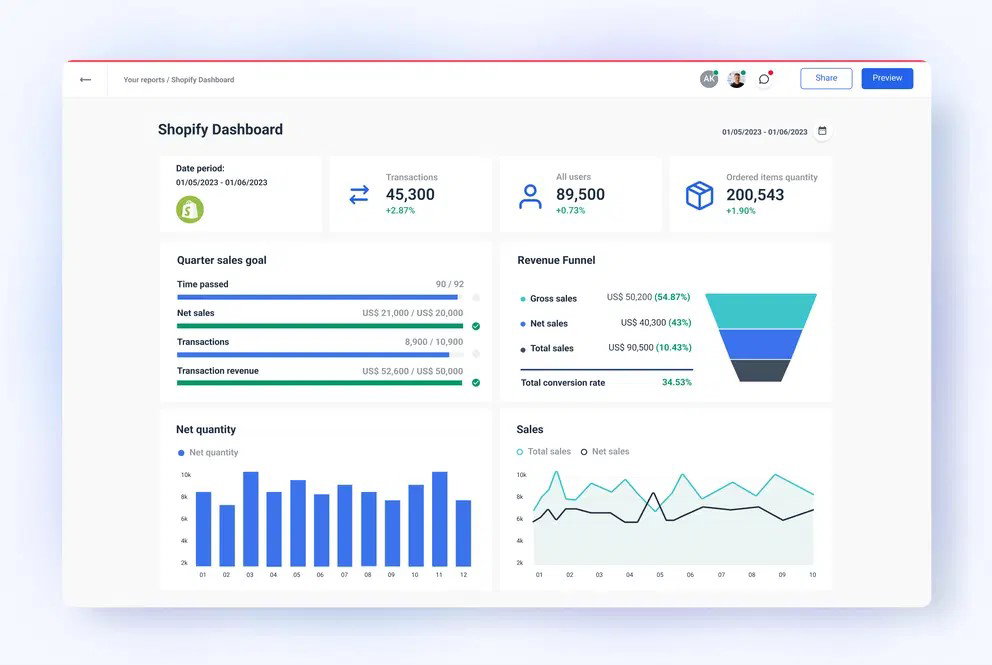
Security and reliability are foundational: Shopify maintains PCI‑compliant infrastructure, SSL, and robust hosting. Its AI feature, Shopify Magic, helps automate tasks such as discount creation, customer analytics, and product descriptions. Additionally, features like tariff‑estimation tools streamline cross‑border commerce.
Pricing
Shopify offers a scalable pricing structure designed for businesses of all sizes. Pricing starts at $39 per month for basic store plans and can go up to around $2,000 per month for Shopify Plus, the enterprise-tier solution. Higher plans include advanced features, automation, and dedicated support tailored to growing and large-scale businesses.
What Works And What Doesn’t
| Pros | Cons |
| Massive merchant base and proven scalability | can escalate the monthly cost for enterprise-level needs |
| Rich app ecosystem and powerful developer tools | Requires developer support for customization |
| Strong AI tools and global infrastructure | Not ideal for on‑premises setups |
Our Final Take
Shopify is ideal for businesses of all sizes seeking a powerful, scalable, and easy-to-manage e-commerce solution with strong AI and global infrastructure. It may not suit companies needing deep on‑premises or highly bespoke implementations.
Top 5 E-Commerce Platforms Comparison
P.S.: Always remember to visit the vendor’s site for the latest information!
| Criteria |  |
 |
 |
 |
 |
| Starting Price | $22,000/year | $10/month | $29/month | €600/month | $39/month |
| Avg. User Rating | 4.0 | 4.3 | 4.2 | 4.3 | 4.4 |
| Trial Period/Demo | 14 days | 30 days | 15 days | Demo | 3 days |
| Key Features | Customized themes, B2B/B2C, composable, and AI integrations | WordPress integration, extensibility via themes/plugins, and SEO-friendly | SaaS scalability, multi‑storefront, and headless API | Open-source modular architecture, AI tools, and creative features | Huge app ecosystem, strong UX, and AI automation |
| Integrations | Adobe suite, third-party plugins, enterprise tools, and more | Vast WordPress ecosystem plugins | APIs, apps, SEO/analytics tools, and more | 3,500 plugins, payments, ERP, creative tools, and more | 16,000+ apps, payments, shipping, and more |
Conclusion
In 2026, top E-commerce Platforms balance flexibility, scalability, and innovation. Shopify excels in ease of use and global reach, while Adobe Commerce suits enterprises needing deep customization. WooCommerce offers unmatched value for WordPress users, and BigCommerce delivers SaaS strength with headless and B2B capabilities. Shopware, a rising entrant, stands out for its modular design and AI-driven tools.
Ultimately, each platform serves distinct business needs, whether you're scaling quickly, optimizing for a new market, or seeking more creative control.
Always remember that the best choice depends on your business’s size, tech stack, and goals. So adopt one of these top E-commerce Platforms and stay ahead in today’s increasingly competitive e-commerce landscape!
Frequently Asked Questions
What Are The Top 5 E-commerce Platforms Of 2026?
Shopify, WooCommerce, Adobe Commerce, BigCommerce, and Shopware are widely recognized as the top E-commerce platforms in 2026.What Are The Features Of E-commerce Platforms?
Typical E-commerce platforms include product catalog and inventory management, secure payment integration, shopping cart and order processing, marketing tools, mobile responsiveness, analytics, and integrations with ERP/CRM or marketing automation.What Is The Most Popular E-Commerce Platform?
Shopify is the most widely used platform, which powering around 25 % of all online stores. Thus, it remains the most active E-commerce platform for sellers.Tue, Dec 16, 2025

Enjoyed what you read? Great news – there’s a lot more to explore!
Dive into our content repository of the latest tech news, a diverse range of articles spanning introductory guides, product reviews, trends and more, along with engaging interviews, up-to-date AI blogs and hilarious tech memes!
Also explore our collection of branded insights via informative white papers, enlightening case studies, in-depth reports, educational videos and exciting events and webinars from leading global brands.
Head to the TechDogs homepage to Know Your World of technology today!
Disclaimer - Reference to any specific product, software or entity does not constitute an endorsement or recommendation by TechDogs nor should any data or content published be relied upon. The views expressed by TechDogs' members and guests are their own and their appearance on our site does not imply an endorsement of them or any entity they represent. Views and opinions expressed by TechDogs' Authors are those of the Authors and do not necessarily reflect the view of TechDogs or any of its officials. While we aim to provide valuable and helpful information, some content on TechDogs' site may not have been thoroughly reviewed for every detail or aspect. We encourage users to verify any information independently where necessary.
Loading comments...