Software Development
Top 5 Application Lifecycle Management Tools Of 2026
Share
TL;DR
-
Codebeamer: Provides end-to-end traceability and built-in templates specifically designed for highly regulated and safety-critical industries.
-
Azure DevOps: Delivers a comprehensive cloud-native toolchain that integrates work planning with robust CI/CD pipelines for maximum value.
-
SpiraTeam: Offers an all-in-one agile hub that balances requirement management and defect tracking with a superior user experience.
-
GitLab: Serves as a complete DevSecOps platform that automates security scanning and deployment within a single, unified interface.
-
Polarion ALM: Enables large-scale enterprise collaboration through a browser-based system featuring rigorous lifecycle governance and audit readiness.
Introduction
We often draws parallels between the digital world and the magic of the silver screen, comparing data integration to the hunt in National Treasure or linking social media analytics to the wit of Young Sheldon. These stories captivate us because they follow a definitive arc: a beginning, a middle, and an end. Just as a film requires a vision to move from a script to a premiere, a software project needs a steady hand to guide it from a raw idea through development and eventual retirement. This narrative journey ensures that every phase is nurtured and every team stays aligned toward the final release.
In the realm of software, Application Lifecycle Management tools act as the ultimate director, overseeing the entire production to prevent a horror-show launch. They provide the necessary coordination to turn a complex technical concept into a high-quality reality. Choosing the right platform is now more critical than ever as cloud-native workflows and AI-driven cycles become the industry standard. Here are the top 5 Application Lifecycle Management tools that are leading the way in 2026. Read on!
What Is An Application Lifecycle Management (ALM) Tool?
An ALM tool is a digital solution that businesses use to support the entire application lifecycle. These help them from ideation and planning through development and maintenance, and all the way to decommissioning and retirement of the application. These tools help improve product quality and productivity while reducing the stress of ensuring efficient, effective collaboration across teams.
Just as a film director ensures each team collaborates effectively and efficiently, ALM Tools ensure all team members across the application lifecycle can collaborate and work with ease.
With all of that understood, let’s explore the Top 5 Enterprise Application Lifecycle Management Tools of 2026.
Top 5 Application Lifecycle Management Tools Of 2026
With cloud-native development, AI-powered workflows, and shorter release cycles becoming the new norm, choosing the right ALM platform is critical. The top players in 2026 are those helping teams ship faster, stay compliant, and maintain product quality at scale.
So, here are the Top 5 Application Lifecycle Management Tools Of 2026 in random order.
 |
 |
 |
 |
 |
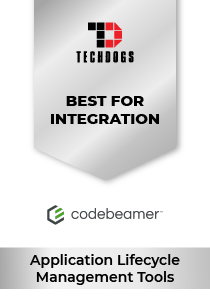
Codebeamer: Best For Integration
Codebeamer remains a leading ALM platform in 2026, especially for organizations needing software and product development governance, traceability, and compliance. In recent recognition, Codebeamer, as part of the broader PTC ALM portfolio, was even named “Leader” in the 2024 Omdia Regulated Software Lifecycle Management (RSLM) Assessment, with its ALM suite scoring the highest in Solution Capability among peers.
Why We Chose Codebeamer In 2026
Codebeamer offers end-to-end ALM capabilities: requirements management, risk and variant handling, test and quality assurance, configuration management, and seamless traceability from concept through testing and release. Moreover, its support for regulated-industry standards (automotive, medical, aerospace) with built-in templates (e.g., ISO 26262, DO-178C, IEC 61508) makes it particularly appealing for safety-critical or compliance-heavy product development.
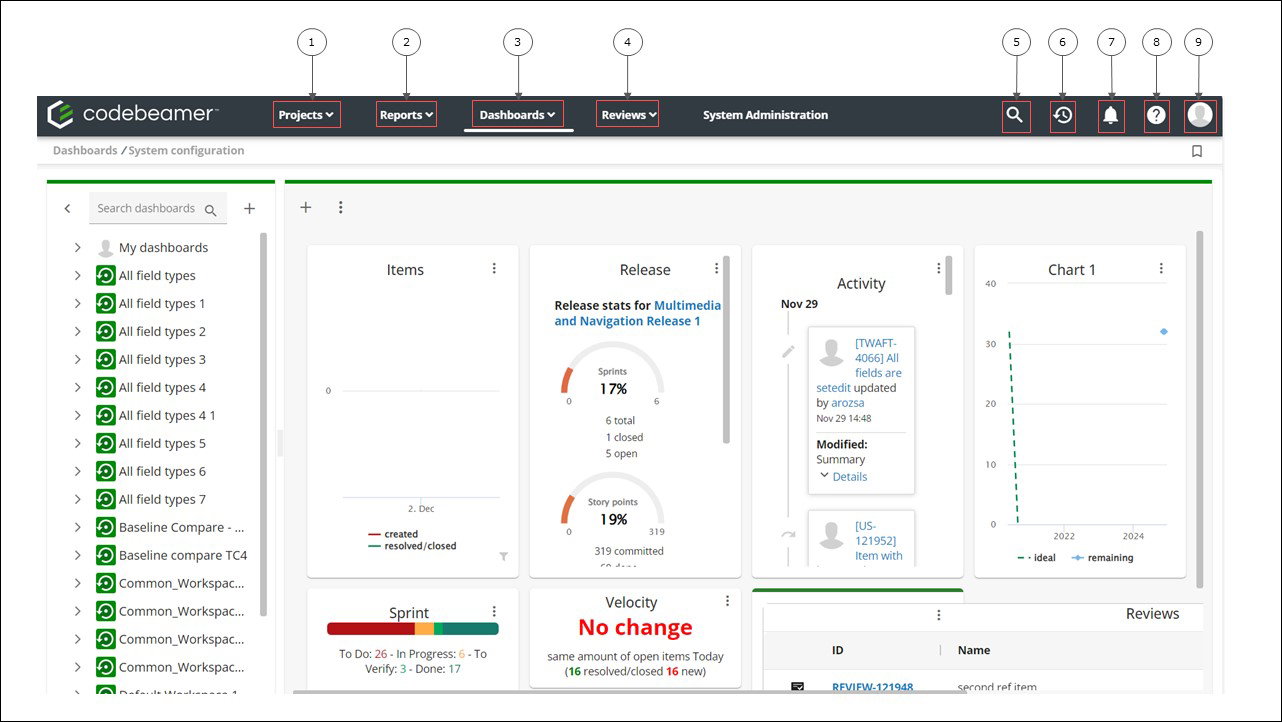
With its flexible architecture, Codebeamer supports both cloud-hosted and on-premises deployments, delivering enterprise-grade scalability and high performance for complex, large-scale projects. The platform’s configurable workflows, strong integration capabilities (e.g., with Jira, MS Office, PLM systems) and out-of-the-box compliance templates make it effective for cross-functional teams to collaborate smoothly and maintain regulatory audit-ready traceability.
Pricing
Codebeamer licensing follows a user-per-year model. The “RM” or “TM” version is listed at USD 1,500 per user per year, and the more comprehensive “LM” version at USD 1,800 per user per year. Codebeamer does not appear to offer a permanent free plan, but it does offer a 30-day free trial for evaluation. For detailed enterprise-level deployment or volume licensing, official quotes via their website or authorized resellers are typically required.
What Works And What Doesn’t
| Pros | Cons |
| Strong end-to-end traceability for regulated workflows | Steep setup/config effort for new teams |
| Robust compliance templates for safety-critical standards | Heavy for small projects with simple ALM needs |
| Flexible integrations with DevOps, PLM, and QA toolchains | Pricing details require custom quotes beyond basics |
Our Final Take
Codebeamer is the best ALM software for enterprises and organizations operating in regulated, safety-critical, or complex product environments where full-lifecycle traceability, compliance, and rigorous QA are non-negotiable. It might not be the ideal choice for small, lightweight projects or startups seeking minimal overhead.
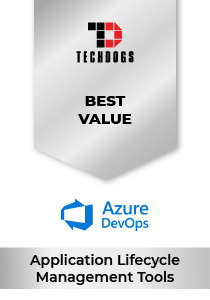
Azure DevOps: Best Value
Azure DevOps is a new entrant to our top 5 ALM list in 2026, reflecting its growing maturity and popularity among modern development teams. In 2025, Azure DevOps earned the prestigious “2025 Data Quadrant Champion” and “2025 Emotional Footprint Champion” awards from SoftwareReviews, recognizing both its strong technical capabilities and high user satisfaction.
Why We Chose Azure DevOps In 2026
Azure DevOps delivers a comprehensive toolchain, encompassing work-planning (Boards), source control (Repos), CI/CD pipelines, test management, and package handling, all within a unified, cloud-native environment. Its tight integration with both open-source ecosystems and cloud services makes it versatile for varied tech stacks and project scales.
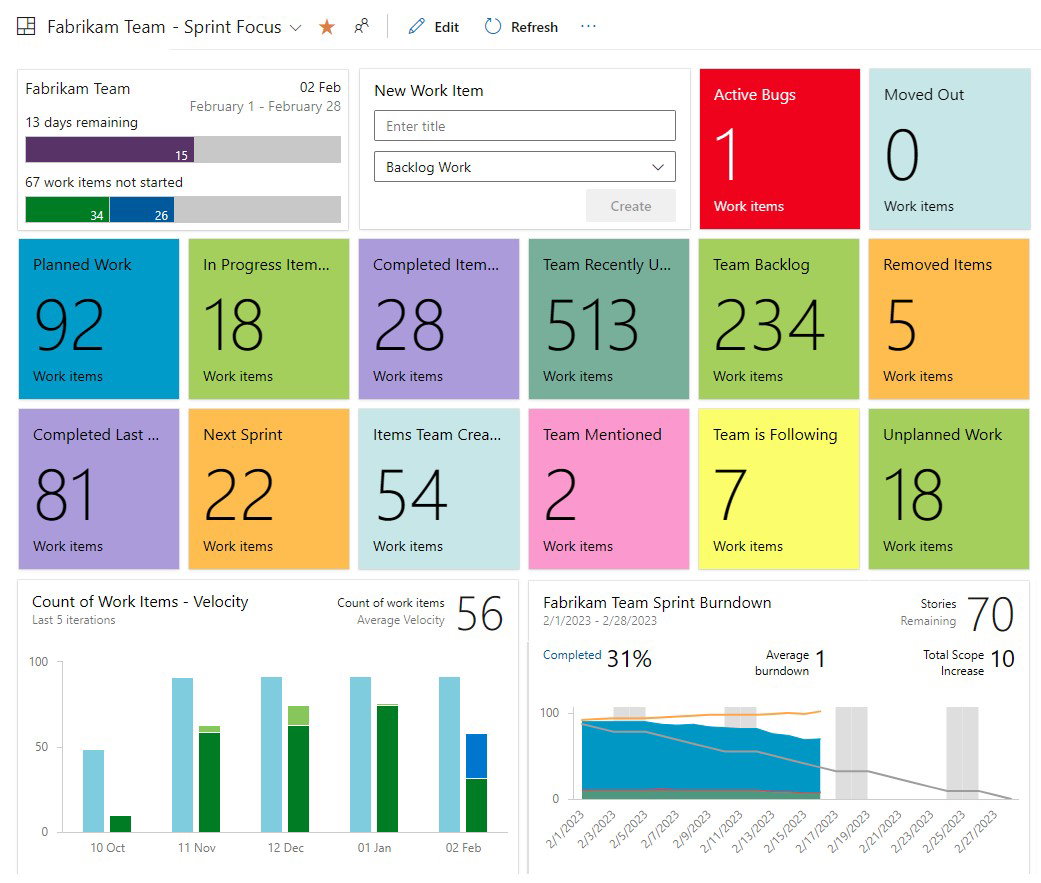
For teams embracing DevOps or agile methodologies, Azure DevOps streamlines workflows from inception to delivery, minimizing tool-hopping and ensuring code, builds, tests, and deployments stay in sync. Its continual updates (including 2025 enhancements to GitHub integration and pipeline security) show active maintenance and responsiveness to modern requirements. Officially supported access levels and cloud infrastructure ensure scalability for small studios and large enterprises alike.
Pricing
Azure DevOps offers a free tier for up to five users (Basic license) with other paid plas. For additional users, the Basic plan costs US $6/user/month, and the “Basic + Test Plans” tier costs US $52/user/month. For open-source or small-team projects, many features remain free, including unlimited private repos, Boards, and limited CI/CD pipelines.
What Works And What Doesn’t
| Pros | Cons |
| Unified ALM + CI/CD pipeline reduces tool fragmentation | Full-feature setup and configuration can be complex |
| Strong cloud and open-source integration, and wide ecosystem support | Some advanced features add extra cost |
| High user satisfaction and an active community backing | Overkill for solo developers or very small/simple projects |
Our Final Take
Azure DevOps is especially well-suited for growing software projects, startups, and enterprises seeking a unified, scalable ALM + DevOps platform that supports planning, version control, CI/CD, automated testing, and deployment under one roof. For solo developers or very small projects that need only basic version control or issue tracking, Azure DevOps may feel heavy. Still, for most professional software teams prioritizing collaboration and delivery velocity, it stands out among ALM options in 2026.
SpiraTeam: Best User Experience (UX)
SpiraTeam is a retained tool on our 2026 list from last year, continuing as Inflectra’s agile ALM platform for managing projects, requirements, tests, and defects in one place. SpiraTeam has 5,000+ customers in 100+ countries worldwide, while Inflectra cites 80,000+ daily users across 82 countries for its product portfolio. To reflect recent recognition, SpiraTeam earned the 2025 Emotional Footprint Champion award from SoftwareReviews and Inflectra was named a 2024 SPARK Matrix Technology Leader in the global Enterprise Agile Planning market.
Why We Chose SpiraTeam In 2026
SpiraTeam’s core strength is integrated lifecycle coverage for agile and hybrid teams: requirements, user stories, tasks, test cases, defects, releases, and source-code links all live in one environment. Its concurrent-user model supports distributed teams with many named users. At the same time, built-in dashboards and reporting help PMs, testers, and developers see project health and traceability without bouncing between tools.
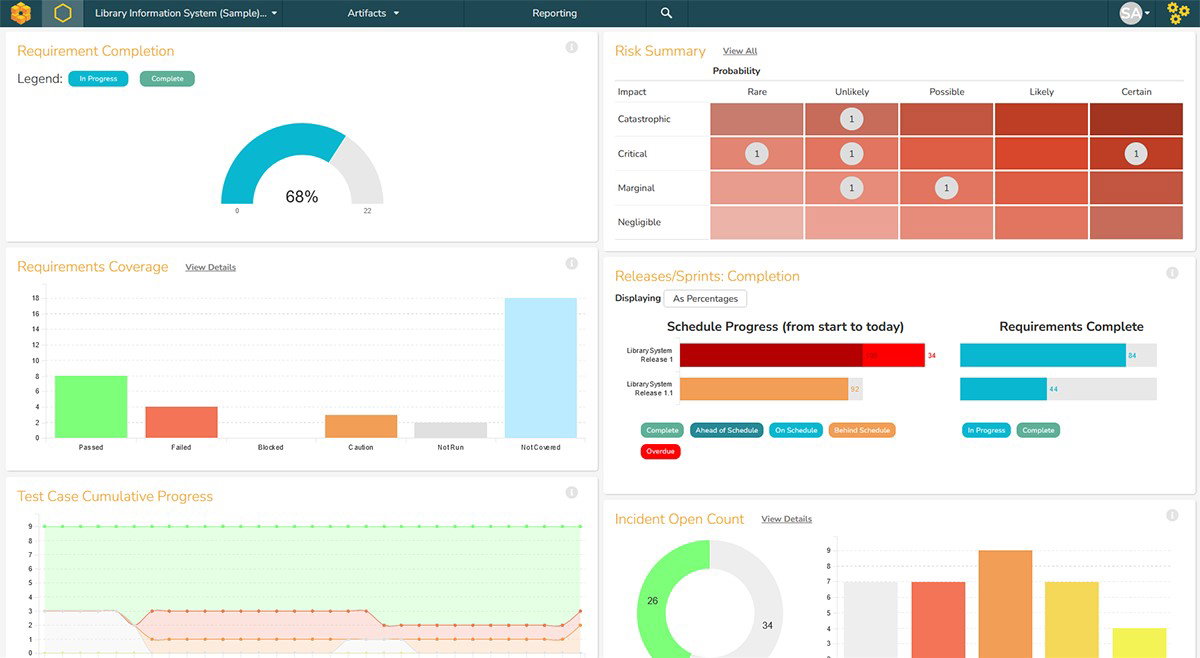
In 2026, SpiraTeam delivers practical value through end-to-end artifact traceability, customizable workflows, and integrations with Jira, CI servers, and SCM tools, plus TaraVault for integrated Git/SVN. Inflectra’s cloud platform is SOC 2 Type II audited, with ISO 27001 and ISO 9001 controls, TLS 1.2 in transit, AES-256 at rest, and PCI DSS–certified hosting; it also aligns with GDPR and HIPAA requirements.
Pricing
SpiraTeam uses official concurrent-user licensing. A 3-user SaaS edition starts at US$171.99/month (US$1,857.49/year) and scales to larger tiers, with unlimited named users and projects.
What Works And What Doesn’t
| Pros | Cons |
| Integrated requirements–test–defect traceability for agile teams | UI can feel dated and less intuitive for new users |
| Concurrent licensing with unlimited named users suits global teams | Performance may slow on very large projects or heavy reports |
| Strong integrations with Jira, CI tools, and SCM for end-to-end ALM | Fewer out-of-the-box regulatory templates than niche compliance ALM |
Our Final Take
SpiraTeam is best for mid-size organizations and enterprises wanting an all-in-one agile ALM hub with solid traceability, flexible workflows, and strong security. It’s less ideal if you need deep, pre-built regulatory templates out of the box. If you value integrated requirements, testing, and project management without per-named-user pricing, SpiraTeam is a compelling choice for 2026.
GitLab: Best Overall
GitLab is a new entrant to our 2026 ALM tools ranking. It has recently gained strong industry recognition: GitLab was named a Leader in the 2025 Gartner Magic Quadrant for DevOps Platforms and ranked #1 in 4 of 6 use cases, including Agile Software Delivery, Cloud-Native Application Delivery, Platform Engineering, and Regulated Delivery. It also won the 2025 Google Cloud Technology Partner of the Year Award in the DevOps category, a mark of its growing influence and cloud-native alignment.
Why We Chose GitLab In 2026
GitLab provides a unified DevSecOps platform that integrates version control (Git repos), CI/CD pipelines, issue andmerge-request tracking, code review, security scanning, and deployment automation. Its comprehensive toolset means teams don’t need disjointed point solutions: planning, coding, testing, security, and deployment can flow seamlessly in a single workflow.
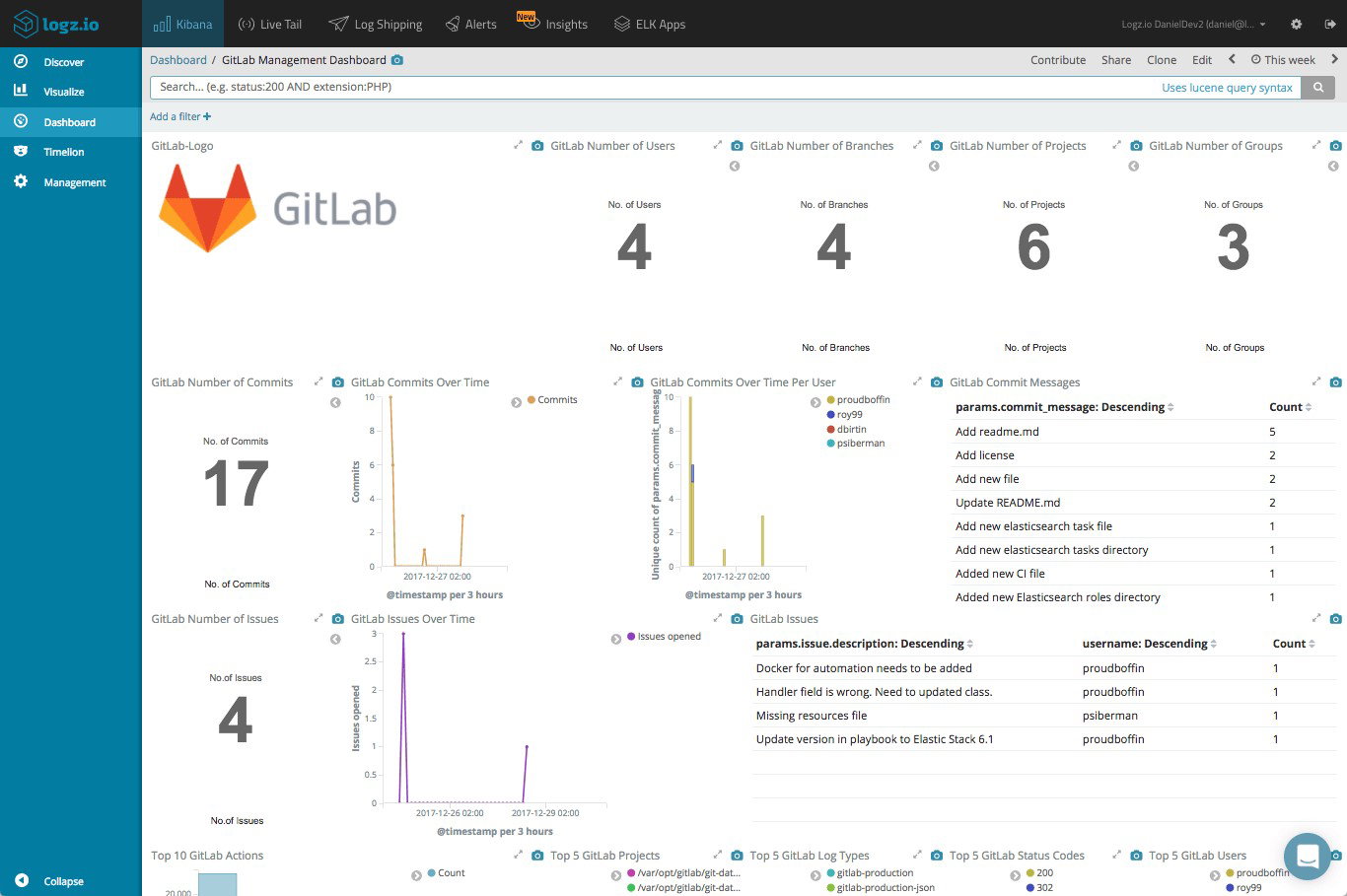
GitLab helps teams deliver software faster by automating builds, tests, security scans, and deployments. Its built-in DevSecOps approach ensures that code, security, compliance, and operations remain integrated, reducing context switching and fragmentation. According to recent evaluations, GitLab enjoys strong user satisfaction: many users highlight how easy it is to set up CI/CD and how well the platform scales from small projects to enterprise-scale development.
Pricing
GitLab’s official pricing includes a Free tier with core SCM and CI/CD, a Premium tier for expanded collaboration and productivity, and an Ultimate tier for advanced security and compliance. Users can start with a 30-day trial of the top tier, then continue Free or upgrade. Premium starts at US$29/user/month, and AI add-ons such as Duo Pro (US$19/user/month) enhance capabilities.
What Works And What Doesn’t
| Pros | Cons |
| All-in-one DevSecOps platform combining code, CI/CD, issues, reviews, and security | The full suite may feel heavy for very small projects |
| Users report high CI/CD reliability with low maintenance overhead | CI/CD runner setup and permissions can be complex |
| Scales well for enterprise workflows with strong built-in security & automation | Premium tiers can become costly for lean teams |
Our Final Take
GitLab is ideal for teams that want full lifecycle coverage: from code hosting through CI/CD, security, review, and deployment. If you value integrated DevSecOps, scalability, and a future-proof tool with strong industry backing, GitLab is a compelling 2026 ALM/DevOps choice. For minimalist or one-person projects, its full breadth may be unnecessary.
Polarion ALM: Best For Enterprise
Polarion ALM remains a core, retained entry on our 2026 ALM list, widely used in regulated, safety-critical, and enterprise projects for end-to-end lifecycle management. It’s part of Siemens Digital Industries Software and continues under active development rather than being acquired off or sunset. In recent user-based evaluations, Polarion ALM earned the 2025 Emotional Footprint Champion award from SoftwareReviews, reflecting strong client satisfaction and vendor trust.
Why We Chose Polarion ALM In 2026
Polarion ALM offers a unified, browser-based ALM platform that handles requirements, test and quality management, change/configuration control, planning, release, defect and risk management, all via a single centralized data store. Its architecture supports traceability from high-level requirements through test cases and code, making it particularly strong for organizations that need audit-ready compliance, rigorous lifecycle governance, and cross-team collaboration across distributed or global teams.
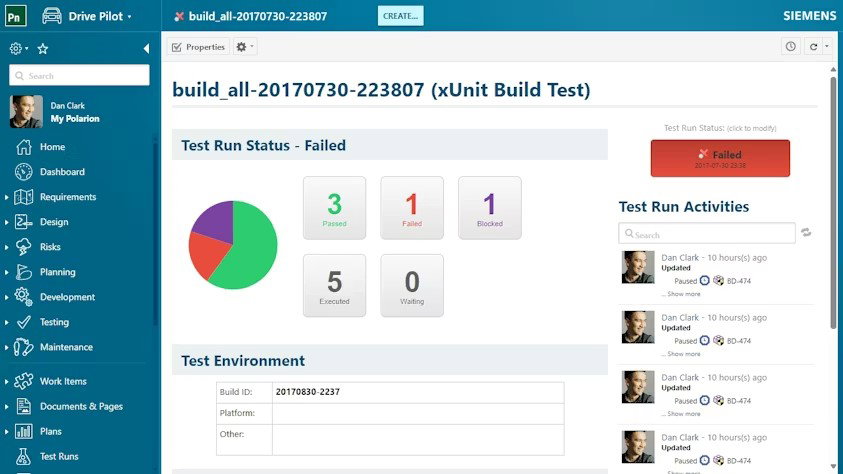
With the 2025 release of Polarion X 2506, the tool added features like Collections-aware reusable live reports, automated “Scheduled Scripts” for workflow and data-management tasks, enhanced REST-API support, improved performance for very large repositories, and security updates, demonstrating its continued commitment to scalability, automation, and maintainability for large, complex projects. Polarion remains beneficial for teams needing fine-grained collaboration, real-time traceability, role-based permissions, and robust versioning and baseline management.
Pricing
Polarion provides both cloud-hosted (Polarion X) subscriptions and on-premise perpetual licenses. Polarion X starts at $46/user/month for Essentials, $125 for Standard, and $164 for Advanced, all with a 10-user minimum. On-premises perpetual licenses begin at $2,490 per named user and $8,690 per floating user, with required first-year maintenance.
What Works And What Doesn’t
| Pros | Cons |
| Browser-based unified platform gives full traceability | Steep learning curve and configuration complexity |
| Strong support for large, complex, regulated projects | Require API-level work and scripting for complex workflows |
| Recent updates make scalability and maintenance easier | Licensing and enterprise-level features may be expensive for small teams |
Our Final Take
Polarion ALM remains a top-tier choice for enterprises and organizations operating in regulated, safety-critical, or compliance-heavy domains—especially those requiring rigorous traceability from requirements to tests, version control, and audit readiness. Its flexibility, browser-based collaboration, and lifecycle breadth make it well-suited for large, distributed teams and complex projects. For smaller, lightweight teams needing minimal overhead, the complexity and cost may outweigh the benefits.
Top 5 Application Lifecycle Management Tools Comparison
P.S.: Always remember to visit the vendor’s site for the latest information!
| Criteria |  |
 |
 |
 |
 |
| Starting Price | $1,500/user/year | $6/user/month | $171.99/month | $29/user/month | $46/user/month |
| Avg. User Rating | 4.3 | 4.4 | 4.2 | 4.5 | 4.1 |
| Trial Period / Demo | 30-Day Free Trial | Free Demo | 30-Day Free Trial | Free Demo | 30-Day Free Trial |
| Key Features | Requirements management, risk & safety workflows, and end-to-end traceability | Boards & Repos, Pipelines (CI/CD), and GitHub integration | Defect tracking, TaraVault SCM, and customizable workflows | Source control, CI/CD automation, and AI features | Baselines, branching, and workflow automation |
| Integrations | Jira, Git, Jenkins, and more | GitHub, Slack, Teams, and more | Jira, Jenkins, Git, and more | Kubernetes, AWS/GCP/Azure, Jira, and more | Jira, Azure DevOps, and more |
Conclusion
The 2026 ALM landscape shows a clear shift toward unified, traceable, and security-driven platforms that support increasingly complex software delivery needs. Each tool in this comparison excels in distinct areas: Codebeamer and Polarion’s regulatory strength, Azure DevOps’ integrated DevOps ecosystem, SpiraTeam’s balanced, all-in-one approach, and GitLab’s modern DevSecOps automation.
Ultimately, the right choice depends on an organization’s scale, compliance needs, and workflow maturity. Regulated industries benefit most from Codebeamer or Polarion, while fast-moving engineering teams may prefer GitLab or Azure DevOps. SpiraTeam suits teams seeking traceability without heavy overhead. Together, these tools define the strongest ALM options for 2026.
Frequently Asked Questions
What Are The Top 5 Application Lifecycle Management Tools Of 2026?
The leading ALM tools of 2026 are Codebeamer, Azure DevOps, SpiraTeam, GitLab, and Polarion ALM. These platforms excel in lifecycle traceability, workflow automation, compliance, and integrated DevSecOps capabilities suited for modern software development.
What Are The Features Of Application Lifecycle Management Tools?
ALM tools typically include requirements management, test and defect tracking, version control, CI/CD integration, workflow automation, reporting, and compliance support. They unify planning, development, testing, and deployment into a single platform to improve visibility, governance, and delivery speed.
What Is The Best Application Lifecycle Management Tool Of 2026?
The best ALM tool depends on organizational needs: Codebeamer and Polarion lead in regulated industries, GitLab and Azure DevOps excel in DevSecOps workflows, and SpiraTeam suits mid-size teams needing balanced lifecycle management. Each dominates a specific use case.
Tue, Jan 6, 2026

Liked what you read? That’s only the tip of the tech iceberg!
Explore our vast collection of tech articles including introductory guides, product reviews, trends and more, stay up to date with the latest news, relish thought-provoking interviews and the hottest AI blogs, and tickle your funny bone with hilarious tech memes!
Plus, get access to branded insights from industry-leading global brands through informative white papers, engaging case studies, in-depth reports, enlightening videos and exciting events and webinars.
Dive into TechDogs' treasure trove today and Know Your World of technology like never before!
Disclaimer - Reference to any specific product, software or entity does not constitute an endorsement or recommendation by TechDogs nor should any data or content published be relied upon. The views expressed by TechDogs' members and guests are their own and their appearance on our site does not imply an endorsement of them or any entity they represent. Views and opinions expressed by TechDogs' Authors are those of the Authors and do not necessarily reflect the view of TechDogs or any of its officials. While we aim to provide valuable and helpful information, some content on TechDogs' site may not have been thoroughly reviewed for every detail or aspect. We encourage users to verify any information independently where necessary.
Loading comments...