Software Development
Top 5 Application Infrastructure Software Of 2026
Share
TL;DR
-
Amazon Web Services (AWS) provides one of the broadest application infrastructure portfolios, spanning compute, containers, serverless, networking, storage, and monitoring services.
-
Microsoft Azure combines cloud infrastructure with enterprise governance, security, DevOps tooling, and deep Microsoft ecosystem integration.
-
Google Cloud Platform (GCP) delivers AI-ready infrastructure through Kubernetes leadership, serverless services, data platforms, and automation capabilities.
-
Datadog gives organizations end-to-end observability across applications, infrastructure, logs, traces, cloud services, and user experiences.
-
Red Hat OpenShift helps enterprises standardize Kubernetes-based application delivery across hybrid cloud, multicloud, and on-premises environments.
Introduction
You know how a five-star restaurant feels effortless from the dining table? The menu looks simple, the food arrives beautifully plated, and everything seems to happen right on time.However, the real action is happening behind the kitchen doors. Chefs, prep stations, inventory systems, temperature controls, timing, cleaning routines, and delivery coordination all work together so guests only experience the final result.
Modern applications work similarly.
Users only see a smooth checkout, a quick dashboard, an instant login, or a notification arriving at the right moment. Behind that simple experience sits a complex infrastructure layer keeping everything available, secure, scalable, and responsive.
In 2026, that layer matters more than ever. Businesses now rely on microservices, containers, serverless functions, APIs, AI services, hybrid deployments, and real-time monitoring. Without the right infrastructure platform, scaling becomes painful, downtime gets expensive, and developers spend more time fixing systems than building products.
That is where Application Infrastructure Software comes in. These platforms help organizations build, deploy, run, secure, scale, and monitor applications across increasingly distributed environments.
Before we dive into the list, let’s quickly understand what Application Infrastructure Software actually does.
What Is Application Infrastructure Software?
Application Infrastructure Software is an online platform that helps organizations build, deploy, operate, scale, secure, and monitor software applications. It includes cloud compute, containers, serverless runtimes, application hosting, deployment tools, networking, observability, automation, and infrastructure governance capabilities.
These platforms help developers and IT teams move faster without manually managing every layer of infrastructure. They also support application availability, performance, security, cost control, and operational consistency across cloud, hybrid, containerized, and distributed environments.
In simple terms, Application Infrastructure Software is the behind-the-scenes foundation that keeps digital products running smoothly while giving teams the flexibility to innovate faster.
Now that we understand what Application Infrastructure Software does, let’s get into the list we are all here for.
Top 5 Application Infrastructure Software Of 2026
If applications are the digital storefronts of modern businesses, Application Infrastructure Software is the power grid, security system, delivery route, and control room behind them. The right platform keeps applications running smoothly while giving development teams the flexibility to innovate faster.
Here are the Top 5 Application Infrastructure Software Tools of 2026.
 |
 |
 |
 |
 |
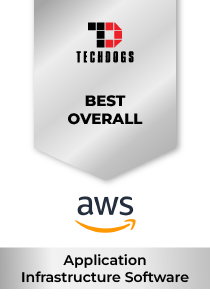
Amazon Web Services (AWS): Best Overall
Amazon Web Services (AWS) remains one of the most established names in cloud infrastructure. Serving customers since 2006, AWS is listed on G2 with a 4.4 average rating and more than 18,000 verified reviews. For application infrastructure, AWS brings compute, containers, serverless, networking, storage, monitoring, and security into one extensive cloud ecosystem.
Why We Chose Amazon Web Services (AWS) In 2026
AWS stands out because of its breadth across application infrastructure models. Amazon Elastic Compute Cloud (EC2) supports secure, resizable cloud compute, while Amazon Elastic Kubernetes Service (EKS) helps teams run Kubernetes across AWS and on-premises environments. AWS Lambda supports serverless applications by running code without provisioning or managing servers.
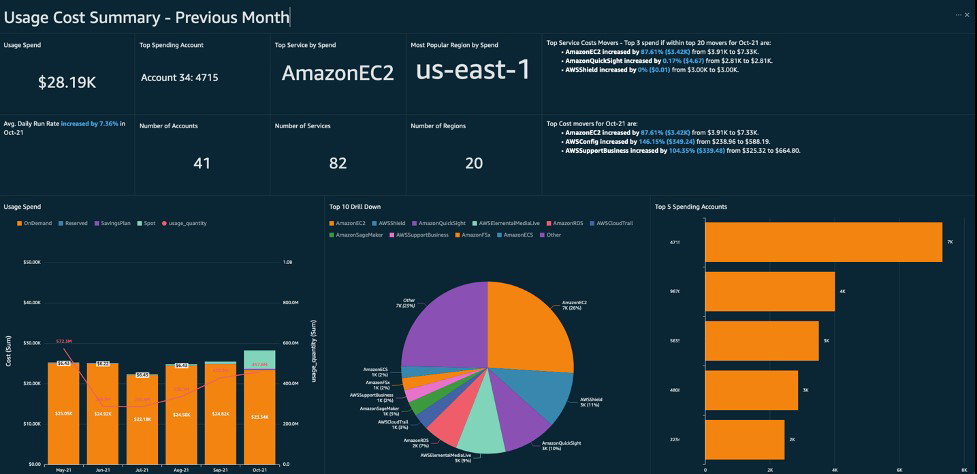
Its practical value comes from flexibility. Teams can run legacy applications, microservices, event-driven workloads, APIs, and AI-supported services without being locked into one deployment pattern. That said, its large service catalog requires strong cloud architecture, governance, and cost management practices.
Pricing
AWS does not publish one fixed monthly or yearly platform-level starting price. Its Free Plan offers credits for up to six months, while paid usage follows service-based pay-as-you-go pricing.
What Works And What Doesn’t
| Pros | Cons |
| Broad compute and deployment choices | Cost governance needs strong discipline |
| Mature cloud and security ecosystem | The service catalog can feel complex |
| Strong scale for demanding workloads | Architecture planning requires cloud expertise |
Our Final Take
AWS is best suited for organizations that need a flexible, scalable, and mature infrastructure foundation. It may feel complex for smaller teams, but its breadth makes it the strongest overall choice.
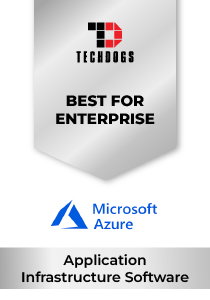
Microsoft Azure: Best for Enterprise
Microsoft Azure is a strong enterprise cloud platform for organizations that want application hosting, governance, identity, development, and infrastructure services in one place. Capterra lists Microsoft Azure with a 4.6 average rating across more than 1,900 reviews. It is especially relevant for businesses already invested in Microsoft tools and enterprise security practices.
Why We Chose Microsoft Azure In 2026
Azure App Service helps teams build, deploy, and scale web apps and APIs using a fully managed platform as a service (PaaS). Microsoft also connects Azure with Azure DevOps, GitHub, and security capabilities, making it useful for enterprise development teams that need structured delivery pipelines.
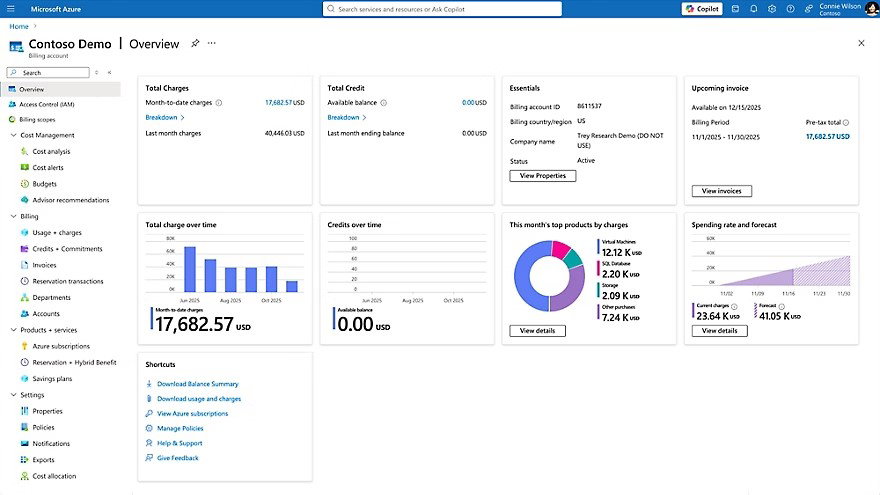
Its practical value lies in enterprise alignment. Azure supports application modernization without forcing teams to manage every infrastructure component themselves. It works well for companies that prioritize compliance, access control, DevOps maturity, and integration with Microsoft tools. However, cost planning and service selection need careful attention.
Pricing
Microsoft Azure does not list one unified monthly or yearly starting price for the whole platform. Its free account includes a $200 credit for 30 days, followed by pay-as-you-go pricing. The comparison table uses NA.
What Works And What Doesn’t
| Pros | Cons |
| Strong Microsoft ecosystem alignment | Pricing varies across service choices |
| Managed hosting for apps and APIs | Portal depth can overwhelm beginners |
| Enterprise governance and access controls | Cost planning needs regular review |
Our Final Take
Azure is best suited for enterprises that need managed application infrastructure with strong governance, security, and Microsoft ecosystem fit. It may require careful configuration, but it is a dependable enterprise choice.
Google Cloud Platform (GCP): Best AI Features
Google Cloud Platform (GCP) brings application infrastructure together with strong data, analytics, Kubernetes, and AI capabilities. Capterra lists Google Cloud with a 4.7 average rating based on more than 2,200 reviews. Its ecosystem includes Compute Engine, Google Kubernetes Engine (GKE), Cloud Run, BigQuery, Cloud Storage, and AI-focused services.
Why We Chose Google Cloud Platform (GCP) In 2026
GCP stands out for teams building AI-ready, cloud-native applications. Compute Engine supports virtual machines for varied workloads, GKE manages containerized applications on Kubernetes, and Cloud Run offers a managed environment for containerized apps. Google Cloud also positions its Gemini Enterprise Agent Platform as a place to build, scale, govern, and optimize agents.
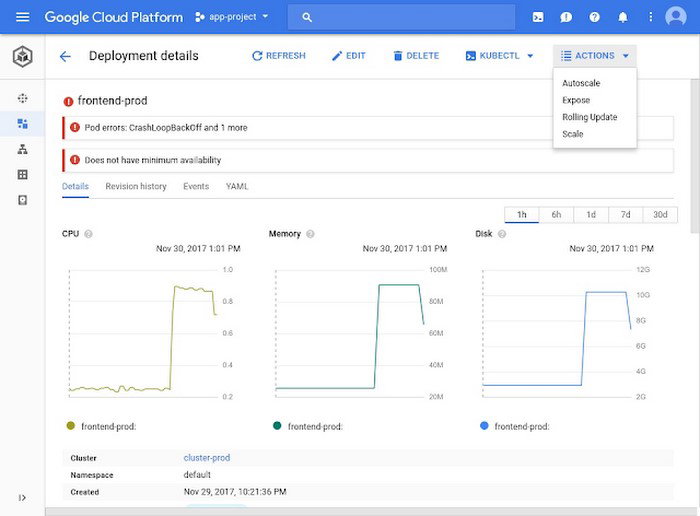
Its practical value comes from connecting infrastructure with data and AI services. Teams can build applications, run containers, analyze data, and experiment with AI workflows within the same cloud environment. However, teams moving from another cloud may need time to adapt to Google Cloud’s service model.
Pricing
GCP does not publish a single platform-level monthly or yearly starting price. New users can access a 90-day free trial with a $300 credit, while paid usage depends on selected services.
What Works And What Doesn’t
| Pros | Cons |
| Strong Kubernetes and serverless options | Requires cloud platform learning time |
| Excellent data and AI alignment | Pricing depends on service configuration |
| Modern build and deployment tooling | Migration planning can be complex |
Our Final Take
GCP is best suited for teams building data-heavy, AI-ready, or cloud-native applications. It may need migration planning, but its infrastructure and AI alignment make it a powerful option.
Topics For More Insights
Datadog: Best User Experience (UX)
Datadog is different from the hyperscale cloud platforms on this list, but it is central to modern application infrastructure. Founded in 2010, Datadog is listed by Capterra with a 4.6 average rating across more than 350 reviews. It focuses on observability, infrastructure monitoring, APM, logs, dashboards, alerting, and security visibility across distributed environments.
Why We Chose Datadog In 2026
Datadog helps teams understand what is happening across infrastructure and applications in real time. Its APM product provides distributed tracing, while its platform brings infrastructure metrics, traces, logs, and more into one unified interface. Datadog also supports more than 1,000 integrations across systems, applications, and services.
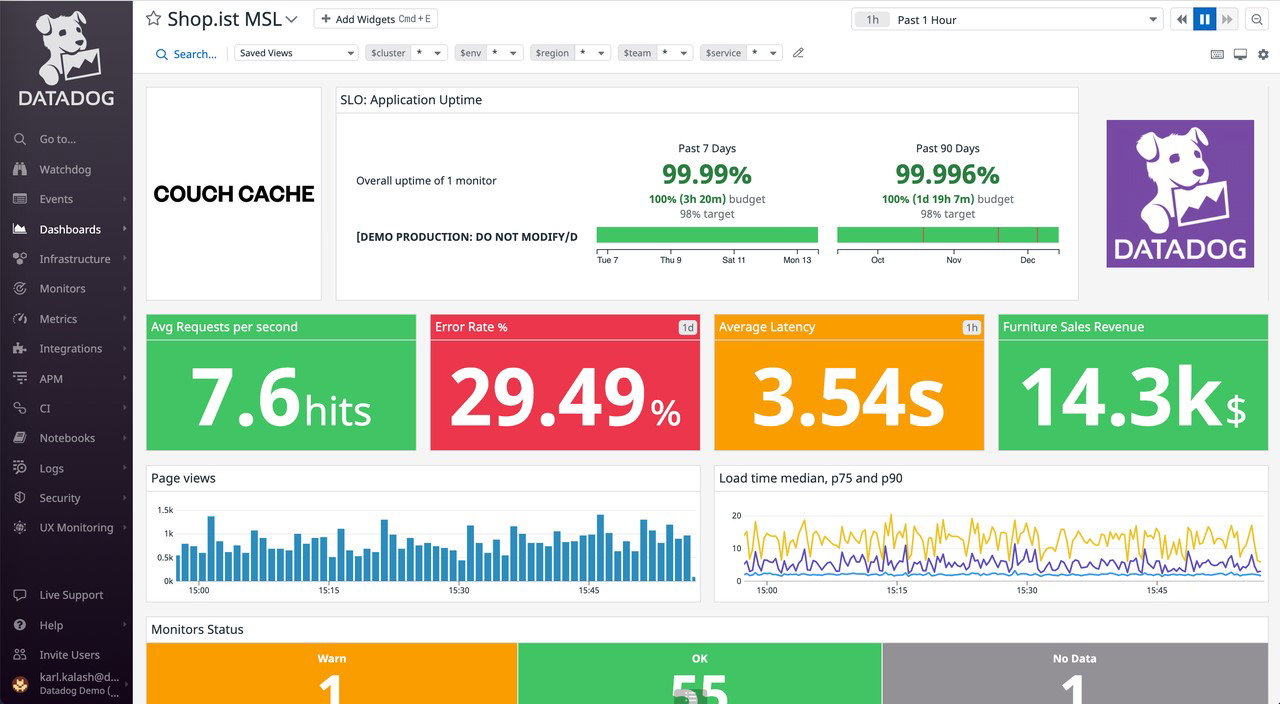
Its practical value lies in usability and troubleshooting speed. Engineering teams can view dashboards, correlate telemetry, investigate incidents, and monitor service health without jumping between disconnected tools. However, costs can increase as teams add hosts, modules, log volume, and advanced monitoring capabilities.
Pricing
Datadog Infrastructure Pro starts at $15 per infra host/month when billed annually. Datadog also offers a 14-day free trial for metrics, traces, logs, and monitoring workflows.
What Works And What Doesn’t
| Pros | Cons |
| Unified monitoring and tracing interface | Costs can grow with usage |
| Strong dashboards and alert workflows | Setup needs thoughtful configuration |
| More than 1,000 integrations available | Module selection can feel complex |
Our Final Take
Datadog is best suited for teams that need a user-friendly observability layer across complex infrastructure. It is not a hosting platform, but it is essential for application reliability.
Red Hat OpenShift: Best for Integration
Red Hat OpenShift is a Kubernetes-based application platform designed for enterprise containerized workloads. G2 lists Red Hat OpenShift with a 4.5 average rating across more than 300 reviews. It helps organizations build, modernize, deploy, and scale applications across hybrid cloud, multicloud, and on-premises infrastructure with consistent Kubernetes-based workflows.
Why We Chose Red Hat OpenShift In 2026
OpenShift stands out for integrating enterprise application delivery around Kubernetes. It supports familiar tools and frameworks across self-managed editions and managed cloud services. Red Hat also positions OpenShift Platform Plus as a unified platform for building, modernizing, and deploying applications at scale with multicluster security and compliance capabilities.
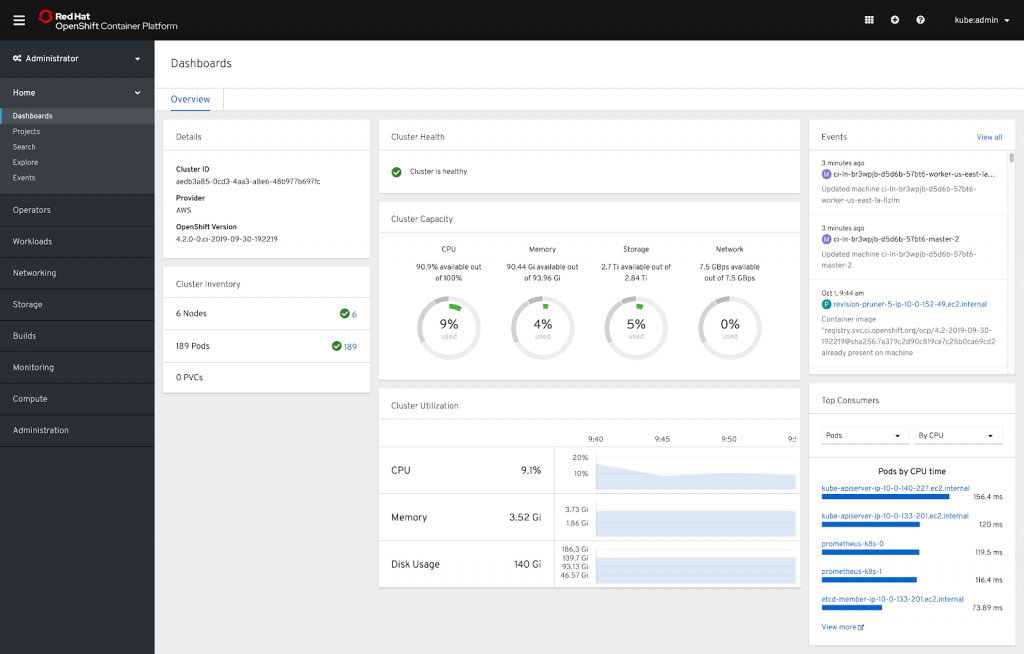
Its practical value is consistency across environments. Enterprises can connect Kubernetes operations, GitOps, CI/CD, automation, security, and hybrid deployment models under one application platform. Still, OpenShift requires Kubernetes knowledge, infrastructure readiness, and careful setup, making it better suited to mature IT and platform engineering teams.
Pricing
Red Hat OpenShift does not list one public monthly or yearly starting price across deployment models. Red Hat offers a 60-day free OpenShift Container Platform trial, so the comparison table uses NA.
What Works And What Doesn’t
| Pros | Cons |
| Strong Kubernetes integration foundation | Requires Kubernetes operating expertise |
| Hybrid and multicloud deployment support | Setup can feel resource intensive |
| Enterprise security and governance focus | Pricing depends on the deployment model |
Our Final Take
Red Hat OpenShift is best suited for enterprises that need integrated Kubernetes application delivery across hybrid environments. It may be advanced for small teams, but it delivers strong control and portability.
Top 5 Application Infrastructure Software Comparison
P.S. Always remember to visit the vendor’s site for the latest information!
| Criteria |  |
 |
 |
 |
 |
| Starting Price | NA | NA | NA | $15/month | NA |
| Avg. User Rating | 4.4 | 4.6 | 4.7 | 4.6 | 4.5 |
| Trial/Demo | 6-month Free Plan | 30-day free account | 90-day free trial | 14-day free trial | 60-day free trial |
| Key Features | EC2, EKS, and Lambda | App Service, governance, and DevOps | Compute Engine, GKE, and Cloud Run | Infrastructure monitoring, APM, and logs | Kubernetes, GitOps, and CI/CD |
| Integrations | CloudWatch, Lambda, EKS, and more | GitHub, Azure, DevOps, and more | BigQuery, Vertex AI, Cloud Build, and more | AWS, GCP, Kubernetes, and more | Red Hat Ansible, Service Mesh, and more |
Conclusion
Application Infrastructure Software is no longer just about servers, storage, and basic hosting. In 2026, it is about giving teams the foundation to build applications that are resilient, scalable, secure, observable, and ready for AI-driven workloads.
Each platform on this list plays a different role. AWS leads with the broadest overall infrastructure ecosystem, Azure fits enterprise environments that need governance and Microsoft alignment, GCP brings strong AI-first infrastructure capabilities, Datadog simplifies observability across complex systems, and Red Hat OpenShift helps standardize Kubernetes delivery across hybrid environments.
The best choice depends on your application architecture, internal skills, compliance needs, cloud strategy, and growth plans. Pick the platform that solves today’s infrastructure challenges while giving your teams enough room to build tomorrow’s applications.
Frequently Asked Questions
What Are The Top Application Infrastructure Software Platforms Of 2026?
The top Application Infrastructure Software platforms of 2026 are Amazon Web Services (AWS), Microsoft Azure, Google Cloud Platform (GCP), Datadog, and Red Hat OpenShift. Each platform supports different infrastructure needs, from cloud compute and Kubernetes to observability, managed hosting, and hybrid application delivery.
What Are The Features Of Application Infrastructure Software?
Application Infrastructure Software typically includes compute, containers, serverless runtime, networking, storage, monitoring, deployment automation, security controls, governance, and integrations. These features help businesses build, run, scale, and monitor applications across cloud, hybrid, and distributed environments.
Which Is The Best Application Infrastructure Software In 2026?
The best Application Infrastructure Software depends on the use case. AWS is the strongest overall choice for broad infrastructure depth, Azure is ideal for enterprise Microsoft environments, GCP is strong for AI-ready workloads, Datadog leads in observability, and Red Hat OpenShift is best for integrated Kubernetes delivery.
Tue, Jun 16, 2026

Enjoyed what you read? Great news – there’s a lot more to explore!
Dive into our content repository of the latest tech news, a diverse range of articles spanning introductory guides, product reviews, trends and more, along with engaging interviews, up-to-date AI blogs and hilarious tech memes!
Also explore our collection of branded insights via informative white papers, enlightening case studies, in-depth reports, educational videos and exciting events and webinars from leading global brands.
Head to the TechDogs homepage to Know Your World of technology today!
Disclaimer - Reference to any specific product, software or entity does not constitute an endorsement or recommendation by TechDogs nor should any data or content published be relied upon. The views expressed by TechDogs' members and guests are their own and their appearance on our site does not imply an endorsement of them or any entity they represent. Views and opinions expressed by TechDogs' Authors are those of the Authors and do not necessarily reflect the view of TechDogs or any of its officials. While we aim to provide valuable and helpful information, some content on TechDogs' site may not have been thoroughly reviewed for every detail or aspect. We encourage users to verify any information independently where necessary.
Loading comments...