Virtualizations
What You Need To Know About Containerization
Share
Overview
Retailers and businesses need to ensure that no matter where the customer is located, they should receive everything they need. Hence, the container must be packed with a tested and quality-assured product, a user manual, a product information brochure, warranty cards, customer support details, etc. The delivered container should be the same irrespective of the consumer’s location, mode of payment, etc.
Similarly, software developers create virtual “containers” that are compatible with every end-user device, no matter their location or operating system. Read on to learn everything about Containerization!
.jpg.aspx "TechDogs-\"What You Need To Know About Containerization\"")
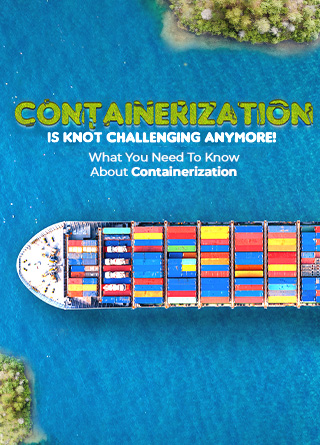
When we say container, you most likely imagine those massive steel boxes aboard cargo ships. Yet, containers are also used extensively by software developers. The only difference is that these containers are virtual. The process of Containerization creates portable computing environments that provide the same service as physical containers: helping you organize, maintain and store all elements that need to be together.
Containerization is a type of virtualization in which users can create and run applications in isolated virtual spaces known as "containers." Since the containers essentially run on the same operating system as the device, they can be used in almost any setting. A fully packaged virtual container, such as an application container, for instance, enables the application to access everything it needs to function. This includes any binaries, libraries, dependencies, configuration files, etc. that are encapsulated in the virtual container.
Sounds interesting, right? Let’s explore the concept of Containerization in more depth.
Understanding Containerization
When we opened the new portable coffee maker for our office, we found it was incredibly easy to set up and use. The startup manual and user manual were provided, as were the coffee filters. Moreover, we received a sample of Arabica coffee beans to get the experience started! #AllInTheBox
Similarly, to ensure software applications have everything they need to function, containers are deployed. Containerization is a software deployment process that assists in the packaging of an application's code, along with all the files and libraries required to run it on any infrastructure in a virtual box. Typically, you must install the version of an application that corresponds to your system's operating system; for instance, you install a Windows software version on a Windows operating system. However, Containerization enables you to build a single software package or virtual container that is compatible with all types of devices and operating systems.
Sounds quite modern, right? Well, the tech is over 40 years old – read on for more information!
Evolution Of The Concept Of Containerization
Container technology first appeared in 1979, with the release of Unix version 7 and the chroot system. By limiting an application's access to a particular directory, the chroot system isolated a process. In 1982, the Berkeley Software Distribution OS included this system for the first time, which gave users their first glimpse of an isolated process. Yet, over the following few decades, containerization technology would not advance.
With the release of Free BSD Jails in the 2000s, container technology again gained traction. Computers were divided into "jails" so that different partitions could be created on the same system. In 2001, with the introduction of Linux VServer, resource partitioning was created which improved this technology further. With the introduction of control groups in 2006 for isolating the usage of resources like the CPU and memory, containerization technology advanced even further.
In 2008, the LXC (Linux Containers) were used for the same. Many other technologies were built on LXC due to its dependability and stability, the first of which was Warden in 2011 and more significantly, Docker, in 2013.
The introduction of Docker was the single biggest factor in the widespread adoption of Containerization. In 2016, Microsoft made it possible to run native Linux Containers on Windows machines. Then, in 2017, Kubernetes, a powerful container orchestration technology, was released, making the technology more widely available.
Today, one out of three enterprises deploy containers in at least one function. Yet, you must be wondering, how does it all work?

Take a sip of your coffee and read on!
How Does Containerization Work?
You know that Containerization creates a virtual container that packs all the required files for the software deployment to work. Yet, what does the process look like?
The process of containerization creates self-contained software packages that perform consistently regardless of the machines on which they are run. The first step in the Containerization process is for software developers to identify the dependencies of the application or software code.
They then create and disseminate the files, along with the command required to launch a containerized application when necessary. The application can now be deployed with high reliability as all the necessary application-specific dependencies are virtualized into an accessible container.
The applications can be deployed on a variety of environments, devices and OS as the container runs resource-isolated processes. The container runs and scales whether the user is on a Linux, Mac, or Windows device, giving users the same experience and functionality each time. This has made containers very useful in various applications – let’s take a look!
Applications Of Containerization

Containers are quicker and lighter than alternatives (such as virtual machines) as they only include the essential files and dependencies of an application. This also implies that they have a variety of use cases:
-
Cloud Migration
Cloud migration, also called the lift-and-shift approach, is a data migration strategy that involves “containerizing” legacy applications and deploying them to the cloud environment. Organizations can thus modernize their operations without rewriting the software code or phasing out older software.
-
Adoption Of Microservice Architecture
Several organizations are seeking to build cloud applications using microservices. The microservice architecture deploys multiple, interdependent software components to deliver a functional application, where each microservice has a unique and specific function. Using Containerization, developers can pack and deploy each microservice separately and access them from various platforms when needed.
-
IoT Environment
The limited computing power of the Internet of Things (IoT) devices makes manual software updating challenging, especially for larger networks. Developers can remotely deploy and update applications across IoT devices using containerization. Each virtual container can be pre-loaded with code dependencies and activated when required.
However, that’s not all. There are several advantages that make Containerization so popular. Read on to learn more!
What Are The Benefits Of Containerization?
Just as a cup of coffee can help with lowering heart diseases and depression, providing an energy boost and clearing the skin, Containerization is also providing many benefits (we promise, this article is about Containerization and not our new coffee maker which we adore!).
The benefits of Containerization include:
• Portability Across Environments
A major traditional IT challenge was figuring out why a particular app only functioned in one environment (such as staging or testing) and not in another (such as production). Typically, the disparity between the two environments was used to explain the issue. This issue is resolved by containerization because the same container, with the same dependencies and files, can be used in both environments.
• Speed
Compared to virtual machines or bare metal servers, containers typically start up in a fraction of the time. While specific boot times vary depending on the number of resources and container size, they begin in a few seconds, as opposed to virtual machines that may take minutes.
• Lightweight Deployments
Containers are significantly lighter than virtual machines as they only contain the components necessary for an app to function. IT teams can hence deploy server resources more effectively thanks to containers.
• Ease Of Deployment
Because containers are lightweight and portable, they can be set up almost anywhere. The containerized application can be run if the underlying container engine (that is, the software that interacts with the container) can be run.
• Higher Scalability
Containerized applications are simple to deploy, start up quickly and occupy very little space. Containerization consequently makes scaling your software deployments much simpler and more organized.
What’s not to love about Containerization? If you are still not convinced, make yourself another cuppa coffee and head on to the future of Containerization!
What’s The Future Of Containerization?

Virtual containers are today playing a crucial part in cloud-based applications and microservices. Modern organizations are using containerization to create newer, more reliable applications to replace their existing applications in the cloud. According to an IBM survey, 61% of businesses that adopted containers reported using them in 50% or more of the new applications. What’s even more important to note is that 64% of adopters expected more than half of their existing applications to be put into containers during the next two years. Containers will gain prominence in the next few years as interoperability will be crucial for businesses working across devices and operating systems.
A Red Hat survey also showed that 40% of businesses that used containers saw the need to add more software developers to manage their container deployments as it still remains a relatively new technology. Hence, the trend of hiring new skilled workers will be observed to help innovate and expand the use cases for Containerization. We’re sure this tech will get more traction in the near future!
Summing It Up
Containerization enables software developers to package code, including libraries and dependencies, required to run an application or software deployment. It is super-scalable, portable and lightweight, leading to most organizations using this technology. The next time you need to build a device and OS-agnostic application, we bet you’ll go for Containerization!
Frequently Asked Questions
What is Containerization and how does it work?
Containerization is a process in which software developers create and run applications in isolated virtual spaces called "containers." These containers encapsulate all the necessary files, libraries, and dependencies required for an application to function. Unlike traditional software installations, where you need to install specific versions for different operating systems, containerization allows you to build a single package that works across various devices and operating systems. This process ensures consistency and portability, making it easier to deploy applications in different environments.
What are the benefits of Containerization?
Containerization offers several advantages, making it a popular choice for software deployment. One major benefit is portability across different environments. Containers can run consistently in various settings, eliminating compatibility issues between different environments. Additionally, containers start up much faster than traditional virtual machines, leading to quicker deployment times. They are also lightweight, consuming fewer resources compared to virtual machines, and offer ease of deployment, as they can be set up almost anywhere. Furthermore, containerized applications are highly scalable, allowing for efficient management and utilization of server resources.
What is the future of Containerization?
The future of containerization looks promising, with virtual containers playing a crucial role in cloud-based applications and microservices. Organizations are increasingly adopting containerization to modernize their operations and create more reliable applications. According to surveys, a significant percentage of businesses have already adopted containers for their new applications, and this trend is expected to continue. As interoperability becomes increasingly important in a diverse technological landscape, containerization is poised to gain even more prominence. This growth may lead to an increased demand for skilled workers to manage container deployments and innovate new use cases for containerization technology.
Wed, Feb 22, 2023

Liked what you read? That’s only the tip of the tech iceberg!
Explore our vast collection of tech articles including introductory guides, product reviews, trends and more, stay up to date with the latest news, relish thought-provoking interviews and the hottest AI blogs, and tickle your funny bone with hilarious tech memes!
Plus, get access to branded insights from industry-leading global brands through informative white papers, engaging case studies, in-depth reports, enlightening videos and exciting events and webinars.
Dive into TechDogs' treasure trove today and Know Your World of technology like never before!
Disclaimer - Reference to any specific product, software or entity does not constitute an endorsement or recommendation by TechDogs nor should any data or content published be relied upon. The views expressed by TechDogs' members and guests are their own and their appearance on our site does not imply an endorsement of them or any entity they represent. Views and opinions expressed by TechDogs' Authors are those of the Authors and do not necessarily reflect the view of TechDogs or any of its officials. While we aim to provide valuable and helpful information, some content on TechDogs' site may not have been thoroughly reviewed for every detail or aspect. We encourage users to verify any information independently where necessary.
Loading comments...