Emerging Technology
Explore The Wacky World Of Mixed Reality (MR)
Share
Overview
Here’s how we would direct the same scene: the only difference is that the “hero” is wearing a pair of Mixed Reality glasses. Wait, what’s that, you ask? Well, Augmented Reality adds information virtually as an overlay to the physical world, whereas Virtual Reality immerses you in an entirely virtual world with no involvement of the physical world. Mixed Reality glasses combines both the real and virtual worlds to create new environments in which physical and elements coexist and interact in real time.
So, the protagonist can pry open the bomb and be presented with a digital overlay showing exactly what each wire does: red makes the countdown double-speed, blue detonates the bomb instantly and green defuses the bomb harmlessly.
Not only hypothetical last-moment bomb defusal but Mixed Reality is rapidly becoming more evident in daily life applications? How, you ask?
That’s why we’re here - let's find out!
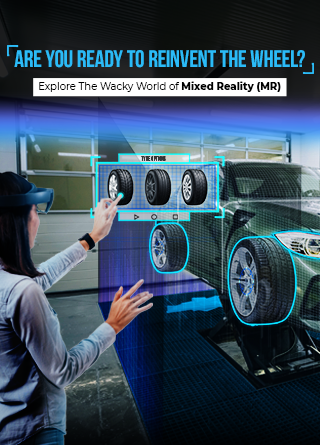
/MR-Website-1800-x-940-(-without-logo-).png.aspx "TechDogs- Are You Ready To Reinvent The Wheel? \"Explore The Wacky World Of Mixed Reality (MR)\"")
Have you ever had a dream that you were so sure was real? What if you couldn't awaken? How would you know the difference between dreams and reality?
This question was asked by Morpheus to Neo in the blockbuster hit, The Matrix.
The movie was thought to be ahead of its time. It challenged our notion of perspective, reality, illusion and a variety of other intriguing concepts.
With the advent of Mixed Reality, we all are asking the same question, what is real?
Technology is rapidly evolving and it is not unreasonable to anticipate that modern life and technology will seem very different in twenty to thirty years. The rapid emergence of immersive experience mediums such as Virtual Reality and Augmented Reality is influencing where technology will go next. These technologies are informational and consumed on screens, whereas the next generation of immersive experiences will be more experiential. No, we don’t mean The Matrix!
Rather than bringing more of the physical world into our digital screens, technology is poised to place digital elements in our real environment via Mixed Reality.
So, let's take a deep dive into the world of Mixed Reality and see how far the rabbit hole goes.
What Is Mixed Reality?
Mixed Reality technology combines the real and virtual worlds to create new environments and visualizations in which physical and digital objects coexist and interact in real-time. With Mixed Reality, you interact with and manipulate both physical and virtual objects and environments using next generation sensing and imaging technologies. It allows you to have one foot (or hand) in the real world and the other in an imaginary environment, breaking down basic conceptions between real and imaginary and providing an experience that can transform the way you game and work today.
Mixed Reality offers endless possibilities. Yet, we wonder who came up with the idea and how it all began. If you too are thinking the same, we have done the research for you – dive in!
History Of Mixed Reality
It was Paul Milgram and Fumio Kishino who coined the term "Mixed Reality" in a research paper in 1994. Yes, that’s five years before The Matrix hit the screens!
The term "Mixed Reality" was first used in an academic paper in the context of computer interfaces. Over two decades after it was published, this paper has been cited over 2600 times, making it a popular research paper in the immersive technology world and one of the most frequently cited research papers in AR and VR.
According to Milgram and Kishino, Mixed Reality is "a specific subclass of VR-related technologies that involves the merging of real and virtual worlds." They specify that Mixed Reality entails the mixing of real and virtual worlds somewhere along the "reality-virtuality continuum" (RV), which connects completely real environments to completely virtual ones. While AR augments virtual elements in the real-world environment, VR creates entirely new environments – MR uses both these techniques. Easy-peasy, right?
Now that we've learned about the history of Mixed Reality, let's understand how it truly works.
How Does Mixed Reality Work?
/1.png.aspx "1.png")
Mixed Reality is not only a mix of actual and virtual experiences; it's also mixed in terms of the technologies that drive it. Mixed Reality is most typically utilized with a headset, which users can wear on their heads and view their environment through. The headset can then insert virtual elements or objects into the user's physical environment.
Users can put on a headset that has a Mixed Reality platform (for example, Microsoft Windows Mixed Reality) capable of running various applications. These applications are the means through which a digital experience can be overlaid and mixed into the physical world.
Sensors are used in Mixed Reality headsets to bring the entire experience to life. The sensors ensure that the person wearing the headset is able to interact with what is displayed on the screen. For example, if you tilt your head to the left, the entire environment moves accordingly. The devices also have audio and speech capabilities, allowing users to engage with others in their Mixed Reality world. These technologies can span from handheld devices to entire rooms and each one has practical applications in a variety of fields. Mixed Reality can help you get things done better, more efficiently and with greater spatial context. It is a tool that will benefit you both at work and play.
That’s enough build-up, let’s look at some potential Mixed Reality applications!
What Are The Potential Applications Of Mixed Reality?
Although Mixed Reality is still in its infancy, it is already being used in a variety of fields and sectors. Here are some examples of how this technology is being used in the real world.
-
Mixed Reality In Manufacturing
-
Mixed Reality In Construction
-
Mixed Reality In Healthcare
-
Mixed Reality In Entertainment
-
Mixed Reality In Gaming
-
Mixed Reality In Education
Benefits Of Using Mixed Reality
The advantages of utilizing Mixed Reality stem from how it can broaden our minds, teach us new concepts without putting us at risk or help us look at things in business and life in a whole different light.
Here are a few advantages of Mixed Reality:
-
Mixed Reality's hands-on, immersive experience allows users to retain more of what they learn.
-
Using Mixed Reality headsets, you can share your experiences in real-time with people who aren’t in the same physical space.
-
Employers can save time and money by using Mixed Reality apps to train employees.
-
When creating a new product, designers and developers can speed up the process of prototyping by seeing how the final product interacts with the environment – virtually!
-
Salespeople can use it to demonstrate products to consumers in different domains, saving time and money on travel, while making the experience more engaging.
-
Mixed Reality provides an easy way to broaden one’s view of the world by taking them on to various locations - without ever leaving the couch.
Now, that’s the future, right? Imagine watching Apollo 11 land at the Sea of Tranquillity in all its glory from the comfort of your couch!
Here’s a look at what else you can expect from Mixed Reality soon!
What’s The Future Of Mixed Reality?
/beat-saber-playing-(2).gif.aspx "TechDogs-\"What’s The Future Of Mixed Reality?\"-A Woman Playing Beat Saber That Uses Mixed Reality")
Imagine being able to try on clothes before purchasing them online, seeing if a wallpaper will match the curtains in your bedroom or having virtual labels around your home that remind you where you left your keys.
Apple, Google, Intel and Microsoft are already investing heavily in the development of Mixed Reality technologies. Many Mixed Reality technologies have been patented already, for example, Magic Leap's Mixed Reality application of projecting light directly into the retina has generated a lot of attention and excitement. It promises to expand the already awesome world of Mixed Reality!
The future of Mixed Reality may even require only a single device to replace our screens. Think of those wicked monocle glasses people wear in sci-fi movies! This will result in new ways to create immersive content as well as new ways to consume it. Mixed Reality, like past great technological upheavals that have revolutionized our existing way of life, will produce new industries, applications and jobs.
We can’t wait to see what else Mixed Reality has in store for us!
Conclusion
Mixed Reality will usher in a future in which our natural physical world coexists with powerful digitally rendered elements and surroundings. Soon, we might be able to touch our favorite Pokémon (no, please don’t touch Charmander!) or wander around Hogwarts Castle and play some (harmless) Quidditch with our buddies!
Frequently Asked Questions
What is Mixed Reality?
Mixed Reality (MR) technology combines aspects of both the real and virtual worlds to create immersive environments where physical and digital objects interact in real-time. Unlike Virtual Reality (VR) which creates entirely virtual environments or Augmented Reality (AR) which overlays digital elements onto the real world, MR merges both realities to provide users with a unique interactive experience. With MR, users can interact with and manipulate virtual objects within their real environment, blurring the line between what is real and what is digital.
How does Mixed Reality work?
Mixed Reality utilizes a combination of sensing and imaging technologies to blend virtual elements into the user's physical environment. Users typically wear MR headsets equipped with sensors that track their movements and position in space. These headsets display virtual content seamlessly integrated with the real world, allowing users to interact with digital objects as if they were tangible physical objects. MR applications range from gaming and entertainment to education, healthcare, manufacturing, and more, offering users endless possibilities for immersive experiences.
What are the potential applications of Mixed Reality?
Mixed Reality has a wide range of applications across various industries. In manufacturing, MR can be used for plant tours and quality inspections, allowing inspectors to view real-time data for mechanical components. In construction, supervisors can use MR to communicate tasks to workers and provide visual instructions for repairs or maintenance. In healthcare, surgeons can practice surgical procedures in a virtual environment, enhancing training and education. MR also has applications in entertainment, gaming, and education, offering immersive experiences and interactive learning opportunities. As MR technology continues to evolve, its potential applications are expected to expand, revolutionizing how we work, learn, and interact with the world around us.
Wed, Aug 24, 2022

Enjoyed what you've read so far? Great news - there's more to explore!
Stay up to date with the latest news, a vast collection of tech articles including introductory guides, product reviews, trends and more, thought-provoking interviews, hottest AI blogs and entertaining tech memes.
Plus, get access to branded insights such as informative white papers, intriguing case studies, in-depth reports, enlightening videos and exciting events and webinars from industry-leading global brands.
Dive into TechDogs' treasure trove today and Know Your World of technology!
Disclaimer - Reference to any specific product, software or entity does not constitute an endorsement or recommendation by TechDogs nor should any data or content published be relied upon. The views expressed by TechDogs' members and guests are their own and their appearance on our site does not imply an endorsement of them or any entity they represent. Views and opinions expressed by TechDogs' Authors are those of the Authors and do not necessarily reflect the view of TechDogs or any of its officials. While we aim to provide valuable and helpful information, some content on TechDogs' site may not have been thoroughly reviewed for every detail or aspect. We encourage users to verify any information independently where necessary.
Loading comments...