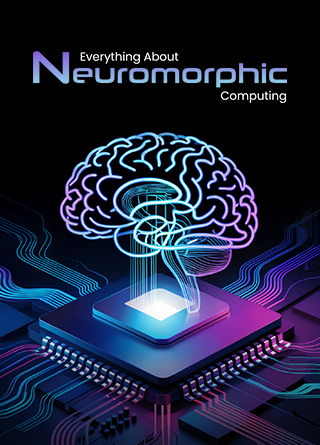
Computing
Everything About Neuromorphic Computing
Share
Overview
Imagine walking into a café where the menu changes based on your mood, the lights dim to match your comfort level, and the barista, who isn't even human, remembers exactly how you like your coffee, down to the temperature.
That’s Neuromorphic Computing—not just responding, but understanding, adapting, and learning from experience like we would. Unlike traditional computers that rely on rigid, step-by-step processing, Neuromorphic Computing takes inspiration from the real MVP—the human brain. It uses specialized hardware and algorithms to mimic the way neurons fire and connect, making machines more efficient, adaptable, and intellectually capable than ever before.
Neuromorphic Computing isn’t just about improving artificial intelligence (AI); it’s about giving technology an intuition, a spark of organic intelligence that makes it feel alive.
You might be wondering what Neuromorphic Computing is exactly, how it works, and whether we should be worried about our computers becoming self-aware. Let’s dive in!
What if your alarm clock not only wakes you up but also senses your grogginess and delays the blaring sound just a little longer? Or what if your phone’s voice assistant doesn't just recognize your voice but understands when you're stressed and adjusts its answers and tone accordingly? Exciting, right!
Traditional computers follow a simple rule: fetch data, process it, store it, repeat. While they’re great at crunching numbers, they struggle with tasks we humans find effortless—like recognizing faces, understanding speech, or making quick decisions. That’s where Neuromorphic Computing steps in!
By mimicking the way the human brain processes information, neuromorphic systems can learn from their environment, adapt in real time, and process data much more efficiently than conventional AI models.
Well, this means a future where AI feels less robotic and more intuitive. With that, let’s explore the fascinating world of Neuromorphic Computing. Read on!
What Is Neuromorphic Computing?
Neuromorphic Computing is a paradigm shift in computing architecture. Instead of following a linear, instruction-based model like traditional computers, neuromorphic systems depend on networks of artificial neurons and synapses that communicate through electrical spikes—just like the brain!
This allows them to learn from data, adapt to changes, and operate with remarkable energy efficiency, making them ideal for real-time AI applications.
Want to know what makes Neuromorphic Computing work? Let’s dive into the mechanics behind it.
How Does Neuromorphic Computing Work?

The human brain is an astonishingly complex system, capable of learning, adapting, and processing vast amounts of information in real time—all while using minimal energy. So, how do we get computers to think more like us?
The answer lies in the following three key components:
-
Spiking Neural Networks (SNNs)
In contrast to traditional AI models, relying on fixed layers of neurons, SNNs mirror real neurons that fire (or don’t fire) depending on incoming stimuli. This makes data processing more efficient and biologically feasible.
-
Neuromorphic Chips
These specialized chips, such as IBM’s TrueNorth and Intel’s Loihi, are engineered to process information in a brain-inspired manner, with thousands to millions of artificial neurons and synapses working together.
-
Event-Driven Processing
Traditional computers process data without fail, even when there’s nothing to do. Neuromorphic systems, however, only activate when they receive relevant input, substantially reducing power consumption.
With these advancements, Neuromorphic Computing offers a smarter, more efficient and intelligent way to process information.
So, what makes it truly beneficial? Keep reading to find out!
Key Benefits Of Neuromorphic Computing
Before we explore its impact, here’s a simple question—why does this technology even matter? Why should we care about this brain-inspired computing approach?
Well, because Neuromorphic Computing is a complete game-changer. Don't take our word for it - simply exploring the benefits will convince you!
-
Energy Efficiency
According to the National Institute of Standards and Technology, the human brain performs about a billion billion tasks per second, using only 20 watts of power—approximately the same as a dim light bulb. Traditional AI models, in contrast, require power-hungry data centers to operate. Neuromorphic Computing replicates the brain’s efficiency, drastically reducing energy consumption for AI applications.
-
Parallel Processing
Contrary to conventional computers that handle tasks one at a time, neuromorphic systems process information simultaneously across multiple neurons. This enables real-time decision-making, perfect for autonomous systems like self-driving cars or robotic assistants.
-
Adaptability And Learning
Neuromorphic chips can learn and adapt on their own without needing continuous reprogramming. This means AI systems can improve over time, becoming more efficient and responsive to alterations in their environment. Think of it like a smart home assistant that truly understands your habits without constant updates!
These benefits make Neuromorphic Computing a powerful tool for advancing AI. Now, let’s look at how it is being applied in the real world as practical applications!
Real-World Applications Of Neuromorphic Computing
Now that we have explored the benefits of Neuromorphic Computing, it should be exciting to explore how it’s starting to make a real impact. Let's dive in!
-
Artificial Intelligence (AI) And Machine Learning (ML)
Neuromorphic Computing can enhance conventional AI and ML models by making them more energy-efficient and adaptive. Imagine chatbots that grasp context naturally or AI assistants like NSFW AI chatbot that feel intuitive and human-like!
-
Robotics
-
AI and ML-powered neuromorphic processors allow robots to operate in real-world environments swiftly and more intelligently, whether it’s a factory robot navigating obstacles or a prosthetic limb responding to brain signals.
-
Edge Computing And Internet Of Things (IoT)
Smart devices, from self-driving cars to security cameras, require immediate edge computing abilities for data processing without relying on cloud servers. Neuromorphic chips bring low-power intelligence to these devices, making IoT systems smarter and more responsive.
-
Healthcare
Neuromorphic Computing has the potential to transform brain-computer interfaces (BCIs), enabling direct communication between the human brain and various devices. This could lead to improved treatments for neurological disorders or even mind-controlled prosthetics.
-
Cybersecurity
Neuromorphic systems make cybersecurity smarter by spotting anomalies instantly, much like how our brains recognize when something is out of place. This allows them to detect and prevent threats before they escalate while keeping systems safer with greater speed and efficiency.
Neuromorphic Computing is transforming industries with its efficiency, adaptability, and intelligence. However, like any emerging technology, it comes with its own set of challenges.
Let’s find out what they are!
Challenges And Limitations Of Neuromorphic Computing
While Neuromorphic Computing sounds like the ultimate breakthrough, it’s not all smooth sailing. Here are some common challenges we face in Neuromorphic Computing:
-
Hardware Complexity
Creating chips that mirror the brain is no easy feat. Neuromorphic processors require innovative architectures that integrate complex neural networks, making their design and large-scale deployment an imperative engineering challenge.
-
Software And Algorithm Gaps
A major challenge in Neuromorphic Computing is that most AI software is designed for traditional computing architecture which limits its ability to fully utilize neuromorphic processors. To fully explore the potential of brain-inspired computing, new algorithms and programming frameworks must be developed to align with the unique processing capabilities of neuromorphic hardware.
-
High Initial Costs
Developing and implementing Neuromorphic Computing comes with huge expenses. Specialized hardware, extensive research, and custom chip design drive up costs and makes adoption challenging. On top of that, neuromorphic processors need entirely new architecture because of which mass production becomes both expensive and complex.
-
Environmental Impact
Neuromorphic Computing is built for efficiency, but creating specialized chips comes at an environmental cost. The use of rare materials and complex manufacturing processes can leave a footprint, and as technology advances, managing electronic waste remains an increasing challenge.
Despite these challenges, the capabilities of Neuromorphic Computing are too promising to overlook. As research advances and technology matures, we’re likely to see innovations that address its limitations. So, what’s next for Neuromorphic Computing?
Let’s explore its future possibilities!
The Future Of Neuromorphic Computing
Though Neuromorphic Computing is still in its early stages, the future looks incredibly promising. Tech giants like Intel, IBM, and Qualcomm are developing next-generation neuromorphic chips that will be more powerful, efficient, and widely available. We’ve got our fingers crossed that it comes sooner rather than later!
As AI advances, Neuromorphic Computing could bridge the gap between deep learning and human-like intelligence, making AI systems more autonomous and adaptable. By bringing AI closer to human reasoning, Neuromorphic Computing could redefine how we interact with technology in the years ahead.
Excited yet?
Final Thoughts
Neuromorphic Computing is more than just a computing trend—it’s a vision of AI’s future. By replicating the way our brains work, it promises to make AI more efficient, adaptable, and intelligent. Despite the challenges, the potential of neuromorphic systems is undeniable.
So, are we on the verge of creating computers that think? Not yet—but we’re certainly teaching them a few new tricks.
Who knows? Maybe one day our laptops will understand our frustration when we forget our passwords and instead of locking us out, they' will remind us with a hint—because even AI would understand that memory lapses are just part of being human!
Frequently Asked Questions
What Is Neuromorphic Computing?
Neuromorphic Computing is a brain-inspired approach to AI that mimics neural networks using specialized hardware and algorithms. It enables machines to learn, adapt, and process data efficiently, making AI more intelligent, energy-efficient, and capable of real-time reasoning.
How Does Neuromorphic Computing Differ From Traditional Computing?
Unlike traditional computing, which follows linear processing, Neuromorphic Computing mimics the brain’s neural networks. It enables parallel processing, real-time adaptability, and energy efficiency, allowing AI to function more intuitively and analyze information like human cognition.
What Are Spiking Neural Networks (SNNs)?
Spiking Neural Networks (SNNs) are AI models that mimic real neurons, firing signals only when necessary. This event-driven approach reduces energy consumption, enhances adaptability, and enables real-time learning, making AI systems more efficient and brain-like.
Thu, Apr 3, 2025

Enjoyed what you read? Great news – there’s a lot more to explore!
Dive into our content repository of the latest tech news, a diverse range of articles spanning introductory guides, product reviews, trends and more, along with engaging interviews, up-to-date AI blogs and hilarious tech memes!
Also explore our collection of branded insights via informative white papers, enlightening case studies, in-depth reports, educational videos and exciting events and webinars from leading global brands.
Head to the TechDogs homepage to Know Your World of technology today!
Disclaimer - Reference to any specific product, software or entity does not constitute an endorsement or recommendation by TechDogs nor should any data or content published be relied upon. The views expressed by TechDogs' members and guests are their own and their appearance on our site does not imply an endorsement of them or any entity they represent. Views and opinions expressed by TechDogs' Authors are those of the Authors and do not necessarily reflect the view of TechDogs or any of its officials. While we aim to provide valuable and helpful information, some content on TechDogs' site may not have been thoroughly reviewed for every detail or aspect. We encourage users to verify any information independently where necessary.
Loading comments...