Emerging Technology
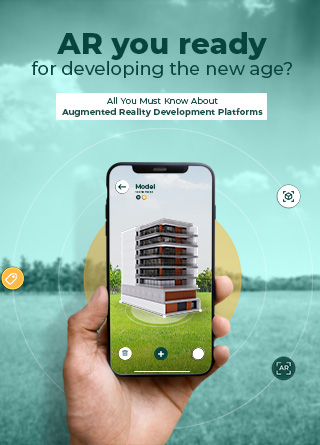
All You Must Know About Augmented Reality Development Platforms
Share
Overview
Iron Man's suit is so kitted out with AR goodies that gives Tony Stark stacks of real-time information and insights so he can do what he does best. #SaveTheWorldWithIntelligence
The Augmented Reality use case in Iron Man’s suit was a result of rigorous efforts that took months for him to develop. Fret not! Getting an AR application for your business will not take that long. Want to know how? Well, by using Augmented Reality Development Platforms. These platforms provide the right tools to create AR-based products that superimpose computer-generated images into the real world. Super cool, isn’t it?
Want to know more about Augmented Reality Development Platforms? Read on!
.jpg.aspx "TechDogs-\"All You Must Know About Augmented Reality Development Platforms\"")
When was the last time you clicked a picture using a Snapchat filter? Not a poser? No worries! Let us rephrase the question – have you ever followed Pikachu in a café or at least seen someone catching him (or any other Pokémon) while you were out on a walk? We assume you have! Are the Pokémons real or were you hallucinating? Well, we are naturally talking about the viral Pokémon Go video game.
Well, it used Augmented Reality (AR) to allow people to capture virtual Pokémon's using their smartphones. The possibilities for Augmented Reality are endless but in order to make them come true, there needs to be a development platform that can actually manage to develop all these products without much hassle. Here is where Augmented Reality Development Platforms come into the picture. They allow developers to create, position and orient virtual objects in the real world. That’s not all, there’s a lot more to explore!
“No amount of money ever bought a second of time” - and with that precious advice, let’s not spend another second and move on to know about Augmented Reality Development Platforms; their origin, their work and their future. Let’s begin.
Let’s Begin With What Are Augmented Reality Development Platforms?
What was your reaction when you first saw Tony Stark AKA Iron Man in that super cool suit? Amazing, right? Iron Man, we mean Robert Downey Jr.’s charm combined with AR technology was enough to make us swoon with happiness. #WeLoveHim3000
Well, AR is a technology that makes it possible to mix the digital world with the physical world. It will allow you to view and interact with a virtual version of your world through a screen by applying digital layers on top of real-world environments. The result is something like you’ve never seen before. Just like seeing Pepper Potts in Rescue Armour for the first time. #IronManNostalgia
Augmented Reality Development Platforms let you create immersive AR experiences for mobile devices, including smartphones and tablets. These platforms make it easy to add AR content to your iOS and Android mobile applications, websites and other apps. They can also be used to create AR-based games, applications and websites.
Let’s hop on to the next section to know the roots of these platforms!
Roots Of Augmented Reality Development Platforms

We said root, not Groot!
Anyway, it was in 2008, when Tony Stark made his first appearance in that eccentric suit and we all went crazy! The suit evolved with time and has come a long way since then. Just like that, AR Development Platforms have a brief history of development with time.
Augmented Reality had its roots in 1957 when a cinematographer called Morton Heilig invented the Sensorama which delivered visuals and sounds to viewers. Of course, it wasn’t computer-controlled but it was the first example of an attempt at adding additional data to an experience. In 1968, Ivan Sutherland, an American computer scientist, invented the head-mounted display as a window into virtual worlds. However, because of technological limitations at the time, that wasn't practical for wide use.
Jaron Lanier coined the term Virtual Reality and Thomas P Caudell of Boeing coined the phrase Augmented Reality in 1990. The first properly functioning AR system was the one developed at USAF Armstrong’s Research Lab by Louis Rosenberg in 1992. These were called Virtual Fixtures and they enabled the overlay of sensory information on a workspace to improve human productivity. #BeginingOfAnEternity
Between then and today, Augmented Reality saw many other breakthroughs, the most notable being the invention of ARToolKit in 2000. It is an open-source development library that Hirokazu Kato developed and was the first Augmented Reality development tool. This package helped developers build Augmented Reality programs, which were able to overlay virtual graphics on top of real-world images.
Not long ago, in 2017, Apple and Google launched their respective AR Development Platforms called ARKit and ARCore respectively, which enabled developers to create AR applications – the rest is history Today, businesses are using AR Development Platforms to take over the market of Augmented Reality applications.
After knowing about the history, let’s quickly move on to the next section to understand their work!
The Next Big Question: How Do Augmented Reality Development Platforms Work?
It is no mystery how Iron Man’s suit works to help him fight the many villains in the Marvel movies. However, what you may not know is the working of Augmented Reality Development Platforms. Don’t worry! We are here to help you out.
Sitting in the chair and playing the role of a software developer can astound anyone – there is a lot of effort put into an app's development! Many concerns need to be addressed for even the simplest apps (such as scalability, compatibility, security, etc.). The process can seem tangled with threads of concerns when it comes to complicated graphics and advanced functionalities using innovative technologies such as AR. All these threads must be tied together, so they make up one unitary product.
This is where Augmented Reality Developments Platforms make a grand entry. These platforms are essentially used to develop, manage and test AR products. If we think about the development process as a web, then AR Development Platforms can help you to deal with all the tangled threads, organize them and turn them into something usable.
The next section will engage you with the features of Augmented Reality Development Platforms that help it untangle the process – read on!
The Features Of Augmented Reality Development Platforms

Do you remember the features of Iron Man’s suit? We are sure no one can forget those microscopic transistors, magneto power resistors and many other teeny-tiny technologies embedded into the suit to make it awesome and powerful. Similarly, the features of AR Development Platforms make them even more efficient. Without further ado, let’s learn about some of them:
-
3D Object Tracking
This helps track instant motion in real-time to assess the 3D body pose on mobile devices such as tablets and smartphones.
-
Image Recognition
Image recognition and tracking is an Augmented Reality feature that provides apps the ability to detect images, triggering digital content to appear in the form of videos, slideshows, 360° panoramas, sound effects and text descriptions of the animations.
-
Visual SLAM
SLAM stands for Simultaneous Localization And Mapping. It is a technology that understands our physical world through feature points. This makes it possible for AR apps to identify 3D objects and scenes, as well as instantly track the world and overlay digital interactive augmentations on top of real-world environments.
Now that you know about their features, let’s look at what the future holds for Augmented Reality Development Platforms in the following section.
The Road To The Future For Augmented Reality Development Platforms

The story of Iron Man’s suit came to an end with the sacrifice of Tony Stark to keep the villainous Thanos from destroying the world. #EndedWithEndgame
However, for AR Development Platforms, the Endgame is not near. AR still seems to be misconstrued as too "high tech" for the average Joe. The truth is everyday consumers already use AR - they just don't know it! While Snapchat's dog filter may seem like a good example of Augmented Reality because you can interact with the animal on top of the screen, this is not how most businesses would define it. So, what will have to change for people to view AR more positively?
It'll need better delivery methods that are designed specifically so that everyone can interact and appreciate what it has to offer. The use of Metaverse technology for better teleconferencing will enable AR features to be accessed and modified by users. The ultimate goal of this is to break down barriers and enable 3D video conferences. Amazing, isn’t it?
Another tech giant’s product – Microsoft Mesh – wants users to have VR and AR capabilities when using a meeting room to view people on the call through their virtual avatars or enabling floating box displays on their feed. The gist is, all these changes by the big companies will increase the demand for AR interactions, resulting in businesses investing more in Augmented Reality development tools.
The Endgame
It’s not about how much we lost; it’s about how much we have left…
With those precious words, our article comes to an end but for Augmented Reality Development Platforms, it’s just a beginning.
These platforms will be widely used. It will be a key driver in increasing the number of AR-enabled applications on smartphones, tablets, etc. Moreover, they will offer extended functionalities that modern internet speeds can handle. Today is a good time to get started with AR Development tools that will draw your customer's attention to your products or engage them with a brilliant immersive campaign. Let’s go!
Frequently Asked Questions
What Are Augmented Reality Development Platforms?
Augmented Reality Development Platforms are tools that facilitate the creation of immersive AR experiences for mobile devices such as smartphones and tablets. Augmented Reality (AR) technology blends digital elements with the physical world, allowing users to interact with virtual objects through a screen. These platforms enable developers to add AR content to mobile applications, websites, and other digital products. With Augmented Reality Development Platforms, developers can unleash their creativity to design engaging AR experiences for various purposes, including gaming, marketing, education, and more.
What Is the History of Augmented Reality Development Platforms?
The roots of Augmented Reality Development Platforms trace back to various technological advancements and innovations over the years. Augmented Reality had its origins in the late 1950s, with early experiments like the Sensorama, which delivered visual and auditory experiences to viewers. However, significant progress in AR technology occurred in the late 20th and early 21st centuries. Key milestones include the invention of the head-mounted display by Ivan Sutherland in 1968 and the coining of the term "Augmented Reality" by Thomas P Caudell in 1990. The development of ARToolKit in 2000 marked a significant milestone, enabling developers to overlay virtual graphics on real-world images. Today, major tech companies like Apple and Google offer AR Development Platforms, further propelling the growth of AR-enabled applications.
How Do Augmented Reality Development Platforms Work?
Augmented Reality Development Platforms serve as comprehensive tools for creating, managing, and testing AR products. These platforms simplify the complex process of AR app development by providing developers with the necessary tools and resources. They assist in tasks such as 3D object tracking, image recognition, and visual SLAM (Simultaneous Localization And Mapping), which enable AR applications to understand and interact with the physical environment. Augmented Reality Development Platforms essentially streamline the development process, allowing developers to focus on crafting immersive AR experiences without getting bogged down by technical complexities.
Fri, Feb 3, 2023

Enjoyed what you've read so far? Great news - there's more to explore!
Stay up to date with the latest news, a vast collection of tech articles including introductory guides, product reviews, trends and more, thought-provoking interviews, hottest AI blogs and entertaining tech memes.
Plus, get access to branded insights such as informative white papers, intriguing case studies, in-depth reports, enlightening videos and exciting events and webinars from industry-leading global brands.
Dive into TechDogs' treasure trove today and Know Your World of technology!
Disclaimer - Reference to any specific product, software or entity does not constitute an endorsement or recommendation by TechDogs nor should any data or content published be relied upon. The views expressed by TechDogs' members and guests are their own and their appearance on our site does not imply an endorsement of them or any entity they represent. Views and opinions expressed by TechDogs' Authors are those of the Authors and do not necessarily reflect the view of TechDogs or any of its officials. While we aim to provide valuable and helpful information, some content on TechDogs' site may not have been thoroughly reviewed for every detail or aspect. We encourage users to verify any information independently where necessary.
Loading comments...