Cloud
All Need To Know About Cloud Management Suite
Share
Overview
Imagine hundreds of businesses uploading a gazillion bytes of data to your abode! With so many people and organizations flooding the heavens, Nephele has chosen you to help her manage the cloud.
Your mission, should you choose to accept it, is to find tools that can work together to help you manage your cloud environments. Thankfully, Nephele has an idea where to start - tools that manage cloud environments: that’s right, a Cloud Management Suite is born!
Read on to learn why you need a Cloud Management Suite and every way it can benefit your business!
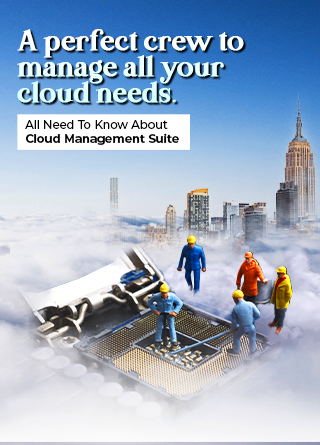
.png.aspx "TechDogs-A Perfect Crew To Manage All Your Cloud Needs \"All Need To Know About Cloud Management Suite\"")
One of the major reasons the cloud is a popular choice among businesses these days is because of its scalability. It can dynamically adjust to meet the specific needs of businesses either by increasing or decreasing their IT resource consumption. Efficiency is where it’s at!
We call it a dynamic cloud, as Nephele termed it. So, what’s so cool about a dynamic cloud? Since both the workloads and the demands of businesses are always changing, dynamic cloud services and software can change and adjust seamlessly, depending on said workloads and demands. If your cloud is managed and supported by the right tools, you can deploy a dynamic cloud for all business activities. This would mean you could optimize two major aspects of your business: flexibility and cost savings.
With the roaring of a thousand trumpets, the mission is on! You need to know what tools are best to manage dynamic cloud environments (no, not tools like a wrench or a hammer!). All you need is a Cloud Management Suite (and Nephele’s blessings!).
Read on to understand what a Cloud Management Suite is, how it evolved, its working, benefits and its future!
The Titans Will Help Us Understand Cloud Management Suite!
A Cloud Management Suite is a set of integrated tools that addresses the installation, management and configuration aspects of any business cloud environment. In doing so, a cloud environment runs more efficiently and enables dynamic scaling.
So, to get the lowdown on what a Cloud Management Suite is made up of, we turn to the Greeks again: Coeus, Titan of the Inquisitive Mind.
“Oh, great Coeus! What actually makes up a Cloud Management Suite?”
“Well,” replies Coeus, “Tools, tools and more tools!”
At a minimum, every Cloud Management Suite offers a variety of features to streamline the installation, management, maintenance, analysis and troubleshooting of cloud environments.
For example, there are features such as performance monitoring, security reporting and analytics dashboards. There may even be the automation of cloud analysis features. It essentially helps in managing the cloud without human (or godly) interventions to maintain a top-notch user experience. Other features that Cloud Management Suites offer are resource management, automated provisioning, cross-platform interoperability, compliance and governance policies, etc. Phew... that’s a handful!
What is the result of all this? Simply put: workload optimization. Isn’t that what Nephele promised!
To better understand how the cloud got to where it is, that is assisted by Cloud Management Suites, you need to take a close look at the history of the cloud. No, we won’t go as far back as the Greek gods!
The History Of Cloud Management Suites
Put on your Backstreet Boys CD in and enjoy a ride back to the 90s!
-
The earliest mention of the term “cloud” is from a Compaq internal document in 1996.
-
In 1997, the term “cloud computing” was used for the first time by Prof. Ramnath K. Chellappa from the University of Texas in Austin.
-
Fast forward a little bit to 2002 when we saw Amazon launching its public cloud service. This was when retail services via the web were fairly new. Only a few years later, Amazon would offer cloud-based services to other companies and organizations. #LongTermVision
-
Then in 2005, the University of Madrid launched an internal research project by the name of OpenNebula, which now refers to a cloud computing platform that helps manage distributed cloud data center infrastructures.
-
In 2010, Microsoft launched their product Azure, a cloud computing service that was run from Microsoft’s remote data centers.
After this, adoption of the cloud grew exponentially. Various businesses and organizations started relying on cloud-based services and infrastructures. Many organizations rely entirely on the cloud and more responsibilities are being shifted to the cloud every day. Naturally, the need for high-quality tools to manage an organization's cloud environment emerged.
Nephele was kind enough to develop and deliver us a solution – Cloud Management Suite! Now, Nephele, could you please explain how it works – just one more time!
How Does The Cloud Management Suite Work, Nephele?

Let’s take a look at the cloud management scenario. An organization has an existing cloud environment. First of all, a Cloud Management Suite must be able to integrate into this environment. It does this in the form of a virtual machine (VM) which is basically a virtual emulation of a computer system. This VM contains a remote server and a database. The server integrates with your cloud, while the database lets you take an inside look into the cloud environment.
This process provides real-time information that allows cloud administrators to analyze and optimize cloud performance. From there, administrators are able to send commands back to the cloud environment. This allows administrators to get metrics in real-time that allow them to make decisions that significantly impact the productivity of an organization on a day-to-day basis. After all, every business uses one or another type of cloud-deployed service today!
Talking about types...
Types Of Cloud Management Suites
Here are the different types of Cloud Management Suites that are used by businesses:
-
First, there are focused cloud platforms. These refer to cloud management platforms that only deal with one specific problem, such as cloud security. So, this is not an entire Cloud Management Suite but a part of the platform that offers a service.
-
Then there are multi-cloud platforms. Let’s say you need to manage multiple clouds, such as Microsoft Azure and Amazon Web Services together. A multi-cloud platform allows you to do this through interoperability features. They can usually handle all aspects of cloud environments and are considered Cloud Management Suites.
-
Lastly, there are hybrid and hyper-converged cloud platforms. These suites manage both public and private clouds that are interacting with one another. These solutions offer control over all aspects of the cloud: storage, compute, networking and management.
If your business uses various types of clouds, some public while some private, choosing the right Cloud Management Suites becomes even more critical. Here are some points to remember before investing in one.
Topics For More Insights
We’re Not Gods; We Must Choose Wisely!
Choosing the right Cloud Management Suite can be overwhelming. If you don’t know what to look for, here are some key capabilities that are the true earmarks of a great Cloud Management Suite:
-
Helps manage resources on various clouds
-
Supports self-service through web-based portals
-
Provides task automation and business processes management
-
Helps in managing cloud financials, such as metering and billing
-
Integrates with multiple existing IT systems
Well, let’s say Nephele helps you choose the best Cloud Management Suite for your needs – what next?
What’s In It For You – The Benefits

Earlier, organizations were lacking the expertise and knowledge to get the most out of their cloud environments and services. This meant the potential of utilizing the cloud wasn’t being tapped into. This led to some organizations stepping away from the cloud and reverting to traditional databases.
It became apparent that the cloud would need assistance in the form of management tools to help organizations make the most of their cloud. This need was met with the development of Cloud Management Suites, which also provided some other major advantages:
The benefits of Cloud Management Suite includes:
-
Automated management policies for cloud management and maintenance.
-
Cloud cost management by measuring, monitoring and optimizing cloud costs.
-
Self-service management to enable better services to consumers.
Flexibility and Scalability to enable dynamic provisioning of IT resources and cloud storage.
Can Nephele See Into The Future?
Well, Nephele is no oracle; she can’t see the future! However, we have done our research about the upcoming trends for cloud management. In the future, there will be further development of multi-cloud management tools. Costs associated with utilizing the cloud will always be a hot topic, so you can bet on Cloud Management Suite vendors to focus on cost optimization. As businesses scale their cloud initiatives, they will look for vendors who can manage large environments at an affordable rate.
Moreover, hybrid infrastructures are pretty new terrain. More cloud management tools will be developed to face the challenges of exploring this new terrain. How could we forget security! With an ever-increasing focus on cyber resilience, security solutions for the cloud will become more robust as well. These integrations will make Cloud Management Suites much more practical and necessary for businesses in the near future.
Summing It Up
Whew! Helping Nephele in the clouds took a lot out of you, so have a rest!
The cloud has grown and evolved quickly in its short history. You’ve seen the benefits of using the cloud and understand why so many organizations are utilizing it and want to utilize its fullest potential. If you haven’t, consult Coeus — he’s sure to be on our side with this. This is why Cloud Management Suites are here and they are not going anywhere, anytime soon. They’re taking Cloud Management Suite to Mount Olympus and beyond
Frequently Asked Questions
What is a Cloud Management Suite?
A Cloud Management Suite is a comprehensive set of integrated tools designed to facilitate the installation, management, and configuration of cloud environments for businesses. These suites streamline various tasks involved in cloud management, such as performance monitoring, security reporting, analytics dashboards, automated provisioning, resource management, and compliance governance. By offering a centralized platform for managing cloud infrastructure, a Cloud Management Suite enhances efficiency and enables dynamic scaling to meet the evolving needs of businesses.
How does a Cloud Management Suite Work?
A Cloud Management Suite integrates into an organization's existing cloud environment through virtual machines (VMs) that emulate computer systems. These VMs contain remote servers and databases, allowing administrators to monitor and optimize cloud performance in real-time. By analyzing metrics and sending commands back to the cloud environment, administrators can make informed decisions to improve productivity. Cloud Management Suites automate various aspects of cloud management, reducing the need for manual intervention and ensuring a seamless user experience.
What are the Benefits of Using a Cloud Management Suite?
The benefits of using a Cloud Management Suite are manifold. Firstly, it enables automated management policies for cloud maintenance, reducing the burden on IT teams and ensuring consistent performance. Additionally, Cloud Management Suites facilitate cost management by measuring, monitoring, and optimizing cloud expenses, thereby maximizing ROI. They also support self-service management, empowering users to access cloud resources through web-based portals and improving service delivery. Moreover, Cloud Management Suites offer flexibility and scalability, allowing businesses to dynamically provision IT resources and cloud storage based on demand. Overall, these suites enhance operational efficiency, cost-effectiveness, and agility in cloud environments, driving business growth and innovation.
Wed, Aug 31, 2022

Enjoyed what you read? Great news – there’s a lot more to explore!
Dive into our content repository of the latest tech news, a diverse range of articles spanning introductory guides, product reviews, trends and more, along with engaging interviews, up-to-date AI blogs and hilarious tech memes!
Also explore our collection of branded insights via informative white papers, enlightening case studies, in-depth reports, educational videos and exciting events and webinars from leading global brands.
Head to the TechDogs homepage to Know Your World of technology today!
Disclaimer - Reference to any specific product, software or entity does not constitute an endorsement or recommendation by TechDogs nor should any data or content published be relied upon. The views expressed by TechDogs' members and guests are their own and their appearance on our site does not imply an endorsement of them or any entity they represent. Views and opinions expressed by TechDogs' Authors are those of the Authors and do not necessarily reflect the view of TechDogs or any of its officials. While we aim to provide valuable and helpful information, some content on TechDogs' site may not have been thoroughly reviewed for every detail or aspect. We encourage users to verify any information independently where necessary.
Loading comments...