Marketing Technology
All About Marketing Resource Management Software
Share
Overview
What’s even better is that unlike a wedding planner, MRM Software never forgets anything (and doesn’t get irritable when it’s hungry!). It can help you understand exactly what investments are paying off (and which ones aren’t). The biggest benefit of an MRM tool is its ability to help you streamline project workflows and execute more efficient and effective marketing campaigns across your entire marketing ecosystem. Thrilled to know more? Then what are you waiting for?
Dive right in to read all there is to know about Marketing Resource Management Software.
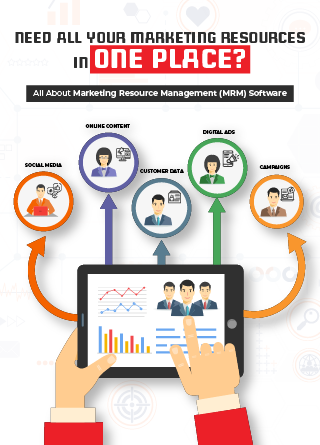
-01-(4).png.aspx "TechDogs-\"All About Marketing Resource Management Software\" Need All Your Marketing Resources In One Place?")
Marketing Resource Management (MRM) Software is the cornerstone of your marketing department. It’s the technology that supports marketing operations and ties all your marketing bits and pieces together, the way a good wedding planner pulls off a flawless and memorable event.
MRM Software helps you plan, manage and track marketing campaigns in a way that enables you to make full use of all those expensive marketing technology platforms you keep buying — the customer relationship management (CRM) and data asset management (DAM) and digital experience platforms (DXP) — that power your omnichannel marketing initiatives.
MRM Software touches every aspect of your marketing strategy — from the tools to the creative development to the budget allocation to what tactics and approaches have the best ROI (and which ones don’t). They make it possible to fully optimize your marketing approach for the absolute best possible results and they turn your marketing team into a powerhouse.
Enough with the praises – let's begin with a formal introduction to Marketing Resource Management Software.
What Is Marketing Resource Management Software?
Marketing Resource Management Software connects the many moving parts — assets, channels, budgets, tactics and people — that make up a company’s marketing infrastructure. It’s an operations tool as much as it is a marketing tool, connecting your entire marketing ecosystem via one centralized platform.
If an MRM Software was a person, it would be like someone with the most extreme type A personality – a monumental overachiever with the ability to multitask, keep a track of a staggering number of details, be preternaturally focused on the many moving parts of your marketing ecosystem and (of course) super competitive, since it would remain highly focused on achieving its goals.
So, how did this Type A, super competitive, overachiever come into being? Let’s find out!
Marketing Resource Management Software — A Brief History
Today’s MRM platforms evolved from older enterprise systems that helped businesses manage the people, processes and marketing assets needed to run a marketing department. Marketing technology has changed a lot over the past decade. This, combined with innovations like Artificial Intelligence (AI) and Machine Learning (ML), plus a staggering number of new marketing channels and creative types have made the marketing team’s role more complex and demanding. However, once upon a time, marketing was simpler and so were the tools used to manage it.
Here’s a brief timeline for the history buffs among us:
-
1800s
Paper-based resource management solutions included address cards, printed spreadsheets, logbooks and probably stone tablets, all of which were used to organize and track marketing initiatives budgets and plan campaigns. Marketing channels were limited to mail, newspapers, posters and catalogs.
-
1970s
Not much happened, from an MRM-technology perspective for nearly 200 years, which is how we have landed at the grooviest time in marketing’s history, the 70s! This era included a vast cornucopia of new channels including TV, radio, direct mail, mass print and out-of-home (e.g., billboards). MRM technology was limited to list management on early computers (e.g., merge/ purge, printing envelopes, campaign forecasting, etc.) #OldSchoolCool
-
1980s
The first iteration of MRM tools emerged in the 1980s to help businesses manage pre-internet era campaigns. They were basically spreadsheets designed to manage direct mail lists and coordinate campaigns and assets (e.g., the ad creative). They also included some early sales automation tools, telemarketing lists and word processing software that businesses used to create marketing documents like insertion orders and direct mail pieces.
-
2000s
We’ve jumped ahead to the 2000s, when Gartner officially gave MRM tools their own category and acknowledged how important this technology was becoming to businesses. Throughout this decade, MRM technology gained more traction, with Gartner classifying five core functionalities that MRM tools needed. These were: creative management, knowledge management, strategic planning, marketing fulfillment and performance management.
-
2010 to present
MRM tools have changed and evolved by integrating and overlapping with other marketing technology (martech) tools that form elaborate tech stacks to power every facet of a business’s marketing infrastructure. MRM Software connect these tools and measure their effectiveness. They are process driven, managing people along with technology and creative assets.
That’s a lot for a single software to manage! Not really, the Type-A kinds can manage it all. Here’s how.
How Does Marketing Resource Management Software Work?
Remember the wedding planner we mentioned earlier? Let’s get her back in the room, shall we?

Where the wedding planner of the 1880s may have used parchment paper and a quill pen to keep track of the different vendors, supplies and budgetary issues involved with a wedding, she’d have a very different set of tools to work with today. Just like that wedding planner, MRMs have evolved. They work by leveraging a set of software applications to support all aspects of marketing management.
This includes planning and budgeting applications, scheduling tools that focus on when media and marketing activities will take place as well as workflow management. An MRM tool will not distribute content, launch champaigns, host your website, or house your content and creatives (you still need other tools like a CMS and DXP for that!). The role of an MRM is to coordinate people, technology and processes, so team members can efficiently coordinate marketing campaigns. It can also give your team insight into marketing performance and ROI.
Features of MRM Software include:
-
Planning And Scheduling Tools
to enable marketing teams to create, plan and manage campaigns and appropriately allocate and track budgets for all tactics, programs and activities.
-
Workflow Management Tools
to coordinate and orchestrate the flow of content and media assets and keep track of the entire production process.
-
Content Management Tools
to align content with campaigns.
-
Reporting And Data Visualization Tools
to enable distributed teams to share plans, budgets, campaign and content performance across marketing campaigns and initiatives.
-
Brand Compliance Capabilities
to manage assets, version control and make marketing assets and related information transparent and visible to all team members.
This isn’t just a wedding planner, my friends. This is a frighteningly efficient, brilliant and tireless wedding planner of the future! Wondering if you really need this freakishly awesome software? Yes, of course. Here’s why!
Topics For More Insights
Why Do We Need Marketing Resource Management Software?

Marketing Resource Management tools are more important than ever. The proliferation of new media channels, the increasing use of distributed teams and the growing number of martech tools mean that marketing teams need an efficient way to keep track of everything, particularly their martech investments. Companies are investing in martech tools and platforms to the tune of $122 billion, with 70% of CMO Council members — a global network of over 16,000 executives — indicating that they plan to increase their investment in marketing technology.
MRMs can help these CMOs track and manage all these new tools, ensuring that the investment in new technology actually pays off. It’s also the only tool that’s truly focused on planning the marketing spend and tying that spend (including any martech investments) back to the ROI. Nifty, right?
The value and need of Marketing Resource Management Software would only rise going forward – and for better. Here’s all you need to know to be prepared.
The Future Of Marketing Resource Management Software
The future of MRM Software is as bright as the entire martech ecosystem. The MRM platform market was estimated at $3.2 billion in 2020 and is expected to reach $3.5 billion in 2021. It’s projected to grow by nearly 12% over the next six years!
Growth in the MRM category is driven by the need for increased efficiency across an ever-expanding marketing ecosystem that includes digital and physical channels. At its core, MRM Software is an efficiency tool — one that makes operating the business of marketing easier and more accountable.
As is the case throughout the marketing technology ecosystem, AI and machine learning will make MRM software even better, enabling marketers to automate more tasks, better coordinate processes and workforces while intelligently managing the many creative assets and tools involved in a well-oiled marketing machine. Are you ready for the future of marketing?
Summing It Up
Today’s marketers have a lot on their plate – coming up with innovative campaigns, keeping up with the latest trends, planning outreach activity and what not. Marketing Resource Management Software can be one of their biggest aids in organizing, managing and streamlining their workload and resources without having to scan through a heap of scribbled notes every time.
MRM Software is all set to be a big ally of the marketers of the future or at least the ones who want to ace their game. They can focus on the creative and strategic parts of marketing while offloading the operational vows to the software - much like how we offload our wedding preparations onto the planner. Phew – one big bullet dodged there, frankly!
Frequently Asked Questions
What Is Marketing Resource Management Software?
Marketing Resource Management Software serves as the central hub for organizing and streamlining various components of a company's marketing operations. From managing assets and budgets to coordinating campaigns and tactics, MRM Software acts as an essential tool that connects all aspects of a marketing ecosystem. It functions not only as a marketing tool but also as an operations tool, providing a unified platform to oversee and optimize marketing strategies effectively.
How Does Marketing Resource Management Software Work?
MRM Software operates by leveraging a suite of software applications to support different facets of marketing management. It facilitates planning and budgeting, scheduling, workflow management, and reporting, among other functionalities. While MRM Software does not directly execute tasks like content distribution or campaign launches, it plays a crucial role in coordinating people, processes, and technologies within a marketing team. By providing insight into performance metrics and ROI, MRM Software empowers teams to efficiently manage campaigns and resources.
Why Do We Need Marketing Resource Management Software?
The need for Marketing Resource Management Software has never been greater, given the complexity and diversity of modern marketing environments. With the advent of numerous marketing channels and technologies, along with the rise of distributed teams, businesses require efficient tools to track and manage their marketing investments effectively. MRM Software not only helps organizations oversee their martech tools but also assists in planning marketing spend and correlating it with measurable returns on investment. As marketing landscapes continue to evolve, MRM Software remains indispensable for optimizing marketing operations and ensuring accountability in resource management.
Fri, Oct 14, 2022

Enjoyed what you read? Great news – there’s a lot more to explore!
Dive into our content repository of the latest tech news, a diverse range of articles spanning introductory guides, product reviews, trends and more, along with engaging interviews, up-to-date AI blogs and hilarious tech memes!
Also explore our collection of branded insights via informative white papers, enlightening case studies, in-depth reports, educational videos and exciting events and webinars from leading global brands.
Head to the TechDogs homepage to Know Your World of technology today!
Disclaimer - Reference to any specific product, software or entity does not constitute an endorsement or recommendation by TechDogs nor should any data or content published be relied upon. The views expressed by TechDogs' members and guests are their own and their appearance on our site does not imply an endorsement of them or any entity they represent. Views and opinions expressed by TechDogs' Authors are those of the Authors and do not necessarily reflect the view of TechDogs or any of its officials. While we aim to provide valuable and helpful information, some content on TechDogs' site may not have been thoroughly reviewed for every detail or aspect. We encourage users to verify any information independently where necessary.
Loading comments...