|

|
|
|
Hello readers,
For a while, Anthropic ruled the AI dynamics. Claude built a reputation as the thinking person's model, the one enterprise trusted with their messiest data problems and their most sensitive workflows. But this week, OpenAI reminded everyone why it's still the name most people say first when they think AI.
GPT-5.6 landed globally, not as one model but three: Sol, Terra, and Luna, each built for a different kind of user and a different kind of budget. It's a wider net, a sharper pitch, and a clear signal that OpenAI isn't done fighting for the top spot.
That tension shows up everywhere this week. Meta is being sued over AI systems that allegedly penalized workers for taking medical leave. A Japanese taxi giant had to shut down its systems after a cyberattack. Xiaomi is chasing a new slice of China's EV market, OnePlus may be quietly backing out of the West, and Midjourney, of all companies, wants to scan your entire body in 60 seconds.
Amid all that, the bigger story stays the same. AI isn't just changing what technology can do. It's changing who gets to lead, who gets left behind, and who has to answer for what happens when the systems get it wrong.
Let's dive in.
|
|

OpenAI has launched GPT-5.6 Sol, Terra, and Luna globally across ChatGPT, Codex, and its API. Sol targets serious professional work, Terra balances cost and capability, and Luna is built for speed. Three tiers, one message. OpenAI isn't slowing down.
|
|
Twenty-six Meta employees allege the company's AI-assisted layoff system penalized workers for taking approved medical or family leave. They want a federal court to pause layoffs starting July 22.
|
|

Nihon Kotsu, Japan's largest taxi operator, shut down its phone dispatch and booking systems after detecting a malware infection. Customers can still book rides through the GO app, but no data leak or attacker has been confirmed yet.
|
|
|
 |
|
Rossen Iossifov, serving time for a $5 million laundering scheme, is now accused of orchestrating the theft of $290,000 in crypto that had already been seized by the U.S. government, allegedly pulling it off from behind bars.
|
|
|
|
Reports suggest OnePlus and parent company Oppo are preparing to stop launching new phones in the US and Europe altogether. Existing customers would still get updates and support, but new devices may simply stop showing up.
|
|
 |
|
|

Xiaomi has unveiled Sky Nomad, a new extended-range electric SUV series aimed squarely at China's competitive family EV segment. It's a big bet beyond its SU7 and YU7 models, and a direct shot at rivals like Li Auto.
|
|

Midjourney is stepping into healthcare with a water-immersion ultrasound scanner that claims to image your entire body in under a minute. A spa-style flagship location is planned for San Francisco by 2027, though FDA clearance is still pending.
|
|

After 15 years, the beloved show-tracking app TV Time is closing down. But founder Antonio Pinto isn't walking away. He's building Bingers, a new home for the same community, complete with an import tool for old watch histories.
|
|
|
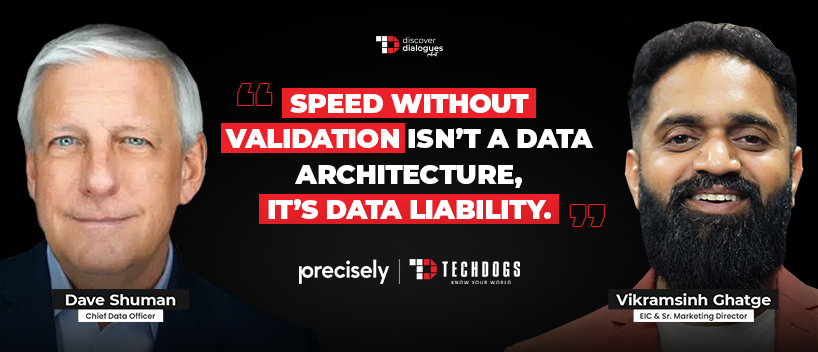 In this episode, Precisely's Dave Shuman explains why enterprise AI readiness has less to do with the model and more to do with trusted data, governance, and decision discipline. He breaks down the OODA loop for AI strategy, why AI agents fail differently than traditional software, and how leaders should really measure AI ROI.
Join the conversation. |
|

Customer Experience Live 2026 brings together CX leaders, marketing executives, and technology innovators in Kuala Lumpur to explore AI, automation, and personalized omnichannel strategies shaping the future of customer engagement. Expect keynotes, case studies, and a live exhibition of cutting-edge CX tools.
Register now.
|
|
|
That's this edition of #TDFutureFocus wrapped. The throne might have changed hands this week, but the real story is not just about who will win, but how fast everything under AI is shifting while we're all still watching the scoreboard.
Stay curious, stay skeptical, and we'll see you in the next edition.
|