Marketing Solutions
Building Trusted Cybersecurity Brands In The Age Of AI
Share
Overview
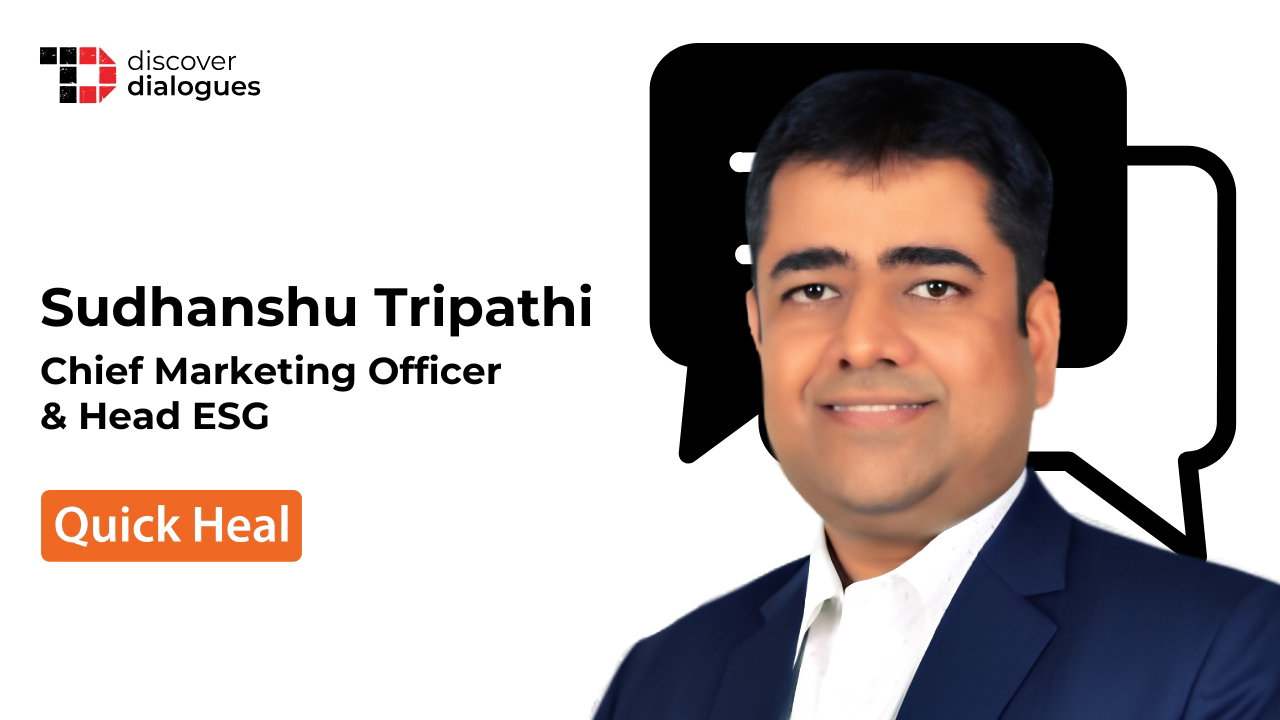
Here is a brief introduction to Sudhanshu:
Sudhanshu Tripathi is the Chief Marketing Officer and Head of ESG at Quick Heal Technologies, where he leads brand, growth, sustainability, and marketing strategy across Quick Heal and its enterprise cybersecurity arm, Seqrite. With over 21 years of experience across technology, energy, cybersecurity, and B2B and B2C markets, he has led brand transformations, IPO marketing, global go-to-market programs, policy advocacy, and AI-enabled marketing initiatives.
As CMO for Quick Heal and Seqrite, how do you approach building cybersecurity brands that are not only trusted by enterprises but also seen as global thought leaders?
Trust in cybersecurity is earned over years and can be lost in a single incident. That's why I tell my team: we are not in the business of making claims; we are in the business of proving them. Our threat research, malware labs, and the intelligence we publish build far more credibility than any marketing campaign ever could.
True thought leadership is a balance of emotional and rational equity. The stories we tell about the future must be grounded in the credibility we've earned through what we've delivered in the past. Vision without evidence is merely aspiration.
Thought leadership cannot be manufactured through opinion pieces alone. It must emerge from what an organization genuinely knows better than anyone else. For us, that's the cyber threat landscape across India, the attacks we detect first, the patterns we uncover, and the insights others often miss. When we speak from that vantage point, people listen. And when Indian enterprises see a homegrown cybersecurity company shaping conversations on data protection and threat intelligence, it transforms brand perception. Trust built locally becomes authority recognized globally, and each reinforces the other.
You lead both marketing and ESG responsibilities. How can technology companies integrate ESG into their brand story without making it feel like a separate corporate communication exercise?
Sustainability is embedded in our DNA. Our ESG philosophy is guided by our core values, shaping business decisions that drive growth while creating meaningful impact for communities.
Our goal, to make cyber safety a fundamental right for all, means initiatives like cyber awareness, building world-class products, and developing future-ready talent are not ESG campaigns; they are core business priorities. Decisions such as eliminating plastic packaging, reducing physical boxes, prioritizing renewable resources, and enabling our value chain on ESG are business choices, not reporting checkboxes.
The biggest mistake organizations make is treating ESG as an annual report. When ESG is owned by a separate team, communicated in a different voice, and disconnected from business strategy, stakeholders can immediately recognize the disconnect. Authentic ESG is not what a company reports; it is how a company operates every day.
Cybersecurity is a complex and high-trust category. What role does storytelling play in simplifying technical solutions while still maintaining credibility with enterprise buyers?
Enterprise buyers are technical, but they're also human. A CISO isn't just buying an EDR platform; they're buying a peaceful sleep at night, confidence, resilience, and the ability to answer the board after an incident.
Great storytelling doesn't simplify the technology; it humanizes the problem. Instead of leading with architecture, we begin with the moments that matter: a ransomware attack at 2 a.m., a looming compliance deadline, or a failed audit. Technology then becomes the enabler that changes the outcome.
Cybersecurity is everyone's responsibility, involving stakeholders far beyond the IT team. Storytelling simplifies complex concepts, aligns diverse audiences, and creates a shared understanding of risk and action.
The strongest narratives are built with engineers and threat researchers, not just marketers. Simple language backed by technical accuracy- that combination is what builds trust.
You manage growth across D2C, e-commerce, affiliate, referral, and traditional offline channels. How should brands balance new-age digital channels with established distribution models?
I no longer see offline and digital as a balancing act; they are force multipliers. Each channel does what it does best and seamlessly hands the customer to the next. Today, a consistent omnichannel experience isn't optional; it's expected.
In India, offline distribution is far more than a legacy channel; it's a trust network built over decades. A retailer's recommendation in a tier-two city often carries more credibility than any digital ad. Digital, on the other hand, delivers scale, data, and speed.
The key is preventing channels from competing with each other. Pricing parity, partner-friendly economics, transparent policies, and clearly defined roles are more important than any individual channel strategy. Most importantly, insights must flow both ways; what we learn from D2C should strengthen our offline partners, not undermine them.
With your experience in PR, analyst relations, policy advocacy, and crisis communication, how should organizations protect and strengthen brand reputation in highly sensitive industries like cybersecurity?
Reputation in industry is built in peacetime and tested in crisis. Organizations that navigate crises well are those that have invested in trusted relationships with customers, journalists, analysts, regulators, and other stakeholders long before they need them.
Three principles have consistently guided me:
-
Lead with speed, backed by facts. Silence fuels speculation, but misinformation causes lasting damage.
-
Be transparent, not evasive. Legal caution should never become a barrier to honest communication. Stakeholders can forgive mistakes; they rarely forgive silence or stonewalling.
-
Treat policy advocacy as a long-term commitment. Organizations that contribute to better policies earn credibility, influence, and trust.
Finally, rehearse. A crisis playbook that has never been tested is just another document.
You have led AI-enabled marketing and large-scale ATL/BTL campaigns across markets. How is AI changing the way marketing teams plan campaigns, understand audiences, and drive measurable business outcomes?
We are already experimenting with an agentic AI setup alongside our human team, so this comes from daily experience. AI has fundamentally changed how marketing works. Tasks that once took weeks- research, content creation, localization, and variations- now take minutes. It hasn't replaced marketers; it has elevated them. My role has increasingly become that of an orchestrator, deciding what AI should do and where human judgment adds the most value.
The biggest shift is in audience understanding and personalization. AI moves us from broad audience segments to real-time, signal-level insights, understanding what a specific buyer needs, in their context and language.
My caution is simple: AI raises the floor, not the ceiling. Competent content will become ubiquitous. Competitive advantage will come from judgment, creativity, and a genuine point of view, qualities AI can amplify but not originate. The winners will use AI for scale and humans for what matters most: deciding what is worth saying. Marketing will become more strategic, more intelligent, and far closer to the core of business than ever before.
Thu, Jul 23, 2026

Liked what you read? That’s only the tip of the tech iceberg!
Explore our vast collection of tech articles including introductory guides, product reviews, trends and more, stay up to date with the latest news, relish thought-provoking interviews and the hottest AI blogs, and tickle your funny bone with hilarious tech memes!
Plus, get access to branded insights from industry-leading global brands through informative white papers, engaging case studies, in-depth reports, enlightening videos and exciting events and webinars.
Dive into TechDogs' treasure trove today and Know Your World of technology like never before!
Disclaimer - Reference to any specific product, software or entity does not constitute an endorsement or recommendation by TechDogs nor should any data or content published be relied upon. The views expressed by TechDogs' members and guests are their own and their appearance on our site does not imply an endorsement of them or any entity they represent. Views and opinions expressed by TechDogs' Authors are those of the Authors and do not necessarily reflect the view of TechDogs or any of its officials. While we aim to provide valuable and helpful information, some content on TechDogs' site may not have been thoroughly reviewed for every detail or aspect. We encourage users to verify any information independently where necessary.
Loading comments...