Featured
Artificial Intelligence
Building AI-Native CRM That Works Invisibly In The Background
Share
Overview
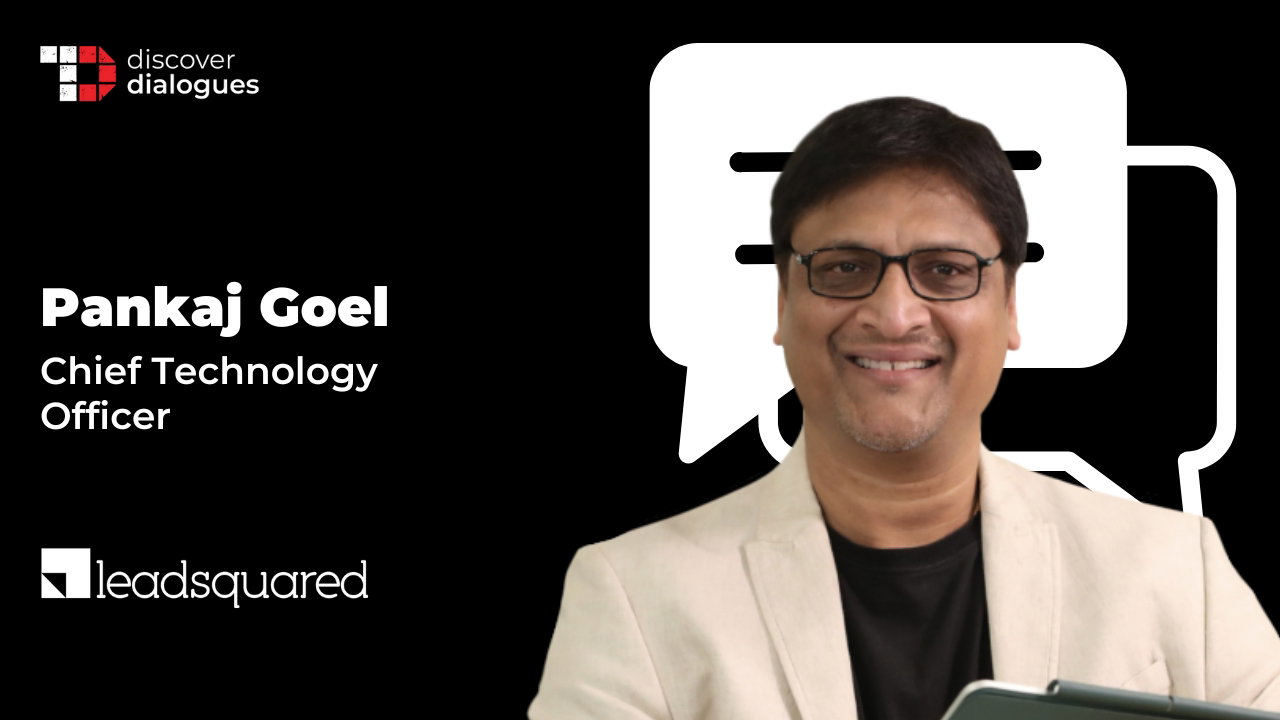
Here is a brief introduction to Pankaj:
Pankaj Goel is the Chief Technology Officer at LeadSquared, where he is focused on building an AI-native, invisible CRM platform powered by generative AI and autonomous agents. He brings nearly three decades of global technology leadership experience across companies such as BharatPe, Razorpay, Intuit, Trilogy and Sun Microsystems, with deep expertise in product strategy, engineering, payments, platform architecture, data, customer experience and building high-performing technology teams.
At LeadSquared, you are focused on building an AI-native, invisible CRM platform. In your view, what does "AI-native CRM" really mean beyond simply adding generative AI features to existing workflows?
We're seeing many organizations experiment with AI by adding copilots or conversational interfaces to existing applications. While those capabilities improve productivity, they don't fundamentally change how customer-facing teams operate.
An AI-native CRM is built differently. Instead of AI sitting alongside the workflow, it becomes part of the workflow itself. The platform continuously understands customer context, prioritizes opportunities, recommends the next best action, and increasingly automates routine execution. Users don't have to constantly tell the system what to do because intelligence is already embedded into the decision-making process.
Ultimately, I think the best enterprise software becomes almost invisible. Sales and service teams shouldn't spend their day navigating CRM screens. They should spend their time engaging customers while the platform quietly handles orchestration, prioritization, and repetitive tasks in the background. That's the direction we believe enterprise CRM is moving towards.
How can autonomous agents transform customer workflows in CRM, especially when enterprises need both hyper-personalization and strong control over business outcomes?
The expectations from enterprise AI have evolved quite quickly. Organizations are no longer looking for systems that simply automate repetitive tasks; they're looking for systems that can understand context, make routine decisions, and execute them reliably.
That's where autonomous agents become valuable. They can qualify leads, respond to customer enquiries, schedule follow-ups, or manage routine workflows without constant human intervention. At the same time, enterprises cannot compromise on governance. Customer interactions directly influence revenue, compliance, and brand trust, so AI must operate within clearly defined business rules.
I don't see autonomous agents replacing people. I see them handling repetitive execution so human teams can focus on complex decisions, relationship building, and exceptions where judgment matters most. The combination of autonomy and human oversight is what will make enterprise AI successful.
Having led payments engineering at Razorpay and technology across BharatPe's payments, lending, UPI, POS, and merchant-focused products, what are the biggest architecture lessons from building high-scale fintech platforms in India?
Building fintech platforms in India teaches you that scale is rarely the hardest problem. The real challenge is sustaining scale while maintaining reliability, security, and customer trust.
One lesson I've carried throughout my career is that architecture should always assume change. Regulations evolve, customer expectations change, payment volumes fluctuate, and entirely new products emerge. Systems built for today's requirements often struggle tomorrow unless flexibility has been designed into the architecture from the beginning.
The second lesson is that resilience isn't a separate engineering function. It has to be built into every architectural decision, whether that's observability, fault tolerance, or operational visibility. The best platforms aren't necessarily the ones with the most sophisticated technology. They're the ones that continue to perform consistently even when complexity increases.
Trust, reliability, and security are critical in both payments and enterprise SaaS. How should technology leaders design platforms that can scale rapidly without compromising resilience or customer confidence?
As technology leaders, we often talk about innovation, but innovation only creates value if customers continue to trust the platform behind it.
That means resilience, security, and observability cannot be added later as the business grows. They need to become part of the engineering culture from the beginning. Every release should improve reliability, every architectural decision should consider operational visibility, and every system should be designed with the assumption that failures will occur.
Customers rarely remember individual product features, but they always remember reliability. Platforms that consistently deliver secure and dependable experiences build confidence over time, and that confidence ultimately becomes a competitive advantage.
You have worked extensively across product strategy, engineering, metrics, data, and customer experience. How should CTOs balance product innovation with measurable business impact when building technology platforms?
Technology organizations sometimes measure success by the number of features they ship. I think the better question is whether those features actually improve customer outcomes.
Innovation should always begin with a business problem. Once that's clear, engineering, product, and data teams can work backwards to determine the simplest way to solve it. Metrics such as adoption, customer retention, operational efficiency, and response times often tell you far more than feature velocity alone.
As CTOs, our responsibility is to ensure technology decisions remain closely connected to business priorities. The strongest engineering organizations aren't necessarily the ones building the most features. They're the ones consistently delivering measurable value for customers and the business.
You have built and led large engineering and cross-functional teams across companies such as Intuit, Razorpay, BharatPe, and LeadSquared. What are the key leadership principles for creating high-performing engineering teams that can innovate at scale?
Technology changes quickly, but the fundamentals of building strong engineering teams remain remarkably consistent.
People perform at their best when they understand the problem they're solving, have ownership over decisions, and know how success will be measured. As organizations grow, leadership becomes less about making every technical decision yourself and more about creating an environment where good decisions happen consistently across teams.
I've also found that curiosity is one of the most important qualities in engineering. Technologies, frameworks, and architectures will continue to evolve, but teams that continuously learn, question assumptions, and collaborate across disciplines are the ones that adapt the fastest. In the long run, culture becomes just as important as technology in determining how successfully an engineering organization scales.
Thu, Jul 23, 2026

Liked what you read? That’s only the tip of the tech iceberg!
Explore our vast collection of tech articles including introductory guides, product reviews, trends and more, stay up to date with the latest news, relish thought-provoking interviews and the hottest AI blogs, and tickle your funny bone with hilarious tech memes!
Plus, get access to branded insights from industry-leading global brands through informative white papers, engaging case studies, in-depth reports, enlightening videos and exciting events and webinars.
Dive into TechDogs' treasure trove today and Know Your World of technology like never before!
Disclaimer - Reference to any specific product, software or entity does not constitute an endorsement or recommendation by TechDogs nor should any data or content published be relied upon. The views expressed by TechDogs' members and guests are their own and their appearance on our site does not imply an endorsement of them or any entity they represent. Views and opinions expressed by TechDogs' Authors are those of the Authors and do not necessarily reflect the view of TechDogs or any of its officials. While we aim to provide valuable and helpful information, some content on TechDogs' site may not have been thoroughly reviewed for every detail or aspect. We encourage users to verify any information independently where necessary.
Loading comments...